
If you’ve been doing SEO for a while, you know the feeling. You pick a keyword, write a killer piece of content, and… nothing happens. You’re stuck on page 5 while your competitors are sitting pretty at the top.
The reason? You’re likely miscalculating the “link gap.”
A lot of people ask me: “How to calculate how many backlinks I need for a specific keyword difficulty?”
If you don’t know the answer to this, you’re just guessing. And in SEO, guessing is the fastest way to burn your budget. You don’t need a massive, endless link-building campaign; you need a precise target. In this post, I’ll show you the exact method I use to calculate the backlinks required to rank, so you can stop wasting money and start seeing results.
Why “Keyword Difficulty” Isn’t the Whole Story
Every SEO tool—Ahrefs, Semrush, Moz—gives you a “Keyword Difficulty” (KD) score. Usually, it’s a number between 0 and 100.
But here is the truth that most people miss: KD scores are just estimates. They are based on the average link profile of the top 10 results. They aren’t a guarantee, and they don’t tell you what kind of links you need.
If the top-ranking page has 50 backlinks, it doesn’t mean you need 50 spammy links from a random directory. It means you need a comparable amount of authority. If you’re building a new site, you need to understand that the quality of your links matters just as much as the quantity. If you’re not sure where to start, check out my DIY SEO Guide to get a handle on the fundamentals.
The 3-Step Calculation Method
You don’t need complex software to figure this out. You just need to look at who is already winning and do the math.
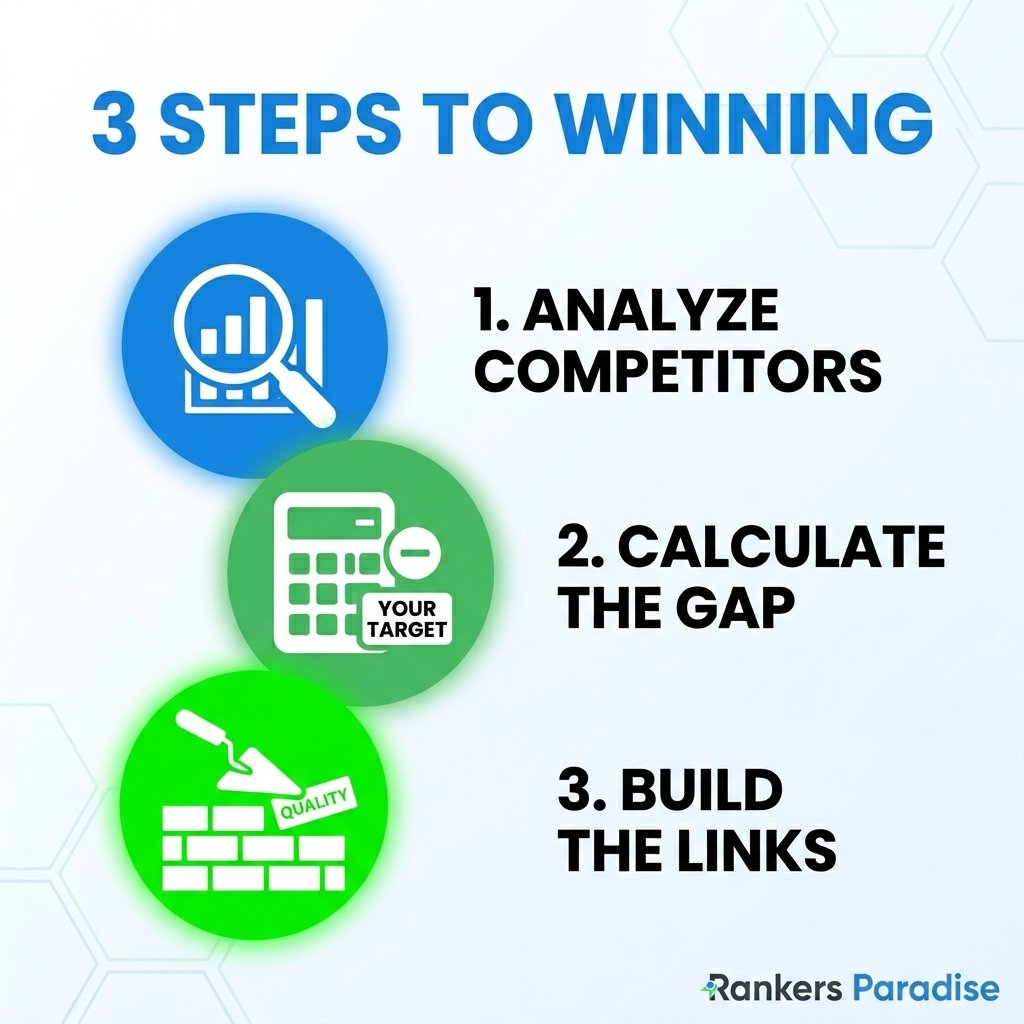
1. Identify Your Real Competition
Search for your target keyword in Google. Ignore the ads and the big brand sites (like Amazon or Wikipedia) if they are ranking. Look for sites that are similar to yours in size and niche. These are your “real” competitors.
2. Analyze the Backlink Profile
Take the URL of the #1 ranked competitor and plug it into a backlink checker. I prefer Ahrefs, but there are plenty of free tools out there. Look for the number of Referring Domains pointing specifically to that page.
3. Apply the “Gap Analysis” Formula
Once you have that number, use this simple calculation:
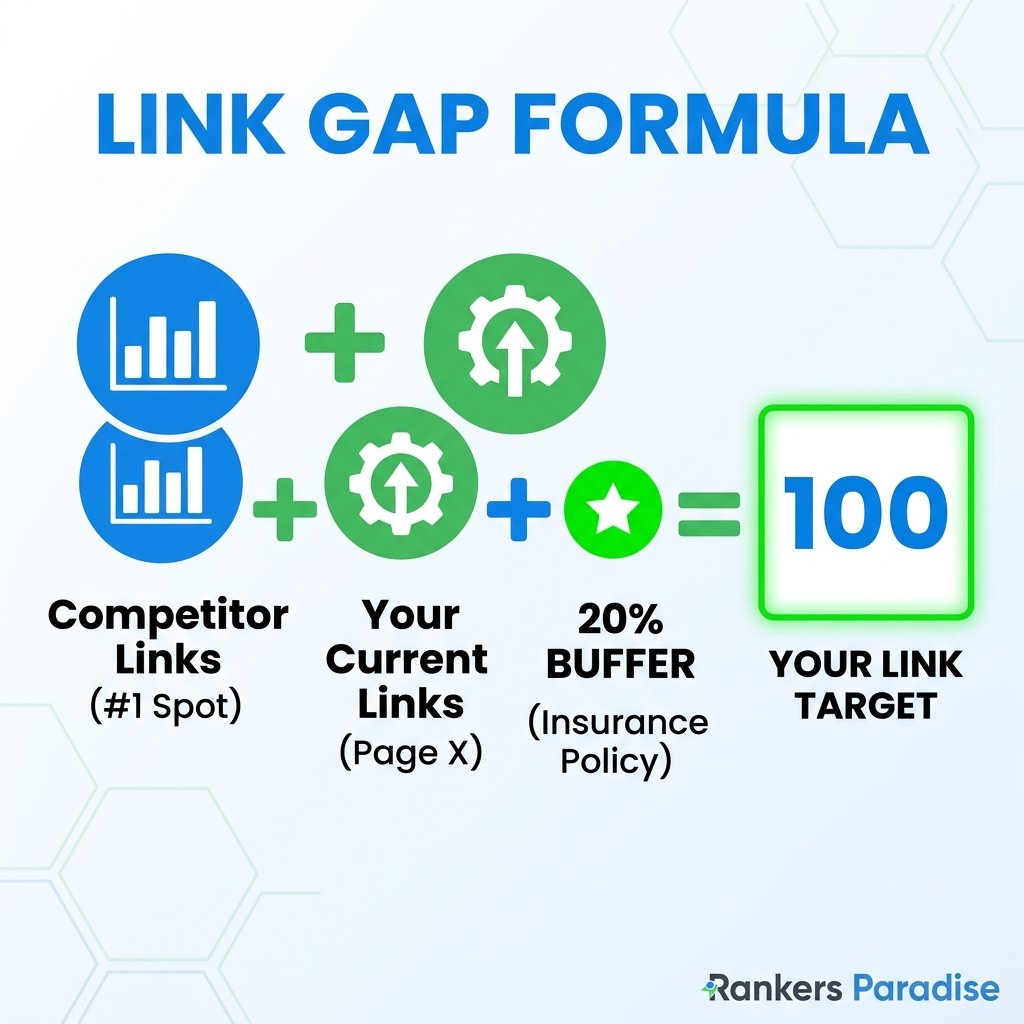
(Competitor Referring Domains – Your Current Referring Domains) + 20% Buffer = Your Target
The 20% buffer is your insurance policy. You don’t just want to reach them; you want to pass them.
Bridging the Gap: What Kind of Links Should You Build?
Now that you have your target number, don’t rush out to buy the cheapest links you can find. That’s how you get a Google penalty.
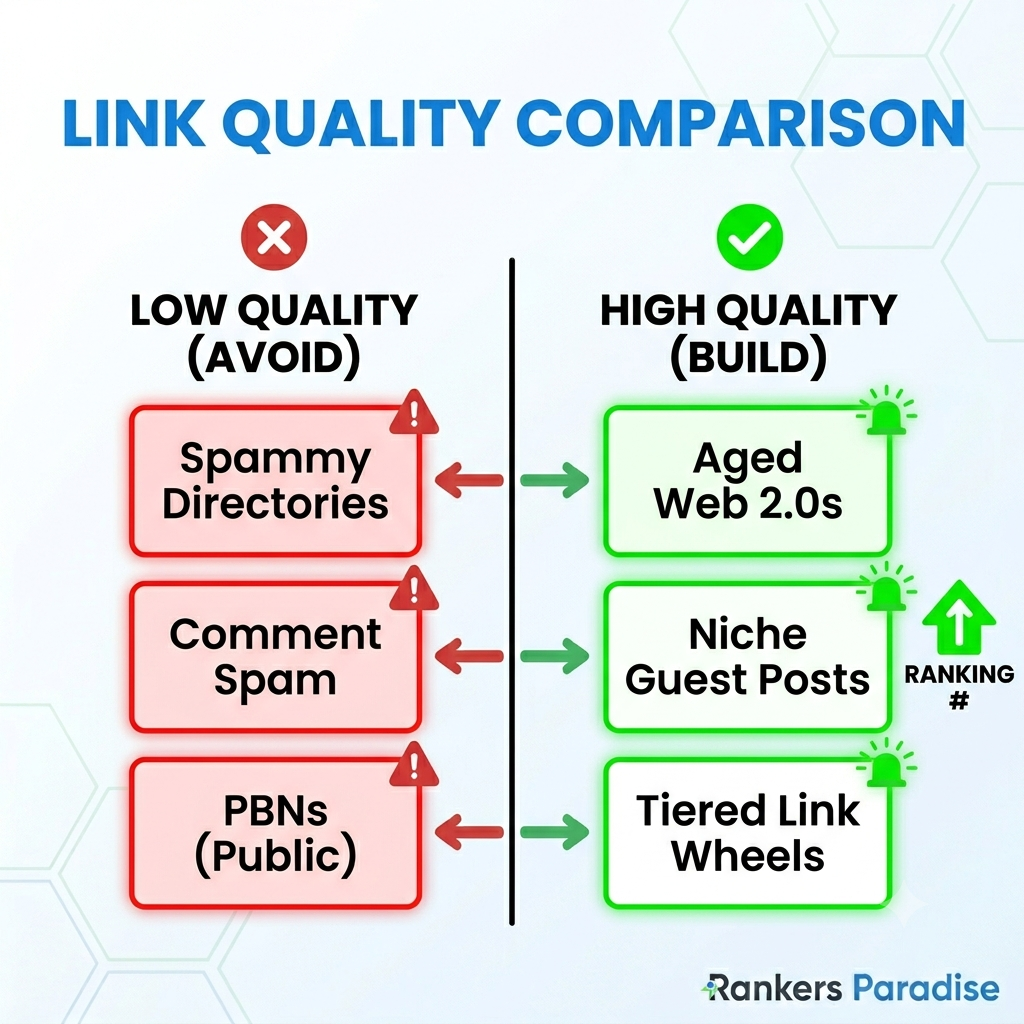
If you need 50 links to close the gap, you need a mix of high-authority, relevant placements. Here is how I structure my campaigns:
-
Web 2.0 Backlinks: These are great for building foundational authority. They are the bread and butter of a solid link profile.
-
Link Wheels: If you are in a tougher niche, a link wheel helps pass link juice efficiently between your properties.
-
Contextual Guest Posts: These are the “power” links that tell Google your site is relevant to your niche.
If you’re struggling to find high-quality placements, my SEO services are designed to help you hit those numbers safely and effectively.
Pro Tips for Ranking #1 in 2026
Calculations are only half the battle. If your content doesn’t match the search intent, all the links in the world won’t save you.
-
Check the “People Also Ask” boxes: These are gold for secondary keywords. Include these as H3s in your article to capture more traffic.
-
Optimize Your Anchor Text: Don’t just use your exact keyword over and over. Use a healthy mix of branded, generic, and long-tail anchor text to keep your profile looking natural.
-
Use Internal Links: I always link from my new articles back to my existing free backlink guides. It helps Google crawl your site and spreads link equity to your older pages.
To save time you can buy backlinks. To help with this process you can read our in-depth guide on the best places to buy backlinks and see our testing results.
Frequently Asked Questions
Does a higher Keyword Difficulty mean I need more links?
Yes, generally. But remember that content quality is a multiplier. If your content is better and more comprehensive than the competitor, you can often bridge a large backlink gap with fewer, higher-quality links.
How long does it take to see results?
If your links are indexed properly, you should start seeing movement in 4 to 8 weeks. If you haven’t seen anything by then, it’s time to re-evaluate your on-page SEO.
Can I do this all for free?
You can definitely find the data for free, but building high-quality links usually requires an investment of time or money. If you’re short on time, taking a look at how to use Web 2.0 sites is the best place to start learning how to scale your efforts.
Final Thoughts
SEO isn’t a guessing game. It’s a process of identifying the gap, planning your approach, and executing. Calculate your number, build the right links, and be consistent. If you follow this math, you won’t just be competing—you’ll be dominating.
Need help reaching your target number? Head over to Rankers Paradise and let’s get your site to the top.