
LAST UPDATE: 30th August 2026
⚡ How to Buy Backlinks Safely (Executive Summary)
To buy backlinks without risking a penalty or losing your rankings, ensure your strategy meets these core rules:
- Verify a 1,000+ monthly organic traffic floor on the target site.
- Ensure strict topical relevance (Entity matching).
- Limit exact-match anchor text to <10%.
- Prioritize editorial placements over automated network links.
- Monitor for indexation within 48–72 hours of publication.
Buying backlinks has always been one of the most debated topics in SEO. Some marketers believe any form of paid link acquisition is dangerous, while others understand that strategic link placements are often part of competing in competitive search results.
The reality is more complicated than simply deciding whether you should buy backlinks or avoid them completely.
The difference between a risky backlink strategy and a successful one comes down to quality, relevance, and intent. A website that purchases hundreds of low-quality links from unrelated domains is creating an unnatural footprint. A website that invests in carefully selected, relevant placements on trusted websites is approaching link building from a completely different angle.
This guide explains how to evaluate backlink opportunities in 2026, what signals separate valuable links from worthless ones, and how to avoid common mistakes that can waste your budget or weaken your search visibility.
You will learn how modern search systems evaluate links, why relevance and context matter more than simple authority metrics, how to analyse potential link placements, and what questions to ask before investing in any backlink campaign.
The goal is not to chase shortcuts. The goal is to understand what makes a backlink valuable and how to build a stronger, more natural link profile that supports long-term organic growth.
What You’ll Learn
- ✔️ How search engines evaluate backlinks in 2026
- ✔️ Which backlinks provide the most long-term value
- ✔️ How to spot low-quality backlink services
- ✔️ What quality backlinks typically cost
- ✔️ How to build a safer backlink profile
- ✔️ Real ranking examples from our own websites
- ✔️ A practical checklist before buying backlinks
Are Backlinks Still Important for SEO in 2026?
Backlinks continue to play an important role in SEO in 2026, but the way search engines evaluate them has changed significantly.
In the early days of SEO, websites could often improve rankings by simply building large numbers of links. Today, search engines have become much better at understanding the difference between meaningful recommendations and artificial link patterns.
A backlink from a relevant website with strong content, genuine visitors, and a clear connection to your industry can still provide valuable signals about trust, expertise, and authority. However, hundreds of unrelated links from low-quality sources are unlikely to provide the same benefit.
Modern SEO is no longer about collecting the highest number of backlinks. It is about earning or acquiring the right links from the right sources.
Search engines increasingly analyse factors such as:
– The relevance between the linking website and your content.
– The quality and usefulness of the page containing the link.
– Whether the link appears naturally within valuable content.
– The overall reputation and trustworthiness of the website.
– How your backlink profile compares with other websites competing for the same keywords.
This shift means successful link building requires more research and strategic thinking than ever before.
A smaller number of high-quality, relevant placements can often provide more long-term value than a large collection of low-quality links that provide little context or trust.
The future of backlink building is focused on quality, relevance, and creating genuine connections between websites that benefit users.
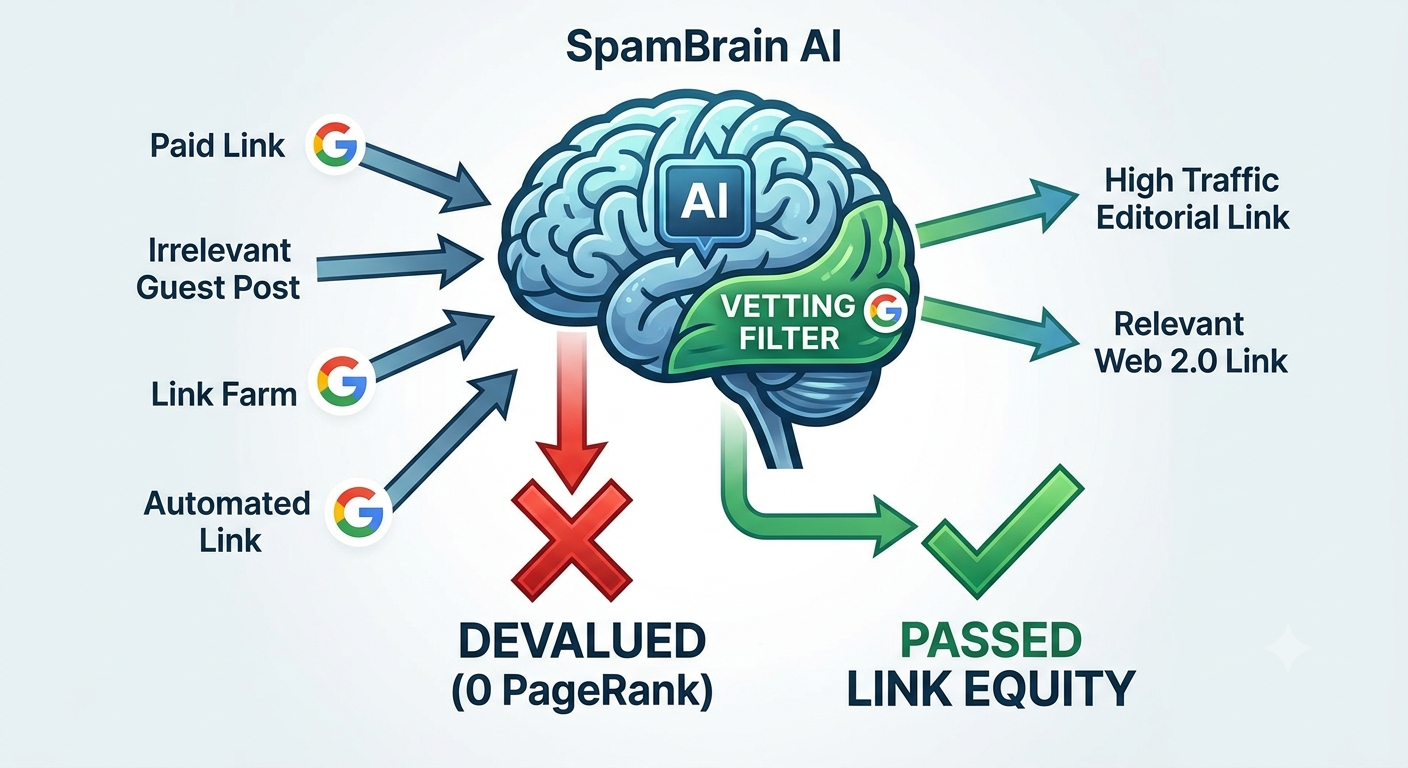
In this guide, I will break down how search algorithms actually treat paid links, how to avoid algorithmic devaluation from Google’s SpamBrain, and how to build a backlink profile that feeds both traditional SERPs and modern AI search engines.
The Honest Truth About Buying Backlinks (And How to Survive It)
Let’s address the elephant in the room: Google’s official guidelines state that buying links is against their spam policies. Yet, look at almost any ultra-competitive search result, and you’ll find sites ranking at the top that are actively investing in paid link building.
The dirty secret of SEO isn’t whether people buy links—it’s how they do it.
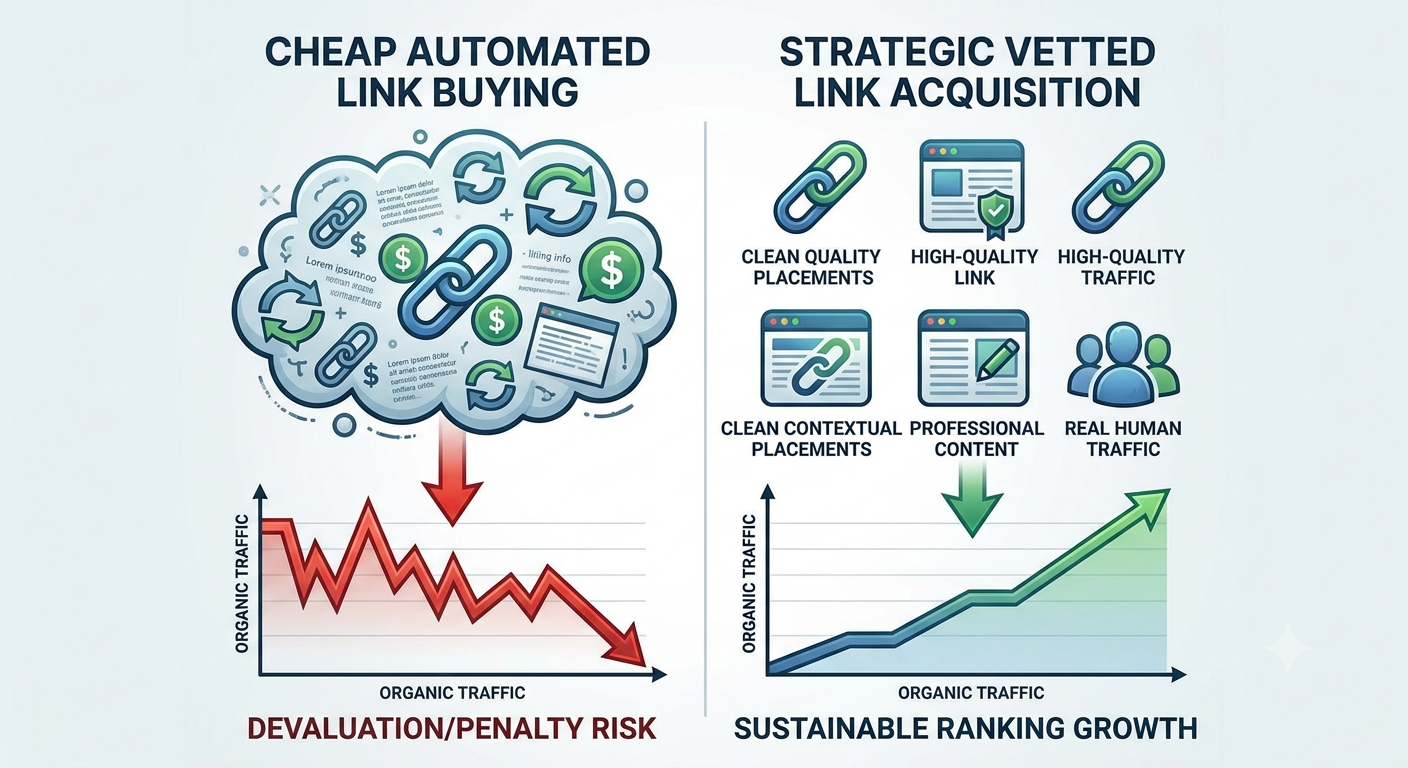
The Toxic Way (Instant Penalties): Buying $5 packages for 5,000 links on Fiverr, blasting exact-match keywords overnight, or using automated PBNs. This triggers Google’s SpamBrain algorithms and leads to lost rankings.
The Safe Way (Calculated Investment): Paying professionals or agencies to handle legitimate digital PR, manual blogger outreach, and high-relevance niche edits on real, traffic-earning websites.
If you choose to buy backlinks, your entire goal should be risk mitigation. A safe link looks natural, comes from a topically relevant site with real organic traffic, and uses a balanced anchor text profile. If a vendor can’t show you real traffic data or relies on automated junk, walk away—it’s your rankings on the line, not theirs.
What Google’s Official Policies Actually Say About Paid Links
Before you spend a single dollar on off-page SEO, you must understand how Google detects and evaluates links.
Google’s official Spam Policies for Google Web Search classify any link intended to manipulate PageRank or a site’s ranking in Google Search results as link spam. This includes:
-
Exchanging money for links or posts that contain links.
-
Exchanging goods or services in in-kind deals for links.
-
Excessive link exchanges (“Link to me and I’ll link to you”).
-
Using automated programs or services to create links to your site.
Why Some Backlinks Get Ignored Instead of Helping Rankings
One of the biggest misconceptions about backlinks is that every link pointing to a website automatically improves rankings.
This is no longer how search engines evaluate links.
Modern search algorithms are designed to identify patterns and determine whether a backlink represents a genuine recommendation or simply an attempt to manipulate rankings.
When a backlink comes from an irrelevant website, appears in low-quality content, or exists within a network created only for link building, search engines may choose to ignore the signal rather than allow it to influence rankings.
This is why a website with thousands of backlinks can sometimes struggle to compete against a website with a much smaller but more relevant link profile.
Common reasons a backlink may provide little or no value include:
– The linking website has no real audience or organic visibility.
– The content surrounding the link provides little useful information.
– The website links out to hundreds of unrelated industries.
– The backlink appears unnatural or forced.
– The placement exists only because money changed hands.
The goal of a successful backlink strategy is not simply increasing the number of referring domains. The goal is creating signals that search engines can associate with trust, relevance, and authority.
A quality backlink should make sense even if search engines did not exist. A real visitor should be able to click the link and find something useful.
Algorithmic Devaluation vs. Manual Penalties
Most site owners fear getting a Manual Action inside Google Search Console. While manual penalties still happen for blatant, large-scale link networks, they are actually rare today.
What happens 99% of the time is Algorithmic Devaluation.
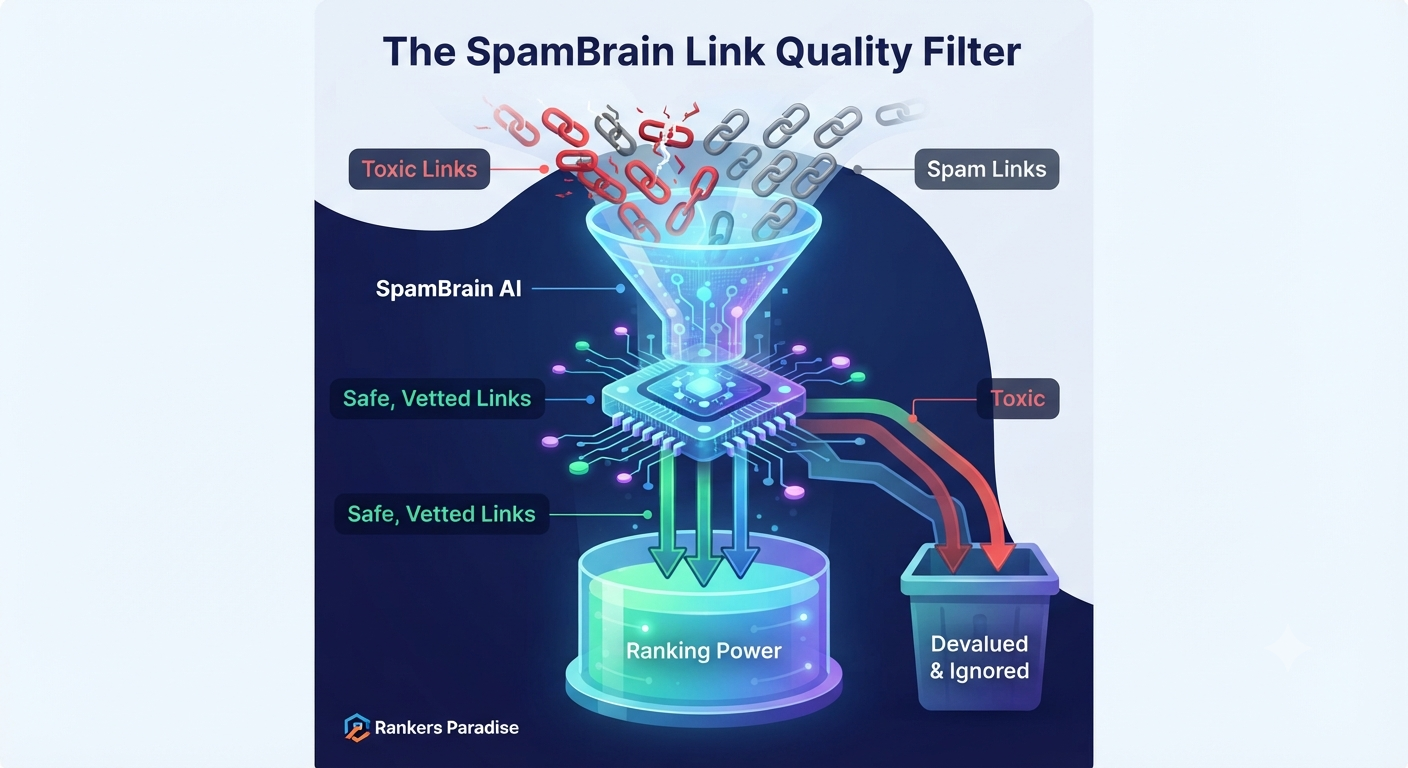
Google utilizes SpamBrain—an AI-based spam prevention system—to detect unnatural link patterns, toxic neighborhoods, and paid link farms. When SpamBrain flags a link, Google doesn’t necessarily slap your site with a manual penalty banner. Instead, it simply zeroes out the link equity.
[ Your Purchased Link ] ───► ( SpamBrain Vetting Filter ) ───► [ Result: Devalued (0 Weight Passed) ]
When you buy low-quality links, you aren’t just taking on risk—you are throwing money away on link signals that Google simply ignores.
The 5-Point Safe Link Vetting Framework
This is the practical framework we use at Rankers Paradise when evaluating potential backlinks. It focuses on the signals that matter most when deciding whether a link is likely to add genuine SEO value or create unnecessary risk.
Before you buy, you need to know who you are buying from. Read our guide: How to Audit a Link Building Agency Before Buying Backlinks.
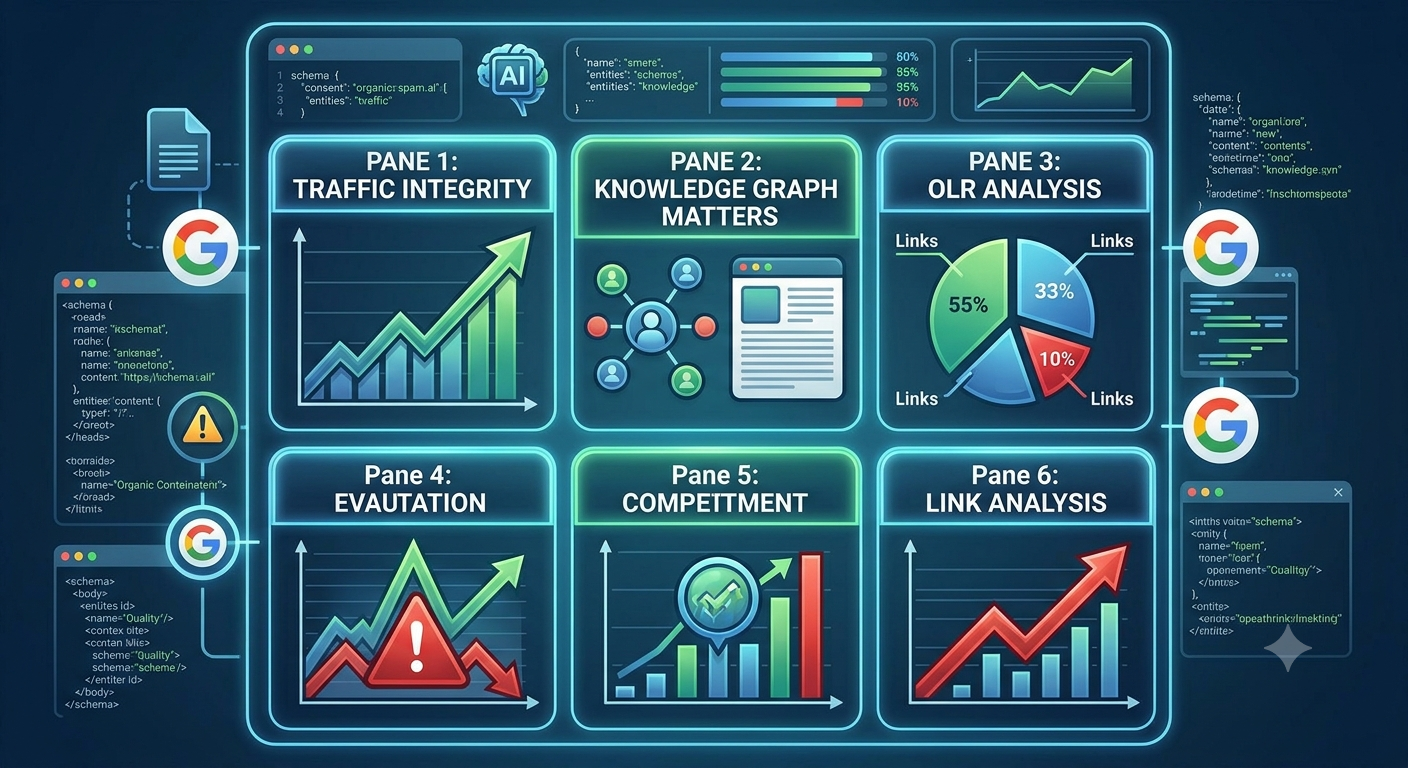
To ensure every link you purchase passes ranking power and stays safe under Google’s quality updates, you need to evaluate targets using a strict verification process.
This is the practical framework we use when evaluating links.
Here is the exact 5-point checklist I use before buying any backlink, I recommend checking…
1. Organic Traffic Floor & Trend
Never buy a backlink from a domain that has zero organic traffic. A domain with high third-party “Authority” metrics but no search traffic is almost always a dropped domain or a dead site created solely to sell links.
-
Requirement: The host site must receive verifiable organic traffic (minimum 1,000+ monthly visits).
-
Trend Check: Verify that the domain’s organic traffic graph is steady or growing. A sudden 50%+ drop over recent core updates indicates an algorithmically suppressed domain.
2. Knowledge Graph & Topical Relevance
Google uses entity mapping and Knowledge Graphs to determine if a link makes sense contextually. A backlink from an auto repair blog pointing to a crypto casino site is an immediate red flag.
-
Requirement: The linking domain and specific page must share topically relevant entities with your target URL.
3. Outbound Link Ratio (OLR)
Link farms publish dozens of sponsored articles every day with outward links to completely unrelated niches.
-
Requirement: Audit the last 10 published posts on the target domain. If every post contains a outbound contextual link to commercial sites, the domain’s link equity is completely diluted.
4. Natural Anchor Text Distribution
Over-optimizing exact match anchor text is the fastest way to get your page filtered out of top rankings. When you buy backlinks, your anchor text distribution must mimic a natural editorial link profile:
| Anchor Type | Target Ratio | Example |
| Brand / URL | 65% – 70% | Rankers Paradise, rankersparadise.com, https://... |
| Topical / LSI | 20% – 25% | SEO strategies, backlink guides, ranking tips |
| Exact Match | 5% – 10% | buy backlinks, web 2.0 backlinks |
5. Content Quality & Information Gain
Google’s Helpful Content and Quality Rater guidelines prioritize content that offers Information Gain—original research, unique perspectives, or clear value beyond generic AI-spun text. If the host page uses thin, repetitive text, Google will devalue the page and any outbound links on it.
The “Gotcha” Metrics: What Most SEOs Miss
When you move past the standard metrics like Domain Authority (DA) or DR, you enter the territory of elite link building. If you are serious about pushing your target page to the #1 spot, you need to account for these two advanced signals that are invisible to most link buyers.
1. Crawl Budget Impact (Quality Over Bloat)
Many SEOs chase links from massive, “authority” sites that host tens of thousands of pages. Here is the reality: Domain size is not always your friend.
Google’s crawler allocates a specific “crawl budget” to every site. If you buy a guest post on a bloated site with 10,000+ pages of thin content, your link is often buried in a massive, noisy crawl environment where the value is diluted.
-
The Pro Move: Seek out surgical links from smaller, highly-curated sites that focus on quality over volume. A link from a site with only 500 pages, all of which are topically relevant and indexed, often passes significantly more “link juice” than a link from a massive site that is struggling to manage its own crawl budget.
2. Entity Clustering (The Semantic Advantage)
Google doesn’t just see keywords; it sees entities. If you are building a link for the keyword “buy backlinks,” you aren’t just looking for a link from an SEO blog—you are looking for semantic context.
A backlink is worth 10x more if the surrounding paragraph contains semantic entities that match your target keyword’s entry in Google’s Knowledge Graph.
-
How to execute: When your content team writes your guest posts or niche edits, don’t just insert the target URL. Ensure the surrounding 50–100 words include related entities—such as “Search Generative Experience,” “algorithm updates,” “backlink indexation,” or “semantic search signals.”
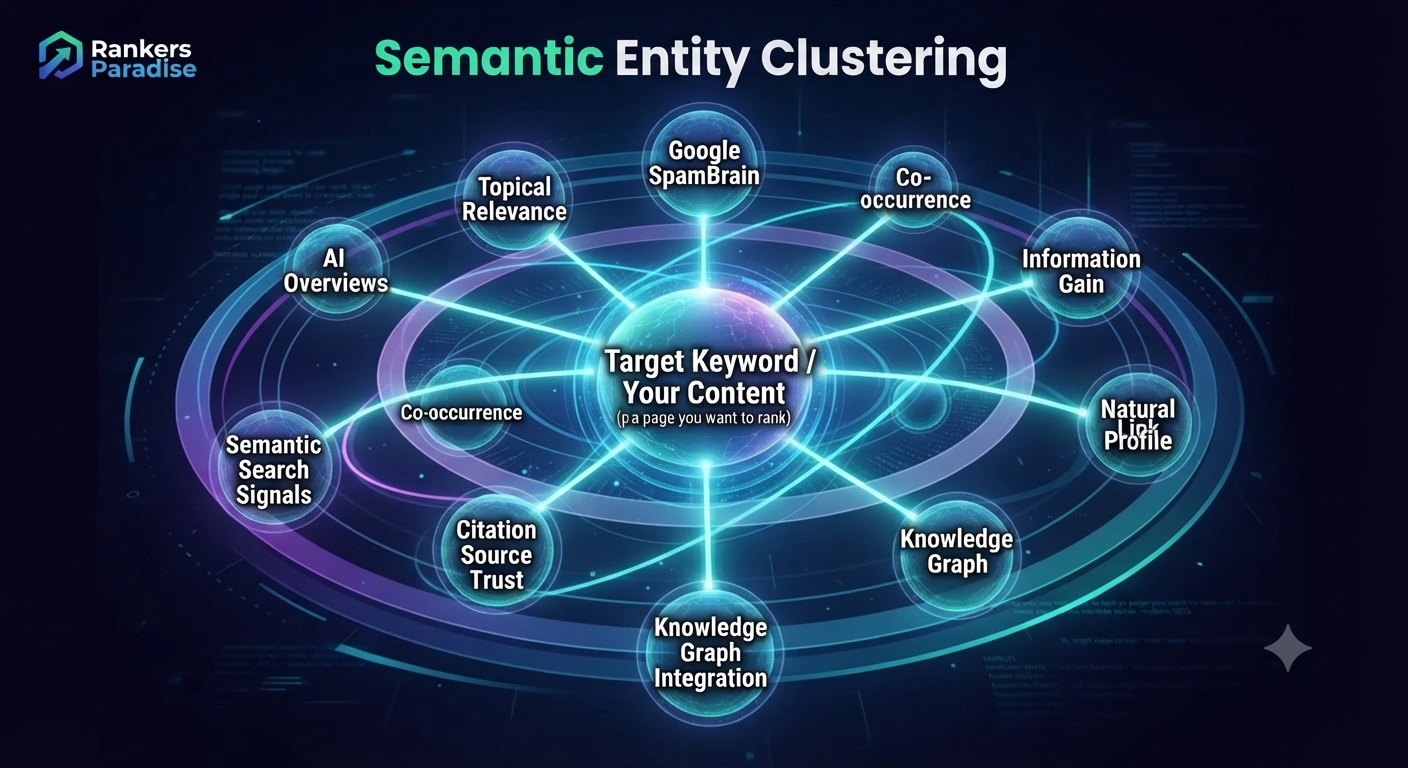
By clustering your link within relevant entity nodes, you signal to Google’s LLMs that your link is a legitimate, contextual citation rather than a paid-for insertion. This is the difference between a link that Google algorithmically ignores and a link that acts as a true ranking signal.
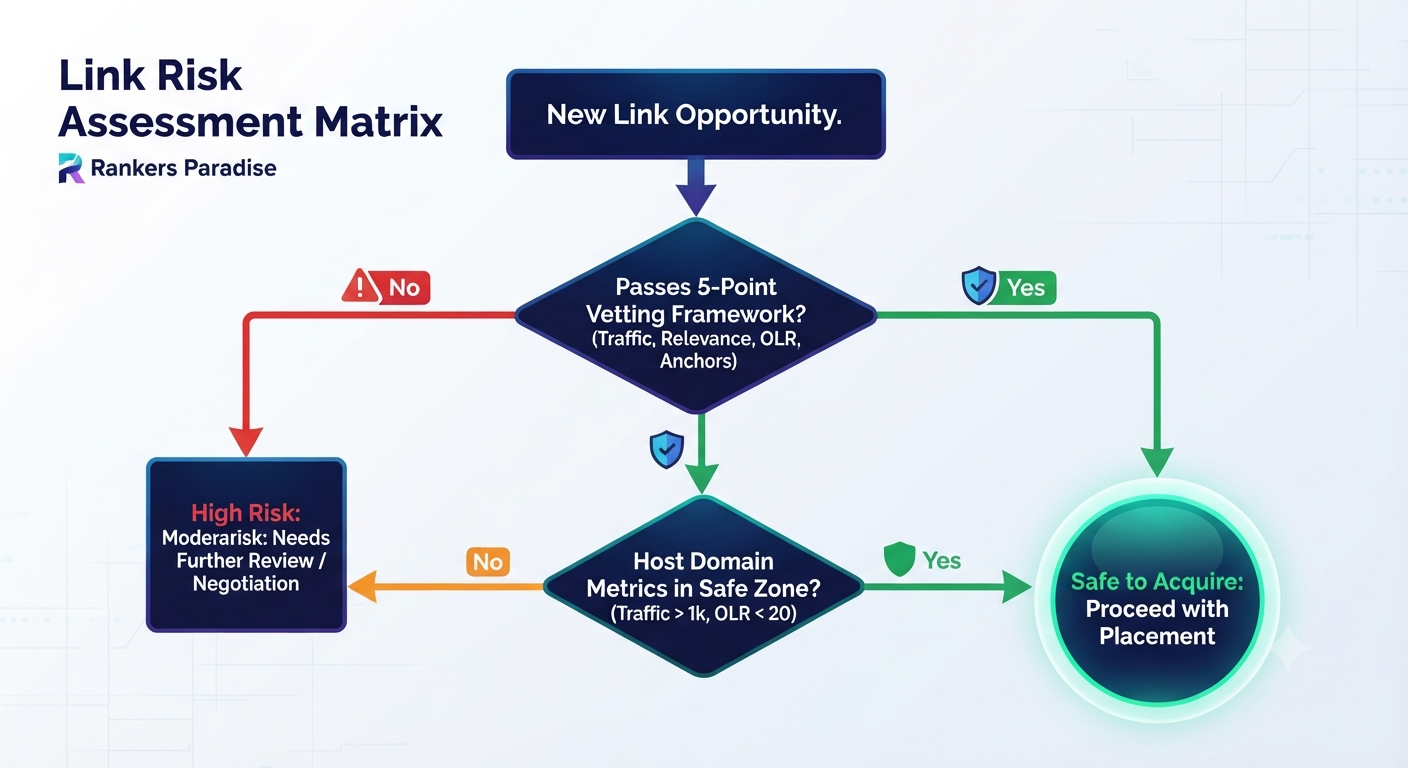
The Backlink Risk Assessment Matrix
Before you deploy capital on any link-building campaign, run the target URL through this quick audit. If a prospective link falls into the Warning Zone across two or more metrics, SpamBrain will likely devalue it before it ever passes equity.
| Metric | Safe Zone (Green Light) | Warning Zone (Red Flag) |
| Monthly Organic Traffic | > 1,000 visits (Steady or growing) | < 100 visits (Or sudden traffic cliff) |
| Outbound Link Ratio (OLR) | < 20 outgoing links on the host page | > 50 links (Blatant link farm / PBN) |
| Anchor Text Distribution | 70% Brand/Naked, <10% Exact Match | >30% Exact Match anchor text |
| Trust Flow / Authority | Real editorial traffic & index history | Bloated metrics with zero organic visibility |
| Indexation Status | Fully indexed by Google within 48 hours | Non-indexed or dropped from cache |
-
Pro Tip for Link Buyers: Bookmark this matrix. If a link vendor tries to sell you a placement on a domain sitting in the Warning Zone, pass on it—no matter how cheap the price is.
Ready to Implement Safe, Vetted Link Building?
Skip the guesswork and let our team handle your off-page SEO using our strict 5-Point Vetting Framework.
Special Offer: Get a 30% discount on our vetted, high-authority packages before October 31st using code UP2OCTOBER.
How Much Do Quality Backlinks Cost in 2026?
One of the most common questions website owners ask before starting a link-building campaign is how much they should expect to invest in quality backlinks.
The answer depends on several factors, including the authority of the website, the amount of organic traffic it receives, the difficulty of the niche, the quality of the content required, and whether the placement is earned through outreach or purchased through a partnership.
There is no universal price for a backlink. A link from a small but highly relevant industry website can sometimes provide more value than a link from a larger website with no topical connection.
Low-Cost Backlinks
Very inexpensive backlink packages often focus on quantity rather than quality. These services may include automated submissions, bulk directory links, unrelated websites, or placements created primarily to sell links.
Common warning signs include:
– Thousands of backlinks delivered within a short timeframe.
– No information about the websites where links will be placed.
– A focus only on metrics such as DA or DR.
– Guaranteed ranking promises.
– Identical content published across multiple websites.
While these packages may look attractive, they often provide little long-term SEO value.
Mid-Range Backlink Campaigns
Professional backlink campaigns usually involve more manual work, including:
– Researching relevant websites.
– Analysing organic traffic and link profiles.
– Creating unique content.
– Building relationships with publishers.
– Securing contextual placements.
These campaigns typically cost more because the process involves genuine research, content creation, and quality control.
Premium Backlink Acquisition
Higher-end campaigns may involve digital PR, industry publications, authoritative websites, and extensive content promotion.
These placements can be more expensive because they often involve:
– Established websites with strong reputations.
– Larger audiences.
– Expert-written content.
– Greater editorial review.
– Stronger brand visibility opportunities.
The most important factor is not the price of a backlink. It is the value behind the placement.
Before investing, evaluate:
– Is the website relevant to my audience?
– Does it receive genuine search traffic?
– Is the content useful and trustworthy?
– Would this link make sense without SEO being involved?
– Does the provider offer transparent reporting?
A quality backlink should be viewed as a long-term digital asset rather than simply a number added to a backlink report.
How AI Search & Future Updates Change Backlink Value
How Backlink Velocity Impacts AI Overviews
In traditional SEO, link velocity measured how fast you acquired links. In the era of AI Overviews, velocity is evaluated through the lens of *entity momentum*. When Google’s Large Language Models evaluate whether to cite your page as a primary source, they look at how rapidly authoritative nodes within your niche begin talking about your brand simultaneously. Acquisition spikes that look unnatural to SpamBrain will trigger algorithmic devaluation, whereas steady, contextually distributed link velocity signals genuine industry consensus.
Avoiding Algorithmic Devaluation through Semantic Context
Google’s AI-driven retrieval systems analyze the semantic distance between your target keyword and the surrounding text on the linking page. If you are buying backlinks, avoiding a penalty isn’t just about checking traffic metrics—it is about securing placement within dense semantic context. By surrounding your target URL with related entities like *algorithmic updates, semantic search signals, and natural link profiles*, you provide the machine learning models with the exact topical validation they require to pass maximum ranking equity.
The landscape is evolving fast. See how we are adapting: How to Pass Link Equity from Bought Backlinks to AI Overviews.
For the next frontier of search, check out: How to Buy Backlinks for Autonomous AI Agents.

Search is shifting rapidly toward generative AI answers, including Google AI Overviews and conversational search models. Understanding how these systems use backlinks will keep your strategy ahead of the curve.
┌─────────────────────────────────────────────────────────┐
│              MODERN BACKLINK VALUE MODEL                │
├──────────────────────────┬──────────────────────────────┤
│ Traditional SERPs        │ AI Overviews & LLMs          │
├──────────────────────────┼──────────────────────────────┤
│ • PageRank Transfer      │ • Entity Verification        │
│ • Anchor Text Relevance  │ • Citation Source Trust      │
│ • Crawl Indexation       │ • Topic Co-occurrence        │
└──────────────────────────┴──────────────────────────────┘
-
Entity Citations in AI Overviews: AI models do not just count links—they look for citations from authoritative nodes within a topic cluster. High-quality editorial placements make your site significantly more likely to be cited as a direct source in AI Overviews.
-
Contextual Co-occurrence: Future updates heavily weigh the words and terms surrounding your backlink (co-occurrence). Algorithms examine the whole paragraph to confirm your link provides legitimate context.
-
Indexation Integrity: If an automated link service places hundreds of links that Google never indexes, those links pass zero value. Safe link building focuses on placements that index naturally.
Safe Backlink Types & How to Multi-Tier Them
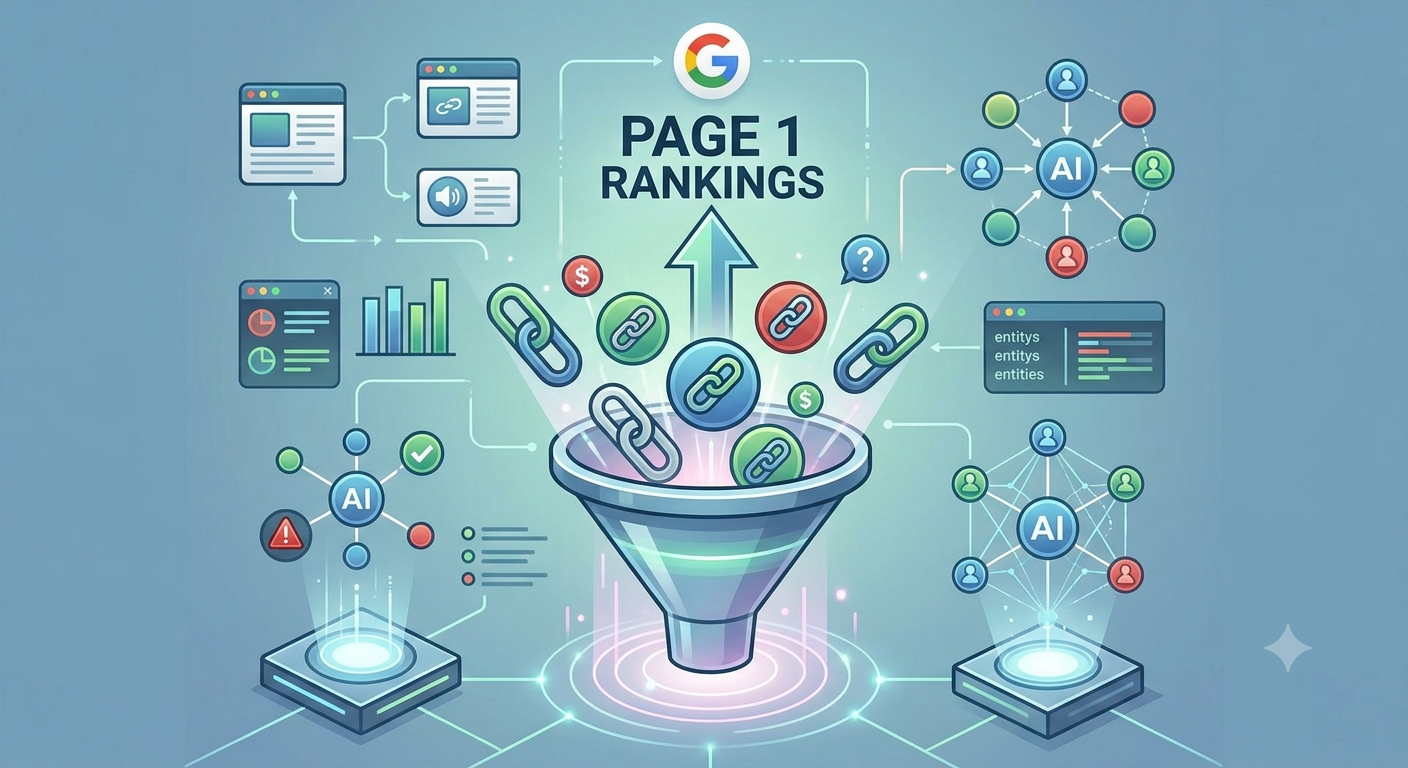
Different backlink types serve specific purposes in your overall off-page SEO strategy. Here is how to mix them safely:
1. High-Authority Guest Posts & Editorial Placements
-
Best For: Pushing primary target keywords from Page 2 to Page 1.
-
Safety Rating: Very High (when placed on real, traffic-backed sites).
-
Execution: Ensure the content is hand-crafted, offers genuine value to the host blog’s readers, and includes contextual links to trustworthy third-party sources alongside your link.
2. Web 2.0 & Tiered Networks
-
Best For: Layering link authority and building foundational brand buffers.
-
Safety Rating: High (when built with unique content and proper anchor ratios).
-
Execution: Using high-DA platforms gives you complete control over your content and anchors. Read our full guide on how to build web 2.0 backlinks step-by-step to power up your secondary tiers safely.
Web 2.0s are powerful when executed correctly. Learn our zero-risk method in: How to Use Web 2.0 Backlinks for Local SEO.
And if you’re worried about indexation, read: How to Index Web 2.0 Backlinks Without Paid Indexers.
3. Niche Edit Contextual Insertions
-
Best For: Getting links on aged, existing pages that already carry indexation history and organic traffic.
-
Safety Rating: High.
-
Execution: Ensure the existing article is contextually aligned with your URL and that the link is inserted naturally inside the body text.
How to Choose a Backlink Provider (Without Wasting Your Money)
Finding backlinks is relatively easy. Finding a provider that consistently delivers quality placements is much more difficult.
With thousands of SEO companies, freelancers, and marketplaces offering backlink services, it can be challenging to separate experienced professionals from businesses focused purely on selling large quantities of links.
Rather than comparing providers based only on price or third-party metrics, take time to understand how they source websites, review quality, and report their work.
A reputable backlink provider should be willing to explain their process and answer questions about the websites they use.
When comparing backlink services, look for providers that offer:
Relevant Website Selection
Backlinks should come from websites that are genuinely related to your industry, products, or services. Topical relevance helps search engines understand why a link exists and provides a better experience for users.
Real Organic Traffic
Ask whether the websites receive genuine organic traffic from search engines. A website with consistent visibility and active visitors is generally a stronger choice than one relying solely on inflated authority metrics.
Manual Quality Checks
Quality providers review each placement before it goes live. This includes checking content quality, relevance, indexation, outbound links, and the overall reputation of the website.
Unique Content
Every placement should include original, useful content written for real readers. Thin, duplicated, or automatically generated articles reduce the value of both the content and the backlink.
Transparent Reporting
A professional provider should clearly show where backlinks have been placed and provide enough information for you to review the work yourself.
Just as importantly, know what to avoid.
Be cautious if a provider:
– Guarantees first-page rankings.
– Promises thousands of backlinks within days.
– Refuses to show sample placements.
– Focuses only on DA, DR, or similar third-party metrics.
– Uses the same list of websites for every customer.
– Cannot explain how websites are selected.
The best backlink providers focus on long-term results rather than quick wins. Their goal is to build a natural backlink profile that supports sustainable growth instead of chasing short-term ranking spikes.
The Pre-Purchase Link Buyer’s Decision Checklist
Bookmark this checklist and run through it before buying any link package:
-
[ ] Traffic Verified: Target domain receives 1,000+ monthly organic visitors.
-
[ ] No Penalty History: Domain traffic graph shows no severe algorithmic drops over the last 12 months.
-
[ ] Topical Match: Content aligns with your site’s niche or industry.
-
[ ] Clean Outbound Profile: Site is not a blatant link farm selling dozens of outbound links daily.
-
[ ] Safe Anchor Text: Planned anchor text fits into a 70/20/10 natural anchor distribution model.
-
[ ] Indexable Page: Host page is indexed (or indexable) by Google search crawlers.
-
[ ] Value-Add Content: Article provides real readability and context.
If you decide to outsource your link building, the same evaluation process should still apply. Any provider you work with should be transparent about the websites they use, the quality checks they perform, and the reporting they provide.
If you’re looking for professionally managed campaigns, we’ve applied the same quality principles discussed throughout this guide to the services below.
- The Omni-Channel Dominance Blueprint: Multilayered Link Building Campaign – Backlink inserts on established/indexed websites. These are inserts into niche websites that have traffic and the pages/posts the backlink is inserted into are indexed (speeds up the ranking process).
- Comprehensive Multi-Tier Authority Link Building Package – Niche relevant link inserts onto indexed websites with real visitors/traffic from the SERPs.
- High DA Guest Posting Campaign with 4k+ Organic Traffic Backlinks – Permanent contextual guest posts on websites with at least 4k organic monthly traffic. All niche content hand written for maximum effect and indexability.
The 4 Questions You Must Ask Before Buying Backlinks
Before you hand over your credit card to any link-building provider, force them to answer these four questions. If they dodge them, close the tab:
-
“Can you show me a live example of a site you’ve recently ranked using this exact method?”
-
Why it matters: Legitimate providers are proud of their case studies and transparent about what works right now. Scammers will hide behind “NDA” excuses or point to generic, dead domains.
-
-
“Do these sites have real organic traffic from Google?”
-
Why it matters: A link from a site with zero organic traffic is practically worthless (and often a footprint-heavy PBN shell). Look for sites pulling in actual search traffic, even if it’s modest.
-
-
“How do you handle anchor text distribution?”
-
Why it matters: If a provider lets you use 100% exact-match anchor text (e.g., linking the phrase “buy best running shoes” 50 times), they are steering your site toward a manual penalty. They should advocate for a natural mix of brand, URL, and partial-match keywords.
-
-
“Is the content written by humans, and is it unique?”
-
Why it matters: Low-quality, AI-spun garbage articles pasted onto a blog scream “paid link” to Google’s algorithms. The surrounding content needs to be genuinely readable and contextually relevant.
-
Step-by-Step: How to Execute Your First Safe Link Campaign
-
Audit Your Current Link Profile: Check your existing domain anchors using tools like Ahrefs, Semrush, or Search Console to ensure your anchor ratio isn’t already over-optimized.
-
Select Your Target Keywords & URLs: Pick 1–2 target URLs that are already properly optimized on-page with H1, Meta, and quality content.
-
Map Out Your Anchors: Prepare your anchor list using mostly Brand, Naked URL, and LSI terms, keeping exact match anchors under 10%.
-
Choose Vetted Placements: Select contextual guest posts, niche edits, or layered tier campaigns that pass all 5 criteria in our Link Vetting Framework.
-
Monitor Indexation & Ranking Progress: Track your keyword rankings and confirm that new link placements are indexed by Google bot.
When you follow this framework, you eliminate guesswork, protect your site from algorithmic devaluation, and ensure every backlink you acquire pushes your site higher in Google SERPs.
Managing your anchors is critical for safety. Follow our exact blueprint: How to Choose Anchor Text When Buying Backlinks (Safe Ratio Blueprint).
New site? Don’t panic. Read: Is It Safe to Buy Backlinks for a New Website? (The Honest Truth).
Real-World Results: Why Experience Matters
There is no shortage of websites offering advice about backlinks, but reading about SEO and consistently achieving strong search rankings are two very different things.
One of the best ways to evaluate any SEO strategy is to look at real examples.
Throughout our own projects, we regularly test content strategies, internal linking structures, backlink acquisition methods, and on-page improvements across websites operating in competitive industries. These real-world campaigns allow us to see what works, what stops working, and how search algorithms continue to evolve.
Where possible, we believe in sharing our own results rather than making claims without evidence. Screenshots showing ranking improvements, organic traffic growth, or keyword movement provide far more value than unsupported promises.
When reviewing any SEO provider, ask yourself a simple question:
Can they demonstrate that their own websites rank competitively for the services they offer?
While every website, niche, and level of competition is different, genuine examples help demonstrate practical experience and provide confidence that the strategies being discussed have been tested outside of theory.
SEO is not a one-time task. Rankings change, algorithms evolve, and competitors continue to improve. The most effective link-building strategies are those that are continually refined through testing, measurement, and long-term observation rather than relying on outdated techniques or one-size-fits-all solutions.
Example Results From Our Own SEO Campaigns
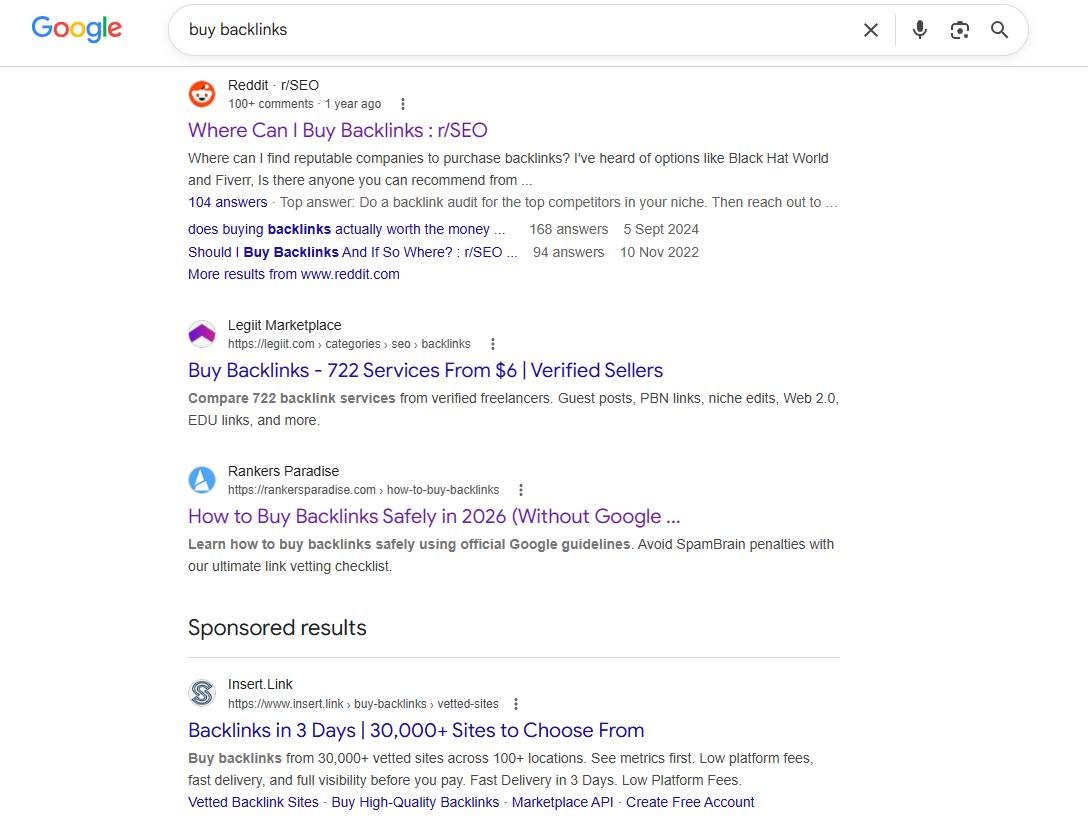
Keyword:
buy backlinks
Result:
Page 1 ranking
Notes:
Achieved using high-quality content, topical relevance, internal linking, and carefully selected backlink acquisition.
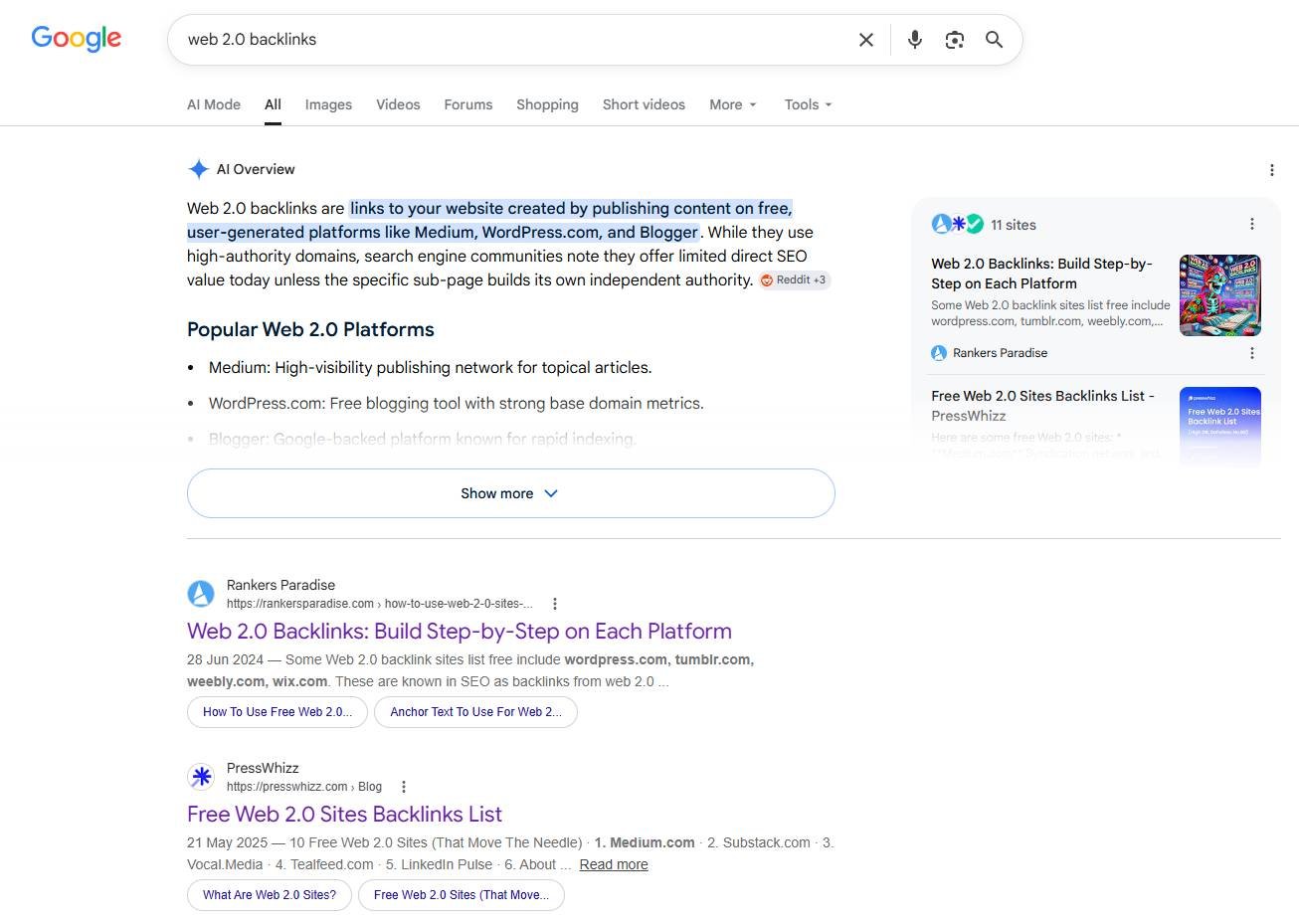
Keyword:
web 2.0 backlinks
Result:
#1 Ranking
Notes:
Achieved using consistent web 2.0 backlinks, only posting unique quality content onto the web 2 platforms.
There’s a lot more keywords that we have #1 on Google. Too many to run through here. We have given you those to give you an idea of what we can do here at Rankers Paradise.
Important: Every website is different. Results depend on factors such as competition, website age, content quality, technical SEO, and the strength of existing backlinks. The examples shown here demonstrate what has been achieved on our own projects and should not be interpreted as guaranteed outcomes.
Mistakes to Avoid When Buying Backlinks
Examples:
❌ Buying solely based on DA/DR
❌ Buying thousands of links overnight
❌ Using only exact-match anchor text
❌ Ignoring topical relevance
❌ Not checking organic traffic
❌ Buying links to weak pages
❌ Forgetting internal linking
❌ Expecting instant rankings
❌ Never monitoring results
❌ Choosing the cheapest provider
Frequently Asked Questions About Buying Backlinks
Is it safe to buy backlinks?
It depends entirely on the quality of the websites, the relevance of the placement, and how the links are acquired. Low-quality, automated link packages carry significantly more risk than carefully selected editorial placements on relevant websites. Focusing on quality, relevance, and natural link growth is generally a more sustainable approach than chasing large volumes of inexpensive links.
How long does it take for backlinks to improve rankings?
There is no fixed timeline. Some websites begin seeing improvements within a few weeks after new backlinks are crawled and indexed, while more competitive industries may take several months before meaningful ranking changes occur. Results also depend on content quality, technical SEO, competition, and the strength of your existing backlink profile.
How many backlinks does a website need?
There is no ideal number. A website competing in a local market may require only a handful of strong, relevant backlinks, while highly competitive industries may require a much larger and more authoritative backlink profile. Quality is almost always more important than quantity.
What are the safest types of backlinks?
Editorial links, high-quality guest posts, relevant niche edits, digital PR mentions, and naturally earned citations are generally considered among the strongest backlink types because they are placed within useful content on relevant websites.
Are expensive backlinks always better?
Not necessarily. Price alone does not determine quality. A backlink should always be evaluated based on the relevance of the website, the quality of the content, organic traffic, editorial standards, and how naturally the link fits within the page.
Can buying backlinks hurt my website?
Poor-quality backlink campaigns can waste money and, in some cases, contribute to an unnatural backlink profile. This is why it is important to carefully evaluate every placement rather than focusing only on authority metrics or the number of links being delivered.
Should new websites build backlinks immediately?
New websites should first establish a strong technical foundation and publish useful, original content before actively building backlinks. Once a website has valuable pages worth linking to, a gradual and relevant backlink strategy can help improve visibility and authority.
What metrics should I check before buying a backlink?
Instead of relying on a single metric, review several factors including:
- Organic traffic
- Topical relevance
- Content quality
- Indexation
- Outbound link profile
- Website reputation
- Recent traffic trends
- Overall user experience
Looking at multiple quality signals provides a much better picture than relying on DA, DR, or any single third-party metric.