
You have a website. It looks good, everything works, and you have spent time getting it exactly how you want it.
There is just one problem.
Nobody is visiting it.
You check your website traffic, and there is hardly anything happening. You search Google for your main keywords, and your website is nowhere to be found.
Sound familiar?
This is where the best SEO services can help, but you need to understand what you are paying for before spending your money.
There are hundreds of companies selling search engine optimization services. Some concentrate on content, others on technical SEO, and plenty offer backlink packages promising better Google rankings.
Which ones should you actually buy?
That depends on your website, your competition, and what is stopping you from getting traffic in the first place.
Here at Rankers Paradise, I prefer to look at SEO from a practical point of view. Find out what needs improving, choose the right strategy, carry out the work, and track what happens.
There is no point spending money on services your website doesn’t need.
In this guide, I am going to explain the different SEO services available, how they work, what they cost, and which ones are worth considering if your main goal is to get more people visiting your website from Google.
I will also cover four different link building methods: Web 2.0 backlinks, guest posts, niche edits, and backlink packages.
By the end, you should have a much better idea of where to spend your SEO budget.
What Are the Best SEO Services for Getting Website Traffic?
The best SEO services are the ones that address the actual reasons your website isn’t ranking.
Simple as that.
A brand-new website with hardly any content needs a different strategy from an established website that already ranks on page two of Google.
You cannot expect the same SEO package to work equally well for both.
Here are the main services worth looking at.
| SEO Service | What It Does | Best For |
|---|---|---|
| Keyword research | Finds search terms potential customers use | New and established websites |
| On-page SEO | Improves pages so they better match searches | Websites with existing content |
| Technical SEO | Fixes crawling, indexing and website problems | Sites with technical issues |
| Content creation | Builds useful pages targeting relevant searches | Websites needing more organic visibility |
| Web 2.0 backlinks | Creates supporting content on publishing platforms | Supplementary content and referral opportunities |
| Guest posting | Publishes content on relevant third-party websites | Exposure, referral traffic and brand awareness |
| Niche edits | Adds relevant links to existing articles | Contextual referral traffic and visibility |
| Link building services | Helps acquire links from other websites | Sites needing stronger online visibility |
| Monthly SEO packages | Combines several SEO activities over time | Businesses wanting ongoing SEO work |
You do not necessarily need all of these.
In fact, buying everything at once without knowing what your website needs is a good way to waste money.
Let’s go through the options.
1. Keyword Research Services: Find Out What People Actually Search For
Before worrying about backlinks, you need to know which keywords you want your website to rank for.
This is where many website owners go wrong.
They choose a keyword because it sounds good rather than checking whether people search for it.
Let’s say you sell handmade wooden furniture.
You might want to rank for “furniture”, but think about the competition.
You are going up against enormous retailers, established brands, and websites with years of history.
Now consider something more specific, such as “handmade oak dining tables”.
That search is much more relevant to what you sell.
The person typing it into Google could also be much closer to making a purchase.
This is why keyword research matters.
You need to find keywords that have:
- Relevant search demand.
- The right search intent.
- Competition your website has a realistic chance of challenging.
- Potential to bring customers rather than random visitors.
I would rather have 100 visitors interested in buying something than 1,000 visitors who have no interest in the website’s products.
My advice: Start with keywords directly related to your products or services. Build up your rankings for specific searches before attempting the really competitive terms.
Keyword research should come before you spend money on link building.
Otherwise, you could end up building links to a page targeting the wrong keyword.
2. On-Page SEO Services: Make Your Existing Pages Worth Ranking
You would be surprised how many websites have decent products or services but poorly optimized pages.
The page title is wrong.
The content barely explains what is being sold.
There are no useful headings.
Important pages are buried deep inside the website.
And sometimes the target keyword isn’t mentioned anywhere meaningful.
Before buying more backlinks, I would look at these problems.
Good on-page SEO includes improving your title tags, page headings, internal links, content, image descriptions, and how well each page answers the searcher’s question.
For example, if you sell garden furniture, a product category page should clearly explain what types of garden furniture you offer.
It should not contain three sentences of generic text followed by hundreds of products.
Give Google and your visitors something useful to work with.
Internal linking is something you can improve yourself
Internal links help visitors find related information and help search engines discover other pages.
You are reading an example of that right now.
This article introduces different SEO services and links to more detailed guides about each method.
That makes sense for the reader.
It also creates a useful connection between related pages.
You don’t need to pay an SEO company just to add a few relevant internal links.
If you have a WordPress website, you can do much of this yourself.
The important thing is to link naturally to pages that provide additional information.
3. Technical SEO Services: Fix Problems That Stop Google Finding Your Website
There is little point spending hundreds on backlinks if Google cannot properly access your pages.
Technical SEO deals with the problems happening behind the scenes.
These can include:
- Important pages accidentally marked
noindex. - Broken internal links.
- Incorrect canonical tags.
- Pages blocked from crawling.
- Slow-loading website templates.
- Poor mobile usability.
- Duplicate URLs and confusing site structures.
Not every technical issue prevents a page from ranking, but some can seriously affect its visibility.
Start by setting up Google Search Console.
It’s free.
You can use it to check whether Google has indexed your important pages, review search performance, and investigate technical problems.
You should also read Google’s SEO Starter Guide.
It explains the fundamentals without trying to sell you anything.
Do you need to pay for technical SEO?
Not always.
If your website is small and built on a decent platform, you might only need to fix a handful of problems.
However, if you have thousands of pages, indexing problems, or a complicated ecommerce website, a technical SEO specialist could be money well spent.
Get the basics working before investing heavily in promotion.
4. Web 2.0 Backlinks: An SEO Service Worth Understanding
Now we get into the link building side of things.
If you have read my other Rankers Paradise articles, you will know I have spent a lot of time writing about Web 2.0 backlinks and testing different linking arrangements.
Web 2.0 backlinks are links created from content published on platforms that allow users to create their own websites, blogs, or articles.
The idea is straightforward.
You publish useful supporting content on another platform and include a relevant link to your main website where appropriate.
These platforms can also help you reach people who might not otherwise discover your website.
But there is an important difference between publishing genuinely useful content and creating hundreds of empty pages just to place links.
Google’s systems can ignore manipulative links, and large-scale link schemes can create problems.
Why do people use Web 2.0 backlinks?
There are several reasons.
You can create supporting articles around related subjects, develop additional places where people can discover your content, and experiment with different content formats.
They can also be relatively inexpensive to create.
However, a link from a free publishing platform does not automatically carry significant SEO value.
A brand-new page with no readers, no visibility, and nothing useful on it is unlikely to achieve much.
I would much rather have a handful of decent supporting articles than a mountain of empty pages.
My Web 2.0 ranking experiments
I have documented Web 2.0 experiments on Rankers Paradise, including link wheels and the rankings observed during those tests.
One of the older experiments involved publishing a page, building a small Web 2.0 link wheel, and recording the rankings over several weeks.
The original article includes screenshots and dated ranking updates, so you can see the results rather than just read a claim about them.
Those are historical results, not proof that the same approach will work for every keyword today.
You can read the full guide here:
Web 2.0 backlinks: How to use Web 2.0 sites for backlinks
I also explain the link wheel method in my Web 2.0 link wheel tutorial.
If you are new to link building, I recommend understanding the method before buying any package.
5. Buy Backlinks: What Should You Look For Before Spending Money?
This is probably one of the most confusing areas of SEO for beginners.
Search Google for backlink services and you will find all sorts of offers.
Some promise hundreds of links.
Others promise links from high-authority websites.
You will also find guest posts, niche edits, profile links, directory submissions, and plenty of other packages.
Prices vary enormously.
So which ones are worth buying?
First, understand the risks.
Google considers buying links for the purpose of manipulating rankings to be link spam. Paid advertising and sponsored placements should use appropriate link attributes such as rel="sponsored" or rel="nofollow".
You can read the rules in Google’s official spam policies.
That doesn’t mean every paid placement is worthless. Advertising, sponsorships, and editorial exposure can bring real visitors and business opportunities.
But buying a link does not guarantee a ranking improvement.
What I would check before buying backlinks
1. Is the website relevant?
A link from a website covering your industry is generally more useful to real readers than a random link from an unrelated website.
If you sell fishing equipment, a mention on a fishing publication makes sense.
A link from an unrelated article about kitchen appliances probably doesn’t.
2. Does the website have real visitors?
Look beyond the domain authority number.
Third-party authority metrics can be useful for comparing websites, but they are not Google ranking scores.
I would want to know whether the website has relevant content, genuine visibility, and signs of a real audience.
3. Where will the link appear?
A link inside a useful article is different from a link hidden in a footer or buried on a page containing hundreds of unrelated outbound links.
Context matters.
4. What content surrounds the link?
Does the article help the reader?
Would somebody genuinely click through to your website?
If the answer is no, question why the link is being placed there.
5. What exactly are you paying for?
Find out whether the service includes content writing, publication, reporting, and any placement conditions.
Do not buy something simply because the sales page says “high authority”.
I have put together a more detailed guide explaining the different options and what to check.
Buy backlinks: A practical guide to buying backlinks for your website
Read that before choosing a backlink package.
6. Niche Edit Services: Links Added to Existing Articles
Niche edits are another type of link placement you will come across when researching SEO services.
Instead of creating an entirely new guest post, a niche edit involves adding a link to an article that already exists.
For example, imagine somebody published a useful article about maintaining a garden pond two years ago.
You operate a website selling pond filters.
If the publisher updates that article and adds a relevant reference to your guide about choosing pond filters, readers may find that link useful.
That is the basic idea behind a niche edit.
Why are niche edits popular?
The main attraction is that the content already exists.
It might have been indexed for years.
It might already receive traffic.
It might even rank for relevant keywords.
But don’t assume an older article is automatically a valuable placement.
Some existing articles have no traffic at all.
Others have been filled with unrelated links.
And some websites sell so many placements that their articles stop being useful.
Niche edits versus new guest posts
A niche edit can make sense when the existing article is highly relevant and the added link genuinely improves it.
A guest post gives you more control over the subject of a newly written article.
Neither is automatically better.
The quality of the website, the content, and the audience matter more than the name of the service.
If you are comparing placements, take a look at our guide to buy niche edits.
It will help you understand what to consider before ordering.
Remember that paid niche edit placements intended to pass ranking credit can violate Google’s link spam rules. Properly qualified sponsorships and genuine editorial references are different arrangements.
7. Guest Posting Services: Get Your Website in Front of Another Audience
Guest posting is one of the more straightforward SEO services to understand.
You write an article for another website.
The website publishes it.
You gain exposure to that website’s audience, and the article may include a relevant reference to your business.
That’s the basic process.
A good guest post should be worth reading even if it contains no backlink.
Think about that for a moment.
If the only purpose of the article is to insert a link, it probably isn’t a particularly good article.
What makes a good guest post?
Let’s say you run a business selling home gym equipment.
You arrange to publish an article on a fitness website.
A useful article might explain how to build a home gym in a small room.
It could cover equipment choices, space requirements, and practical buying advice.
If readers want more information, they might visit your website.
That is a sensible promotional opportunity.
Now imagine the same article is published on an unrelated website with no fitness audience.
Even if the website has an impressive-looking authority score, the placement might not bring a single interested visitor.
Should you buy guest posts?
You can pay for sponsored editorial placements, but make sure you understand the publication’s standards, audience, and link policies.
Google expects paid links to be appropriately qualified.
I would focus on relevance and genuine readership rather than chasing a particular authority metric.
You can find more information about the process in our guide to buy guest posts.
For businesses trying to build recognition in a particular industry, relevant guest content can be a useful part of a wider marketing strategy.
8. Best Link Building Services: Which One Should You Choose?
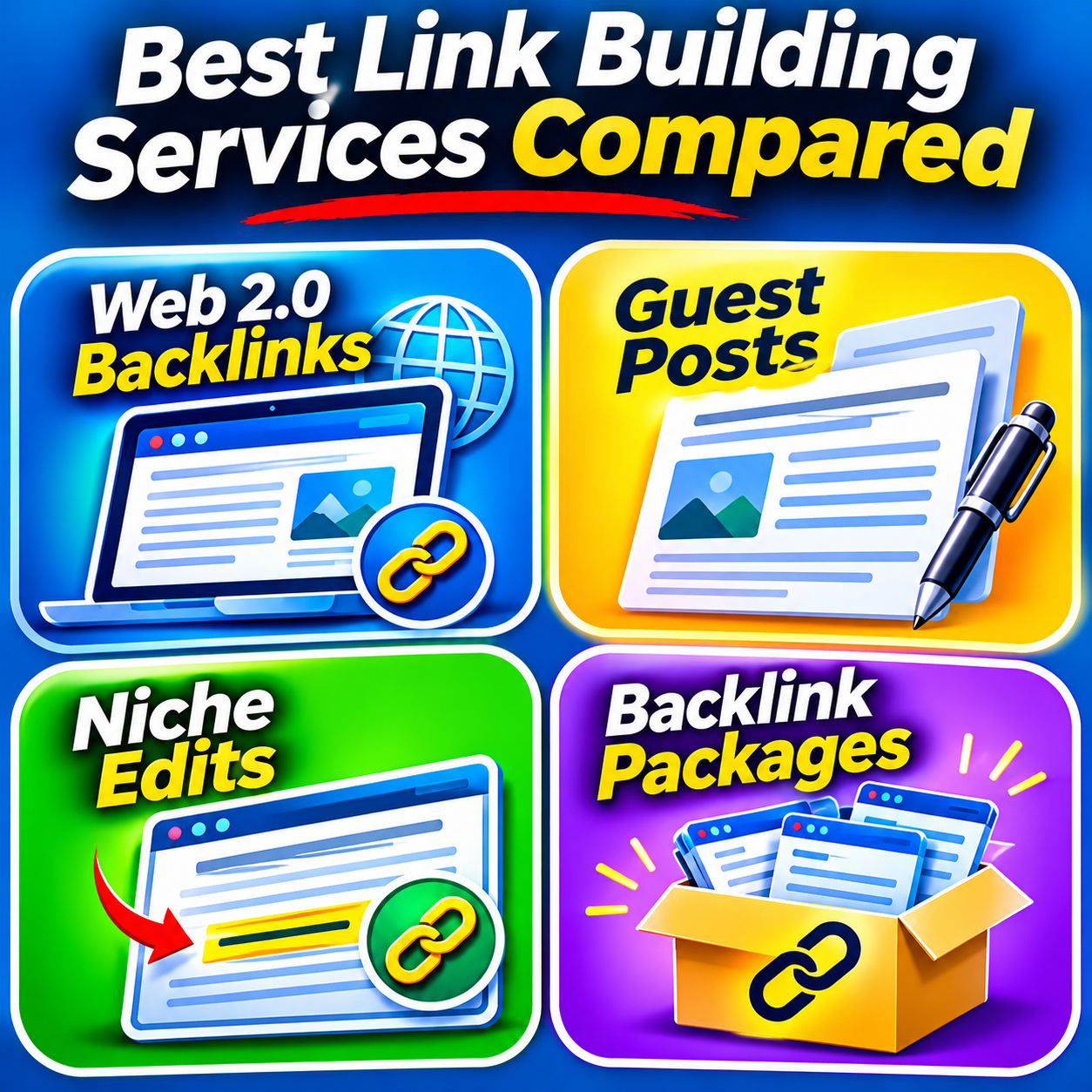
We have now covered four different backlink-related services.
But which one should you use?
Here is how I would compare them.
| Service | Main Advantage | What to Watch Out For |
|---|---|---|
| Web 2.0 backlinks | Supporting content on publishing platforms | Thin pages and artificial link networks |
| Backlink packages | Convenient way to arrange multiple link placements | Irrelevant sites and manipulative link schemes |
| Niche edits | Placement within existing relevant content | Pages overloaded with paid links |
| Guest posts | New content and access to another audience | Low-quality publishers and irrelevant placements |
The biggest mistake is choosing a service purely by the number of links.
One hundred links sounds better than five.
But numbers alone tell you very little.
You need to look at where those links are coming from, whether they make sense, and whether the work is likely to provide genuine value.
A website with strong content, sound technical SEO, and relevant editorial mentions is in a better position than one relying entirely on large quantities of low-quality backlinks.
That is the approach I would concentrate on.
9. Monthly SEO Services: Better Than Buying One Package?
This is another question worth asking.
Should you buy a one-off SEO service or pay for ongoing monthly SEO?
It depends on how much work your website needs.
A one-off service can be useful when you have a specific task to complete.
Perhaps you need a technical audit, keyword research, or a particular piece of content.
Monthly SEO is different.
It allows you to work on several areas of the website over a longer period.
For example, a monthly campaign might include:
- Finding new keyword opportunities.
- Improving existing pages.
- Publishing useful content.
- Fixing technical issues.
- Developing relevant promotional opportunities.
- Tracking rankings and organic traffic.
- Reviewing what is working and what needs changing.
The main advantage is continuity.
SEO is not something you complete once and forget about forever.
Competitors publish new pages.
Search results change.
New websites enter your market.
Your own website needs to keep improving.
What should a monthly SEO service include?
At the very least, I would expect to know what work is being completed and how performance is being measured.
You should not have to guess what your SEO provider has been doing.
Ask about reporting, keyword tracking, deliverables, and the strategy behind the work.
You should also understand that rankings and traffic cannot be guaranteed.
At Rankers Paradise, we offer monthly SEO packages for website owners who prefer ongoing SEO work rather than arranging every task separately.
Take a look at the available packages and compare them with the amount of work your website actually needs.
10. How Much Do SEO Services Cost?
SEO prices can vary considerably.
You might pay a relatively small amount for a specific task or several thousand dollars per month for a comprehensive campaign.
The price depends on the work involved.
A local business targeting a handful of keywords is very different from an international ecommerce website competing against major retailers.
Here are some broad planning ranges, not fixed market prices.
| Type of SEO Work | Illustrative Budget |
|---|---|
| Basic keyword research | $50–$300+ |
| Small website on-page optimization | $100–$500+ |
| Technical SEO audit | $200–$1,500+ |
| SEO content writing | $50–$400+ per article |
| Individual sponsored editorial placement | $50–$500+ |
| Small-business monthly SEO | $300–$1,500+ per month |
| Larger ongoing SEO campaigns | $1,500–$5,000+ per month |
These figures are only examples to help you plan. Actual quotes can be much lower or higher depending on the provider, scope, and market.
Is cheap SEO worth buying?
Sometimes.
A simple job does not always need an expensive agency.
But cheap SEO becomes expensive when the work is poor.
Imagine paying for hundreds of irrelevant backlinks and then having to spend time investigating the damage.
Or paying somebody to produce fifty articles that nobody wants to read.
The better question is not “How cheap can I get this?”
It is “What exactly am I getting for my money?”
Always check the deliverables.
11. How to Choose the Best SEO Services for a New Website
If you have just launched a website, I would not start by buying every backlink package available.
You need a foundation first.
Here is the order I would consider.
Step 1: Make sure Google can find your website
Set up Google Search Console.
Submit your sitemap if appropriate.
Check that your important pages are indexable.
Search for your website and make sure the pages you want people to find are appearing.
Do not assume that publishing a page means Google will automatically index it.
Step 2: Find realistic keywords
Start with specific searches relevant to your business.
If your website is brand new, competing for extremely broad keywords can be difficult.
Look for opportunities where you can create something genuinely better than the pages already ranking.
Step 3: Publish useful content
This is where I would spend a good portion of the initial effort.
Create proper product descriptions, service pages, guides, and supporting articles.
Answer the questions your potential customers are asking.
Give people a reason to visit your website.
Step 4: Improve your internal links
Connect related pages.
If you publish a guide about choosing running shoes, link to relevant product categories and other helpful running articles.
Make the website easy to navigate.
Step 5: Promote your best content
Once you have something worth visiting, start promoting it.
That might involve contacting relevant publishers, contributing useful guest articles, participating in industry communities, or developing other legitimate referral opportunities.
Do not assume that publishing content alone guarantees traffic.
Step 6: Track your results
Give the work time.
Check which pages are getting impressions and clicks.
See which keywords are improving.
Look for pages that are close to ranking on page one.
Those pages can sometimes be good candidates for additional content improvements.
And remember, SEO progress is rarely a perfectly straight line.
Rankings can rise, fall, and move around while Google evaluates different results.
12. What If Your Website Is Already Ranking on Page Two of Google?
This is where things get interesting.
Let’s say you have a page sitting at position 14 for a keyword you really want.
You are getting some impressions but hardly any clicks.
What should you do?
I would start by looking at the pages ranking above yours.
Are they more useful?
Do they explain the subject in greater detail?
Do they contain information your article is missing?
Are they targeting the same search intent?
Do they have better navigation or more relevant supporting content?
Do not automatically assume the answer is more backlinks.
Sometimes the page simply needs improving.
Check the content before spending money
Go through your article and ask yourself whether somebody searching that keyword would find everything they need.
If the article is 500 words long and every competing page provides a detailed buying guide, there might be an opportunity to improve it.
But don’t add another 2,000 words just for the sake of it.
More words do not automatically mean better rankings.
A short article can rank extremely well when it answers a specific question properly.
A competitive commercial keyword might require a much more detailed page because people want comparisons, prices, examples, and buying advice.
The right content length is whatever is needed to satisfy the search.
Check whether the page deserves more links
If the content is strong and technically sound, look at how competitors are earning attention and links.
Are they being mentioned by industry websites?
Have they published useful research?
Do they have resources people naturally reference?
Those are opportunities worth investigating.
A well-targeted promotional campaign can be more useful than buying random links.
13. Why Some SEO Services Fail to Increase Website Traffic
I think this section is important because beginners can easily get the wrong impression about SEO.
You pay for a service.
The work gets completed.
You expect more visitors.
Then nothing much happens.
Why?
There are several possible reasons.
You targeted the wrong keywords
You might improve rankings for a keyword nobody searches.
That is not much use if your goal is more traffic.
Or you might target a keyword that attracts visitors who have no interest in your products.
Traffic alone is not the objective.
Relevant traffic is what matters.
Your website isn’t good enough
You can attract visitors to a website, but you still need to give them a reason to stay.
If your pages are confusing, your products are poorly explained, or the site doesn’t work properly on mobile devices, SEO cannot solve everything.
Your competition is stronger than expected
Some keywords are extremely competitive.
A brand-new website is unlikely to outrank established businesses overnight simply because it has published one article.
That doesn’t mean you should abandon the keyword.
It means you need a realistic strategy.
You bought the wrong service
Perhaps your website needed technical improvements, but you spent the entire budget on backlinks.
Or perhaps you needed better content but paid for an expensive audit that told you things you already knew.
Choose the service based on the problem.
You expected instant results
SEO takes time.
Google needs to discover and process changes.
Competitors are also working on their websites.
There is no fixed period in which every SEO campaign should start producing results.
Be wary of anybody guaranteeing a particular ranking by a particular date.
14. How Do You Know Whether Your SEO Services Are Working?
This is something every website owner should understand.
You need to measure results.
Not just the number of backlinks delivered.
Not just an authority score.
And certainly not a report containing hundreds of URLs without explaining what the work achieved.
I would concentrate on four things.
Google rankings
Are your important keywords becoming more visible?
Track the same search market and device type consistently so your comparisons mean something.
Organic search traffic
Are more people visiting your website from unpaid search results?
Google Search Console and your analytics platform can help you investigate this.
Conversions
Are visitors buying products, submitting enquiries, or contacting your business?
More traffic is nice.
More customers is better.
The work completed
What exactly did you pay for?
Was the content published?
Were the technical problems fixed?
Were the agreed placements delivered?
You should be able to answer these questions without chasing your provider for information.
Don’t judge everything by one keyword
A website can gain visibility across dozens of relevant searches even if its main target keyword has not reached page one.
That is why I prefer looking at the overall picture.
Track the important keywords, but also look at total search impressions, clicks, and conversions.
A successful SEO strategy should support the business, not just produce a nice-looking ranking report.
15. Best SEO Services for Small Businesses: Where Should You Spend Your Budget?
Let’s say you have $300 to spend on SEO.
What would I do?
First, I would look at the website.
If Google cannot index the important pages, fix that.
If the website has almost no useful content, improve the main service or product pages.
If the pages are already good, look at keyword opportunities and promotion.
There is no universal $300 package that is right for every business.
But here are three examples.
Example A: A brand-new website
Priority: Keyword research, indexability, and useful content.
I would not rush into large-scale link building.
Get the foundation right.
Example B: An established website with decent content
Priority: Improve underperforming pages and develop relevant promotional opportunities.
Look at keywords where the website already has some visibility.
Identify pages that could benefit from better content, stronger internal links, and genuine editorial exposure.
Example C: An online shop with hundreds of products
Priority: Technical SEO, category optimization, internal linking, and product content.
Ecommerce websites can have problems with duplicate pages, filters, navigation, and thin descriptions.
Fixing those issues might be more useful than ordering a backlink package.
The point is to spend money where it can make a difference.
Not where the sales pitch sounds most exciting.
16. Should You Do SEO Yourself or Hire an SEO Service?
You can absolutely do SEO yourself.
In fact, I think every website owner should understand the basics.
You don’t need to become a technical expert.
But you should know how to check whether Google has indexed your pages, how to find relevant keywords, and how to improve your content.
There is plenty you can do without paying anybody.
For example, I have a guide explaining different ways to find and earn free backlinks.
Some methods require time and effort rather than money.
And that’s the trade-off.
You either spend time doing the work yourself or pay somebody to help.
When does hiring an SEO service make sense?
It makes sense when you know what needs doing but don’t have the time, skills, or resources to complete it properly.
Perhaps you need technical problems investigated.
Maybe you need a consistent content strategy.
Or perhaps you want help arranging legitimate promotional placements and monitoring results.
Whatever the reason, make sure the service solves a real problem.
Do not buy SEO simply because somebody tells you that every website needs more backlinks.
17. Frequently Asked Questions About the Best SEO Services
What are the best SEO services for beginners?
For most beginners, keyword research, on-page SEO, useful content creation, and technical basics are the best starting points. Once those are in place, relevant promotion and link earning can help more people discover the website.
Which SEO service is best for increasing Google traffic?
There is no single best service for every website. The right choice depends on why the website isn’t getting traffic. A technically broken website needs different work from one that has strong content but little visibility.
Can I buy SEO services to improve my rankings?
Yes, you can hire professionals for SEO tasks such as keyword research, technical fixes, content creation, and promotion. However, no legitimate provider can guarantee a particular Google ranking, and paid links intended to manipulate rankings can violate Google’s policies.
Are backlinks still important for SEO?
Links remain part of how search engines discover and understand websites, but not all backlinks are equally useful. Relevant editorial links can provide discovery and referral benefits. Artificial or manipulative links may be ignored or create risks.
Are guest posts better than niche edits?
Neither is automatically better. Guest posts involve new content, while niche edits involve existing content. Relevance, editorial quality, audience, and placement conditions are more important than the label.
Can Web 2.0 backlinks help my website?
Web 2.0 platforms can provide opportunities to publish supporting content and attract readers. Their SEO value varies considerably. Creating large numbers of low-value pages purely for backlinks is not a reliable long-term strategy.
How long does SEO take to increase website traffic?
There is no guaranteed timeline. Some improvements can become visible relatively quickly, while competitive keywords may require sustained work over many months. The starting condition of the website and the strength of the competition both matter.
How much should a beginner spend on SEO?
Start with what you can afford and prioritize the most important problems. You do not need an expensive monthly contract to improve basic titles, content, internal links, and indexing issues.
Can I rank on Google without buying backlinks?
Yes. Pages can rank without purchased backlinks, particularly for relevant, specific searches where the content is useful and the competition is manageable. Competitive searches may require stronger authority and broader promotional work.
Is monthly SEO worth paying for?
It can be worth paying for when your website needs ongoing improvements and the provider delivers useful work with clear reporting. Make sure you understand what is included and how success will be measured.
18. My Final Advice: Choose SEO Services That Actually Help Your Website
If you have made it this far, you should now have a better idea of which SEO services are available and what they can do.
My biggest piece of advice is this:
Don’t buy an SEO service until you understand why your website needs it.
If your content is poor, improve it.
If Google cannot index your pages, fix the technical problems.
If you are targeting the wrong keywords, research better ones.
And if you have a decent website with useful content but very little exposure, look at relevant promotional and link earning opportunities.
The best SEO services are not necessarily the most expensive.
They are the services that address the problems holding your website back.
Here at Rankers Paradise, we cover several different backlink methods and ongoing SEO options.
If you want to investigate a particular service, start with these guides:
- Web 2.0 backlinks — Learn about supporting content, Web 2.0 platforms, and documented ranking experiments.
- Buy backlinks — Understand backlink packages, placement quality, and what to check before ordering.
- Buy niche edits — Learn about contextual links added to existing articles.
- Buy guest posts — Explore guest posting and sponsored editorial opportunities.
- Monthly SEO packages — Compare ongoing SEO services if you prefer regular work on your website.
You can also browse the Rankers Paradise SEO store to see the available services and packages.
Take your time, compare the options, and choose the work that makes sense for your website.
Getting more traffic from Google is not about buying everything you see.
It’s about making the right improvements, targeting the right searches, and giving people a good reason to visit your website.