
Building a new website is exciting, but getting it noticed can feel slow at the beginning. Search engines need time to discover your pages, understand your content, and decide where your site fits in the rankings. This is where a careful Web 2.0 backlinks strategy can help.
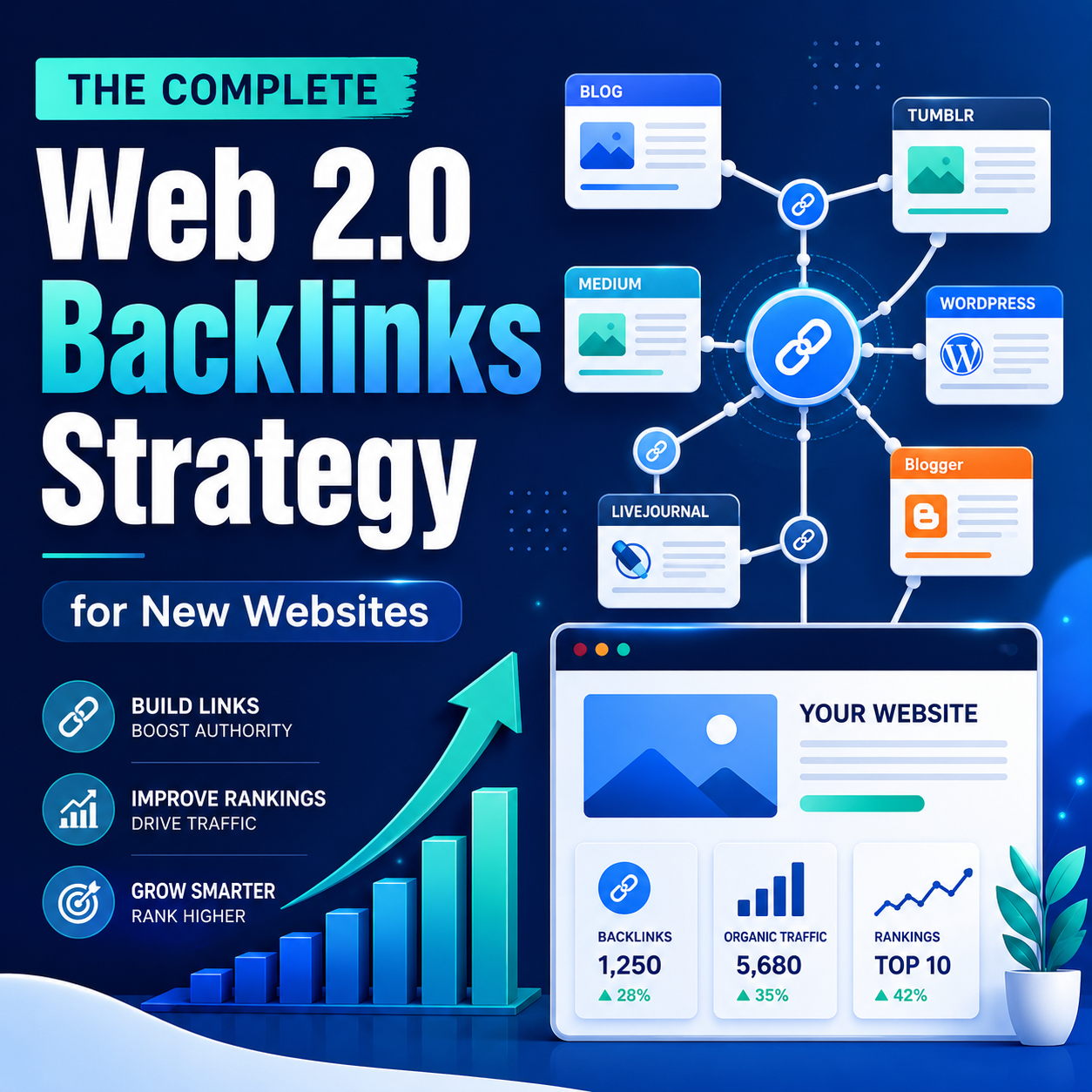
Web 2.0 backlinks are links created on user-generated publishing platforms such as blogs, mini-sites, social publishing sites, and content-sharing platforms. When used correctly, they can support your SEO campaign by helping search engines find your content, diversify your backlink profile, and build early authority around important pages.
However, Web 2.0 backlinks should never be treated as a shortcut or a spam tactic. For new websites, the best approach is quality, relevance, and consistency. The goal is not to create hundreds of low-value links. The goal is to build useful supporting content that points naturally toward your main website.
Why Web 2.0 Backlinks Matter for New Websites
New websites often have one major problem: they have very little authority. Even if the content is well-written, search engines may not trust the site enough to rank it quickly. Backlinks act as signals of trust, and Web 2.0 platforms can provide an accessible starting point for building those signals.
Unlike guest posts or editorial links, Web 2.0 properties are usually easier to control. You can create content, add branding, publish supporting articles, and link to your main website when it makes sense. This makes them useful for early-stage SEO, especially when your website has limited exposure.
For example, if your main website has a detailed pillar page about Web 2.0 backlinks, you can create supporting articles on related topics and use them to guide readers toward the main resource. This creates a simple content ecosystem where your supporting pages strengthen the relevance of your pillar content.
To understand the fundamentals, it is important to know how web 2.0 backlinks work before building your own campaign.
The Right Mindset for Web 2.0 Link Building
Many people make the mistake of treating Web 2.0 backlinks as disposable links. They create thin content, add an exact-match anchor, publish once, and never touch the property again. This approach can look unnatural and may provide little long-term value.
A better mindset is to treat each Web 2.0 property like a small supporting website. It does not need to be huge, but it should look real, helpful, and relevant. That means publishing original content, adding proper formatting, using natural language, and keeping the topic focused.
For a new website, this matters even more. Search engines are cautious with young domains. If a new site suddenly receives a large number of low-quality backlinks, that can look suspicious. A slow and steady strategy is usually safer and more effective.
Step 1: Choose Relevant Web 2.0 Platforms
The first step is choosing where to build your Web 2.0 properties. Popular platforms often include blogging and publishing sites where users can create their own content pages. The exact platforms you use may vary, but the most important factor is quality.
Look for platforms that are established, indexable, and easy to manage. A good Web 2.0 platform should allow you to publish original articles, include links naturally, customize basic profile details, and update content over time.
Avoid platforms that are filled with spam or have poor user experience. If a platform looks abandoned, overloaded with low-quality content, or difficult to navigate, it may not be worth using. Quality matters more than quantity.
For new websites, starting with a small number of strong Web 2.0 properties is better than creating dozens of weak ones. You can always expand later once you have a system in place.
Step 2: Build Topic Relevance Before Linking
Before adding links to your main website, you should establish topical relevance. This means your Web 2.0 property should clearly be about the same subject area as the page you want to support.
If your pillar content is about Web 2.0 backlinks, your supporting Web 2.0 articles could cover related topics such as beginner link building, content authority, backlink diversity, SEO foundations, or how new websites can gain visibility.
This helps search engines understand the connection between the Web 2.0 content and your main page. A link from a relevant article is more meaningful than a random link placed in unrelated content.
You should also avoid creating content that exists only to hold a backlink. Each article should have a clear purpose. It should answer a question, explain a concept, compare ideas, or provide useful guidance.
Step 3: Create Original Supporting Content
The strength of your Web 2.0 backlink strategy depends heavily on the quality of your supporting content. Thin, copied, or generic articles are unlikely to help much. Unique content gives your Web 2.0 property a better chance of being indexed and trusted.
Each article should be written naturally and structured well. Use headings, short paragraphs, and clear explanations. You can include examples, tips, and simple step-by-step advice to make the content more useful.
For new websites, it is smart to create content that supports your main SEO goals without competing directly with your pillar page. Your Web 2.0 articles should cover smaller subtopics and point readers toward the deeper guide on your main website.
This creates a strong internal content relationship. The Web 2.0 content introduces the topic, while your pillar content provides the complete explanation.
Step 4: Use Natural Anchor Text
Anchor text is the clickable text used in a backlink. It helps users and search engines understand what the linked page is about. However, using the same keyword-rich anchor text too often can look unnatural.
A safe Web 2.0 backlink strategy should include a mix of anchor types. These can include branded anchors, partial-match anchors, natural phrases, naked URLs, and occasional exact-match keywords when appropriate.
For new websites, natural anchor text is especially important. Since the site does not yet have a mature backlink profile, over-optimized anchors can stand out quickly. The goal is to make every link look like it belongs in the content.
A link should fit naturally into the sentence. It should help the reader find more information, not feel forced into the paragraph for SEO purposes.
Step 5: Link to the Right Pages
Not every backlink should point to your homepage. One of the best uses of Web 2.0 backlinks is supporting important pillar content. Pillar pages are usually detailed, high-value resources that target important keywords and cover a topic in depth.
For new websites, building links to pillar content can help search engines identify your most important pages. It can also support topical authority by showing that your website has a strong central resource on the subject.
You can also link to supporting blog posts, service pages, or category pages when relevant. The key is to choose pages that deserve authority and provide value to readers.
Avoid linking to too many pages from one Web 2.0 article. One contextual link is often enough. If you add too many links, the content can look promotional or unnatural.
Step 6: Make Each Web 2.0 Property Look Real
A strong Web 2.0 property should not look like it was created only for a backlink. Add basic details such as a relevant profile name, description, logo or image where appropriate, and a few pieces of supporting content.
You can also publish more than one article on the same property. For example, instead of creating ten separate Web 2.0 sites with one article each, you might create three stronger properties and add several related posts to each one.
This makes the property look more natural and useful. It also gives you more opportunities to build topical relevance before linking to your main site.
The more realistic and helpful your Web 2.0 property appears, the better it supports your overall SEO strategy.
Step 7: Index Your Web 2.0 Backlinks Carefully
A backlink only has value if search engines can discover it. After publishing your Web 2.0 content, you should check whether the page gets indexed. Some platforms are indexed quickly, while others may take longer.
You can encourage discovery by sharing the Web 2.0 page through safe channels, linking to it from other supporting properties, or updating it with fresh content. Avoid aggressive indexing tools or spammy methods, as these can create unnecessary risk.
Patience is important. New websites and new Web 2.0 properties may take time to be discovered. Focus on building a natural footprint rather than forcing instant results.
Step 8: Keep a Balanced Backlink Profile
Web 2.0 backlinks should be only one part of your link-building strategy. They can support a new website, but they should not be your only source of links.
A healthy backlink profile may include guest posts, niche edits, business citations, social profiles, directory listings, digital PR, editorial mentions, and high-quality content that earns natural links over time.
Web 2.0 backlinks are useful because they are accessible and controllable. But long-term SEO success usually requires a broader approach. Search engines look for natural patterns, and natural websites attract links from different types of sources.
For a new site, start simple. Use Web 2.0 backlinks to support your foundation, then expand into other authority-building methods as your website grows.
Common Mistakes to Avoid
One common mistake is creating too many Web 2.0 backlinks too quickly. A brand-new site does not need hundreds of links in its first few weeks. Slow growth looks more natural and is easier to manage.
Another mistake is using duplicate content. If the same article appears across multiple Web 2.0 platforms, it reduces the quality of the campaign. Every post should be unique enough to stand on its own.
Over-optimized anchor text is another issue. Repeating the same keyword anchor again and again can create an unnatural pattern. Use varied, natural anchors to reduce risk.
Finally, do not ignore the Web 2.0 properties after publishing. Updating them occasionally, adding fresh content, or improving old posts can help them stay useful over time.
A Simple Web 2.0 Backlinks Plan for New Websites
A practical beginner strategy could start with three to five Web 2.0 properties. Each property should focus on a related topic area and include original content.
You might begin by publishing one introductory article on each property. Then, over the next few weeks, add another supporting post. Once the property has some content and topical relevance, add a contextual link to your main pillar page where it fits naturally.
This slow approach is safer than creating everything at once. It also gives you time to improve the quality of each property and monitor whether the pages are being indexed.
As your website grows, you can expand the strategy by creating more supporting content, linking to additional pillar pages, and combining Web 2.0 backlinks with other link-building methods.
Final Thoughts
Web 2.0 backlinks can be a valuable starting point for new websites, but only when they are built with care. The best strategy is not about volume. It is about relevance, quality, natural anchor text, and useful supporting content.
For new websites, Web 2.0 backlinks can help create early authority, support pillar content, and improve content discovery. They work best when they are part of a wider SEO plan that includes strong on-page optimization, helpful content, and a balanced backlink profile.
If you treat Web 2.0 properties like real publishing assets instead of quick link drops, they can become a useful part of your long-term SEO foundation.
Keep reading…
What Are Web 2.0 Backlinks and Why Do They Still Matter for SEO?
Web 2.0 Backlinks Explained: A Beginner’s Guide to Safer Link Building