
Search engine optimization has changed a lot over the years, but backlinks remain one of the strongest signals search engines use to understand trust, authority, and relevance. While many link-building methods have become more advanced, one strategy that still gets attention is Web 2.0 link building.
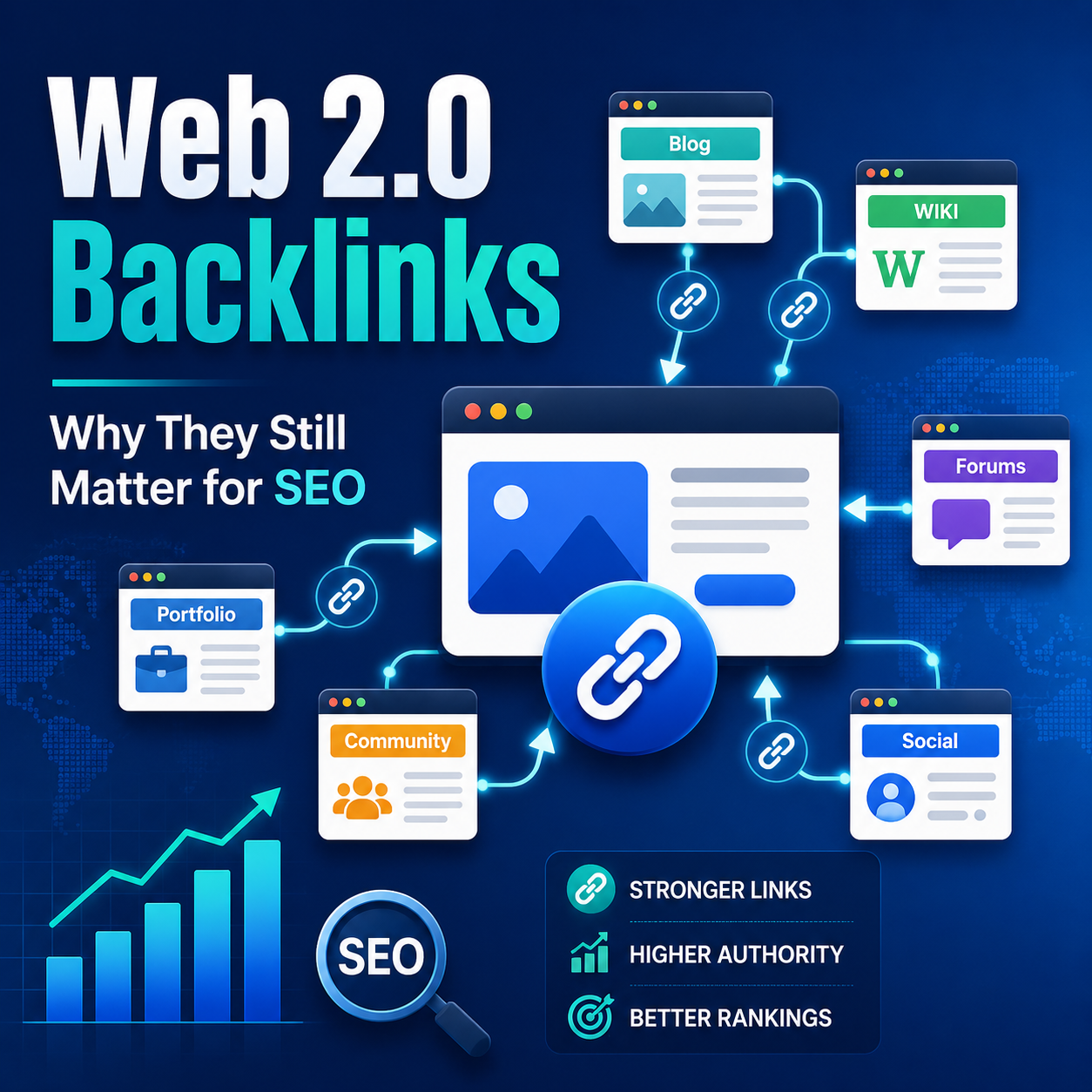
Web 2.0 backlinks are links created on user-generated publishing platforms such as blogs, mini-sites, content hubs, and social publishing websites. These platforms allow users to create their own pages, publish articles, add media, and include links back to their main website.
When used correctly, Web 2.0 backlinks can still support an SEO campaign by helping diversify your backlink profile, strengthen topical relevance, and create supporting content around your main pages.
What Are Web 2.0 Backlinks?
Web 2.0 backlinks are links placed on websites where users can create and publish their own content. Unlike traditional websites that are controlled by one company or publisher, Web 2.0 platforms allow individuals to create pages, blogs, profiles, or articles.
Examples of Web 2.0-style platforms may include blogging sites, publishing communities, document-sharing platforms, and niche content networks. The idea is simple: you create useful content on a third-party platform and include a relevant backlink to your main website.
For example, if your pillar page teaches people how to build web 2.0 backlinks, then a supporting article on a related platform could discuss backlink diversity, content silos, anchor text strategy, or SEO authority building, while naturally linking back to the full guide.
Why Web 2.0 Backlinks Became Popular
Web 2.0 backlinks became popular because they gave website owners more control over their link-building efforts. Instead of waiting for other websites to mention them, marketers could create their own content assets and use them to support their money pages, blog posts, or pillar content.
They also allowed SEOs to build links from different domains, create topic-focused content, and experiment with anchor text. In the earlier days of SEO, many people used Web 2.0 platforms aggressively because they were easy to create and could produce fast ranking movement.
However, search engines have become much better at identifying low-quality, spammy, or thin content. This means Web 2.0 backlinks are no longer about mass creation. Today, they work best when treated as real content assets rather than disposable link pages.
Do Web 2.0 Backlinks Still Matter?
Yes, Web 2.0 backlinks can still matter for SEO, but only when they are created properly. The value comes from quality, relevance, and natural placement.
A thin 300-word article with a random link is unlikely to help much. In some cases, it may even look unnatural. On the other hand, a well-written, topic-relevant article that provides useful information and links to a deeper resource can still add value to a broader SEO strategy.
Modern SEO is about building trust and context. Web 2.0 backlinks can help with both when they are part of a balanced backlink profile.
The Main SEO Benefits of Web 2.0 Backlinks
One of the biggest benefits of Web 2.0 backlinks is link diversity. A natural backlink profile usually includes different types of links from different sources. These may include guest posts, niche edits, directories, social profiles, citations, digital PR links, and Web 2.0 properties.
Another benefit is topical support. If you create Web 2.0 content around a specific subject, it can help reinforce the theme of your target page. For example, if your main website has a pillar article about backlink building, supporting Web 2.0 articles can cover related subtopics such as anchor text, authority stacking, backlink indexing, or content relevance.
Web 2.0 backlinks can also help with content promotion. A strong Web 2.0 article can act as a small supporting page that introduces readers to your main guide, service page, or blog post.
Quality Matters More Than Quantity
The biggest mistake people make with Web 2.0 backlinks is focusing on volume instead of quality. Creating dozens of weak pages with spun content and exact-match anchors is not a sustainable SEO strategy.
A better approach is to create fewer, higher-quality Web 2.0 properties. Each one should have unique content, a clear topic, natural formatting, and a reason to exist beyond the backlink.
Good Web 2.0 content should be readable, helpful, and relevant. It should include headings, examples, supporting details, and a natural link placement. The backlink should feel like a useful recommendation, not something forced into the article.
How to Use Web 2.0 Backlinks Safely
To use Web 2.0 backlinks safely, start by choosing relevant platforms. Avoid low-quality sites that are filled with spam or have no editorial value. The platform should allow useful content and have enough trust to make the page worth creating.
Next, write original content for each Web 2.0 page. Do not copy content from your main website. Duplicate content weakens the value of the asset and makes the page less useful.
You should also vary your anchor text. While exact-match anchors can be useful in small amounts, overusing them can make your backlink profile look unnatural. Mix branded anchors, partial-match anchors, naked URLs, and natural phrases where appropriate.
Finally, do not rely only on Web 2.0 backlinks. They should support your SEO strategy, not replace stronger link-building methods like guest posting, authority placements, digital PR, and high-quality niche links.
Web 2.0 Backlinks and Internal Linking Strategy
Web 2.0 backlinks work especially well when they are used to support pillar content. A pillar page is usually a detailed guide that targets an important keyword and covers a topic in depth. Supporting backlinks can help send authority and relevance to that page.
The key is to make the supporting content closely related to the pillar page. Instead of creating a generic article, build content around a specific angle that naturally leads readers to the main resource.
For example, a Web 2.0 article could explain why backlink diversity matters, then link to a complete guide on using Web 2.0 sites for backlinks. This creates a logical connection between the supporting article and the pillar page.
Common Mistakes to Avoid
One common mistake is using low-quality spun content. Search engines are much better at identifying content that provides no real value. If the article is unreadable or generic, the backlink is unlikely to provide meaningful benefit.
Another mistake is using the same anchor text too many times. Exact-match anchors can help signal relevance, but overuse can create an unnatural pattern.
Some people also create Web 2.0 pages and abandon them immediately. A stronger approach is to treat them like mini-content assets. Add useful information, update them occasionally, and make them look like real pages rather than link placeholders.
Are Web 2.0 Backlinks Enough to Rank?
Web 2.0 backlinks alone are usually not enough to rank competitive keywords. They can help, but they should be part of a larger SEO plan.
Strong rankings usually come from a combination of quality content, technical SEO, internal linking, topical authority, user experience, and a diverse backlink profile. Web 2.0 backlinks can support this system, but they should not be your only strategy.
Think of them as a supporting layer. They can strengthen your SEO foundation, but the main structure should include high-quality content and authoritative backlinks from trusted sources.
Final Thoughts
Web 2.0 backlinks still matter because they give website owners a way to create relevant supporting content and build link diversity. However, their effectiveness depends entirely on how they are used.
Low-quality, spammy Web 2.0 links are unlikely to help and may harm your SEO efforts. But well-written, relevant, and naturally linked Web 2.0 content can still play a useful role in a modern link-building campaign.
The best approach is to focus on quality, relevance, and balance. Create helpful content, use natural anchor text, and connect each Web 2.0 property to a clear SEO purpose. When done properly, Web 2.0 backlinks can still support rankings, strengthen topical signals, and help your pillar content perform better in search.
Keep reading…
The Workflow Behind High-Value Link Placement