
High-value link placement is not about dropping a URL onto a random website and hoping for ranking improvements. It is a structured workflow built around relevance, quality control, content alignment, and long-term SEO value. When done correctly, link placement supports organic visibility, strengthens topical authority, and helps search engines understand why a page deserves to rank.
Many website owners focus only on the link itself, but the real value comes from the process behind it. A strong link placement workflow ensures that every backlink has a purpose, every placement fits naturally, and every publishing opportunity supports the bigger SEO strategy.
Understanding the Goal of Link Placement
Before any outreach, content creation, or placement decision begins, the first step is understanding the goal of the campaign. A backlink should not be treated as a standalone SEO tactic. It should support a specific business or ranking objective.
For example, a website may need links to strengthen a commercial page, support a pillar guide, increase topical authority, or build trust around a new domain. Each goal requires a slightly different approach. A link pointing to a homepage may need broader brand relevance, while a link pointing to a detailed guide should come from content that matches the subject closely.
This is why high-value link placement starts with strategy. The target page, anchor text, surrounding content, and referring website must all work together. Without that alignment, even a live backlink may produce little SEO impact.
Reviewing the Target Page First
A quality workflow begins by reviewing the page that will receive the link. This step is often overlooked, but it is essential. If the destination page is thin, poorly structured, or not useful to readers, link building becomes less effective.
The target page should have clear search intent, strong on-page SEO, helpful information, internal links, and a logical content structure. If the page is designed to rank for a competitive keyword, it should also provide enough depth to deserve authority from external references.
For example, businesses that want to buy high-quality backlinks should first make sure the page they are promoting is worth linking to. A strong destination page gives each backlink more purpose and increases the chance that authority passes effectively.
Identifying Relevant Link Opportunities
Relevance is one of the most important parts of high-value link placement. A backlink from a website in the same or closely related niche usually carries more contextual value than a random link from an unrelated domain.
This does not mean every referring site must cover the exact same topic. Instead, there should be a natural connection between the linking page and the target page. For example, an SEO article can naturally link to a backlink guide. A digital marketing website can reference content about link acquisition. A business growth blog can mention search visibility strategies.
The key question is simple: would the link make sense to a real reader?
If the answer is no, the placement may look forced. Forced links can weaken content quality and may offer less SEO value over time. High-value placements feel natural because they help the reader learn more about the subject.
Checking Website Quality
Not every website with good metrics is worth getting a link from. A proper workflow includes a quality review of the referring domain before placement.
Important checks include topical relevance, organic traffic patterns, indexing status, content quality, outbound link behavior, and overall site trust. A site that publishes hundreds of unrelated guest posts may not be as valuable as a smaller niche website with consistent editorial standards.
It is also important to look beyond surface-level numbers. Metrics such as domain authority or domain rating can be useful, but they should not be the only deciding factor. A website can have strong metrics but poor content, spammy outbound links, or little real audience value.
High-value link placement focuses on the full picture. The best opportunities usually come from websites that have real content, clear topical focus, stable search visibility, and a natural publishing history.
Planning the Anchor Text
Anchor text plays an important role in how search engines interpret a backlink. However, using the same keyword-rich anchor repeatedly can make a link profile look unnatural.
A strong workflow includes anchor text planning before the link is placed. This helps maintain balance across branded anchors, partial-match anchors, exact-match anchors, naked URLs, and natural phrase anchors.
The best anchor text depends on the target page, keyword difficulty, existing backlink profile, and overall SEO strategy. For competitive pages, anchor variation is especially important. The goal is to send clear relevance signals without over-optimising.
Good anchor text should also fit the sentence naturally. If the phrase looks awkward or forced, it can reduce the quality of the content and make the placement feel artificial.
Creating Context Around the Link
A backlink is stronger when it appears inside relevant, useful content. The words around the link help define its context. This is why high-value link placement is not just about the domain; it is also about the paragraph, section, and topic surrounding the link.
The surrounding content should introduce the idea naturally, support the link with meaningful context, and give the reader a reason to click. A link placed randomly in a thin paragraph is less valuable than one included inside a useful explanation.
For example, if an article discusses SEO growth, link authority, or content ranking strategy, a backlink to a detailed backlink guide can make sense. The link becomes part of the reader journey instead of feeling like an interruption.
Reviewing Editorial Fit
Editorial fit is another major part of a professional link placement workflow. The linking article should match the tone, style, and standards of the website where it is published.
A high-quality placement usually appears in content that has a clear introduction, helpful headings, original insights, and a natural flow. It should not read like generic filler created only to hold a backlink.
Search engines are increasingly good at recognising patterns in low-quality content. If an article exists only to host links, its long-term value may be limited. Editorial quality helps protect the placement and makes the backlink look more natural.
This is why a strong workflow includes content review before publication. The article should be useful even without the backlink.
Avoiding Overloaded Pages
A page with too many outbound links can reduce the value of each individual placement. It can also create a poor user experience. High-value link placement works best when the link appears on a clean, focused page with limited and relevant outbound references.
If a page links to many unrelated websites, it may look like a link farm or low-quality guest post page. That can reduce trust and make the placement less valuable.
A good workflow checks how many outbound links are on the page, whether they are relevant, and whether the page appears editorially controlled. A natural article may include a few helpful external references, but it should not be overloaded with promotional links.
Publishing and Indexing
Once the content is published, the workflow does not end. The next step is checking whether the page is live, accessible, and indexable.
A backlink has limited SEO value if the page is blocked from indexing, hidden behind technical issues, or removed shortly after publication. Basic checks include confirming the page loads correctly, the link is clickable, the anchor text is correct, and the page can be discovered by search engines.
Indexing is especially important. If the linking page is not indexed, search engines may not count or fully evaluate the link. A professional link placement workflow includes monitoring after publication to make sure the placement is visible and stable.
Tracking Performance Over Time
High-value link placement is a long-term SEO asset, not a one-day task. After links are placed, performance should be tracked over time.
Useful signals include keyword movement, organic traffic changes, target page impressions, referring page status, and link retention. Not every backlink will create immediate ranking improvements, but a consistent pattern of quality placements can strengthen authority over time.
Tracking also helps identify what types of placements work best. Some niches may respond better to editorial links from industry blogs, while others benefit from links inside detailed guides, resource pages, or digital PR-style mentions.
The more data collected, the better future campaigns become.
Maintaining a Natural Link Profile
A healthy backlink profile should look natural. That means links should come from different domains, different content types, different anchors, and different relevant sources.
If every link uses the same anchor text or comes from the same type of website, the profile may appear manipulated. A strong workflow avoids this by building variety into the strategy.
Natural link profiles usually include branded mentions, informational anchors, URL anchors, and keyword-focused anchors in moderation. They also include links to different pages across the site, not just one commercial page.
High-value link placement is about building trust gradually. A balanced profile is more sustainable than aggressive link building that focuses only on quick ranking gains.
Why Workflow Matters More Than Volume
Many SEO campaigns fail because they focus on quantity instead of quality. A large number of weak links may not outperform a smaller number of highly relevant, well-placed backlinks.
The workflow matters because it protects every part of the process. It ensures that the right page is selected, the right websites are reviewed, the right anchor text is used, and the final placement makes sense inside the content.
A link is only as strong as the context around it. When the workflow is rushed, the result is often a collection of low-value placements. When the workflow is strategic, each backlink has a clear role in the wider SEO campaign.
Final Thoughts
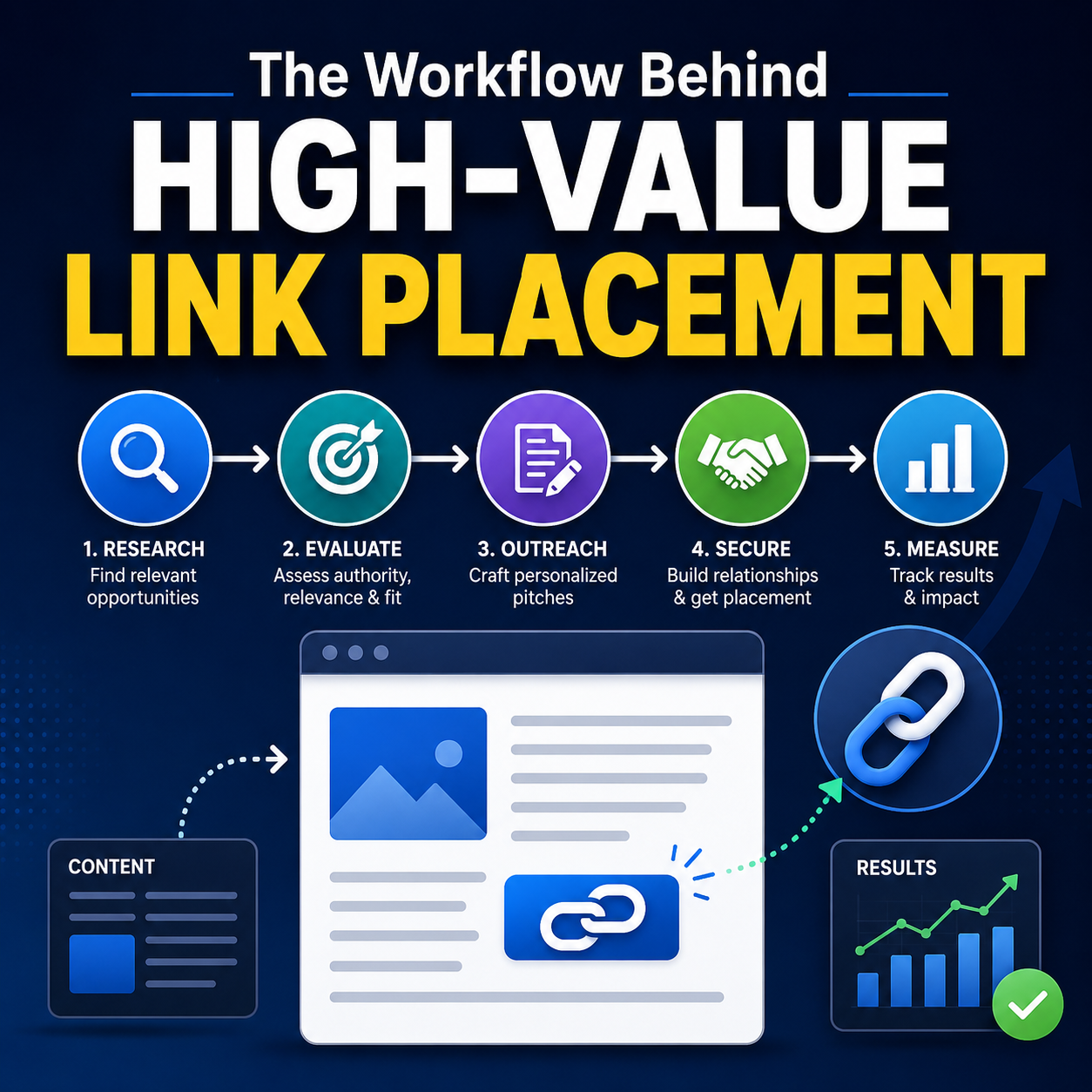
High-value link placement is a careful process that combines research, strategy, editorial judgment, and ongoing monitoring. It is not simply about getting a backlink live. It is about placing the right link, on the right website, inside the right content, with the right context.
A strong workflow helps turn link building from a risky shortcut into a structured SEO asset. By focusing on relevance, quality, anchor planning, content value, and long-term tracking, businesses can build links that support rankings, authority, and organic growth over time.
Keep reading…
Manual Outreach vs. Buying Links: Which is Faster for Startups?
Buying Backlinks for Crypto & Finance: Navigating High-Competition Niches