
Building backlinks is still one of the most important parts of SEO, but the way you build them matters more than ever. Search engines are no longer impressed by random links placed on thin, low-quality pages. They reward relevance, trust, useful content, and natural linking patterns. That is why Web 2.0 sites remain a valuable part of a balanced link building strategy when they are used correctly.
Web 2.0 platforms allow users to publish their own content, create mini-sites, share articles, and build branded properties across the web. These platforms can help support your main website by giving you extra places to publish helpful content, expand topical relevance, and create contextual backlinks.
However, not all Web 2.0 backlinks are equal. The best results come from choosing trusted platforms, publishing original content, and linking naturally to your most important pages. If you want a full strategy breakdown, you can read this guide on web 2.0 backlinks for SEO.
What Are Web 2.0 Sites?
Web 2.0 sites are platforms that allow users to create, publish, and manage their own content. Unlike static websites where only the owner controls the content, Web 2.0 platforms are built around user participation. Examples include blogging platforms, content-sharing websites, portfolio sites, community publishing platforms, and social publishing networks.
For SEO, these sites are useful because they let you create supporting content around your niche. You can publish articles, guides, tutorials, opinion pieces, case studies, and resource pages that link back to your main website in a natural way.
A properly built Web 2.0 property should not look like a throwaway backlink page. It should look like a real website or content hub with useful information, proper formatting, relevant media, and consistent updates.
Why Web 2.0 Sites Are Useful for Backlinks
Web 2.0 sites can help improve your SEO campaign in several ways. First, they give you more control over your content and link placement compared with many other backlink methods. You can choose the topic, structure the article, add supporting information, and place your link where it makes sense.
Second, many established Web 2.0 platforms have strong domain authority, long histories, and existing trust with search engines. While a new page on these platforms does not automatically inherit full ranking power, publishing on trusted domains can still be beneficial when done properly.
Third, Web 2.0 properties can help build topical relevance. For example, if your main website is about SEO, you can create Web 2.0 content around backlink building, keyword research, content optimization, local SEO, and technical SEO. These related pieces can support your pillar content and strengthen your overall topical footprint.
Finally, Web 2.0 sites can help diversify your backlink profile. A natural backlink profile usually includes links from different types of websites, including blogs, directories, guest posts, citations, niche edits, social profiles, and user-generated content platforms.
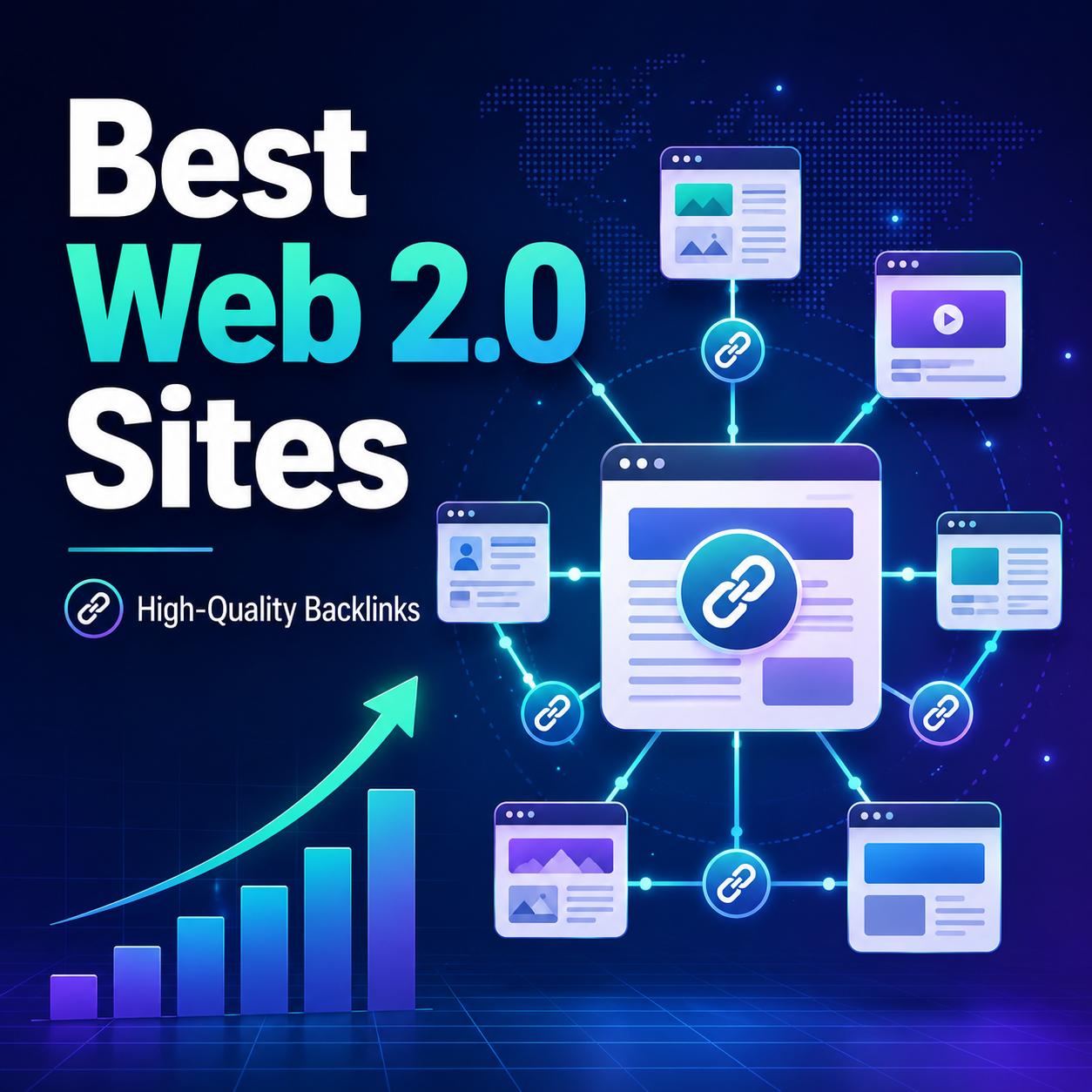
The Best Web 2.0 Sites for Building High-Quality Backlinks
Below are some of the most popular Web 2.0 platforms that can be used for backlink building when you focus on quality, relevance, and natural content.
1. WordPress.com
WordPress.com is one of the most widely used blogging platforms in the world. It is suitable for creating niche-focused blogs, publishing detailed articles, and building supporting content around your main website.
A WordPress.com property works best when you treat it like a real blog. Add a proper title, description, branding, categories, and several useful posts before placing important backlinks. Instead of creating one thin article and abandoning the site, build out a small content hub that supports your niche.
For example, if your pillar page is about Web 2.0 backlinks, your WordPress.com blog could include supporting articles about safe link building, content syndication, anchor text diversity, and backlink indexing.
2. Blogger
Blogger is another well-known publishing platform that can be useful for creating Web 2.0 backlinks. It is simple to use, easy to set up, and owned by Google. While that does not mean links from Blogger automatically rank your site, the platform itself is trusted and easy to manage.
Blogger is best used for straightforward informational posts. You can create short guides, opinion articles, tutorials, and niche updates. To make your Blogger site stronger, customize the theme, add an about page, include images, and publish more than one article.
Avoid using Blogger only as a quick link drop. A better approach is to build a branded supporting blog that looks legitimate and provides useful content to readers.
3. Medium
Medium is a popular content publishing platform with a large audience. It is excellent for thought-leadership content, educational articles, industry commentary, and simplified guides.
Backlinks from Medium are commonly nofollow, but that does not make them useless. Medium can still help with content discovery, referral traffic, brand visibility, and link diversification. A well-written Medium article can also rank in search results on its own, creating another entry point for users to discover your brand.
When using Medium, focus on helpful content rather than promotional writing. Articles that educate, explain, or offer a unique perspective usually perform better than obvious SEO link-building posts.
4. Tumblr
Tumblr is a microblogging platform that allows users to publish short posts, images, quotes, links, and multimedia content. It can be useful for creating branded Web 2.0 properties, especially when your niche allows for visual or bite-sized content.
Tumblr is not usually the best place for long-form SEO articles, but it can work well for summaries, quick tips, curated resources, and visual posts. You can use it to support your broader content strategy by posting short insights and linking to deeper resources when relevant.
For best results, make the Tumblr page look active. Use a proper theme, add a profile image, write a short description, and post a mix of content types.
5. Weebly
Weebly allows users to create simple websites and blogs with drag-and-drop tools. It is useful for building mini-sites that support a specific topic or niche.
A Weebly site can be structured like a small resource website. You can create a homepage, about page, blog section, and several supporting articles. This makes it a good option if you want your Web 2.0 property to look more like a standalone website rather than a basic blog.
To get better value from Weebly, avoid publishing thin content. Add well-structured pages, relevant headings, internal links between your own Web 2.0 pages, and useful information that supports your main website topic.
6. Wix
Wix is another website builder that can be used to create Web 2.0-style properties. It is especially useful if you want a more polished design. You can build a simple niche site, add blog posts, include images, and create a branded look without advanced technical skills.
Wix works best when you create a small, focused website around a clear topic. For example, an SEO-focused Wix property could include pages about backlink basics, website audits, content marketing, and common SEO mistakes.
Although Wix may take slightly more effort to set up than a basic blogging platform, the result can look more professional and trustworthy.
7. Google Sites
Google Sites is a simple platform for creating basic websites. It is not as feature-rich as WordPress, Wix, or Weebly, but it can still be useful for building clean, organized supporting pages.
Google Sites is ideal for simple resource hubs, checklists, guides, and informational pages. You can use it to create a structured mini-site around a topic and link to relevant resources where appropriate.
The key is to make the site useful. Add sections, images, original text, and logical navigation. A blank-looking page with only one paragraph and a backlink will not provide much value.
8. Jimdo
Jimdo is another website builder that allows users to create simple websites and publish content. It can be used to build small niche properties that support your main website.
Like other Web 2.0 platforms, Jimdo works best when you create a real-looking site with helpful pages. Include a clear topic, useful content, an about section, and relevant supporting posts.
Jimdo may not be as widely discussed as WordPress or Blogger, but it can still be part of a diversified Web 2.0 backlink strategy.
9. LiveJournal
LiveJournal is an older blogging and community platform. Although it is not as popular as it once was, it still has value as a Web 2.0 publishing option when used carefully.
This platform is better suited for blog-style posts, personal commentary, niche discussions, and informational content. Because it has a more traditional blogging feel, your content should read naturally rather than like a commercial landing page.
A good LiveJournal post should provide context, useful information, and a natural reason for any outbound link.
10. Webflow
Webflow is more advanced than many Web 2.0 platforms, but it can be used to create highly polished websites. It is ideal for users who want more design control and a professional-looking supporting property.
A Webflow site can be used as a niche resource, portfolio, blog, or branded content hub. Because Webflow sites can look very professional, they are a good choice if you want your Web 2.0 assets to feel more premium.
The downside is that Webflow requires more setup time than simpler platforms. However, the quality of the final site can make it worthwhile.
How to Choose the Right Web 2.0 Sites
Choosing the best Web 2.0 sites depends on your goals. If you want simple blog posts, WordPress.com, Blogger, and Medium are good options. If you want mini-sites, Weebly, Wix, Google Sites, Jimdo, and Webflow may be better.
When choosing platforms, look for:
- Easy content publishing
- Clean page design
- Ability to add contextual links
- Indexable pages
- Good user experience
- Long-term platform stability
- Relevance to your content strategy
It is usually better to build fewer high-quality Web 2.0 properties than dozens of weak ones. A strong Web 2.0 site with multiple useful posts can be far more valuable than many thin pages created only for backlinks.
Best Practices for Building Web 2.0 Backlinks
The biggest mistake people make with Web 2.0 backlinks is treating them as quick link drops. If your only goal is to publish a low-quality article with an exact-match anchor, your results will usually be limited.
Instead, follow these best practices.
Publish Original Content
Every Web 2.0 post should be unique. Do not copy content from your main website or spin existing articles. Search engines are much better at detecting low-quality duplication than they used to be.
Original content gives your Web 2.0 property a better chance of being indexed, trusted, and useful. It also makes your backlink look more natural.
Make the Content Helpful
A Web 2.0 article should answer a question, explain a topic, or provide value to readers. Even if the main purpose is link building, the content still needs to be useful.
For example, instead of writing a generic post titled “Best SEO Tips,” create something specific like “How Small Businesses Can Use Content Hubs to Support SEO.” Specific content usually feels more natural and attracts better engagement.
Avoid Over-Optimized Anchor Text
Using the same exact-match anchor text repeatedly across many Web 2.0 sites can look unnatural. Mix branded anchors, partial-match anchors, URL anchors, and natural phrases.
Anchor text should fit smoothly into the sentence. If the link feels forced, rewrite the paragraph until it reads naturally.
Build Out Each Property
A single-page Web 2.0 site with one backlink may look weak. A better approach is to build out each property with several posts, an about page, and internal links between related posts.
This helps the property look more complete and useful. It also gives search engines more context about the topic of the site.
Use Relevant Images and Formatting
Good formatting makes your content easier to read. Use headings, short paragraphs, bullet points, images, and clear sections. Add relevant visuals where possible.
A well-formatted Web 2.0 page looks more trustworthy than a plain block of text. It also improves user experience, which can indirectly support your SEO efforts.
Do Not Build Too Many Too Fast
Link velocity matters. If you suddenly create hundreds of Web 2.0 backlinks in a short time, it may look unnatural. Build gradually and focus on quality.
A slow, steady approach is usually safer and more sustainable. Create a few strong properties, add content over time, and use them as part of a broader link building plan.
Keep Your Web 2.0 Sites Updated
Many people create Web 2.0 properties and then abandon them. This can make the sites look inactive and low value. Updating your properties occasionally can help keep them fresh.
You do not need to post every week, but adding new content from time to time makes the property look more natural. You can also update old posts with new information, better formatting, or additional resources.
Common Mistakes to Avoid
Web 2.0 backlinks can be useful, but they can also be wasted if they are built carelessly. Avoid these common mistakes:
- Publishing duplicate or spun content
- Using too many exact-match anchors
- Creating thin one-page properties
- Linking to the same page from every post
- Ignoring design and formatting
- Building too many links too quickly
- Using irrelevant topics
- Abandoning the property after one post
The goal is to make each Web 2.0 asset look like a real, useful piece of the internet. If the site exists only for a backlink, it will usually be less effective.
Are Web 2.0 Backlinks Still Worth It?
Yes, Web 2.0 backlinks can still be worth it when they are part of a balanced SEO strategy. They should not be your only link building method, but they can help support your pillar pages, diversify your backlink profile, and strengthen topical relevance.
The key is quality. A well-written article on a trusted platform is much better than dozens of low-effort posts on weak properties. Web 2.0 backlinks should support your content ecosystem, not replace real outreach, digital PR, niche edits, guest posts, or high-quality editorial links.
Think of Web 2.0 sites as supporting assets. They help reinforce your main website, but they work best when combined with strong on-page SEO, useful content, technical optimization, and a diverse backlink strategy.
Final Thoughts
The best Web 2.0 sites for building high-quality backlinks are the ones that allow you to publish useful, relevant, and well-structured content. Platforms like WordPress.com, Blogger, Medium, Tumblr, Weebly, Wix, Google Sites, Jimdo, LiveJournal, and Webflow can all play a role in your SEO strategy when used properly.
The most important rule is simple: build Web 2.0 properties for users first and backlinks second. When your content is original, helpful, and naturally connected to your main website, your backlinks are more likely to support long-term SEO growth.
Web 2.0 link building is not about shortcuts. It is about creating a network of valuable supporting content that strengthens your authority, improves relevance, and helps your pillar content perform better in search results.
Keep reading…
Are Web 2.0 Backlinks Still Effective for Ranking Websites?
What Are Web 2.0 Backlinks and Why Do They Still Matter for SEO?
How to Build Powerful Web 2.0 Backlinks Without Getting Penalized
Great article and a useful reminder that Web 2.0 link building can still have a place in an SEO strategy when it is done with quality and relevance in mind. Platforms like WordPress, Blogger, Tumblr, Wix or Weebly can support visibility, but only if the content published there is unique, useful and connected to a real topical context.
I especially agree that backlinks should not be created just for the sake of numbers. A Web 2.0 property with thin, copied or purely AI-generated content will not build long-term authority. The real value comes when these sites are treated as supporting content hubs: with helpful articles, natural anchor text, multimedia, internal structure and a clear connection to the main website.
It is also important to remember that modern link building is not only about passing link equity. It is about building a broader digital footprint around a brand. Well-prepared Web 2.0 pages can support SEO, brand mentions, topical authority and even visibility in AI-driven search, but they should be part of a diversified strategy, not the whole strategy.
Rafał Cyrański
Many think web 2 links do not work in 2026 and go around telling people this in forums and blog posts. The fact is that the people that use them in the right way know that they work 🙂