
Web 2.0 backlinks can still play a useful role in an SEO strategy when they are built with care, relevance, and quality in mind. The problem is that many people treat Web 2.0 properties like throwaway link farms. They create thin pages, publish spun content, stuff exact-match anchors everywhere, and expect rankings to improve. That approach is exactly what can make a backlink profile look manipulative.
The safer and more effective way to use Web 2.0 backlinks is to treat each property like a real mini-content asset. Instead of building empty pages purely for links, you create useful supporting content that adds context around your main topic. When done properly, these pages can help strengthen topical relevance, diversify your link profile, and support your pillar content without creating obvious spam signals.
If your main target keyword is web 2.0 backlinks, the goal should not be to build as many links as possible. The goal should be to create a clean, natural, and relevant network of supporting content that points users toward your best resource.
What Are Web 2.0 Backlinks?
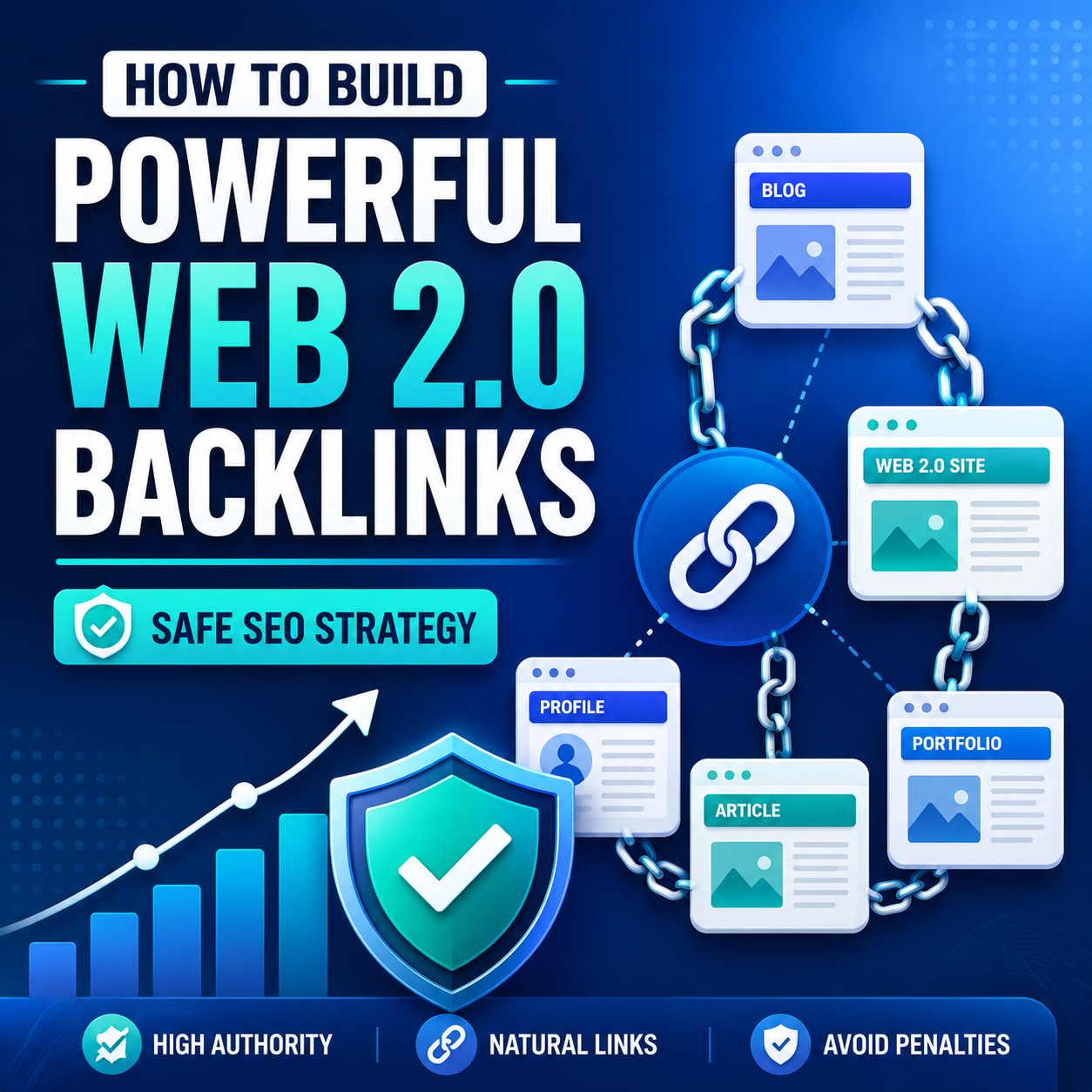
Web 2.0 backlinks are links created from user-generated publishing platforms. These can include blogging platforms, profile-based websites, community publishing sites, and content-sharing platforms where users can create their own pages or posts.
Unlike traditional editorial backlinks, Web 2.0 links are usually self-created. That means they require extra care. Search engines are good at spotting patterns, so if every Web 2.0 page looks low-quality, uses the same anchor text, and links to the same money page, it can do more harm than good.
A strong Web 2.0 backlink should come from a page that looks natural, has original content, fits the topic, and provides value beyond the link itself.
Why Web 2.0 Backlinks Can Be Risky
The biggest risk with Web 2.0 backlinks is over-optimization. Many website owners make the mistake of using exact-match anchor text repeatedly. For example, they may create 20 Web 2.0 pages and link back with the same keyword every time. This creates an unnatural footprint.
Another common issue is thin content. A Web 2.0 page with 200 words of generic text and one obvious backlink does not look useful. It looks like it exists only to manipulate rankings.
Other risks include duplicate content, irrelevant topics, abandoned properties, excessive outbound links, and using low-quality automated tools. These methods may create links quickly, but they also increase the chance of attracting negative attention.
The safest mindset is simple: build each Web 2.0 property as if a real person might read it.
Start With a Strong Pillar Page
Before building Web 2.0 backlinks, your pillar content should be worth linking to. A strong pillar page should be detailed, useful, well-structured, and optimized for the main keyword. If the destination page is weak, backlinks will not fix the problem.
Your Web 2.0 content should act as supporting material. It should introduce related subtopics, answer smaller questions, and naturally guide readers toward your main guide. For example, if your pillar page explains the full process of building Web 2.0 links, your supporting articles could cover topics like anchor text safety, content quality, link indexing, or common mistakes.
For a deeper guide, you can read this resource on how to use Web 2.0 sites for backlinks.
Use Original Content on Every Web 2.0 Property
Original content is one of the most important parts of safe Web 2.0 link building. Do not copy and paste the same article across multiple platforms. Do not use lightly rewritten content that says the same thing in every post. Each page should have its own angle.
For example, one Web 2.0 article could explain how beginners should structure their first backlink campaign. Another could discuss why anchor text diversity matters. Another could compare Web 2.0 links with guest posts, niche edits, or citations.
This helps each page feel independent and purposeful. It also reduces the risk of creating a repetitive footprint.
A good Web 2.0 article should usually include:
- A clear title
- A useful introduction
- Several helpful sections
- Natural internal formatting
- Relevant images or media where appropriate
- One or two sensible outbound links
- A natural backlink to your target page
The content does not need to be as long as your pillar article, but it should be strong enough to stand on its own.
Avoid Aggressive Anchor Text
Anchor text is one of the biggest areas where people get penalized or filtered. If every backlink uses your exact target keyword, it looks unnatural. Real backlinks usually use a mix of branded anchors, naked URLs, partial-match phrases, generic anchors, and long-tail variations.
For Web 2.0 backlinks, it is better to be conservative. Use natural phrases that fit the sentence. Do not force keywords where they do not belong.
Examples of safer anchor types include:
- Branded anchors
- Article title anchors
- Partial-match anchors
- Natural sentence anchors
- URL anchors
- Generic anchors such as “learn more” or “this guide”
Exact-match anchors can be used occasionally, but they should not dominate your backlink profile.
Build Fewer, Better Web 2.0 Links
Quality matters more than quantity. Ten carefully built Web 2.0 properties with original content are usually better than 100 low-quality pages created in a rush.
A strong Web 2.0 property should look active and believable. That means it should not contain only one post and one backlink. You can add supporting posts, an about section, images, categories, and links to other useful resources. This makes the property look more natural.
You do not need to turn every Web 2.0 property into a full website, but it should not look abandoned from day one. Even a few well-written posts can make a big difference.
Keep the Topics Relevant
Relevance is essential. If your target page is about Web 2.0 backlinks, your supporting Web 2.0 content should stay close to SEO, link building, content marketing, digital authority, or website growth.
Avoid creating random content just to place a link. A backlink from a relevant article has more contextual value than a link dropped into unrelated content.
For example, suitable Web 2.0 article topics could include:
- Beginner mistakes in link building
- How to diversify a backlink profile
- Why supporting content helps SEO
- Safe anchor text strategies
- How to build authority for a new website
- The role of Web 2.0 platforms in off-page SEO
These topics naturally support the pillar page without looking forced.
Do Not Overload Pages With Links
A Web 2.0 page should not be packed with outbound links. If every paragraph contains a link to a different money page, the page starts to look spammy. Keep linking minimal and useful.
In most cases, one link to your target page is enough. You can also include one or two authority outbound links to trusted sources if they genuinely help the reader. This makes the content feel more natural and informational.
The backlink should appear where it makes sense. It should not be randomly inserted at the top of the article or forced into an awkward sentence.
Make the Web 2.0 Page Look Natural
Search engines look at patterns. A Web 2.0 backlink strategy becomes risky when every property follows the same structure. If every post is the same length, uses the same layout, links in the same paragraph, and uses the same anchor style, it creates a footprint.
To avoid this, vary your approach naturally. Use different article formats, different headings, different content lengths, and different link placements.
Some articles can be tutorials. Others can be opinion pieces, checklists, beginner guides, or case-study-style posts. This variety makes your link-building activity look more organic.
Add Value Beyond the Backlink
The safest Web 2.0 backlinks come from content that is useful even without the link. Ask yourself: would this page still help someone if the backlink was removed? If the answer is yes, you are building in the right direction.
Useful Web 2.0 content may explain a concept, answer a question, compare methods, or give practical steps. It should not exist only as filler around a hyperlink.
This is also better for long-term SEO. Low-quality tactics may create short-term movement, but useful content has a better chance of staying indexed and passing value over time.
Indexing Should Be Natural
Some people build Web 2.0 backlinks and immediately force indexing using aggressive tools. This can create another unnatural signal. While it is normal to want your backlinks indexed, it is better to use a softer approach.
You can improve indexing by making the Web 2.0 property more complete, adding internal links between posts on the same property, sharing the content naturally, and ensuring the page is not thin or duplicated.
If a Web 2.0 page is good enough, it has a better chance of being discovered and indexed naturally.
Avoid Automation and Spam Tools
Automated link-building tools may be tempting because they save time, but they often create low-quality results. They may use spun content, duplicate templates, repeated anchors, and platforms that are already abused. These footprints can weaken your SEO rather than improve it.
Manual creation takes longer, but it gives you control over quality. You can choose better platforms, write better content, vary your anchors, and keep each property relevant.
For long-term SEO, control is more valuable than speed.
Build Web 2.0 Links as Part of a Bigger Strategy
Web 2.0 backlinks should not be your entire link-building strategy. They work best as supporting links within a broader SEO plan. Your backlink profile should include a mix of link types, such as editorial links, guest posts, niche placements, citations, social profiles, branded mentions, and high-quality content assets.
A natural backlink profile is diverse. If most of your links come from self-created Web 2.0 pages, that may look suspicious. Use them to support your SEO campaign, not to replace every other link-building method.
Track Results Carefully
After building Web 2.0 backlinks, monitor your rankings, indexing, organic traffic, and backlink profile. Do not build too many links at once. A gradual approach is safer and easier to evaluate.
If you see positive movement, continue slowly. If rankings drop or pages stop improving, review your anchor text, content quality, and link velocity.
SEO is not just about building links. It is about building the right signals over time.
Common Mistakes to Avoid
Many Web 2.0 backlink campaigns fail because they are too aggressive. Avoid these common mistakes:
- Using the same exact-match anchor repeatedly
- Publishing duplicate or spun content
- Creating thin pages with no real value
- Building too many links too quickly
- Linking only to money pages
- Ignoring relevance
- Using the same template on every property
- Abandoning each Web 2.0 after one post
- Relying only on Web 2.0 links for rankings
Avoiding these mistakes can make your strategy safer and more effective.
Final Thoughts
Web 2.0 backlinks are not magic, and they should not be treated as a shortcut. They are most useful when they are built with quality, relevance, and moderation. If you create helpful supporting content, use natural anchors, avoid spam patterns, and link to a strong pillar page, Web 2.0 backlinks can become a valuable part of your SEO strategy.
The key is to think long term. Build Web 2.0 properties that look natural, read well, and support your main content in a meaningful way. When you focus on quality instead of volume, you reduce risk and create backlinks that are far more likely to help rather than hurt your rankings.
Keep reading…
What Are Web 2.0 Backlinks and Why Do They Still Matter for SEO?