
You can spend hundreds of dollars building backlinks and watch absolutely nothing happen to your Google rankings.
I’ve seen plenty of websites with thousands of links pointing at them that struggle to get anywhere near page one.
Then you come across a website with a handful of decent links that sits above them.
Why?
Because the number of backlinks pointing to a website doesn’t tell you the whole story.
Where those links come from, the content surrounding them, the pages they point to and the competition you’re trying to beat all matter.
I’ve been testing different backlink strategies for years here at Rankers Paradise. I’ve used free blogging platforms, built link wheels, experimented with different tiers of backlinks and tracked the results in Google.
Some tests produced encouraging results. Others taught me that throwing more links at a website isn’t always the answer.
In this guide, I’m going to compare four popular ways to build backlinks, explain what I look for before using them and show you where I think your money is best spent.
You can do some of this work yourself for free.
Or you can save the time and have someone else do it.
Let’s get into it.
What Are the Best Link Building Methods for SEO?
There isn’t one backlink strategy that works best for every website.
A brand-new website with no authority has different requirements from an established business sitting at position eight for a competitive keyword.
You also need to consider the type of website you’re promoting.
A local plumber, an online shop and an international affiliate website aren’t competing in the same search results.
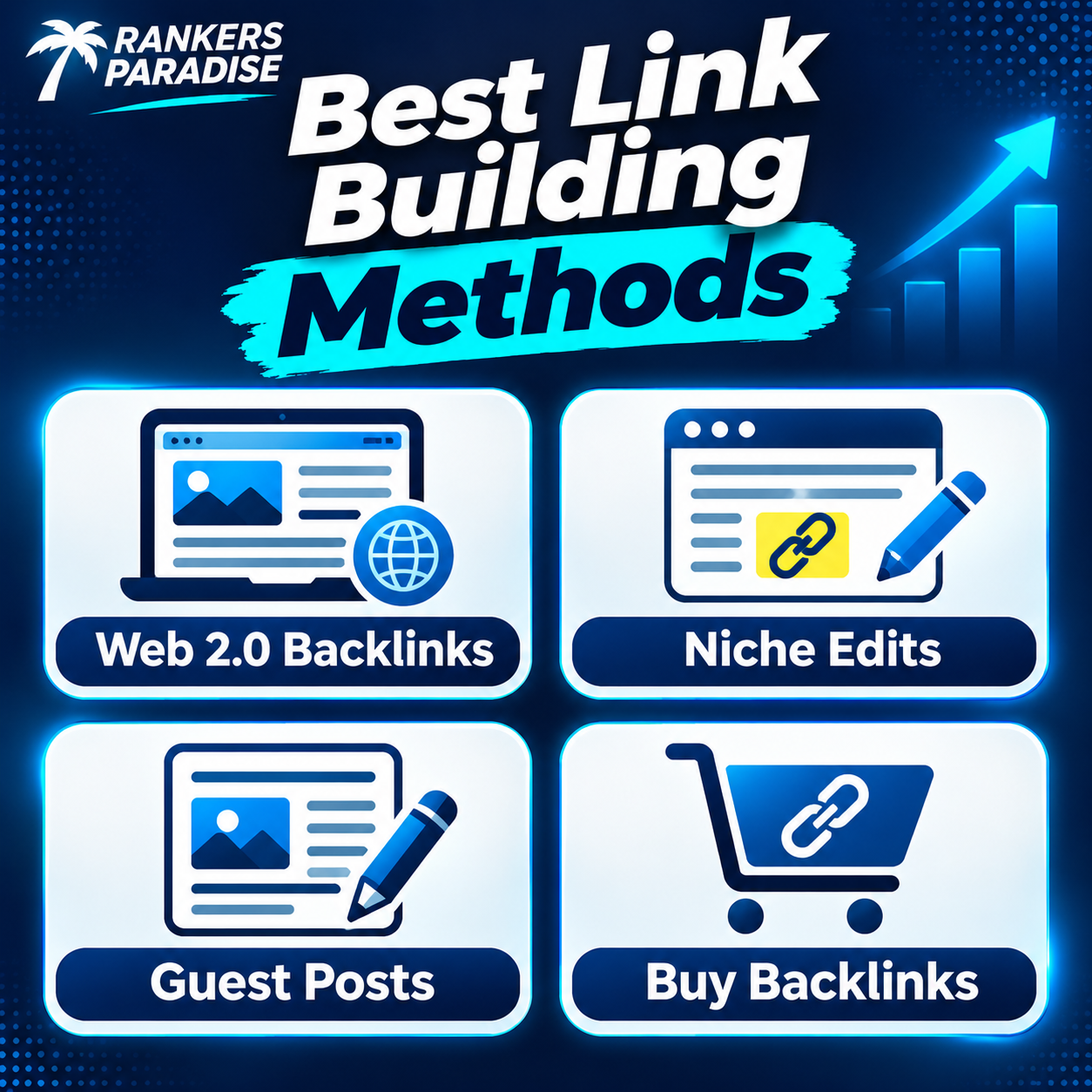
Here are the four methods we’re going to look at.
| Link building method | Main advantage | Main drawback | Best suited to |
|---|---|---|---|
| Web 2.0 websites | Low entry cost and content control | Many pages have little independent authority | Supporting content and brand presence |
| Niche edits | Placement inside existing articles | Quality depends heavily on the host page | Established websites seeking relevant exposure |
| Guest posting | New editorial content on relevant websites | Requires research and outreach | Businesses building authority and awareness |
| Paid backlink services | Saves research and administration time | Quality varies; paid ranking links carry policy risks | Businesses with a budget for promotion |
My advice is to look at the individual placement before deciding whether it’s worth having.
A link from a website with impressive-looking authority metrics isn’t automatically better than a link from a smaller site with genuine readers.
And a cheap backlink isn’t a bargain if it does nothing useful.
1. Web 2.0 Backlinks: A Cheap Way to Build Your Own Supporting Content
I’ve written quite a lot about this particular method on Rankers Paradise.
The reason is simple.
It’s something you can experiment with yourself without spending much money.
Web 2.0 websites are publishing platforms that allow you to create your own pages, blogs or articles.
Some popular examples include:
These websites allow you to publish content without having to purchase a separate domain and hosting package.
However, each platform has its own rules about commercial content and outbound links.
How I approach Web 2.0 websites
The first thing I look at is the content.
You don’t want to create a page that consists of three sentences and a backlink.
Give the page a reason to exist.
For example, imagine you run an online shop selling garden furniture.
You could publish an article about choosing outdoor furniture for a small garden.
Explain the different materials, discuss maintenance and include useful examples.
If a link to your main website genuinely helps the reader, it fits naturally into the article.
That’s a much better approach than filling a page with keywords and dropping an unrelated link at the bottom.
I also like to keep the content relevant to the website being promoted.
A backlink buried inside an article about an entirely different subject doesn’t suddenly become valuable because the hosting domain has a high authority score.
My original Web 2.0 link wheel experiment
I published a link wheel experiment on Rankers Paradise back in April 2017.
The setup was straightforward.
I created five Web 2.0 properties and connected them in a wheel formation.
The plan also involved adding ten supporting Tumblr links to each of the five properties.
I recorded a position-five result on Google.com and Google.co.uk on the day the test page was published.
By 18 May 2017, I reported that the page had reached the top position for its selected keyword.
You can see the original setup and the historical ranking screenshots in my Web 2.0 link wheel tutorial.
Now, that doesn’t mean you’ll get the same result today.
It was an easy keyword, the experiment took place years ago, and Google’s systems have changed considerably.
It also wasn’t a controlled test that isolated the effect of each link.
But it gives you an idea of why I started testing these publishing platforms in the first place.
If you want to build the links yourself, I’ve put together a separate guide showing how to create web 2.0 backlinks using different platforms.
Are they worth using today?
They can be useful when you’re building genuine supporting content, developing a brand presence or attracting referral visitors.
The important thing is to check whether the page itself has any value.
A new blog on a famous publishing platform doesn’t inherit all the authority of the platform’s homepage.
That’s something people often overlook.
Also, building networks of low-value pages mainly to manipulate rankings can fall foul of Google’s link spam policies.
For businesses that want someone to handle the setup and publishing work, Rankers Paradise has a range of Web 2.0 backlink services.
I’d still recommend checking the content quality, link attributes and intended purpose before placing an order.
2. Niche Edits: Getting Your Link Inside an Existing Article
This is where things get interesting.
Instead of publishing an entirely new article, a niche edit involves adding a link to content that’s already online.
Let’s say you sell mountain bikes.
You find a cycling website with an existing article about choosing a bike for rough terrain.
That article might have been published three years ago.
It may already attract visitors, have relevant backlinks and appear in Google for several search terms.
If the website owner updates the article to include a useful resource from your website, that’s a contextual link inside established content.
You haven’t had to create a completely new guest article.
What I check before choosing a niche edit
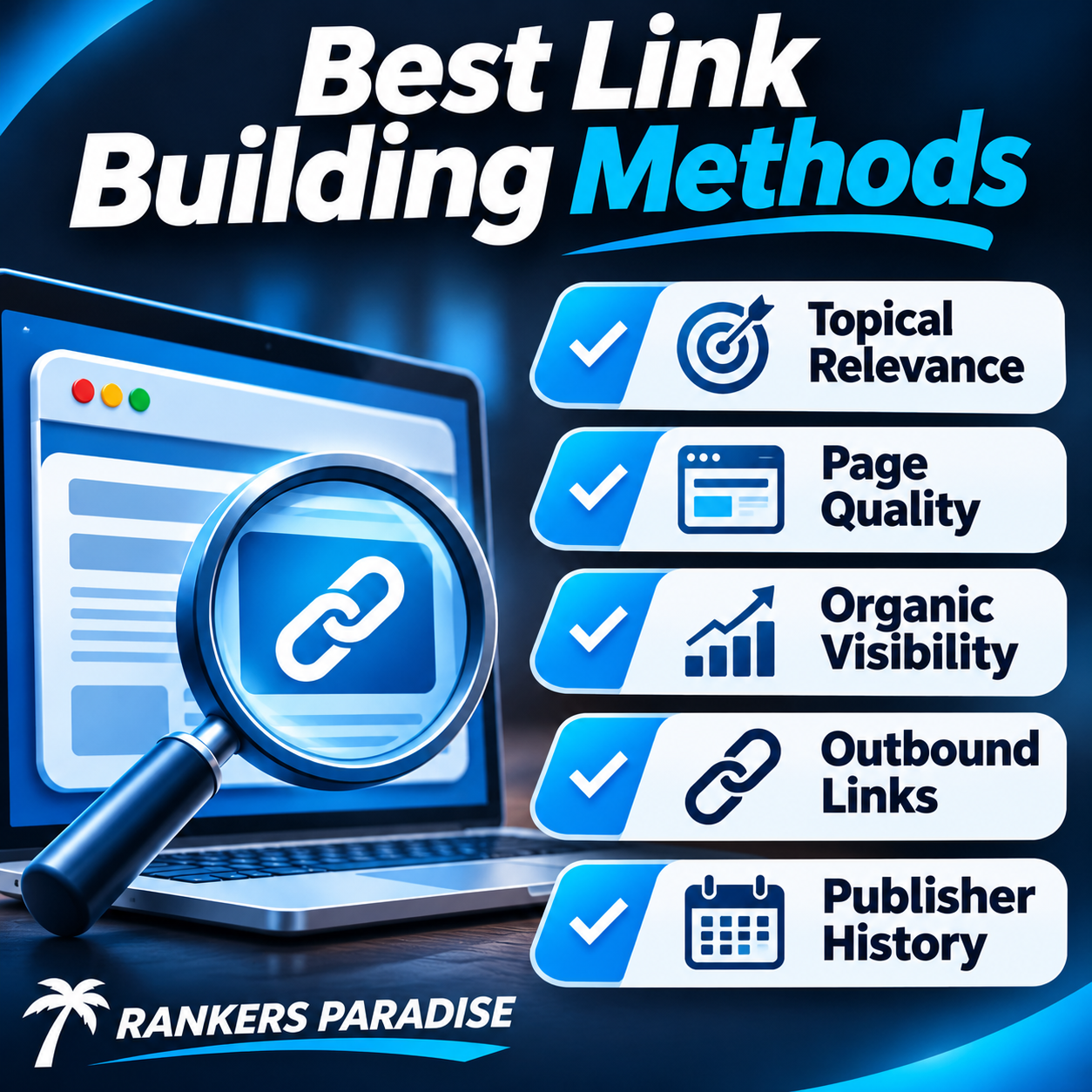
The first thing I want to know is whether the article is relevant.
Not just the website.
The actual page.
A website could publish articles about finance, travel, pets, technology and hundreds of other subjects.
That doesn’t mean every page on the domain is a suitable place for your link.
I would check:
1. The article’s subject
Does the content relate to the page you’re promoting?
If not, I’d move on.
2. The existing backlinks
Has the article attracted links from other websites?
Check the referring pages rather than looking at the number alone.
3. Organic search visibility
Does the article appear in Google for relevant searches?
A page that already attracts suitable visitors could be useful for referral traffic.
4. Outbound links
Is the article full of links to unrelated commercial websites?
That’s something I’d investigate before spending money.
5. The website’s publishing history
Does it publish useful content for a recognisable audience, or does every article appear to exist solely to sell another link?
That distinction matters.
Should you pay for niche edits?
A genuine editorial update that introduces readers to a useful resource can be worthwhile.
A paid placement can also provide advertising exposure, but Google expects commercial links to be appropriately qualified.
Don’t assume an unqualified paid link is a safe shortcut to higher rankings.
If you’re comparing providers, take a look at the Rankers Paradise guide on where to buy niche edits.
You should be able to understand the placement requirements and what you’re purchasing before paying for anything.
3. Guest Posts: Build Links While Getting Your Business in Front of New Readers
Guest posting has been around for years.
And there’s a good reason people still use it.
You get the opportunity to publish useful content on another website and introduce your business to an audience that might never have found you otherwise.
That’s the part I think deserves more attention.
Too many people focus entirely on whether the link is dofollow.
They forget that an actual person might read the article.
What makes a guest post worth having?
Imagine you operate a website selling fishing equipment.
You have two possible placements.
The first is a general website publishing hundreds of articles every month about every subject imaginable.
The second is a smaller fishing blog with regular readers, genuine discussions and detailed articles about tackle and fishing locations.
Which would you prefer?
I’d investigate the fishing blog first.
Even if the general website has a much higher authority score.
The specialist website has an audience that’s more likely to be interested in what you’re selling.
That’s the sort of relevance I want to see.
How to find suitable guest posting opportunities
Start by searching Google for websites in your industry.
Try searches such as:
-
fishing blog write for us -
fishing guest article -
fishing equipment contributor -
fishing blog submission guidelines
Replace fishing with your own industry.
Don’t limit yourself to websites with a dedicated guest posting page, either.
Some excellent publishers accept contributions without advertising that fact.
Look for editorial contact details and check whether they publish outside contributors.
When contacting the owner, suggest an article that would genuinely interest their readers.
Don’t send a generic message asking how much they charge for a dofollow backlink.
How to write a guest post that people actually read
Choose a subject you understand.
Explain something useful.
Add examples.
And avoid turning the whole article into an advertisement.
If you’re writing about fishing equipment, perhaps compare different types of rods for beginners.
Explain the mistakes people make when choosing equipment.
Give readers something they can use.
A relevant link to your website might make sense in that context.
A paid guest placement should use the appropriate sponsored or nofollow link attributes. Google also warns against large-scale guest posting designed primarily to manipulate rankings.
You can read more about the service options available at Rankers Paradise if you’re looking to buy guest posts.
Guest posts versus niche edits
Both methods can put your website in front of a relevant audience.
The main difference is the content.
With a guest post, you’re usually creating something new.
With a niche edit, you’re working with an existing article.
I prefer a new guest article when there’s a subject worth covering in detail.
An editorial update can make more sense when an established article is missing a resource that would genuinely improve it.
Neither method should be judged solely by a domain authority number.
4. Buying Backlinks: What You Need to Know Before Spending Money
This is where people can waste a lot of money.
Search Google for backlink services and you’ll find everything from a handful of editorial placements to packages promising thousands of links for a few dollars.
The prices are all over the place.
So is the quality.
One service might involve contacting relevant website owners, producing original content and arranging a clearly disclosed sponsored placement.
Another might involve posting your URL across hundreds of automated profiles.
Those are two completely different products.
Are expensive backlinks always better?
No.
I’ve seen services charging high prices simply because the websites have impressive-looking domain authority metrics.
That doesn’t tell you whether the page is useful.
Before buying any package, I’d want answers to a few questions.
Where will the links appear?
Can I see examples of previous placements?
Will the content be relevant to my website?
Are the pages indexed?
Will I receive a report showing the completed work?
Are the links permanent, temporary or dependent on an ongoing payment?
What link attributes will be used?
You shouldn’t have to guess what you’re paying for.
Don’t confuse domain authority with Google rankings
Domain Authority, Domain Rating and similar metrics are useful for comparing websites.
But they aren’t Google’s own ranking scores.
You can find a website with a high third-party authority score that receives hardly any organic traffic.
You can also find a smaller website that ranks extremely well for a handful of commercially valuable keywords.
Which one is better?
It depends on what you’re trying to achieve.
I’d rather have relevant visitors reaching my website than a backlink that only looks impressive in a spreadsheet.
What about cheap backlink packages?
Cheap doesn’t automatically mean bad.
Some tasks cost less because they’re straightforward to complete.
Setting up a profile or publishing on a free blogging platform doesn’t involve the same work as researching, writing and arranging a specialist editorial contribution.
The problem starts when a service promises ranking improvements without explaining how the work will help.
Google’s link spam policies explicitly prohibit buying links for the purpose of manipulating rankings.
Paid advertising and sponsorship are permitted when links are appropriately qualified.
That distinction is worth understanding before you order.
I’ve written a separate guide explaining what to check when you buy backlinks.
Read that before spending your money.
Which Backlink Strategy Gives You the Best Value?
Let’s compare the four approaches from a practical point of view.
| Method | Typical workload | Content control | Potential referral traffic |
|---|---|---|---|
| Web 2.0 publishing | Low to medium | High | Usually limited initially |
| Niche edits | Medium | Depends on publisher | Depends on existing article traffic |
| Guest posting | Medium to high | Shared with publisher | Can be strong on relevant websites |
| Managed backlink services | Low for the buyer | Depends on package | Varies by placement |
Notice I’ve not given any of these methods a guaranteed ranking score.
That’s deliberate.
You can’t accurately predict how much an individual backlink will influence Google rankings just by looking at its type.
The target keyword, competing pages, existing website authority, content quality and link context all play a part.
A backlink that appears valuable for one website might contribute very little to another.
My Approach to Building a Backlink Strategy
If I were starting with a new website, I wouldn’t rush out and order thousands of backlinks.
I’d first look at what I’m trying to rank for.
Let’s use an example.
Imagine you’ve launched a website selling office furniture.
You want to rank for a commercial keyword such as “buy ergonomic office chairs”.
Here’s how I’d approach the project.
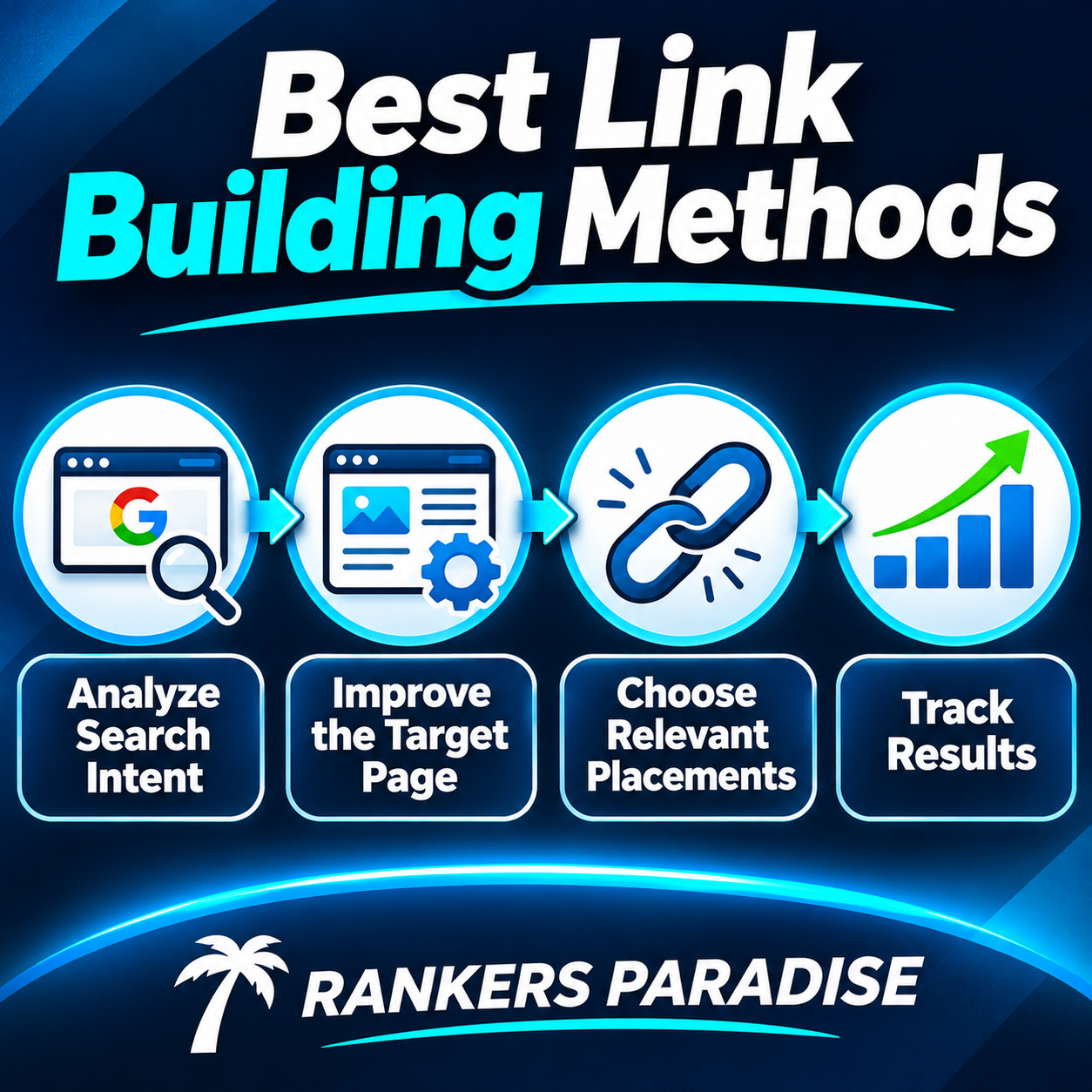
Step 1: Look at the websites already ranking
Open Google and search for your target keyword.
Examine the top results.
Are they large retailers?
Specialist shops?
Product category pages?
Long-form buying guides?
You need to understand what Google is currently showing people searching for that particular product.
If the first page is dominated by established retailers with strong product pages, publishing a 3,000-word blog post might not be the answer.
You may need a better category page.
Step 2: Check the competing pages
Look at the actual URLs ranking, not just their homepages.
You can use tools such as Ahrefs or Semrush to investigate referring domains, estimated traffic and competing keywords.
I would look for patterns.
Are the top pages supported by links from relevant websites?
Do they have genuinely useful content?
Are there weaker pages ranking among the established competitors?
Those details help you decide where to spend your time.
Step 3: Improve the page you want to rank
Don’t build links to a page that doesn’t answer the searcher’s question properly.
For an office chair category page, I’d want useful product information, clear prices, delivery details, specifications and sensible navigation.
A few relevant internal links can also help people find the page.
Get those basics right before investing heavily in promotion.
Step 4: Choose the most suitable placements
Now look at the websites where potential customers spend their time.
You might find office design blogs, workplace publications, furniture review websites or business resources.
A specialist article about home-office ergonomics could provide a relevant editorial opportunity.
A sponsored placement might deliver useful referral visitors.
A supporting article on a publishing platform could introduce your brand to another audience.
You don’t have to use every method.
Choose the ones that make sense.
Step 5: Track the results
This is the part I always find interesting.
You can spend weeks putting a campaign together, but until you measure what happens, you’re largely guessing.
Record your starting positions.
Check your impressions and clicks in Google Search Console.
Track the target pages and the keywords you’re trying to improve.
I would also record the dates when new content was published and links were acquired.
Then review the results over time.
Don’t assume that a ranking movement was caused by the most recent backlink.
Google rankings can change for numerous reasons, including competitors updating their websites and changes to Google’s search systems.
Look for sustained improvements rather than celebrating every temporary jump.
How Much Should You Spend on Link Building?
There’s no universal figure.
A small local business targeting a handful of low-competition searches might have very different requirements from an international retailer competing for highly valuable commercial terms.
I would start by calculating what a new customer is worth.
Let’s say your average sale is $200.
If your profit after costs is $60, that gives you a starting point for deciding how much you can afford to spend acquiring customers.
Now consider the value of relevant referral traffic, content production and the wider marketing benefits.
A $300 campaign that produces no measurable business value isn’t automatically better than a $50 campaign.
But the cheapest option isn’t always the most economical either.
What should you ask a link building provider?
Before purchasing a service, ask for examples of completed work and find out exactly what’s included.
A proper report should make it easy to identify where the work has been carried out.
You should also understand whether you’re purchasing content creation, outreach, advertising, profile setup or another service.
These distinctions affect the price.
At Rankers Paradise, you can browse the available SEO services and backlink packages and compare different approaches.
My advice is to choose a package that suits your website and budget rather than automatically ordering the one with the biggest link count.
Common Link Building Mistakes That Can Cost You Money
I’ve covered the methods I would investigate. Now let’s look at a few mistakes worth avoiding.
Buying links based entirely on authority scores
A DA 80 website might look impressive.
But if the placement is on a page with no relevant content, no readers and dozens of unrelated outgoing links, what are you really getting?
Check the page itself.
Ignoring search intent
You could have excellent backlinks pointing to an article, but if people searching the keyword want to buy a product, that article may be the wrong page to rank.
Look at what Google is already showing.
Building hundreds of links without checking the source
Quantity alone doesn’t tell you anything about quality.
A large package of automated links can introduce unnecessary risk.
I’d rather know where links are going before deciding whether they’re suitable.
Using the same keyword for every anchor text
A natural link profile contains different kinds of anchor text.
Brand names, website addresses, article titles and descriptive phrases all have legitimate uses.
Repeatedly forcing an exact commercial keyword into paid placements is a recognised link spam pattern.
Expecting immediate results
Some ranking movements happen quickly.
Others take months.
And some campaigns never produce the outcome you hoped for.
That’s why you need a proper baseline and regular reporting.
Forgetting about internal links
You can have excellent articles scattered across your website, but visitors still need a sensible way to move between them.
Internal links help people discover related information.
They also help search engines understand how your pages connect.
For example, this article compares several different strategies.
The individual tutorials linked throughout the guide explain each method in greater detail.
That creates a useful route from a general comparison to a more specific subject.
Should You Build Backlinks Yourself or Pay for a Service?
That depends on how much time you have.
If you enjoy SEO and want to learn how different publishing platforms work, try creating some useful content yourself.
You can learn a lot by building a website, publishing articles and tracking what happens.
I’ve shared plenty of tutorials on Rankers Paradise for that reason.
You don’t have to buy everything.
On the other hand, running a business takes time.
Researching publishers, checking placement quality, writing articles and maintaining records can become a substantial job.
That’s where a service provider can help.
Just remember that outsourcing the work doesn’t remove the need to understand what you’re purchasing.
And no reputable provider can guarantee a particular organic ranking.
Frequently Asked Questions
What is the most effective link building method?
There isn’t a single method that works best for every website. Relevant editorial links, useful content promotion and genuine industry relationships can all help a website gain visibility. The most suitable approach depends on your audience, budget and competition.
Are Web 2.0 links still useful?
They can be useful for publishing supporting content, building a brand presence and attracting visitors. However, low-quality pages created primarily to manipulate rankings can violate search engine policies.
Are niche edits better than guest posts?
Not necessarily. An editorial update to an established article can provide exposure to an existing audience, while a new guest article allows you to cover a subject in more detail. Judge the individual website and placement.
How many backlinks do I need to rank on Google?
There’s no fixed number. Some pages rank with very few external links, while others compete in markets where leading websites have substantial backlink profiles. Content relevance, search intent, competition and other signals also matter.
Can I rank without buying backlinks?
Yes. Pages can earn rankings through useful content, strong site structure, relevant internal links and naturally acquired references. Whether that’s enough for a particular keyword depends on the competition.
Is it safe to pay for backlinks?
Paying for advertising or sponsorship is permitted under Google’s policies when links are appropriately qualified. Buying links that pass ranking credit for the purpose of manipulating search results is against those policies and carries risk.
How long does link building take to work?
There is no guaranteed timetable. Search engines need to discover and process pages, and rankings are influenced by many factors. Track results over several weeks and months rather than expecting every placement to produce an immediate change.
Final Thoughts: Choose the Right Links, Not Just More Links
I’ve spent years experimenting with different backlink strategies, and one thing I would encourage anyone doing SEO to remember is this:
Don’t get carried away with the number of links.
Look at the websites.
Look at the pages.
Look at the content.
And look at the results.
A backlink should have a reason to exist beyond trying to influence a search engine.
If you can attract relevant visitors, build useful relationships and publish content people actually want to read, you’re creating something with value beyond a temporary ranking movement.
If you want to do the work yourself, use the tutorials I’ve linked throughout this guide.
If you’d rather outsource the research, publishing and placement work, have a look through the Rankers Paradise SEO shop and choose a service that matches what you’re trying to achieve.
Whatever you decide, measure the results.
That’s how you find out what deserves more of your time and money.