
Web 2.0 backlinks can be a useful part of an SEO strategy when they are created with care, relevance, and long-term value in mind. These backlinks are built on user-generated publishing platforms, blogs, and content-sharing sites where you can create your own pages and link back to your main website. When done correctly, they can support your backlink profile, help diversify your link sources, and give your pillar content extra visibility.
However, many website owners and SEO beginners make the mistake of treating Web 2.0 properties as quick link drops rather than useful supporting assets. This often leads to weak, low-quality backlinks that provide little value and may even harm the credibility of a campaign. To get the best results, it is important to understand what not to do.
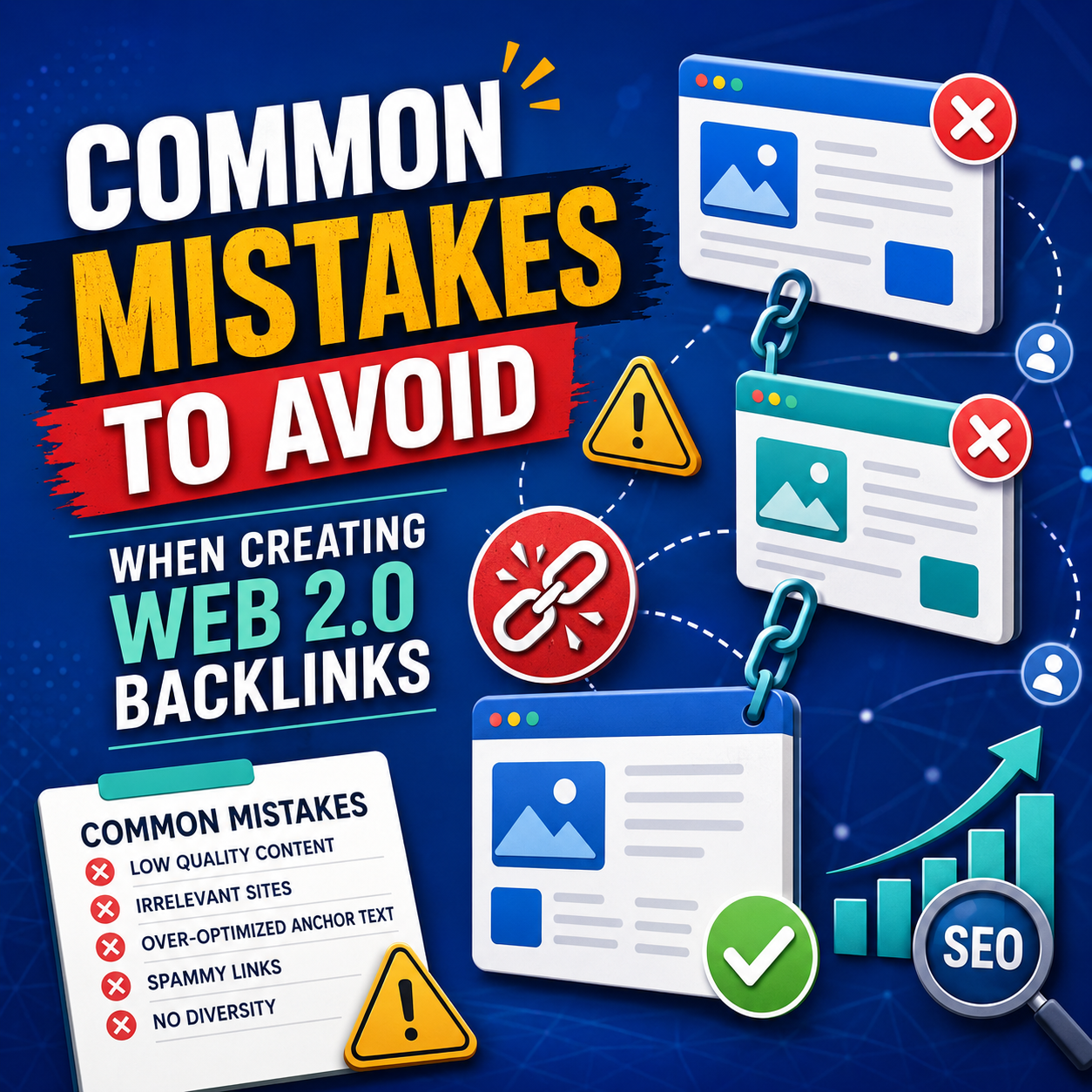
Below are the most common mistakes to avoid when creating Web 2.0 backlinks.
1. Using Thin or Low-Quality Content
One of the biggest mistakes is publishing short, generic, or poorly written content just to place a backlink. A Web 2.0 page should not exist only for the link. It should provide helpful information, answer a question, or support a topic in a meaningful way.
Thin content often includes:
- Very short articles with no real depth
- Spun or rewritten content that reads unnaturally
- Articles stuffed with keywords
- Content that offers no unique value
- Posts created only to hide a backlink
Search engines are much better at identifying poor-quality pages than they used to be. If your Web 2.0 content looks rushed, duplicated, or irrelevant, the backlink will likely carry little weight. Instead, each post should be written like a real article that a reader could benefit from.
2. Overusing Exact-Match Anchor Text
Another common mistake is using the same keyword anchor text repeatedly. While it may seem logical to use your main keyword every time you build a backlink, this can create an unnatural pattern.
For example, if every Web 2.0 post links back using the exact same anchor text, it may look manipulative. A natural backlink profile usually contains a mix of branded anchors, partial-match anchors, naked URLs, generic anchors, and topical phrases.
Anchor text should feel natural inside the sentence. It should help the reader understand where the link goes without looking forced. For a deeper strategy, you can read this guide on web 2.0 backlinks for SEO.
3. Creating Too Many Links Too Quickly
Speed can be a problem when building Web 2.0 backlinks. Some people create dozens or even hundreds of Web 2.0 properties in a short period, thinking more links will automatically produce faster rankings.
This approach can look unnatural, especially if all the properties are new, all link to the same page, and all use similar content. SEO growth should look gradual and organic. A smaller number of well-built Web 2.0 properties is usually more effective than a large number of weak, rushed ones.
Focus on quality, consistency, and relevance rather than volume alone.
4. Ignoring Relevance
Relevance matters in link building. If your main website is about SEO, digital marketing, or online business, your Web 2.0 content should stay closely related to those topics. Creating backlinks from unrelated content can reduce the value of the link.
For example, a post about cooking, travel, or fitness that randomly links to an SEO article will not look as natural as a post about link building, ranking strategies, or content marketing.
Your Web 2.0 article should make sense as a supporting piece of content. It should naturally lead readers toward your pillar page.
5. Not Building Out the Web 2.0 Property
Many people create a Web 2.0 account, publish one article, add a backlink, and then abandon it. This makes the property look weak and artificial.
A stronger Web 2.0 property may include:
- A completed profile
- A relevant username or brand name
- A short bio or description
- Multiple posts over time
- Internal links between posts
- Images or media where appropriate
- Natural outbound links to helpful resources
The goal is to make the Web 2.0 property look like a real mini-site or supporting blog, not a one-page link farm.
6. Publishing Duplicate Content Across Multiple Platforms
Copying and pasting the same article across different Web 2.0 sites is another mistake. Duplicate content reduces uniqueness and can make the entire strategy look automated.
Each Web 2.0 post should be original. You can cover similar topics, but the structure, wording, examples, and angle should be different. For example, one post could explain the benefits of Web 2.0 link building, another could cover common mistakes, and another could discuss how to make supporting content more natural.
Unique content gives each Web 2.0 property a better chance of being indexed and valued.
7. Forgetting About Indexing
A backlink that is never discovered by search engines is unlikely to provide much benefit. Some Web 2.0 pages may not get indexed automatically, especially if the content is thin or the property has no activity.
To improve indexing chances, make sure the content is useful, properly formatted, and not duplicated. You can also share the Web 2.0 post naturally, link between related supporting properties, and keep the page active with occasional updates.
Indexing should not be forced through spammy methods. Instead, make the page worth discovering.
8. Adding Too Many Links in One Article
A Web 2.0 post filled with links can look spammy. Some people add several links to the same money page, multiple exact-match anchors, and several unrelated outbound links in a single short article.
This reduces trust and makes the content harder to read. A cleaner approach is to include one relevant backlink where it naturally fits. If you include other links, they should point to genuinely useful resources and support the topic.
The backlink should feel like part of the content, not the only reason the content exists.
9. Using Poor Formatting
Formatting affects readability and perceived quality. A long block of text with no headings, spacing, or structure can look low effort. Even if the article contains useful information, poor formatting can make it less effective.
Good Web 2.0 content should include:
- A clear title
- Short paragraphs
- Helpful subheadings
- Natural keyword usage
- Bullet points where useful
- A logical beginning, middle, and end
The easier the content is to read, the more professional the Web 2.0 property appears.
10. Treating Web 2.0 Backlinks as the Whole SEO Strategy
Web 2.0 backlinks should not be your entire link-building plan. They work best as one layer within a broader SEO strategy. Strong rankings usually depend on a combination of quality content, technical SEO, internal linking, topical authority, user experience, and a diverse backlink profile.
Relying only on Web 2.0 links can limit growth. Use them to support pillar content, strengthen topical relevance, and diversify your link sources, but do not ignore other SEO fundamentals.
11. Not Matching the Content to Search Intent
Every article should match what the reader expects to learn. If your Web 2.0 post targets people looking for backlink advice, the content should directly answer their questions. Avoid vague introductions, filler content, or unrelated sections.
Search intent matters because it keeps the article focused. A focused article is more useful for readers and more relevant for the backlink it contains.
Before writing, ask:
- What problem is this article solving?
- Who is the reader?
- What should they understand by the end?
- Where does the backlink naturally fit?
This helps create content that feels purposeful.
12. Using Automated or Spun Content
Automation can save time, but it can also produce content that sounds unnatural. Spun content often contains awkward phrasing, repeated ideas, and poor sentence flow. Search engines and readers can usually detect this.
If you use AI or tools to help draft Web 2.0 content, always edit the article manually. Add original examples, improve the structure, and make sure the writing sounds natural. The final article should read like it was written for people, not just search engines.
13. Forgetting to Update Older Web 2.0 Posts
Many Web 2.0 posts are created and then forgotten. Over time, information may become outdated, links may break, or the content may no longer match your current SEO strategy.
Updating older posts can help keep them useful. You can refresh the introduction, improve headings, add new information, adjust anchor text, or include more relevant supporting details.
A maintained Web 2.0 property looks more natural than one that was created once and abandoned forever.
14. Choosing Low-Quality Platforms
Not all Web 2.0 platforms are equal. Some are trusted, active, and easy to index. Others are filled with spam, inactive accounts, or low-quality content. Choosing the wrong platforms can reduce the effectiveness of your backlinks.
Look for platforms that allow useful content, have a decent reputation, and provide a clean publishing experience. Avoid sites that appear overloaded with spam or have no editorial standards.
The quality of the platform matters just as much as the content you publish.
15. Writing Only for Search Engines
The final mistake is forgetting the reader. Web 2.0 backlinks may be created for SEO, but the content still needs to be useful to humans. If the article is awkward, repetitive, or stuffed with keywords, it will not build trust.
Write naturally. Explain ideas clearly. Use examples. Make the article easy to follow. A good Web 2.0 post should support your SEO goals while still providing genuine value to someone who lands on the page.
Final Thoughts
Web 2.0 backlinks can be helpful when they are built with quality and relevance in mind. The biggest mistakes usually come from rushing the process, using poor content, overusing exact-match anchors, or treating Web 2.0 sites as simple link drops.
A better approach is to create useful supporting content, build out each property properly, use natural anchor text, and keep your links relevant to the topic. When Web 2.0 backlinks are part of a balanced SEO strategy, they can support your pillar content and help strengthen your overall backlink profile.
Keep reading…
How to Build Powerful Web 2.0 Backlinks Without Getting Penalized
The Best Web 2.0 Sites for Building High-Quality Backlinks
Web 2.0 Backlinks vs Guest Posts: Which Link Building Method Works Better?