
Most people look at high-ranking websites and assume there is one big reason they sit at the top of Google. Maybe they have better content. Maybe their domain is older. Maybe they have more backlinks. Maybe they publish more often.
The truth is more interesting.
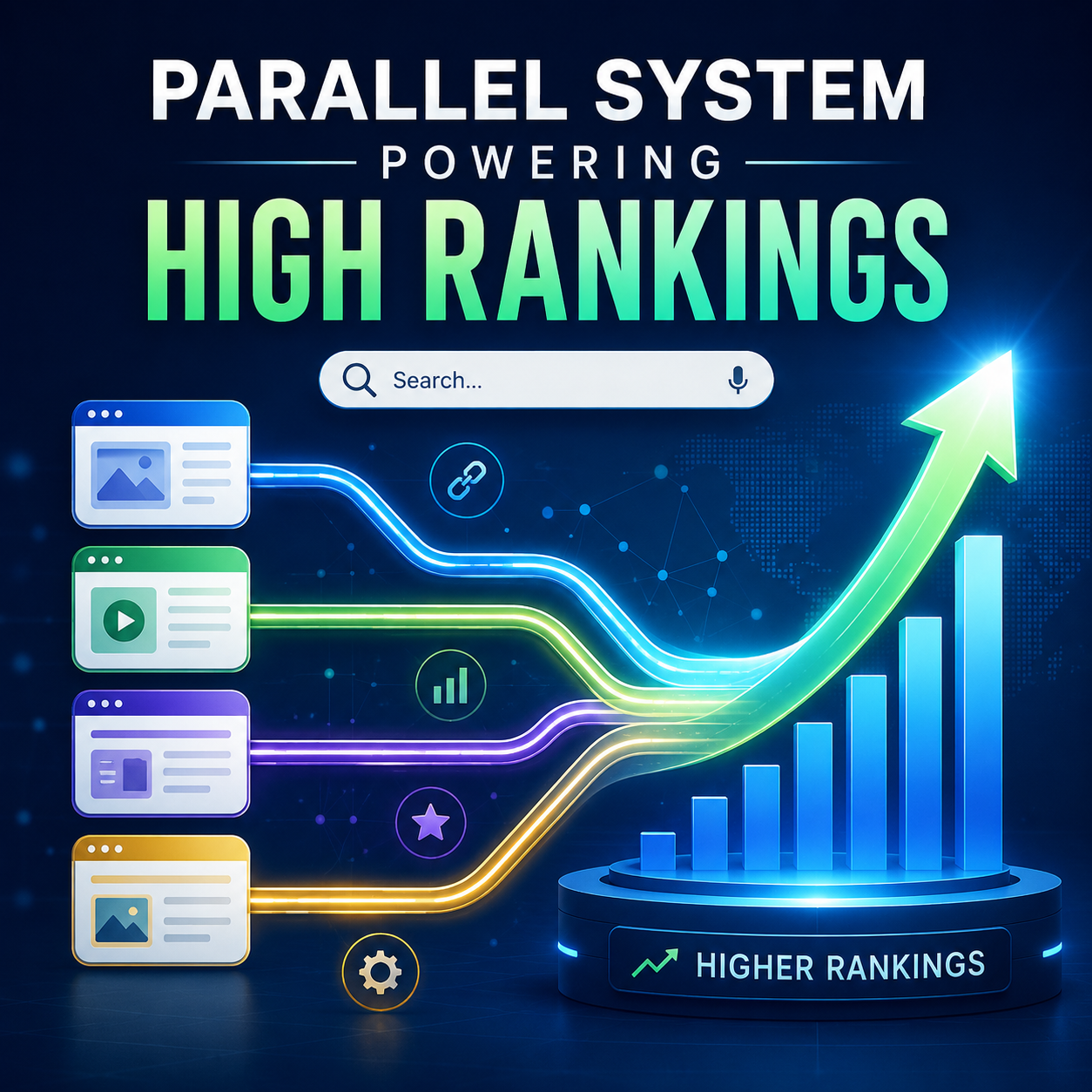
High rankings are rarely powered by one single tactic. They are usually the result of a parallel system: several SEO forces working at the same time, supporting each other quietly in the background. When this system is built properly, rankings do not depend on luck. They become the outcome of structure, authority, relevance, and trust moving together.
That is why some websites seem to climb faster than others. They are not just writing articles. They are building a ranking machine.
Why SEO Works Best as a Parallel System
A website does not rank because of content alone. Content gives Google something to understand, but authority gives Google a reason to trust it. Technical SEO helps search engines crawl and index pages properly, but links help those pages gain strength. Internal linking spreads that strength across the site, while topical relevance helps Google see the bigger picture.
Each part matters, but the real power comes from the combination.
Think of it like a business with multiple departments. Content is the sales team, attracting visitors and answering questions. Backlinks are the reputation department, proving that others trust the brand. Technical SEO is the operations team, making sure everything runs smoothly. Internal links are the communication system, passing value and direction from one area to another.
When one part is weak, the whole system slows down. When all parts work together, rankings become much easier to grow.
The Role of Content in the System
Content is the visible part of SEO. It is what users read, share, and engage with. It is also what search engines analyse when deciding whether a page deserves to appear for a keyword.
But not all content is equal.
A strong SEO content strategy is not just about publishing random blog posts. It is about creating pages that answer real search intent. Every article should have a purpose. Some pages are designed to attract informational searches. Some are created to support product or service pages. Others are built to strengthen a larger pillar page.
This is where many websites fail. They publish content without connecting it to a bigger strategy. The result is a collection of isolated posts that do not build much authority together.
A parallel system avoids this problem. Every article supports something larger. Each supporting page becomes part of a content network that helps Google understand which pages are most important.
Why Authority Still Matters
Even the best content can struggle if the website has no authority.
Search engines want to rank pages that appear trustworthy and valuable. Backlinks remain one of the strongest signals for that. When reputable websites link to a page, they are effectively giving it a vote of confidence.
Of course, quality matters far more than quantity. A handful of relevant, well-placed links can be more powerful than hundreds of weak links from low-value sites. The purpose of backlinks is not just to increase numbers. It is to build trust, relevance, and ranking strength.
For websites trying to compete in difficult niches, understanding buying backlinks for SEO can be an important part of building authority safely and strategically.
Internal Links: The Hidden Power Lines
External backlinks bring authority into a website, but internal links help distribute that authority.
This is one of the most overlooked parts of SEO. A website may earn strong backlinks, but if its internal linking structure is poor, much of that value can remain trapped on a few pages. Internal links guide both users and search engines through the site. They show which pages are connected, which topics matter, and which content deserves priority.
A good internal linking system creates clear pathways.
Supporting articles should link to pillar content. Related posts should connect naturally. Important commercial or informational pages should not be buried deep in the site. When internal links are planned carefully, the entire website becomes easier to crawl, easier to understand, and stronger as a whole.
This is why internal links are part of the parallel ranking system. They may not always be visible as a major SEO tactic, but they quietly influence how power moves across the site.
Technical SEO Keeps the Machine Running
Technical SEO is not always exciting, but it is essential.
A website with slow loading times, broken links, poor mobile usability, crawl errors, duplicate pages, or indexing problems will struggle to perform. Even strong content and quality backlinks can be held back if search engines cannot access or understand the site properly.
Technical SEO supports everything else.
It helps Google crawl pages efficiently. It improves user experience. It reduces wasted crawl budget. It makes sure important pages are indexable and properly structured. It also helps prevent small issues from becoming ranking barriers.
In a parallel system, technical SEO is the foundation. Without it, the rest of the strategy becomes harder to scale.
Topical Relevance Builds Search Confidence
Google does not only look at individual pages. It also looks at the broader context of a website.
If a site publishes one article on a topic, that article may rank. But if the site publishes a complete cluster of helpful content around that topic, Google has more reason to view the site as relevant and authoritative.
This is topical relevance.
For example, a website trying to rank for SEO-related terms should not rely on one page alone. It should build supporting content around link building, keyword research, technical SEO, on-page optimisation, content strategy, authority building, and ranking systems. Each article strengthens the overall theme.
The more complete the topic coverage, the easier it becomes for search engines to understand what the website is about.
User Signals Complete the Loop
SEO is not just about getting people to a page. It is also about what happens after they arrive.
If users click a result and quickly leave, that can suggest the page did not satisfy their intent. If they stay, read, click internal links, and explore more content, the page is likely doing its job.
This is why user experience matters.
Clear formatting, strong introductions, helpful headings, natural language, fast page speed, and useful next steps all contribute to better engagement. SEO content should not be written only for algorithms. It should be written for real people who need answers.
A parallel system works best when users are guided naturally from one helpful page to another.
Why Isolated SEO Tactics Usually Fail
Many website owners chase one tactic at a time.
They publish more content but ignore backlinks. They buy links but neglect content quality. They improve page speed but forget internal linking. They optimise keywords but fail to build topical depth.
This creates uneven SEO.
A website might improve for a short time, but the results are often unstable. One update, one competitor, or one technical issue can weaken the progress.
A parallel system is more resilient because it does not depend on one ranking factor. It creates strength from multiple directions. If content is strong, links can push it higher. If links are strong, internal linking can spread the authority. If technical SEO is clean, Google can access everything efficiently. If user experience is good, visitors are more likely to stay and engage.
That is how sustainable rankings are built.
How to Build a Parallel Ranking System
The first step is to identify your pillar pages. These are the main pages you want to rank and protect. They may be service pages, product pages, guides, or high-value informational assets.
Next, create supporting content around those pages. Each article should answer a related question, target a useful long-tail keyword, or support the main topic in a natural way.
Then, connect the content through internal links. Supporting posts should link back to the pillar page where relevant. Pillar pages should also link out to useful supporting resources when it improves the user journey.
After that, strengthen the system with authority. This means earning, building, or acquiring relevant backlinks from trustworthy sources. Backlinks should support the pages that matter most, while internal links help pass value throughout the site.
Finally, keep the technical foundation clean. Audit the site regularly. Fix broken links. Improve speed. Check indexing. Make sure the structure remains easy for search engines and users to follow.
The Long-Term Advantage
The biggest benefit of a parallel SEO system is momentum.
At first, progress may feel slow. A new article may not rank immediately. A backlink may not move the needle overnight. An internal link may seem like a small improvement. But over time, these actions compound.
Content builds relevance. Links build authority. Internal links distribute strength. Technical SEO removes friction. User experience improves engagement. Together, these elements create a website that becomes harder for competitors to outrank.
That is the real secret behind many high-ranking websites. They are not relying on one trick. They are running a complete system.
Final Thoughts
High rankings are not powered by chance. They are powered by alignment.
When content, backlinks, internal links, technical SEO, topical authority, and user experience work together, a website becomes more than a collection of pages. It becomes a structured SEO asset.
That is the parallel system behind strong rankings. It is not always obvious from the outside, but it is constantly working beneath the surface. For websites that want long-term visibility, this system is not optional. It is the foundation of sustainable search growth.
Keep reading…
Don’t Buy Backlinks Until You Know This