
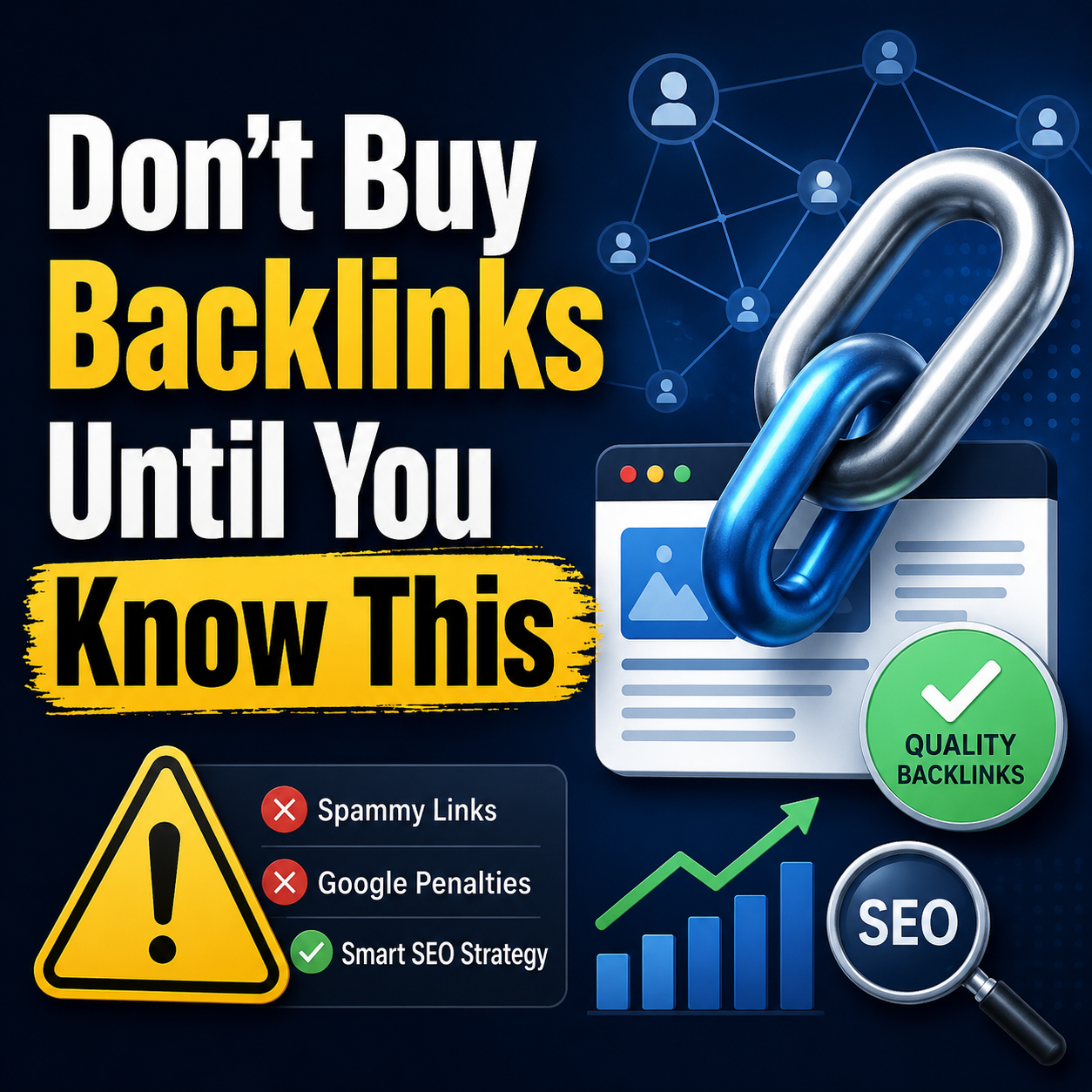
Buying backlinks can be one of the fastest ways to strengthen your website’s authority, but it can also be one of the quickest ways to damage your rankings if you approach it the wrong way. Many website owners hear that backlinks are important for SEO, then rush into purchasing links without understanding what separates a powerful backlink from a risky one.
Before you spend money on link building, you need to know what actually matters.
Not All Backlinks Are Equal
A backlink is only valuable when it comes from a relevant, trustworthy, and properly maintained website. A link from a strong site in your niche can help search engines understand that your content is credible. On the other hand, links from spammy directories, low-quality blogs, or sites created only to sell links can do more harm than good.
The goal is not to collect as many backlinks as possible. The goal is to earn or purchase links that look natural, make sense within the content, and come from websites with real value.
Cheap Links Can Become Expensive Problems
Many backlink sellers promise hundreds or even thousands of links for a very low price. At first, this might sound like a great deal. In reality, these packages are often filled with automated links, irrelevant placements, copied content, private blog networks, or websites with no real traffic.
Search engines have become much better at detecting unnatural link patterns. If your website suddenly receives a large number of poor-quality links, it can raise red flags. This may lead to ranking drops, loss of trust, or the need to spend time cleaning up your backlink profile later.
A cheap backlink package can end up costing more than a quality campaign because you may need to recover from the damage.
Relevance Matters More Than Volume
One strong backlink from a relevant website can be more useful than dozens of random links from unrelated sites. For example, if you run a health website, a backlink from a trusted wellness blog is far more valuable than a link from a random casino, fashion, or tech site.
Relevance helps search engines connect your website with the right topic. It also makes the link look natural to readers. If a backlink does not make sense in context, it is usually not worth pursuing.
Anchor Text Needs to Look Natural
Anchor text is the clickable text used in a backlink. Many people make the mistake of using the same exact keyword repeatedly because they want to rank faster. This can look manipulative.
A healthy backlink profile usually includes a mix of branded anchors, natural phrases, URL anchors, and occasional keyword-rich anchors. The anchor text should fit naturally into the article rather than looking forced.
For a deeper guide on how to approach this properly, click here to learn about safe link purchasing.
Check the Website Before Buying a Link
Before purchasing any backlink, review the site where the link will be placed. Look at the quality of its content, the topics it covers, whether it has real traffic, and whether it links out to too many unrelated websites.
A good backlink source should have:
- Relevant content
- A clean design
- Real articles written for readers
- A natural outbound link profile
- No obvious spam or hacked pages
- Topical connection to your niche
If the website looks like it exists only to sell links, avoid it.
Backlinks Should Support Good Content
Backlinks work best when they point to useful, well-structured content. If your page is thin, poorly written, or not helpful to users, links alone will not solve the problem.
Before investing in backlinks, make sure your target page deserves to rank. It should answer the search intent, include clear headings, provide useful information, and guide readers toward the next step. Backlinks can amplify strong content, but they cannot fully rescue weak content.
Avoid Sudden, Unnatural Link Building
Natural link growth usually happens gradually. If a small website gains hundreds of backlinks overnight, that pattern can look suspicious. A safer strategy is to build links steadily over time.
Consistency is better than speed. A few quality backlinks each month can create stronger long-term growth than a sudden burst of low-quality links.
Look Beyond Domain Authority
Many buyers focus only on metrics like Domain Authority, Domain Rating, or traffic estimates. These metrics can be useful, but they are not perfect. Some websites have inflated scores because of spammy link building.
Do not judge a backlink source by one number alone. Look at the whole picture: relevance, content quality, organic traffic, indexing, outbound links, and whether the website feels trustworthy.
The Best Backlinks Look Editorial
The safest and most effective backlinks are usually placed naturally inside helpful content. They support the article, provide extra context, and make sense for the reader.
A backlink should not feel like an advertisement shoved into a random paragraph. It should feel like a useful recommendation within a relevant topic.
Final Thoughts
Buying backlinks is not automatically bad, but buying the wrong backlinks can seriously hurt your SEO progress. Before investing, focus on quality, relevance, natural placement, and long-term safety.
The smartest link building strategy is not about shortcuts. It is about building authority carefully, choosing placements wisely, and making sure every backlink supports your website’s growth instead of putting it at risk.
Keep reading…
The Secret to Scaling SEO: Moving Beyond Basic Guest Posts
Data-Driven Link Building: Why DR/DA Isn’t the Only Metric That Matters