
Search engines don’t just rank pages based on keywords anymore. A major part of modern SEO is how much trust the wider web seems to place in a website. These “trust signals” aren’t always obvious, and they’re rarely controlled from inside your own site alone. Instead, they’re shaped by how your brand, content, and backlinks appear across the open web.
Understanding how to source and strengthen these signals can be the difference between a page that ranks temporarily and one that holds long-term authority.
What Are Trust Signals in SEO?
Trust signals are external indicators that suggest your website is credible, authoritative, and worth ranking. These signals are typically interpreted by search engines through patterns such as:
- Mentions of your brand across other websites
- Backlinks from relevant and authoritative domains
- Consistency of information about your business
- Engagement signals from users interacting with your content elsewhere
- Contextual relevance of where your site is being referenced
In simple terms, trust signals are what the internet says about you when you’re not in the room.
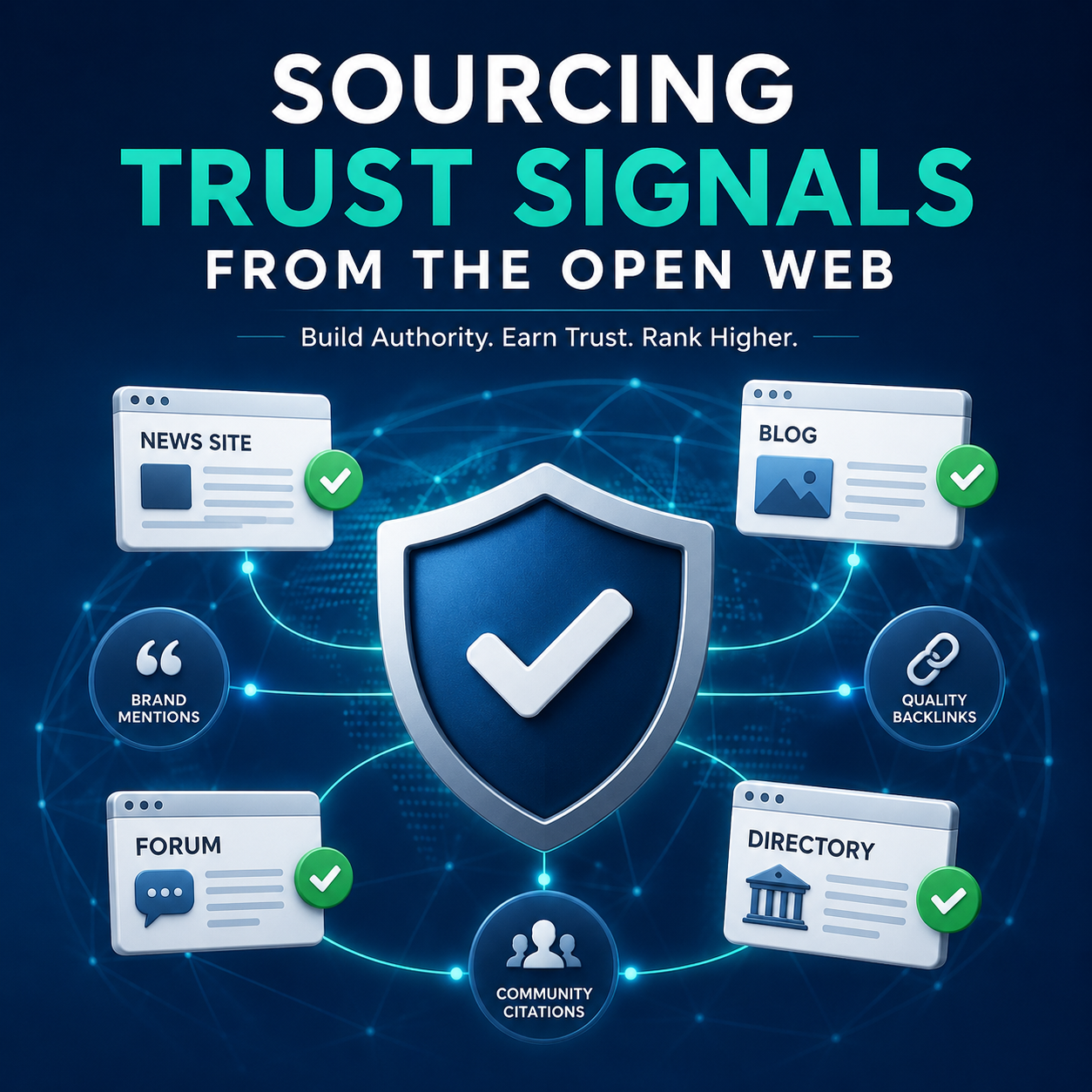
Why the Open Web Matters
The “open web” refers to all publicly accessible content outside your own website. This includes blogs, forums, news sites, social platforms, directories, and niche communities.
Search engines constantly crawl these sources to understand:
- Whether your site is being referenced naturally
- How often your brand appears in relevant discussions
- Whether authoritative sites endorse or reference your content
- How your website fits into broader topical ecosystems
If your website only exists in isolation, it’s much harder to establish authority. But when it’s consistently mentioned and linked across the web, trust compounds over time.
How Trust Signals Are Sourced
Trust signals don’t appear randomly—they are built through intentional and strategic exposure. Common methods include:
1. Contextual Backlinks
Links placed naturally within relevant content are one of the strongest signals of trust. These links tell search engines that your content is useful enough to be cited by others.
2. Brand Mentions Without Links
Even unlinked mentions of your brand can contribute to perceived authority, especially when they appear on reputable domains.
3. Editorial References
When bloggers, journalists, or niche writers reference your content, it carries more weight than self-published promotion.
4. Community Citations
Mentions in forums, Q&A platforms, and niche communities help reinforce topical relevance and authenticity.
The Role of Strategic Link Acquisition
One of the most effective ways to strengthen trust signals is through carefully planned link acquisition strategies. However, the key is not just getting links—it’s getting them from the right context, placement, and relevance level.
High-quality backlinks act as endorsements. They tell search engines that your content is not only visible but also trusted enough to be referenced by others in your space.
For a deeper breakdown of how structured link acquisition fits into a broader SEO framework, you can explore practical methods used by professionals if you see the Rankers Paradise strategy here.
Building Sustainable Trust Over Time
Trust signals are not built overnight. They accumulate gradually as your website becomes more integrated into the web’s content ecosystem. To maintain long-term growth, focus on:
- Earning links from diverse but relevant sources
- Avoiding over-reliance on a single traffic or link source
- Building consistent topical authority in your niche
- Ensuring your brand appears in multiple credible contexts
The goal is not just visibility—it’s recognition.
Final Thoughts
Sourcing trust signals from the open web is less about quick wins and more about strategic presence. When your website is consistently referenced, cited, and discussed across relevant platforms, search engines begin to treat it as a reliable authority.
Over time, these signals compound, strengthening your rankings and making your SEO performance far more stable and resilient.
Keep reading…
The Truth About PBNs: High Risk or High Reward in 2026?
The Anatomy of a Link: What Makes a ‘High-Quality’ Backlink in 2026?