
If you have been running a website or managing SEO campaigns for more than five minutes, you already know how frustrating the financial side of search engine optimization can be.
You set aside a monthly budget. You throw cash at random agencies, cheap Fiverr gigs, or isolated outreach emails, and what happens? Absolutely nothing. Your rankings flatline on page two, your traffic stays dead, and you are left staring at a pile of empty SEO invoices wondering where your money went.
I’ve been building links, testing ranking factors, and running Rankers Paradise since 2016. Over the last decade, I have seen Google’s core updates wipe out thousands of dollars in automated link spam, while smart, well-structured multi-tier campaigns keep climbing straight to the top of the SERPs.
The secret isn’t spending a fortune. It’s knowing how to execute a proper link building budget breakdown.
If you want to stop guessing and start outranking your competitors, you need a battle-tested financial and structural blueprint. Let’s break down how to allocate your SEO budget across Web 2.0s, Niche Edits, and Guest Posts so every single dollar works hard to push your site to Page 1.
Why Most SEO Budgets Fail (And How to Fix Yours)
Most site owners treat link building like buying lottery tickets. They spend $500 here on a random blog post, $200 there on a directory blast, and hope something sticks.
That is not an SEO strategy. That’s burning cash.
To rank competitive commercial keywords in Google today, your link profile needs three things:
-
Safety and Velocity Control: A foundation that looks natural and buffers your money site.
-
Instant Authority: Aged, indexed link juice that passes ranking power immediately.
-
Contextual Relevance: Fresh editorial votes from sites getting real human traffic.
If your budget only focuses on one of these elements, you will stall out. To fix this, you need to diversify your spend across a proven asset mix.
Step 1: Laying the Foundation (Web 2.0 Buffer Layer)
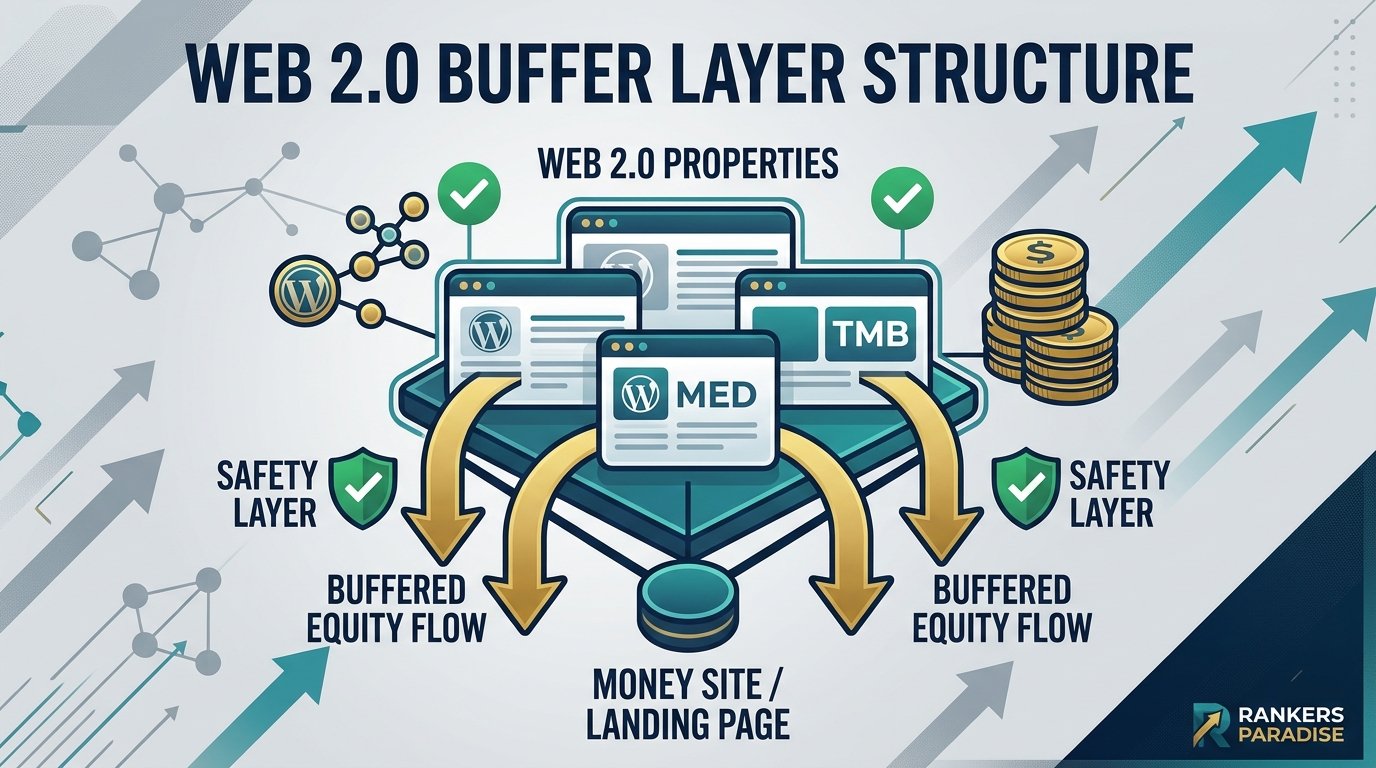
Before you point powerful, expensive authority links directly at your money page, you need a safe structural buffer. This is where Web 2.0 properties come into play.
When I first started back in 2016, building high-authority Web 2.0 properties was one of the fastest ways to dominate organic search. Over the years, the exact mechanics have evolved, but the core principle remains identical: Google loves platforms it already trusts (like WordPress.com, Medium, or Tumblr) when they are used correctly.
Instead of hammering your main domain with risky Tier 1 velocity, you build a clean network of high-DA Web 2.0 assets. These properties act as your buffer layer. They absorb indexing checks, hold contextual anchor text safely, and pass filtered equity down to your money site.
If you want to master this phase without risking algorithmic penalties, read my guide on web 2.0 backlinks to see how we structure these properties safely in real-world campaigns.
-
Budget Allocation: Allocate roughly 20% to 25% of your monthly link budget to foundational Web 2.0 creation and tiering.
Step 2: Injecting Instant Power (Niche Edits)
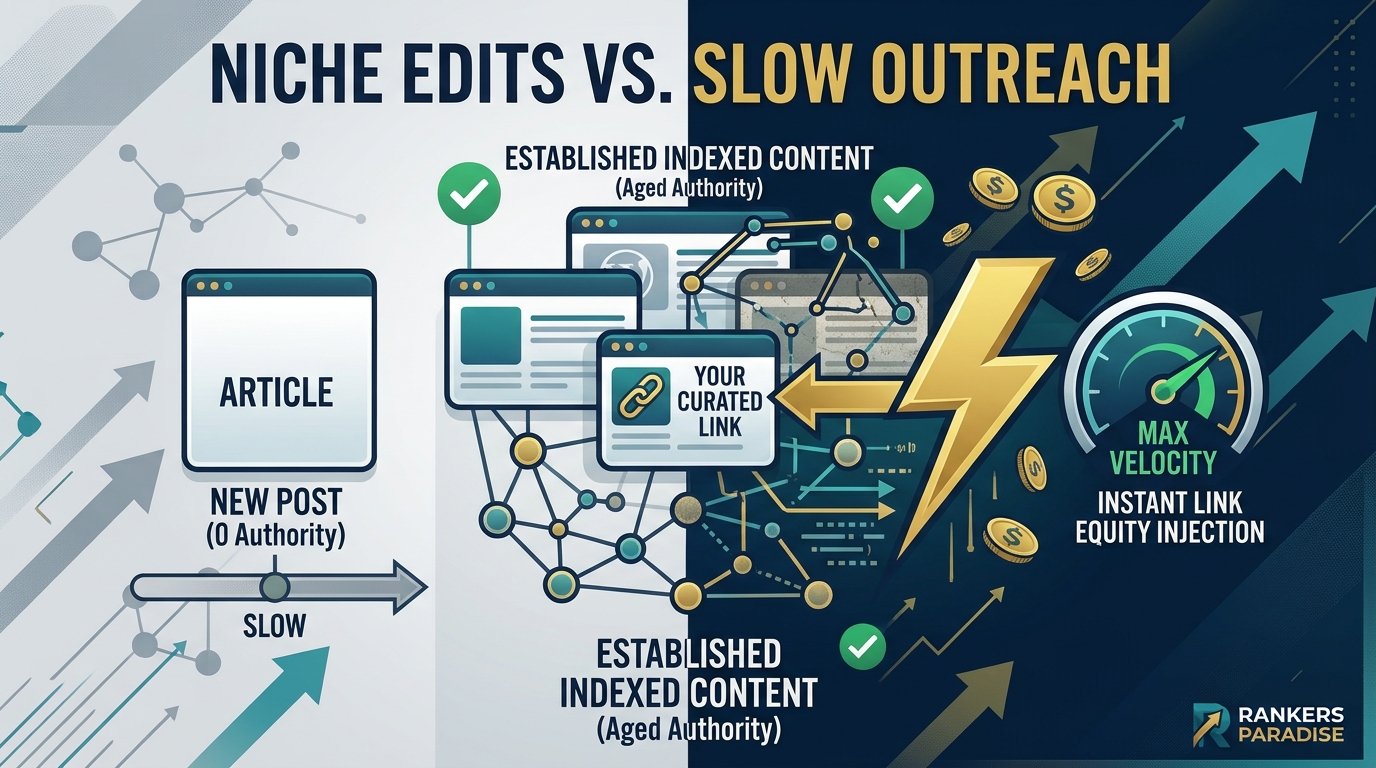
Waiting six months for a brand-new blog post to build authority naturally is a luxury most business owners don’t have. If you want faster movement on commercial keywords, you need link insertions—commonly known as Niche Edits.
A niche edit involves placing your contextual link inside an article that is already published, already indexed by Google, and already holding authority.
Think about it from an algorithmic perspective: would you rather have a link on a brand-new page that Google hasn’t fully crawled yet, or a link inside an aged article that has been ranking and receiving traffic for two years? The answer is obvious.
However, you can’t just buy cheap niche edits from link farms riddled with spam. You need curated placements on sites with clean backlink profiles and real organic visibility. When executed right, this gives your rankings an immediate, measurable lift.
Ready to add these to your campaign? You can explore our verified inventory when you buy niche edits directly from our shop.
-
Budget Allocation: Allocate 35% to 40% of your link building budget toward high-impact niche edits.
Step 3: Securing Editorial Authority (Guest Posts)
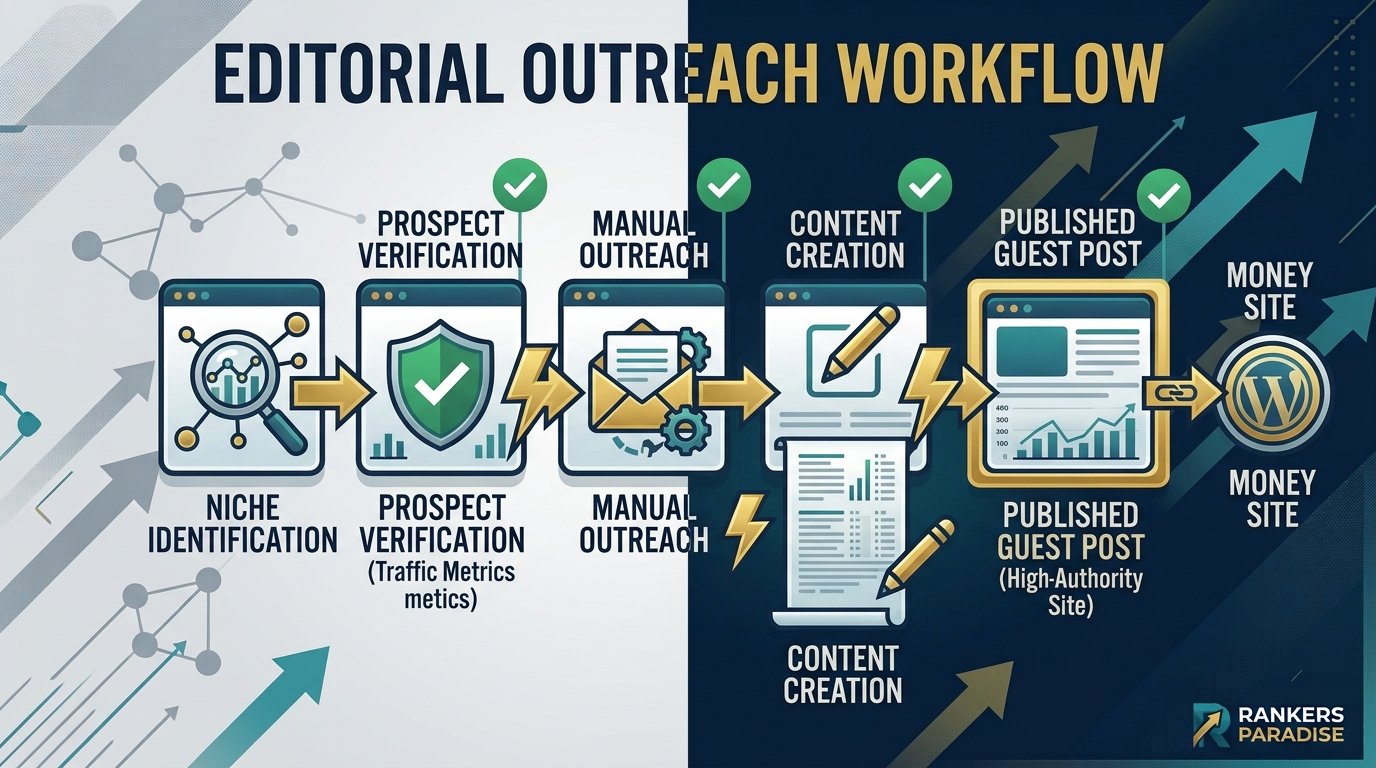
While niche edits give you speed and aged power, guest posting provides fresh, highly targeted contextual relevance.
Guest blogging isn’t dead—lazy guest blogging is. If you are writing 300-word garbage articles just to drop a link, Google’s spam detection algorithms will catch up to you. But if you secure genuine editorial placements on relevant, niche-specific websites, guest posts act as one of the most powerful trust signals you can send to search engines.
A solid guest post establishes your brand as an authority in your space while passing clean, contextual link equity straight to your target landing page.
To see how real editorial outreach is handled without the usual agency markup, take a look at our curated inventory when you buy guest posts through our platform.
-
Budget Allocation: Allocate 30% to 35% of your monthly budget to high-quality guest posting.
Step 4: Tying It All Together (All-in-One Campaigns)
Trying to manage four different vendors, track separate spreadsheets, and coordinate anchor text ratios manually across Web 2.0s, Niche Edits, and Guest Posts is an absolute headache.
That is why successful SEOs and agency owners rely on unified packages. When your foundation, acceleration, and editorial assets work together in a synchronized pipeline, your anchor text distribution stays balanced, your link velocity looks completely natural to Google’s crawlers, and your rankings start climbing week after week.
If you want a streamlined, hands-off approach that combines these exact strategies into a single revenue-driving machine, check out our core inventory and buy backlinks directly through our tested packages.
Recommended Monthly Link Building Budget Model
To give you a practical framework, here is how a healthy $1,000 monthly SEO link budget should typically be split across a commercial campaign:
| Asset Type | Budget Share ($1,000 Example) | Primary Purpose |
| Web 2.0 Properties | $200 (20%) | Tier 1 buffering, safety, and foundational anchor distribution |
| Niche Edits | $400 (40%) | Instant SERP velocity using aged, indexed page authority |
| Guest Posts | $400 (40%) | Fresh contextual relevance and high-authority editorial trust |
(External Reference: For broader industry benchmarks on digital marketing and search engine algorithms, you can review resources like Search Engine Journal to stay updated on shifting ranking factors.)
Final Thoughts
Link building doesn’t have to be a guessing game. By ditching random, unverified tactics and implementing a strict link building budget breakdown, you protect your domain from penalties while maximizing your return on investment.
Stop wasting money on single-source tactics that leave footprints. Build a balanced ecosystem of Web 2.0 buffers, aged niche edits, and authoritative guest posts—and watch your target pages climb straight to the top of Google organic SERPs.