
If you’ve been grinding in off-page SEO for more than five minutes, you already know the ugly truth: buying individual, random backlinks one at a time is a complete waste of time and money.
You buy a standalone guest post here, a random citation there, or a single link blast, and then you sit around for weeks staring at your rank tracker, waiting for a movement that never happens.
Why? Because Google’s algorithm doesn’t care about isolated link spikes anymore. Modern organic ranking requires a structured, multi-layered off-page profile.
When people search to buy SEO link packages, they aren’t looking for bloated agency pitch decks or generic 500-word SEO fluff. They want a proven, battle-tested structure that delivers real authority, keeps anchor text ratios safe, and forces Google bot to pass equity directly to money pages.
In this guide, I’m going to break down the exact strategy we use at Rankers Paradise to construct link packages that hit page #1, how to blend different link types for maximum impact, and how to structure your internal link velocity safely.
What Makes a High-Ranking SEO Link Package?
A lot of SEO sellers bundle together 10,000 automated spam links, label it an “Ultra Gold Ranking Package,” and send you a spreadsheet full of dead URLs on de-indexed domains.
That is not an SEO link package. That is a penalty waiting to happen.
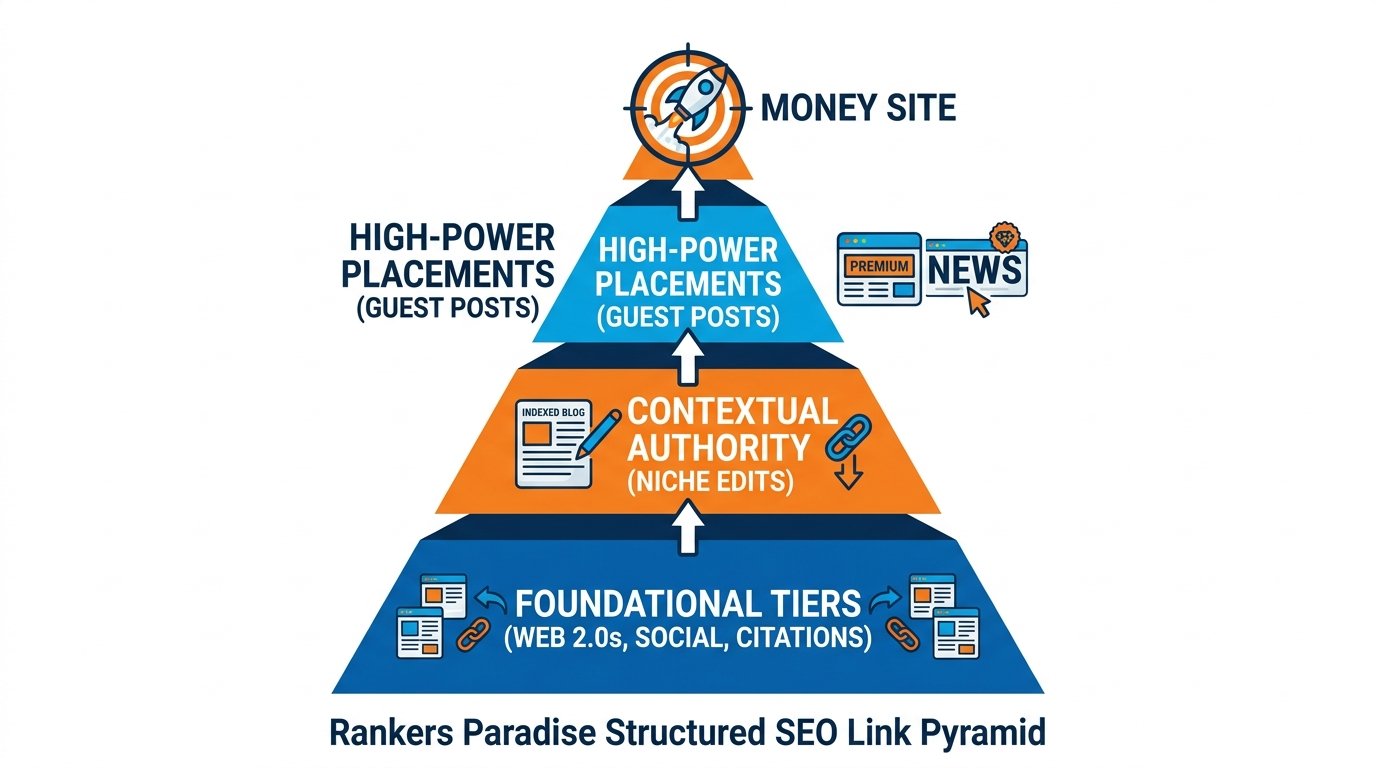
A real, rank-building link package is designed like a pyramid. It uses safer, highly controlled authority properties at the foundation level, surrounded by contextual link insertions, and topped off with heavy-hitting, niche-relevant placements.
                   [ Target Money Page ]
                             ▲
      ┌──────────────────────┼──────────────────────┐
      │                      │                      │
[ High-DA Guest Posts ] [ Niche Edits ]  [ Web 2.0 Link Wheels ]
When you evaluate or build an off-page link strategy, every layer in that package must serve a specific role:
-
Foundational Buffer & Velocity: Absorbs link volume and safely establishes brand/naked anchor text ratios.
-
In-Content Contextual Relevance: Inserts links directly into aged, indexed articles that Google already trusts.
-
Raw Domain Authority: High-metric power links that push competitive long-tail and commercial keywords onto page #1.
The 3 Core Components of Every Winning Link Package
To pull off a complete ranking campaign in Google organic SERPs, a properly engineered package blends three distinct types of links.
1. Web 2.0 Buffer Layers (Foundational Safety)
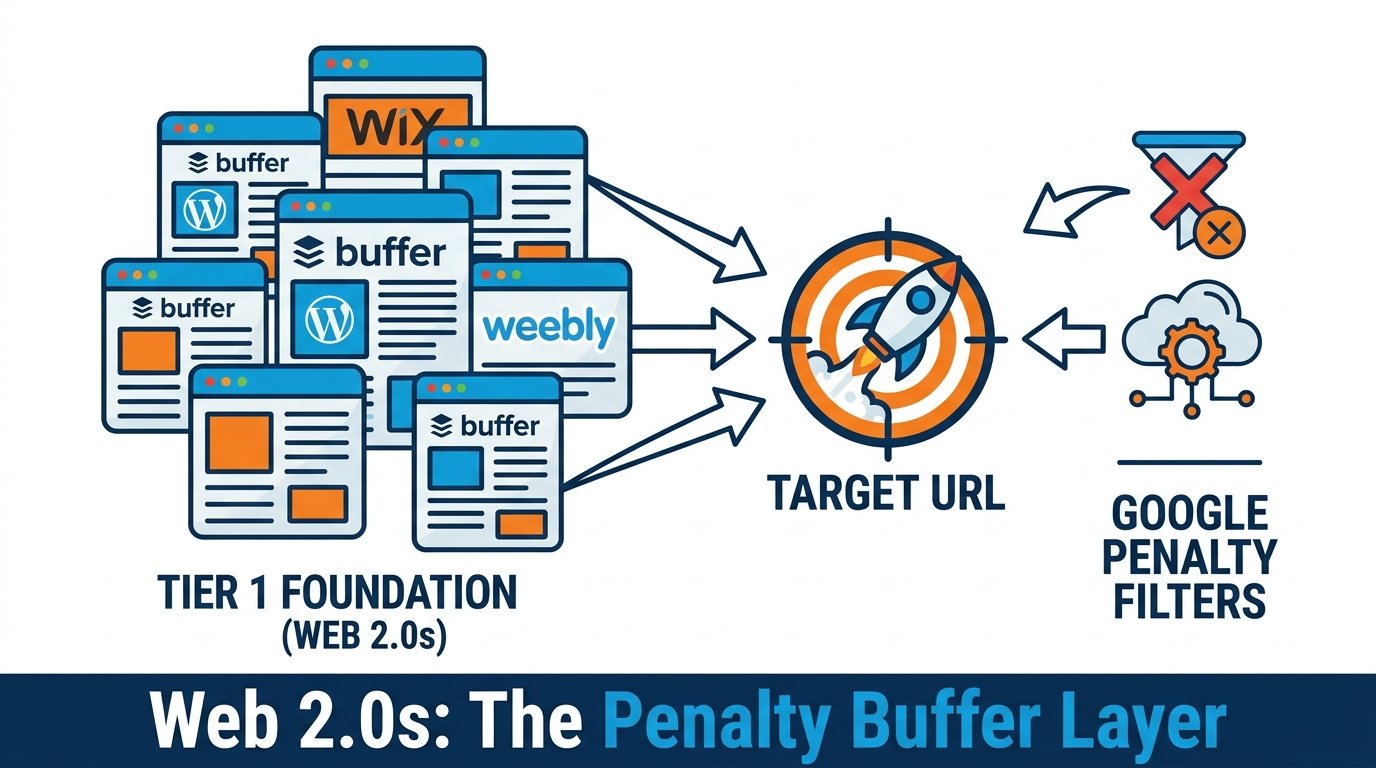
Before you throw high-powered exact-match links at a money site, you need a safe buffer layer. Web 2.0 sites (like Wix, Weebly, WordPress.com, and Tumblr) give you 100% control over the content, outbound links, and anchor text distribution.
When built properly, high-DA buffer blogs act as your first line of defense against algorithmic penalty filters. You can run aggressive link wheels or multi-tier indexing strategies directly behind them without ever exposing your primary money site to risks.
-
To learn the exact step-by-step process of building permanent, non-dropping subdomains, check out my full guide on how to build web 2.0 backlinks.
2. Niche Edits (Curated In-Content Links)
Niche edits (also known as contextual link insertions) are one of the fastest ways to push authority to a stagnant URL.
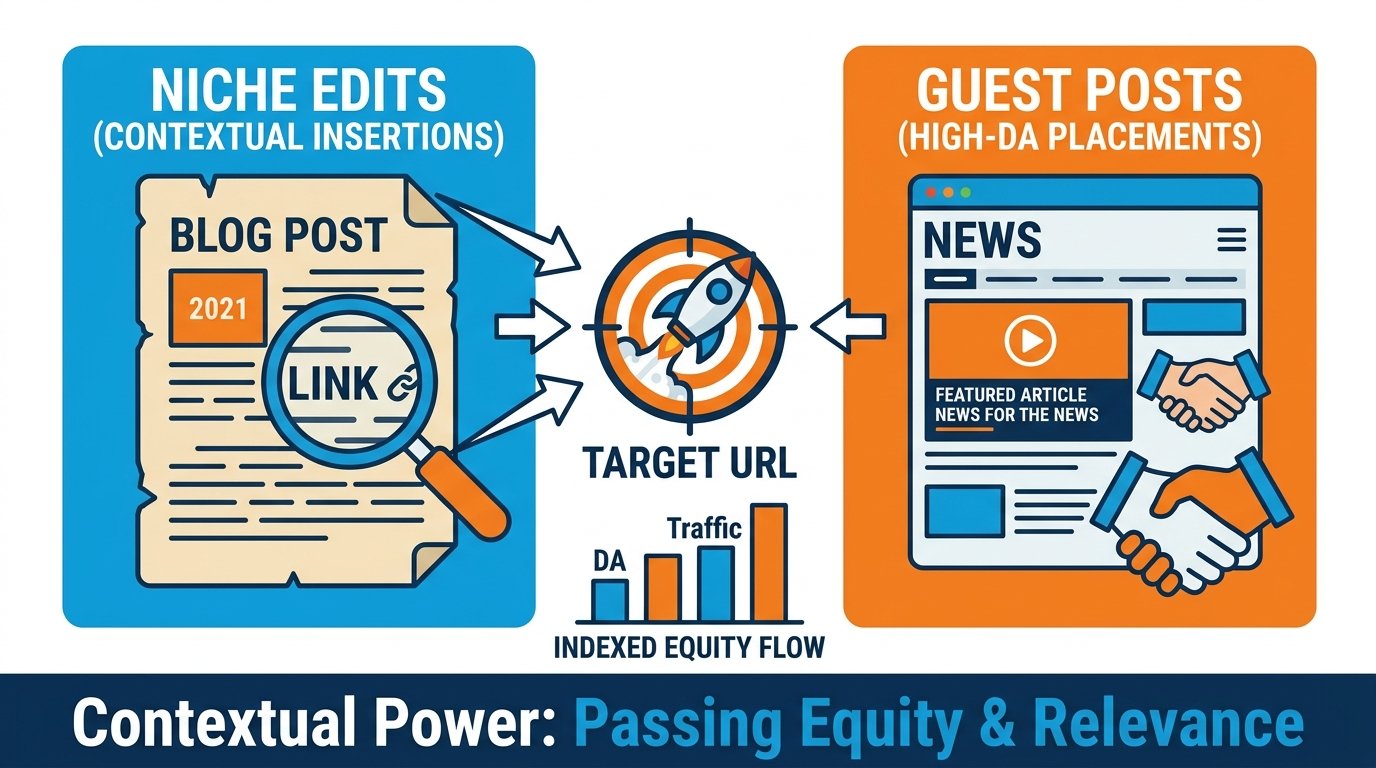
Instead of waiting for a brand new blog post to get crawled and indexed by Google, niche edits place your link directly inside an existing, aged article that already holds indexed page authority and historical trust.
When you buy niche edits, you bypass the indexation delay entirely. Google bot re-crawls the existing page, detects the new contextual link, and passes immediate equity through to your target target landing page.
3. High-Authority Guest Posts (Power & Niche Relevance)
If niche edits provide rapid indexing and authority, guest posts provide pure relevancy and clean domain-level trust.
A high-quality guest post placement means publishing a completely unique, highly targeted article on an active site within your vertical. It allows you to wrap your target anchors around topically relevant headings, paragraphs, and co-occurring entity keywords.
When you choose to buy guest posts, you are placing contextual votes of confidence directly from active editorial sites that Google regularly crawls.
Anchor Text Distribution: How Not to Get Penalized
The biggest mistake site owners make when buying SEO link packages is over-optimizing their exact-match target anchors.
If your target keyword is “buy SEO link packages” and 80% of your incoming links use that exact string as anchor text, Google’s spam filters will flag your link profile almost instantly.
In our real-world testing across hundreds of ranking campaigns, we stick to a strict anchor text ratio across the entire package:
| Anchor Type | Target Percentage | Examples |
| Brand / Naked URL | 50% – 60% | rankersparadise.com, [https://site.com](https://site.com), Rankers Paradise |
| Generic / Call to Action | 20% – 25% | click here, check this guide, website, source |
| Partial Match / LSI | 10% – 15% | best SEO link packages, affordable link building packages |
| Exact Match Target | 5% – 10% | buy SEO link packages |
By keeping exact match anchors under 10% and pushing the bulk of your exact keywords through high-relevance content surrounding naked URLs, you get maximum ranking push with zero footprint.
Step-by-Step Execution: How We Deploy a Link Package
Here is the exact rollout process we run when deploying a multi-tier link campaign for top SERP rankings:
Week 1: On-Page Audit & Foundational Web 2.0 Tier Setup
Week 2: Niche Edit Insertions into Aged Niche Articles
Week 3: Guest Post Outreach & High-DA Editorial Publishing
Week 4: Tier-2 Web 2.0 Link Wheels & Crawl Verification
Step 1: On-Page Optimization Check
No backlink package will fix broken on-page SEO. Before building any links, ensure:
-
Your target keyword is present in the
Title Tag,H1 Tag, andURL slug. -
Your overall keyword density remains clean (under 1%).
-
Your internal link structure flows equity from supporting blog posts directly into core transactional pages.
Step 2: Deploying the Foundation (Tier 1)
We start by building controlled Web 2.0 properties and foundational brand links. These use brand, open URL, and generic anchors to establish a natural velocity baseline.
Step 3: Injecting Contextual Power (Niche Edits & Guest Posts)
Once the foundation is set, we introduce high-DA guest posts and curated niche edits. These carry your partial-match and exact-match target anchor text directly inside niche-relevant articles.
Step 4: Indexing and Crawl Verification
A backlink does not exist until Google bot crawls it. We monitor indexation rates closely using Google Search Console and log-file analyses. To understand more about Google’s official stance on webmaster guidelines and crawling, refer to the Google Search Essentials documentation.
If you want to skip the trial-and-error of building these campaigns manually from scratch, you can buy backlinks directly through our structured store packages designed specifically for safe, long-term SERP movement.
Frequently Asked Questions
How long does it take to see ranking movement from an SEO link package?
Depending on keyword competition and domain age, ranking movements typically start showing between 14 to 30 days after the links are fully indexed by Google.
Are Web 2.0 backlinks still effective for SEO today?
Yes, absolutely. When built with unique content, proper multimedia, and structured in a link wheel or tiered setup, Web 2.0s remain one of the most cost-effective ways to pass authority safely.
How many backlinks do I need to rank on Page 1?
There is no single magic number. It depends entirely on the link profiles of the top 3 ranking URLs in your target SERP. For low-to-medium competition keywords, a well-balanced package combining 5–10 high-quality contextual links alongside a solid Web 2.0 foundation is often enough to secure top rankings.