
If you’ve been doing off-page SEO for more than five minutes, you already know the dirty truth: 95% of link building lists on the web are complete garbage.
They are written by freelance copywriters who have never ranked a single keyword in their life, regurgitating generic affiliate lists of bloated agencies charging $1,500 a month for zero ranking movement.
I’m Nick. I’ve been running and testing links in the trenches at Rankers Paradise since 2016. Across a decade of core algorithm updates, spam filters, and SERP overhauls, I’ve built, indexed, and analyzed hundreds of thousands of backlinks across almost every niche imaginable.
When you’re trying to rank on page one of Google in 2026, content alone won’t get you there. You can dial in your title tags, get all green lights in Rank Math, and polish your on-page until it shines—but without raw domain trust and contextual relevance pushing power to your target URLs, your site will stall out on page two.
In this guide, I’m cutting out the theoretical fluff. I’m going to break down what actually constitutes the best link building services in 2026, how to structure a bulletproof multi-tier strategy, and how to acquire links safely without burning your money site.
The Real State of Link Building in 2026 (Why Most Services Fail)
Google’s spam algorithms are smarter than ever at filtering out footprint-heavy, automated links. If an agency promises you 5,000 “high DA” profile links on dead Web 2.0 properties for $20, your money site isn’t going to rank—it’s going to get ignored, deindexed, or penalized.
Most commercial link services fail because they sell isolated link types as a silver bullet:
-
Over-reliance on guest posts: Buying raw guest posts with exact-match anchors on low-traffic PBNs disguised as “real sites.”
-
Ignoring anchor text ratios: Blasting main target terms until Google flags the exact-match anchor density as unnatural.
-
Zero Tier-2 buffering: Sending raw, unindexed links directly to money pages without building authority behind the link source itself.
To win in modern search results, you need a balanced off-page asset mix: high-tier editorial placements, aged contextual insertions, and structured Web 2.0 buffers to keep your anchor diversity safe.
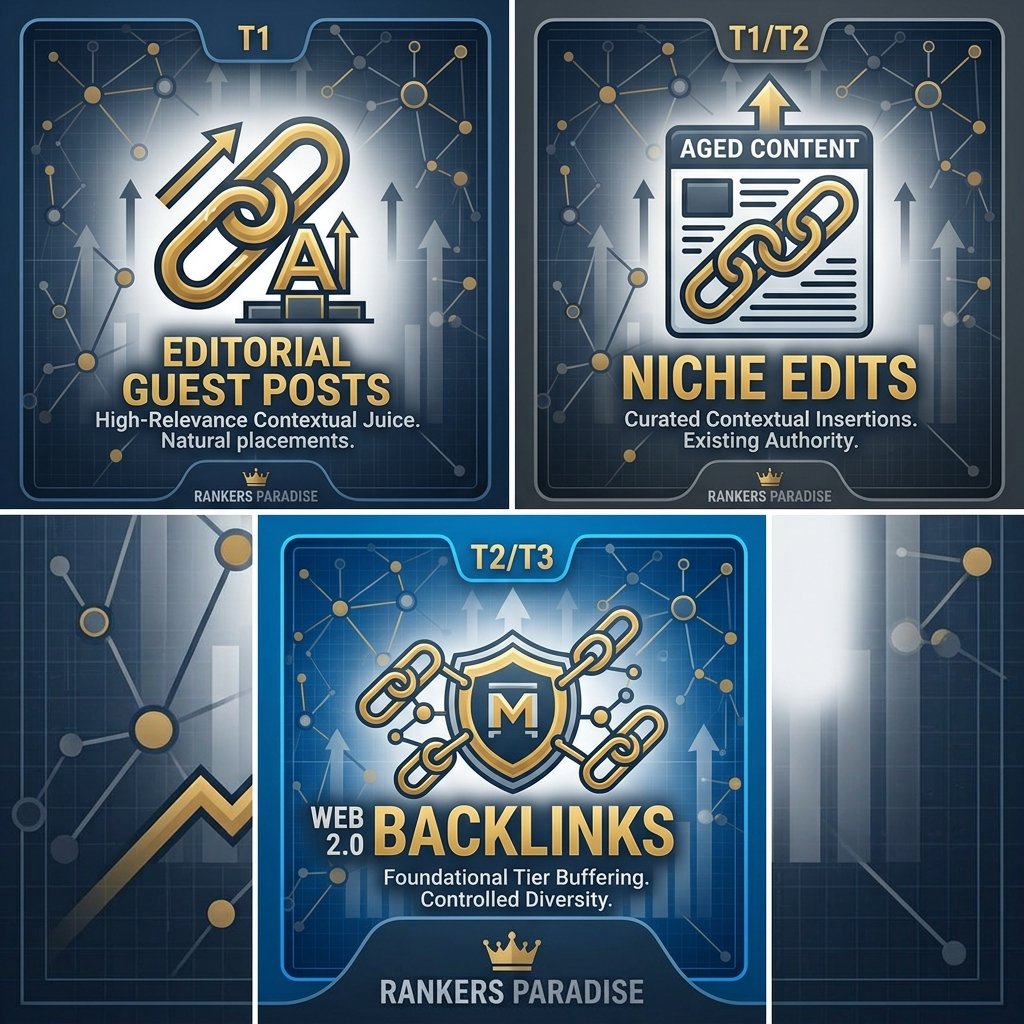
1. Editorial Guest Posts: High-Relevance Contextual Juice
When you want to establish top-tier topical authority and signal active industry trust to Google’s web crawler, nothing beats real editorial outreach on active blogs that receive genuine organic search traffic.
What Makes a Winning Guest Post Placement?
-
Real Organic Traffic: The hosting site must rank for keywords and draw real visitors (you can verify this using SEO audit platforms like Ahrefs or SEMrush).
-
Clean Outbound Link Ratios: The site shouldn’t be an “article farm” selling 50 outbound links per page to casino, pharma, and essay sites.
-
Contextual Integration: Your link must sit naturally inside a freshly published, highly targeted article related directly to your niche.
When you buy guest posts, you are purchasing clean DoFollow contextual authority that directly passes PageRank to your primary core money pages.
2. Niche Edits (Curated Contextual Insertions)
If you need fast ranking movement without waiting weeks for a new post to get crawled and indexed, curated niche edits (also known as contextual link insertions) are one of the most effective tools in off-page SEO.
Why Niche Edits Perform So Fast
Unlike fresh guest posts—which start at zero page authority and take time to get indexed—a niche edit is placed directly inside an existing, aged article that Google has already crawled, indexed, and trusted for months or years.
-
Existing Authority: The URL already holds historical weight and internal PageRank within the publisher’s site structure.
-
Instant Crawl Frequency: Because Google search spiders regularly re-crawl established URLs, your backlink gets recognized significantly faster.
To get the best return on investment, make sure you buy niche edits placed exclusively on pages with relevant body copy and existing search indexation.
3. Web 2.0 Backlinks & Link Wheels (Foundational Tier Buffering)
Foundational platforms remain one of the safest, most controllable ways to build out your backlink architecture, buffer your anchor text diversity, and feed secondary authority into your primary tier-1 placements.
       [ Money Site ]
             ^
             |  (Tier 1 Contextual Links)
   +---------+---------+
   |                   |
[Guest Posts]     [Niche Edits]
   ^                   ^
   |                   |  (Tier 2 Juice)
+--+-------------------+--+
|   Web 2.0 Link Wheel    |
| (WordPress, Tumblr, etc)|
+-------------------------+
How to Build Web 2.0s That Actually Rank
Back in 2016, I published my first guide on setting up Web 2.0 structures, and the core rules haven’t changed: quality over automated quantity.
-
Unique Accounts: Register blogs on major platforms (WordPress, Blogger, Tumblr, Medium) with custom subdomains.
-
Hand-Written / Unique Content: Never dump raw machine-spun gibberish on Web 2.0 blogs. Google easily filters unreadable spam.
-
Interlinking & Buffering: Structure your Web 2.0 properties into a cohesive network or link wheel, passing authority upward to your money site or powering up your Tier-1 guest post URLs.
If you want to build these properties correctly yourself, check out my complete step-by-step blueprint on how to properly build and optimize web 2.0 backlinks.
How to Choose the Best Link Building Strategy for Your Site
Every website sits at a different stage of authority. Here is the exact framework I use when evaluating new campaigns in the trenches:
| Site Status | Primary Objective | Recommended Link Mix |
| New Site (0–3 Months) | Build foundational trust & anchor safety | 70% Web 2.0 / Citations, 30% Branded Guest Posts |
| Stuck on Page 2–3 | Inject contextual authority | 50% Niche Edits, 50% High Traffic Guest Posts |
| Competitive Keyword Push | Drive page #1 rankings & pass maximum juice |
Tier 1: Guest Posts & Niche Edits
Tier 2: Web 2.0 Networks powering Tier 1 |
Before committing your budget to any off-page campaign, make sure you thoroughly audit your competitors’ link profiles and read through our complete guide on how to safely buy backlinks without triggering algorithmic penalties or over-optimization filters.
Summary Checklist for Ranking #1 in 2026
-
Diversify Your Assets: Never rely 100% on a single link type. Combine guest posts, niche edits, and Web 2.0 buffers.
-
Control Anchor Text Ratios: Keep exact-match money anchors under 10–15%. Use brand name, URL, and partial-match variations for the rest.
-
Verify Indexation: A link that isn’t indexed by Google is worth zero. Always monitor your backlink reports using Google Search Console.
-
Power Up Tier 1: Send Web 2.0 links and secondary tiers directly to your guest posts to squeeze maximum PageRank out of every placement.
Stop wasting time with cheap automated blasts that do nothing for your SERP positions. Stick to proven, tested off-page structures, build real authority, and keep climbing those rankings.