
Let’s be honest about the SEO industry. Most advice out there is written by people who have never built a live link in their lives. They repeat theoretical mumbo-jumbo about “content is king” while ignoring the brutal reality of Google organic SERPs: if you don’t have authority, you don’t rank. Period.
I’ve been testing, breaking, and ranking websites since 2016. I run Rankers Paradise, and I spend my days testing link structures, running tier networks, and figuring out what actually moves the needle when Google rolls out another core update.
If you want to dominate competitive commercial keywords, you can’t rely on luck. You need a structured approach. You need to know how to buy backlinks safely, where to source juice, and how to combine foundational power with elite editorial placements.
Let’s break down the exact playbook for choosing the best backlink services for SEO and how to structure your campaign to grab that #1 spot.
Why Most Link Building Services Fail (And How to Avoid the Trap)
Go to any freelance marketplace or low-end SEO forum, and you’ll see offers for “10,000 backlinks for $10.”
If you buy that garbage, you deserve the manual penalty or filter hit that follows. Google’s algorithms are smart enough to spot footprint-heavy, automated junk from a mile away. When you buy cheap, spun profile blasts or dead PBN networks with zero traffic, you aren’t doing SEO—you’re lighting your marketing budget on fire.
Real link building requires a balanced approach. It requires looking at a site’s actual organic traffic, verifying topical relevance, and ensuring the link profile looks completely natural to a human reviewer or Googlebot.
To win, you need a multi-layered asset strategy. Let’s look at the three core pillars that make up the best backlink services on the market.
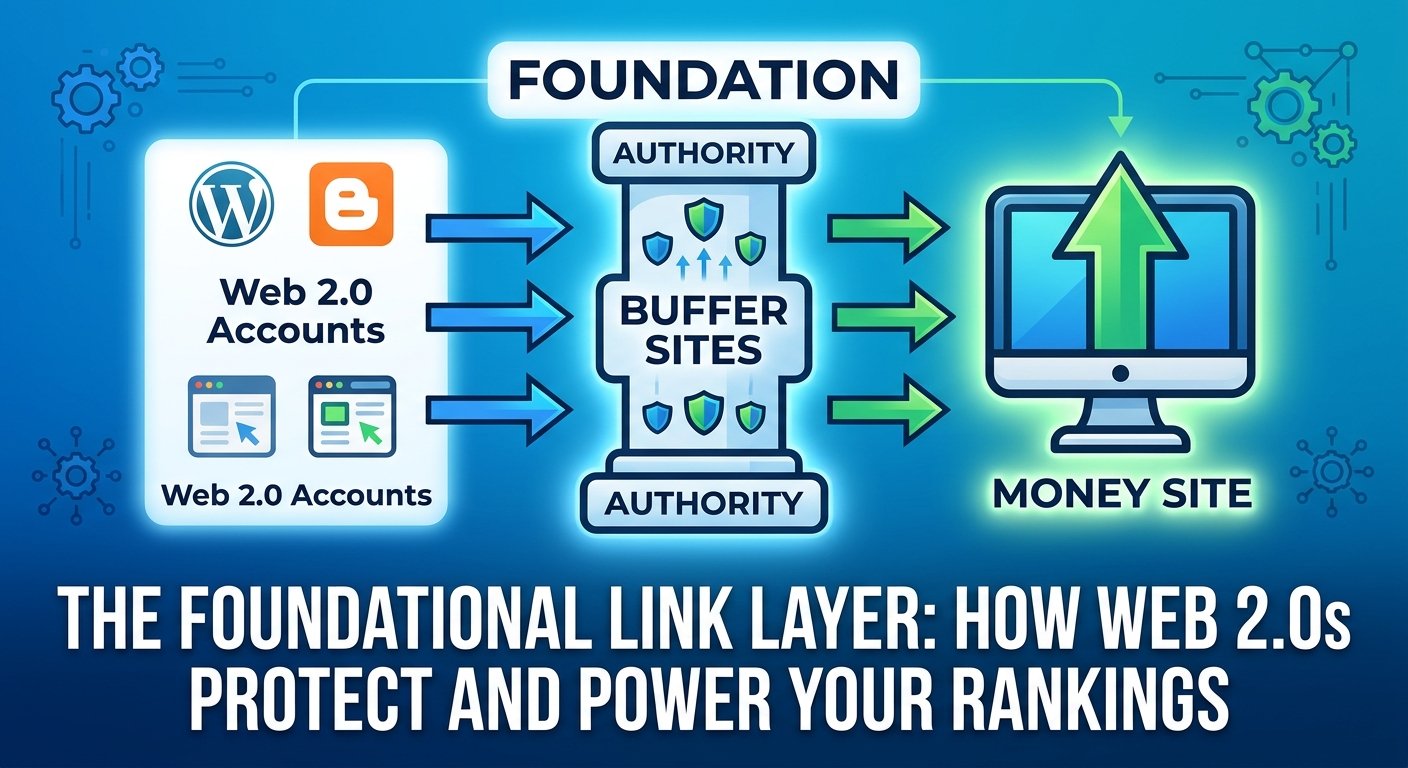
Pillar 1: Foundational Power with Web 2.0 Backlinks
Before you start hunting down high-end authority placements, your site needs a solid foundation. This is where tiered link building comes into play.
If you want to understand how to properly set up buffer sites, pass authority safely, and avoid leaving a clumsy footprint, check out our guide on web 2.0 backlinks.
Why Web 2.0s Still Matter
-
Buffer Protection: They act as a protective layer between your money site and raw tier-2 links.
-
Anchor Text Control: You dictate the exact brand, generic, or partial-match terms pointing to your core assets.
-
Indexation Speed: High-authority Web 2.0 properties get crawled fast, helping drag Googlebot deeper into your architecture.
When executed correctly, Web 2.0s establish the baseline relevance and trust that allow your heavier commercial pages to rank without triggering algorithmic alarms.
Pillar 2: Fast-Tracking Rankings with Niche Edits
If Web 2.0s are your foundation, niche edits are your rocket fuel.
Why spend weeks waiting for a brand-new article to get indexed, crawl-budgeted, and slowly gain authority when you can inject your link directly into an aged, already-indexed page that is already holding live rankings?
When you buy niche edits, you are leveraging existing contextual trust.

What to Look for in Quality Niche Edits:
-
Real Organic Traffic: Never buy a link from an aged domain that pulls zero traffic from Google. Check Ahrefs or Semrush to ensure the host page has active impressions and rankings.
-
Topical Relevance: The insertion must fit naturally into the surrounding 50–100 words. If you run a digital marketing blog, your link shouldn’t be dropped into a recipe post about vegan lasagna. Keep the context tight.
-
Clean Outbound Link Ratios: Make sure the page isn’t already saturated with dozens of unrelated sponsored links. Less is more when passing juice.
Pillar 3: Editorial Authority with Guest Posts
While niche edits leverage aged content, guest posts allow you to plant your flag on fresh, highly targeted editorial content built specifically around your core entities.
When you buy guest posts, you aren’t just buying a link—you’re buying a contextual endorsement from a real publication with an engaged audience.
The Golden Rules of Guest Posting:
-
Insist on Unique Content: Never accept spun or low-quality AI gibberish on the host blog. The article must provide genuine information gain so it holds its own weight in the index.
-
Editorial Standards: Real sites have editorial guidelines. If a site publishes anything under the sun—from online gambling to plumbing to crypto on the exact same feed—walk away. Stick to clean, niche-focused or high-quality general authority blogs with real vetting standards.

How to Structure Your Campaign for the #1 Spot
Buying links randomly without a game plan is a recipe for stalled rankings. To rank #1 in competitive organic SERPs, you need a disciplined rollout:
[ Your Money Page / Shop ]
       ▲         ▲         ▲
       │         │         │
[Guest Posts] [Niche Edits] [Web 2.0 Tiers]
-
Week 1-2 (The Foundation): Build out your foundational tier layers. Establish brand signals and ensure your technical SEO and on-page optimization are airtight.
-
Week 3-6 (The Contextual Push): Introduce niche edits to aged, relevant pages to pass immediate contextual weight to your inner and money pages.
-
Week 7+ (The Editorial Authority): Layer in high-authority guest posts with clean, natural anchor text diversification. Keep the link velocity steady rather than dumping 50 links overnight.
For an external perspective on how search engines evaluate hyperlink signals and anchor text distributions, you can review Google’s Search Essentials documentation to ensure your technical compliance remains bulletproof. Additionally, studying advanced anchor text models via industry resources like Ahrefs SEO Blog provides great data on keeping your link velocity natural.
Final Words
Stop guessing what Google wants. Google wants to rank pages that are backed by real authority, clear topical relevance, and solid user value.
If you don’t have the time to handle manual outreach, vet organic traffic metrics, and manage live placements yourself, let us do the heavy lifting. Head over to our commercial storefront and explore our proven, hand-tested link packages designed to move rankings safely and effectively.