
If you’ve been following my work here at Rankers Paradise for a while, you know I’ve spent years refining the art of the Web 2.0 asset. From the early days of basic link wheels to the more complex tier structures I use today, I’ve seen search engines evolve through countless algorithm updates.
Right now, we are sitting right on the edge of a massive shift in how Google processes off-page optimization.
If you are still building free blogs and subdomains the exact same way you did a few years ago, you are going to find your pages stuck in the sandbox. The game has changed. Today, we are looking past basic anchor text manipulation and moving straight into AI entity trust signals.
I am going to show you exactly how AI entity trust signals impact web 2.0 backlink indexing for 2027, and how you can structure your properties right now to rank #1 in the Google organic SERPs.
Why Old-School Web 2.0 Backlink Indexing is Failing
Let’s be honest for a moment. Most people build a free Web 2.0 property, paste a spun 300-word article, drop a bare link to their money site, and walk away. A few years ago, that might have scraped by.
Today? Google bot crawls those subdomains through an entirely different lens.
Modern search engines don’t just count incoming hypertext links anymore. They evaluate entities, co-occurrence, and semantic proximity. When a crawler hits a platform like Medium, WordPress.com, or Substack, it’s looking for context. If your page reads like robotic spam, or if it lacks clear entity relationships, the AI-driven indexing bots simply ignore it.
That is why so many marketers run into indexing walls. They buy cheap links or build properties that don’t pass any real contextual value. If you want to understand how to properly leverage these assets without wasting your time, take a look at my complete guide on how to use web 2.0 backlinks to get a top ranking on Google.
What Are AI Entity Trust Signals?
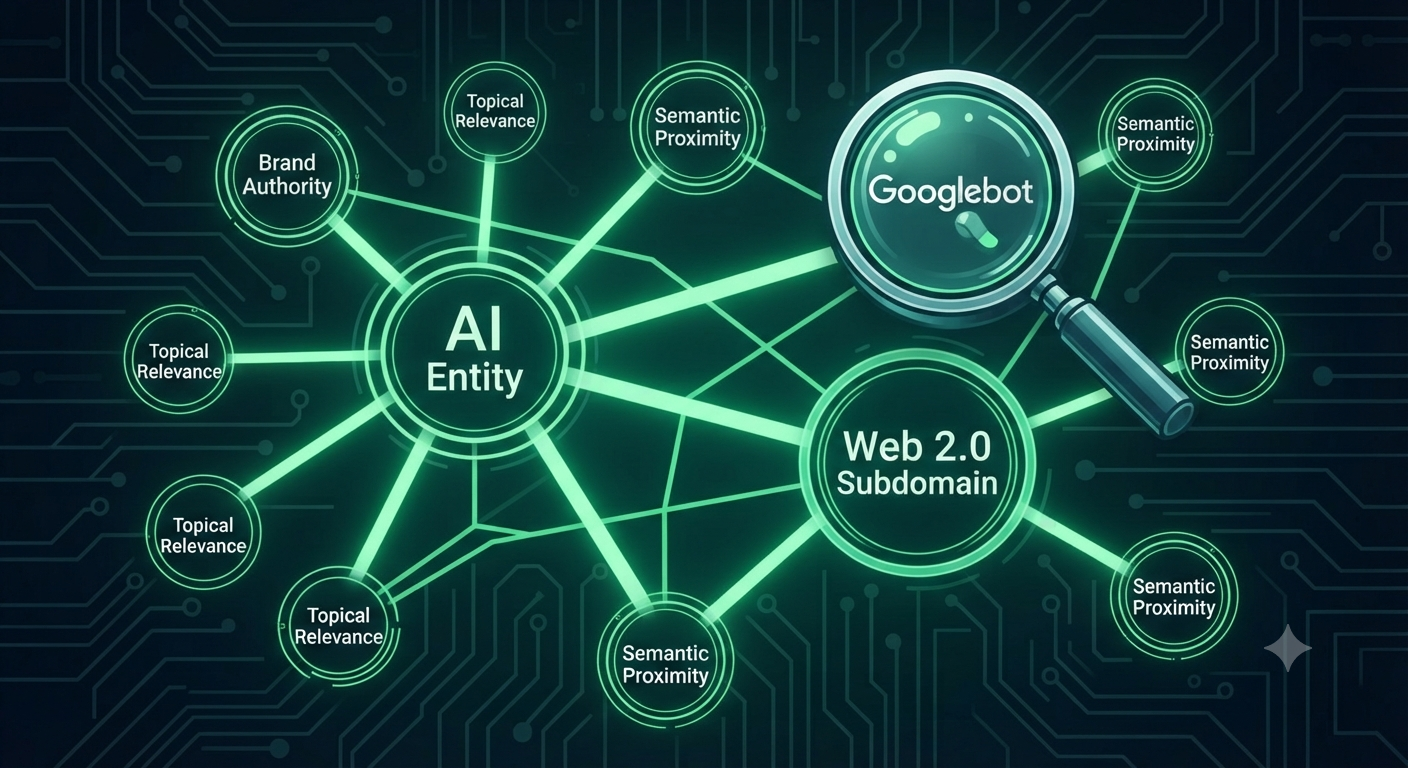
An “entity” can be a person, a brand, a location, or a distinct concept that Google recognizes within its Knowledge Graph.
When you build a backlink from a Web 2.0 property in 2027, that link alone isn’t enough. The surrounding content on that Web 2.0 page must explicitly mention related entities that reinforce your brand’s authority.
For instance, if you run an online service, the text around your link shouldn’t just contain a random keyword. It needs to mention industry standards, related topical terminology, brand names, and contextual markers that tell large language models (LLMs) and search crawlers: “This website is a verified node in this specific industry.”
If you want to scale this approach across competitive niches—such as the high-stakes world of competitive online entertainment—you can review our specialized iGaming SEO case study to see how semantic entity structuring performs under heavy algorithmic pressure.
How to Optimize Web 2.0 Content for AI Indexing Bots
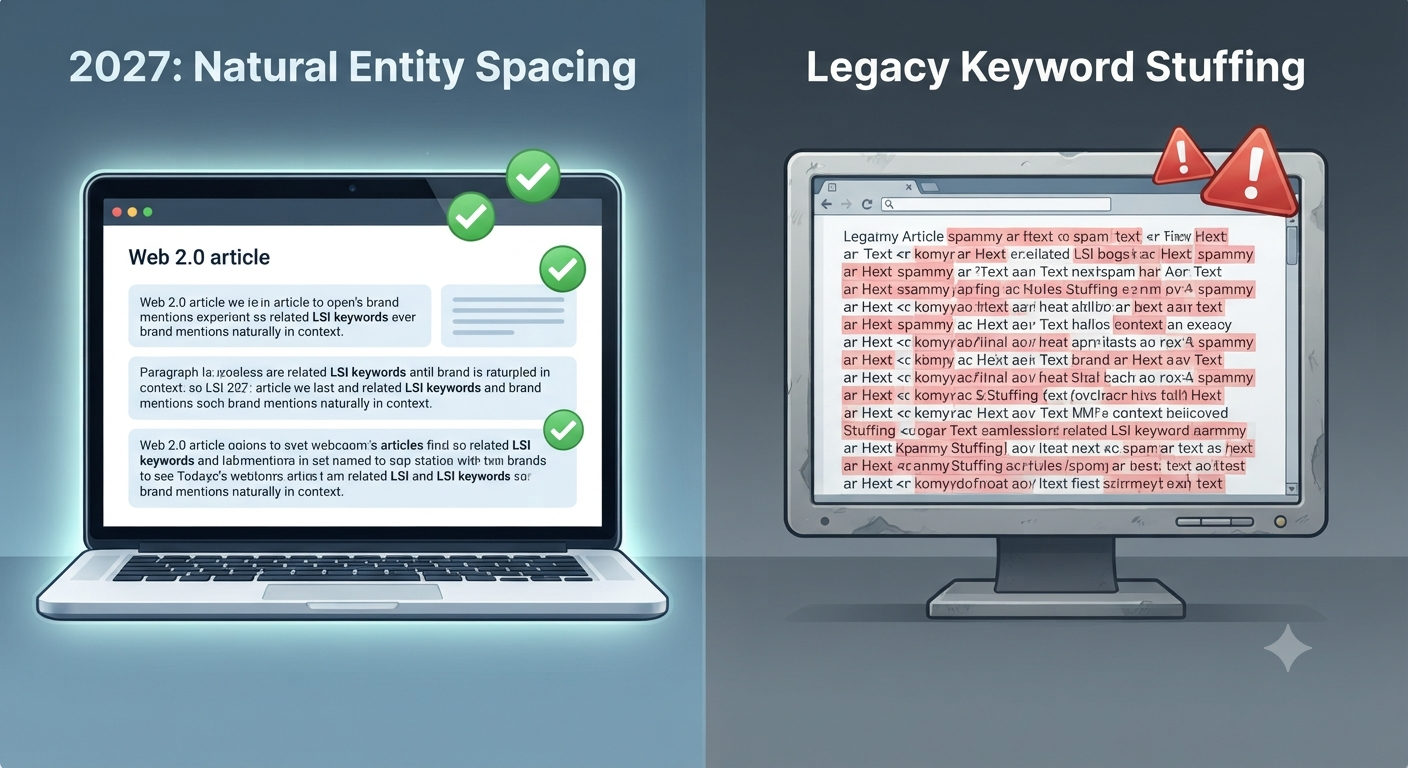
If you want your Web 2.0 links to pass maximum authority and stay permanently indexed, you have to feed the crawlers what they want. Here is the step-by-step blueprint:
1. Build Natural Entity Spacing
Don’t stuff your target keywords into every single sentence. Instead, use natural language variation. AI parsers look at semantic distance. Mentioning related sub-topics naturally within your paragraphs creates a web of context that validates the authenticity of the page.
If you are struggling with your indexing rates or notice your links missing from Google Search Console, you can read my troubleshooting breakdown on purchased backlinks showing as unindexed.
2. Control Your Link Velocity
Building too many subdomains overnight is a surefire way to trigger automated spam filters. You need a controlled, natural link-building schedule. To see the exact pacing required to keep your assets safe and effective, check out my guide on how many web 2.0 backlinks per day you should actually build.
3. Fortify Your Tiers with Safe Power
A single free Web 2.0 blog often lacks the juice to move a competitive keyword on its own. You need to boost it safely from behind. But you have to do it with the right ratios so you don’t leave a heavy footprint.
When you are ready to scale up your off-page campaigns without risking penalties, you can learn how to safely buy backlinks from trusted providers who understand modern algorithmic footprints. Furthermore, if you want to understand how to secure these assets correctly, you can also look into why your web 2.0 blogs get deleted and how to protect them from automated anti-spam deletions.
The Future Is Here: Prepare Your SEO Strategy Now
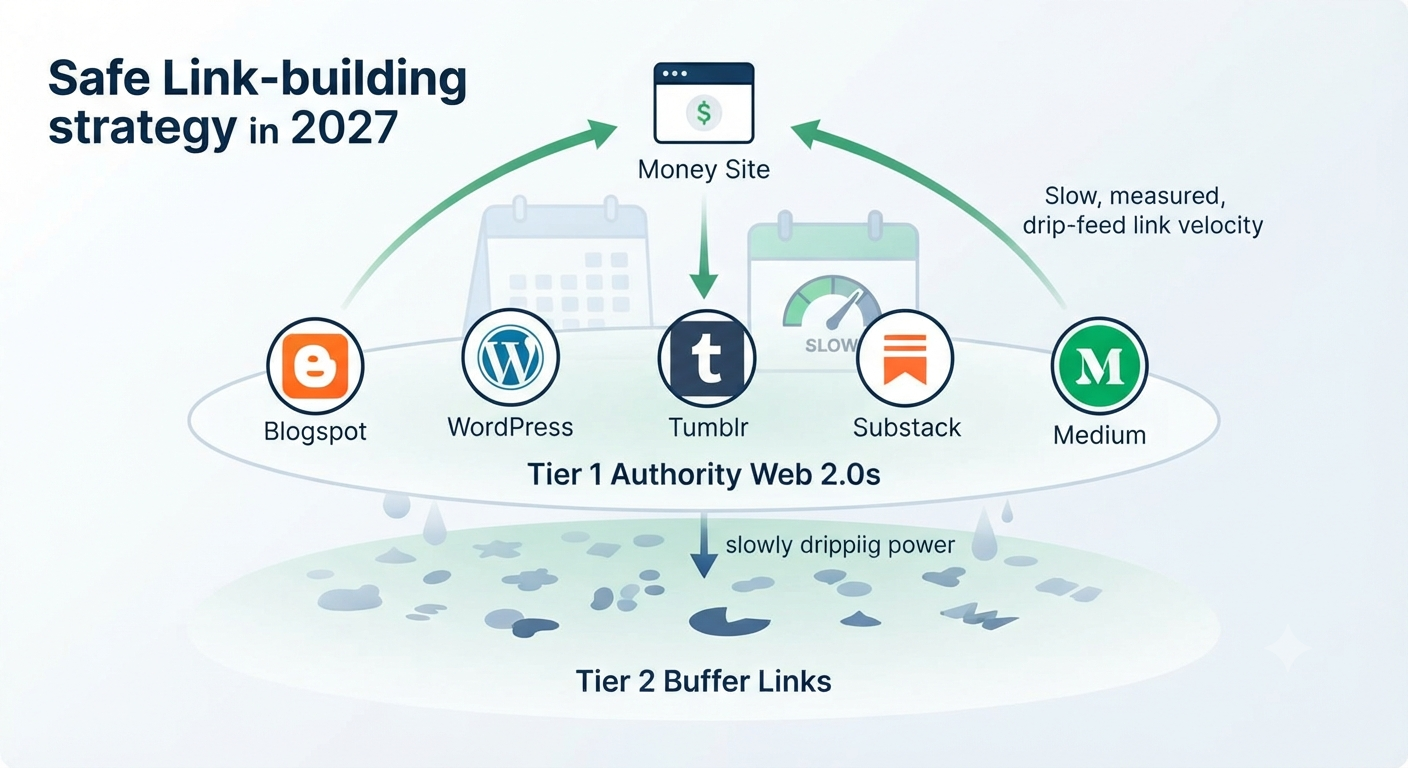
Search engine optimization is moving faster than ever. The integration of generative AI search overviews means that mediocre content and old-school link spam are being filtered out of the top rankings entirely.
By focusing on AI entity trust signals, structuring your Web 2.0 networks with clean semantic context, and maintaining a disciplined link velocity, you insulate your digital properties against future core updates.
Take action on these strategies today, structure your content like a human expert, and watch your rankings climb straight to the top of the Google SERPs.