
If you’ve been doing SEO for more than five minutes, you already know how this game goes. You type “best web 2.0 link building service” into Google, and what do you get? A wall of recycled listicles written by people who have never built a live link in their lives. They recommend random platforms, push automated software spam, and list agencies that churn out garbage on dead subdomains.
I’m Nick from Rankers Paradise. I’ve been running tests, building links, and ranking sites right here since 2016. I don’t care about theoretical SEO fluff or what gurus are preaching on social media this week. I care about what moves the needle, what keeps my clients at the top of the SERPs, and what doesn’t get torched by an algorithm update.
If you want to find a service that actually delivers, you need to know what separates real, hand-crafted off-page architecture from automated software garbage. Let’s break it down.

Why 90% of Web 2.0 Link Building Services Fail
Most site owners learn this the hard way. They find a cheap gig online, drop fifty bucks on a package promising “500 High-DA Web 2.0 Backlinks,” and wait for the magic to happen.
Six weeks later, the report arrives. They check the URLs, and what do they see?
-
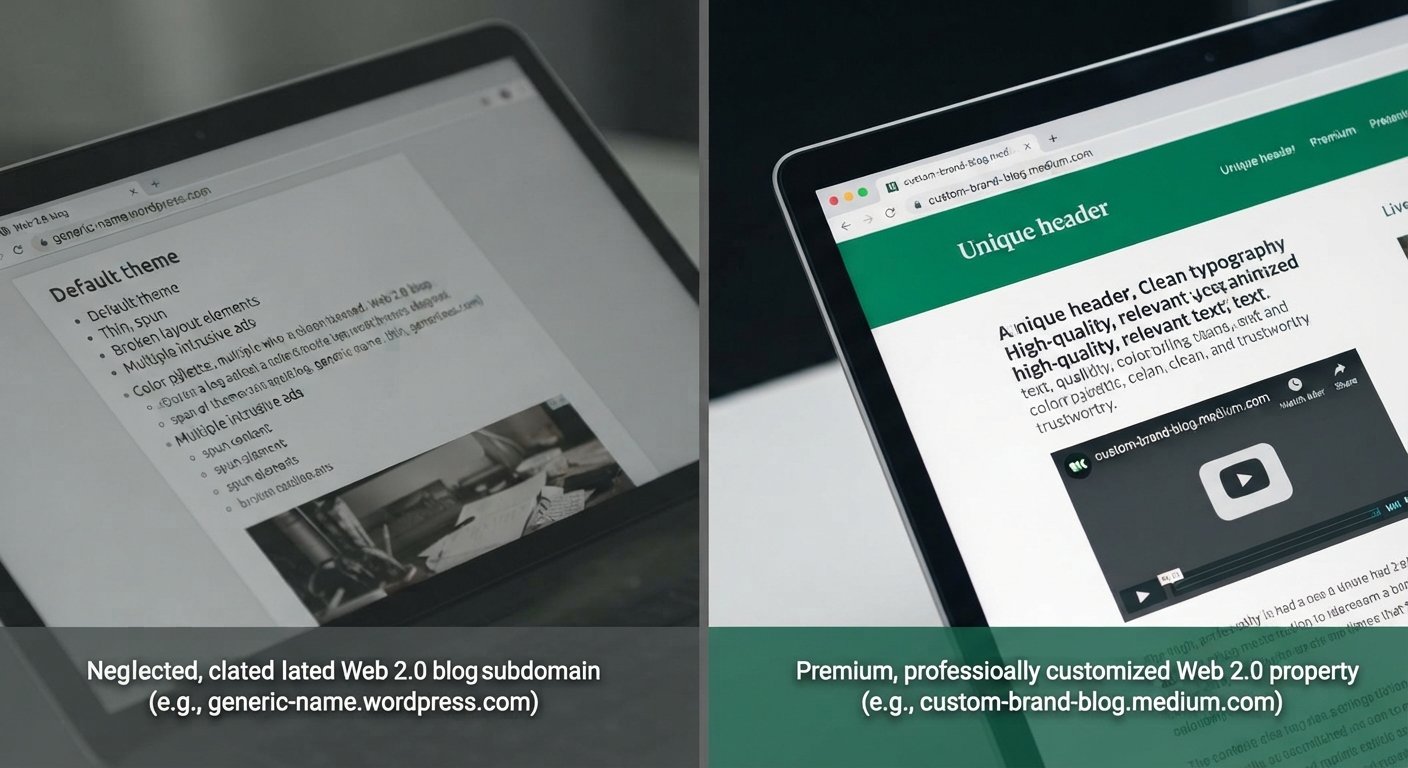
Empty blogs with zero custom design.
-
Copied and pasted, spun-to-death text that reads like gibberish.
-
Zero indexation because Google’s spiders took one look at the spam factory and blocked it out.
-
Within a few months, the profiles get deleted for terms of service violations, or worse—the money site takes a hit because Google spots a blatant unnatural link footprint.
Building Web 2.0 properties that actually pass juice isn’t about clicking a button in a piece of black-hat software. It requires manual effort, proper niche relevancy, and strict tiering protocols. If you want to understand the foundational mechanics of how these platforms should be set up from scratch, check out my guide on how to use web 2.0 backlinks.
What to Look for in the Best Web 2.0 Link Building Service
If you are going to outsource your off-page campaigns, you cannot afford to guess. A legitimate, high-performing service must tick several essential boxes:
1. Manual Account Creation and Profile Optimization
Real Web 2.0 properties (platforms like Medium, Substack, Tumblr, Blogger, etc.) require genuine human setup. Accounts need aged profiles, custom avatars, authentic bios, and unique styling so they mimic real user blogs. Bots cut corners here; real human teams do not.
2. Hand-Written, Niche-Relevant Content
You can’t drop a contextual link inside a completely unrelated article and expect Google to pass authority. Every single blog post published on a tier-one property needs to feature well-researched, unique content relevant to your niche. If you want to dive deeper into how foundational link architectures operate alongside other strategies, take a look at my resource on free backlinks.
3. Proper Tier-Two Buffering and Indexing
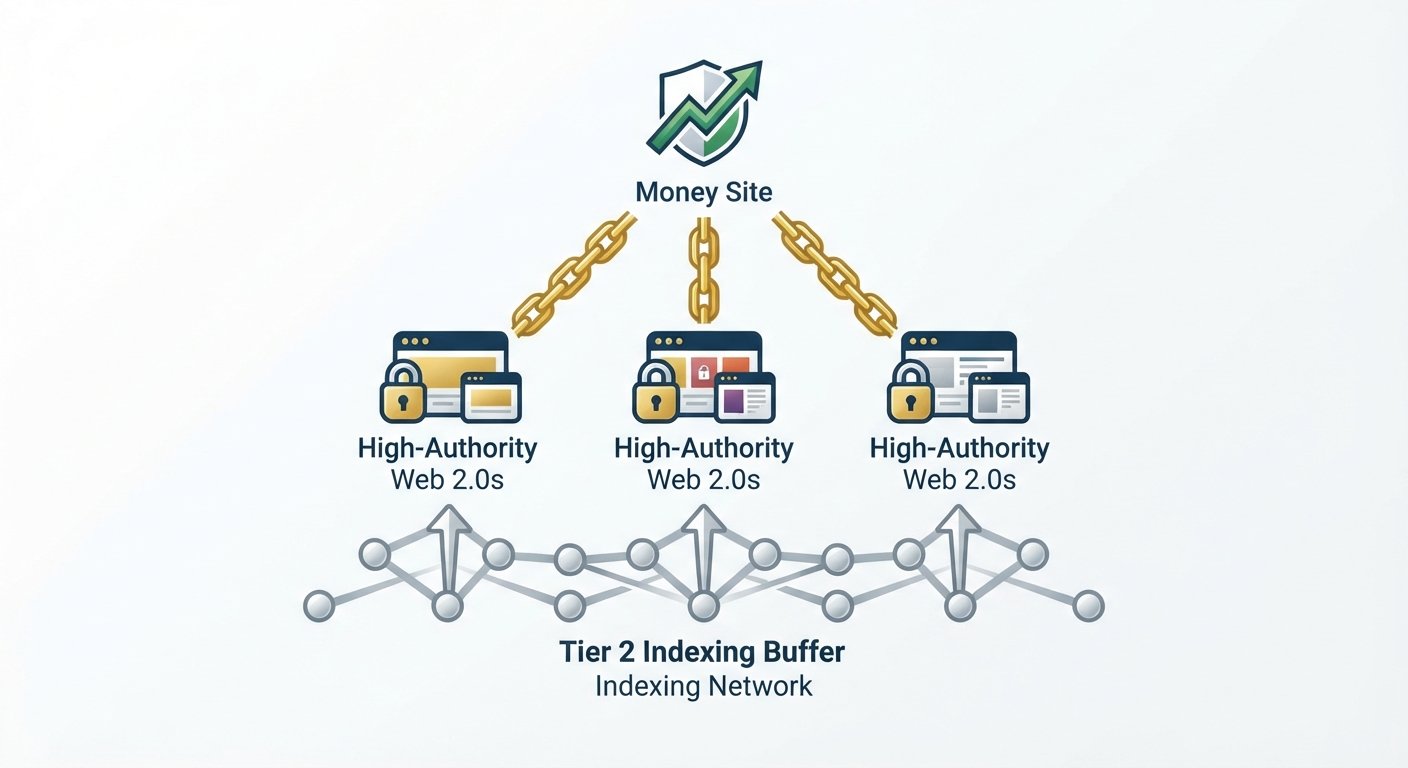
This is where most cheap providers fail completely. They publish a Web 2.0 post and leave it sitting in the dark with zero internal or external power pointing to it. Google’s bots can’t crawl what they can’t find. A professional service uses multi-tiered link structures—such as a modern take on the classic web 2.0 link wheel—to feed crawl power directly to your tier-one assets, forcing search engines to index and pass link juice safely.
Diversifying Your Off-Page Arsenal: Beyond Web 2.0s
While high-authority Web 2.0 networks are phenomenal for building diversified buffer zones, controlling your anchor text profile, and driving direct ranking velocity, they shouldn’t be the only tool in your toolkit. A bulletproof SEO campaign blends multiple authority sources.
-
Contextual Power: If you want to capture immediate trust from aged, high-traffic authoritative domains, you should also look to buy guest posts that place your link inside existing, high-ranking content.
-
Instant Authority: To leverage existing page-level trust and historical keyword rankings on mature third-party sites, many marketers choose to buy niche edits.
-
Comprehensive Strategy: Before you invest a single dollar into any off-page campaign, make sure you understand the core fundamentals outlined in my master breakdown on how to buy backlinks safely without triggering algorithmic filters.
For broader industry standards on technical off-page link building and algorithmic updates, you can also reference resources like Search Engine Journal’s Link Building Guide.

Skip the Guessing Game: Let Rankers Paradise Handle Your Campaign
Finding the best web 2.0 link building service shouldn’t feel like rolling dice. If you’re tired of wasting budget on automated software packages that get de-indexed, let us do the heavy lifting for you.
Head over to our store and check out our proven off-page packages at Rankers Paradise. Every link we build is hand-crafted, contextually relevant, properly indexed, and engineered to pass safe, long-term ranking power straight to your money site. Stop guessing—start ranking.