
Web 2.0 backlinks remain a useful part of a balanced SEO strategy when they are created with care, relevance, and long-term value in mind. While they should never be treated as a shortcut or a replacement for high-quality editorial links, they can help support your website’s authority, diversify your backlink profile, and create additional branded content around your target topics.
The key is to use Web 2.0 platforms properly. Instead of creating thin pages with copied content and spammy links, the goal should be to build small, useful content assets that make sense for real readers. When done correctly, these properties can strengthen your overall SEO foundation and give your main website more topical support.
What Are Web 2.0 Backlinks?
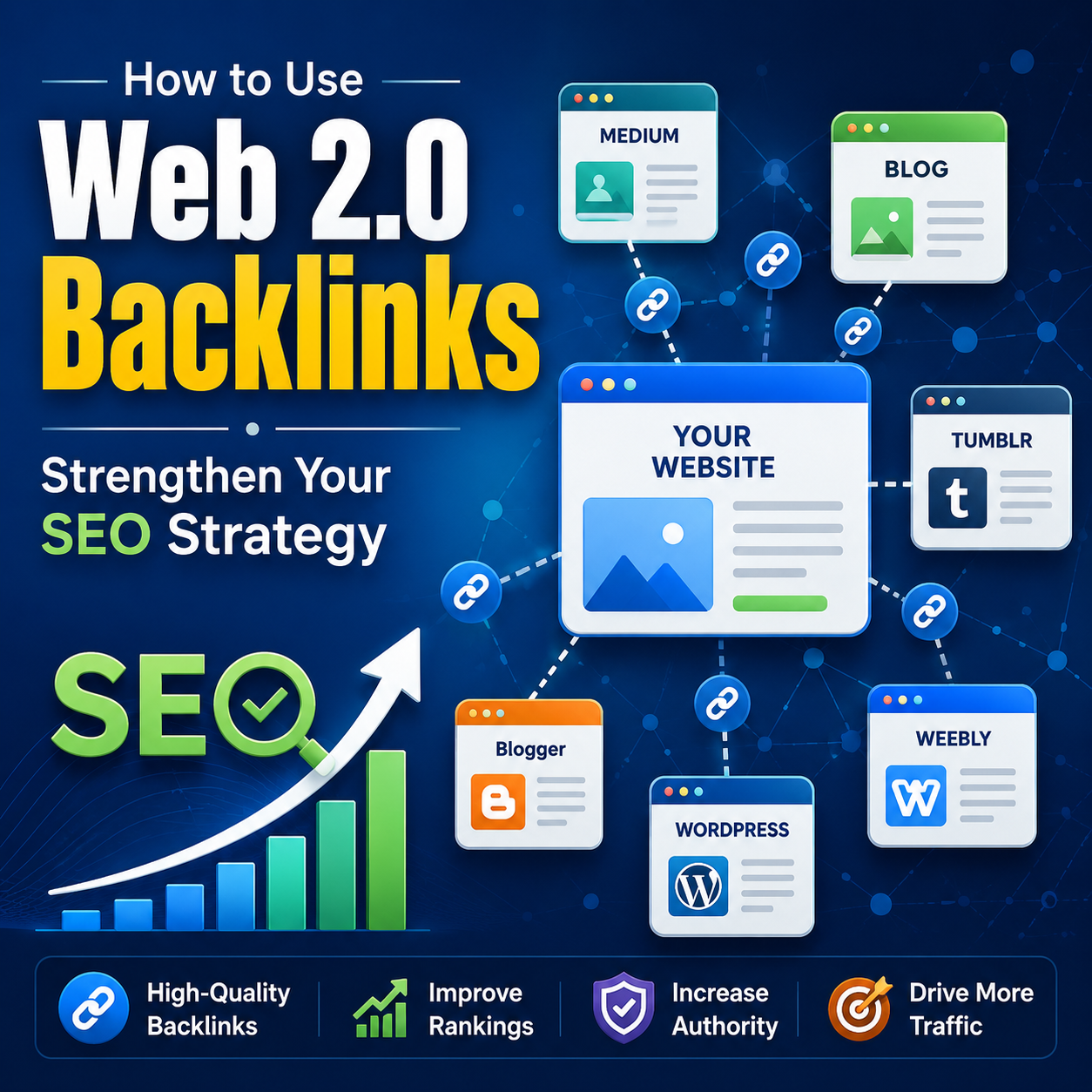
Web 2.0 backlinks are links created from user-generated publishing platforms. These platforms allow users to create blogs, pages, profiles, or content hubs where they can publish articles and link back to relevant pages on their own websites.
Common examples include blogging platforms, free website builders, content-sharing sites, and community-based publishing platforms. Because users can control the content they publish, Web 2.0 sites can be used to create contextual backlinks within relevant articles.
However, quality matters. Search engines are much better at detecting low-value link building than they used to be. A Web 2.0 backlink placed inside a poorly written, irrelevant, or abandoned page will not carry the same value as one placed inside a useful, topic-focused piece of content.
Why Web 2.0 Backlinks Can Still Be Useful
Web 2.0 backlinks can support your SEO campaign in several ways. First, they help create more content around your niche. When your Web 2.0 properties are written around related topics, they can reinforce the theme of your main website.
Second, they can diversify your backlink profile. A natural backlink profile usually includes links from different types of sources, such as guest posts, directories, niche edits, citations, social profiles, and Web 2.0 platforms. This variety can make your overall link profile appear more organic.
Third, they can help index and support important content. When you publish supporting articles that link to a pillar page, you create another pathway for search engines to discover and understand that page.
For example, if your main guide explains the full process of building web 2.0 backlinks, supporting articles can be used to expand on related subtopics while pointing readers toward the main resource.
Focus on Relevance Before Quantity
One of the biggest mistakes people make with Web 2.0 backlinks is focusing only on volume. Creating dozens of weak pages is far less effective than building a smaller number of strong, relevant properties.
Each Web 2.0 page should have a clear purpose. It should cover a topic connected to your niche and provide enough useful information to stand on its own. If the content only exists for the backlink, it is unlikely to provide much lasting value.
Before creating a Web 2.0 property, ask yourself:
Does this page help explain a related topic?
Would a real person find the content useful?
Is the backlink placed naturally within the article?
Does the page look trustworthy and complete?
If the answer is yes, the backlink is much more likely to support your SEO strategy in a positive way.
Create Original Content for Every Web 2.0 Property
Duplicate content is a common problem in low-quality Web 2.0 link building. Some people publish the same article across multiple platforms and simply change the anchor text. This approach can make the content look lazy and unnatural.
Instead, every Web 2.0 article should be original. It does not have to be extremely long, but it should be unique, readable, and relevant. A good Web 2.0 article might explain a specific subtopic, answer a common question, or provide a beginner-friendly guide related to your main niche.
For best results, avoid stuffing the article with keywords. Use natural language, include helpful headings, and make the content easy to read. The backlink should feel like a useful recommendation, not a forced SEO placement.
Use Natural Anchor Text
Anchor text plays an important role in how search engines understand the page being linked to. However, overusing exact-match anchor text can look unnatural.
A healthy SEO strategy uses a mix of anchor types, including branded anchors, partial-match anchors, naked URLs, generic anchors, and occasional exact-match phrases. When using Web 2.0 backlinks, it is better to keep anchors natural and varied across your wider campaign.
The anchor text should fit the sentence and provide context for the reader. If the link feels awkward, it is usually a sign that the anchor needs to be adjusted.
Build Out the Web 2.0 Page Like a Real Asset
A strong Web 2.0 property should not look empty or unfinished. Add a proper title, helpful formatting, relevant images where appropriate, and supporting internal pages if the platform allows it.
You can also make the property look more natural by adding an about section, publishing more than one article, and linking to other useful external resources. This helps the page feel more like a real content asset rather than a one-page backlink source.
The more complete and trustworthy the Web 2.0 property appears, the better it may support your broader SEO efforts.
Avoid Spammy Automation
Automation can be tempting, especially when creating backlinks at scale. However, mass-generated Web 2.0 links often leave clear footprints. These may include spun content, identical layouts, repeated anchor text, and links created too quickly across too many platforms.
Search engines are designed to identify patterns that look manipulative. If your Web 2.0 strategy appears automated or low quality, it could reduce the value of the links or even create risk for your site.
A safer approach is to build slowly, focus on quality, and make each property look different. Use unique content, varied formatting, different article angles, and natural publishing patterns.
Support Pillar Content Strategically
Web 2.0 backlinks work best when they support important pages on your website. These are usually pillar pages, service pages, product pages, or detailed guides that you want to rank higher in search results.
Instead of linking randomly to your homepage every time, think about which page deserves support. A pillar page is often a good target because it usually covers a topic in depth and can benefit from relevant contextual links.
Supporting content should be closely connected to the pillar page. For example, if your pillar content is about Web 2.0 backlinks, your supporting articles could cover topics such as backlink diversity, safe link building, anchor text planning, tiered link building, or common mistakes to avoid.
This creates a stronger topical relationship between the supporting content and the page you want to rank.
Keep Your Link Profile Balanced
Web 2.0 backlinks should be only one part of your overall SEO strategy. Relying too heavily on one type of backlink can make your link profile look unnatural.
A stronger strategy includes multiple link sources. These may include guest posts, niche edits, business citations, digital PR, social profiles, directory listings, and natural editorial mentions. The goal is to build a backlink profile that looks diverse and trustworthy.
Web 2.0 links can help support this structure, but they should not be the only method you use.
Track Results and Improve Over Time
Like any SEO tactic, Web 2.0 backlinks should be monitored. Track your rankings, organic traffic, indexing status, and backlink profile over time. This helps you understand whether your efforts are contributing to your SEO goals.
You should also revisit your Web 2.0 properties occasionally. Update outdated content, add new posts, fix broken links, and improve pages that look thin. A maintained property is more valuable than one that is created once and forgotten.
SEO is a long-term process, and small improvements can add up when they are done consistently.
Final Thoughts
Web 2.0 backlinks can still play a valuable role in SEO when they are used properly. The most important thing is to focus on quality, relevance, and natural placement. Thin content, aggressive anchor text, and mass automation are unlikely to produce lasting results.
A smart Web 2.0 strategy should support your main content, strengthen topical relevance, and add diversity to your backlink profile. When combined with other high-quality SEO methods, Web 2.0 backlinks can help build a stronger foundation for long-term search visibility.
Keep reading…
How to Build Powerful Web 2.0 Backlinks Without Getting Penalized