
Web 2.0 backlinks have been discussed in SEO circles for years. Some marketers still use them as part of their link-building campaigns, while others believe they have lost their power due to Google’s stricter approach to low-quality links. The truth sits somewhere in the middle. Web 2.0 backlinks can still support rankings when they are created properly, but they are no longer a shortcut for instant SEO success.
Today, search engines look beyond the existence of a backlink. They consider relevance, content quality, authority, natural placement, user value, and overall link profile diversity. That means a poorly written post on a free publishing platform with an exact-match link stuffed into the content is unlikely to help much. However, a well-built Web 2.0 property with useful content, topical relevance, and a natural backlink can still provide SEO value.
What Are Web 2.0 Backlinks?
Web 2.0 backlinks are links created on user-generated publishing platforms. These may include blogging sites, content-sharing platforms, profile-based websites, and mini-site builders where users can publish their own pages or posts. Common examples include platforms that allow you to create blogs, articles, or branded pages with links pointing back to your main website.
The appeal of Web 2.0 links is simple: they are usually easy to create, affordable, and fully controlled by the person building them. Unlike guest posts or editorial links, you do not need approval from another website owner in many cases. You can choose the content topic, anchor text, link destination, and publishing schedule.
That control is useful, but it also creates risk. Because Web 2.0 platforms are easy to use, they have been heavily abused by spammers. As a result, search engines are much better at identifying thin, low-effort Web 2.0 pages that exist only for link manipulation.
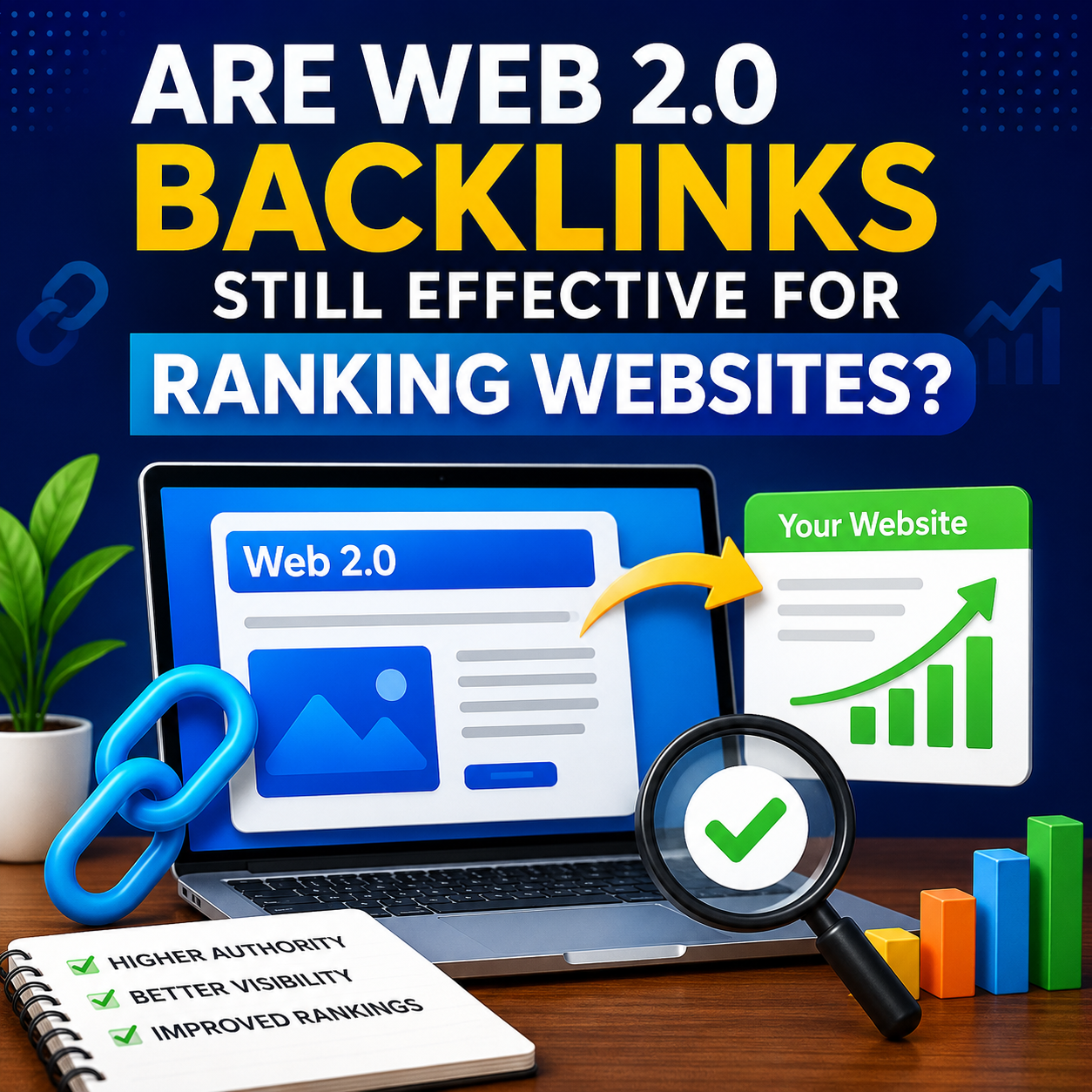
Are Web 2.0 Backlinks Still Effective?
Yes, Web 2.0 backlinks can still be effective, but only when they are built with quality and relevance in mind. They should not be treated as powerful standalone ranking weapons. Instead, they work best as supporting links within a broader SEO strategy.
A strong backlink profile usually includes a mix of link types, such as guest posts, niche edits, citations, social profiles, branded mentions, resource links, and contextual links from relevant content. Web 2.0 backlinks can fit into this mix when they are used naturally.
The key is to avoid the old-fashioned approach of creating dozens or hundreds of low-quality pages with spun content. That tactic is outdated and risky. Modern Web 2.0 link building should focus on creating useful mini-assets that look and read like real content.
For example, instead of publishing a 300-word generic article with a forced keyword link, you could create a helpful supporting article that expands on a subtopic related to your main page. This makes the link more natural and gives the page a reason to exist.
For a deeper breakdown, you can follow this detailed web 2.0 backlink strategy.
Why Web 2.0 Links Still Have SEO Value
Web 2.0 backlinks can still help because they provide contextual relevance. When a link appears inside a piece of content that is related to your target page, it gives search engines more context about the linked page’s topic.
They can also help diversify your backlink profile. A natural website rarely earns links from only one type of source. Having a mix of platforms, domains, anchor texts, and content formats can make a backlink profile appear more organic.
Another benefit is indexation support. When your Web 2.0 content is properly written, internally structured, and occasionally updated, it may get indexed and pass some authority or relevance signals to your main site. This is especially useful when the Web 2.0 property itself gains supporting links or social signals.
However, expectations need to be realistic. A Web 2.0 backlink from a brand-new, empty page will not carry the same strength as a link from an established, authoritative website. Its value depends heavily on the quality of the content, the trust of the platform, the indexing status of the page, and the naturalness of the link placement.
What Makes a Good Web 2.0 Backlink?
A good Web 2.0 backlink starts with original content. The article should be readable, helpful, and relevant to the page you are linking to. It should not feel like it was created only to hold a backlink.
Relevance is also important. If your main website is about SEO, your Web 2.0 content should discuss SEO-related topics. A random article about travel, food, or technology linking to an SEO page would look unnatural unless there is a clear topical connection.
Anchor text matters as well. Using the same exact-match anchor repeatedly can create an unnatural pattern. A better approach is to use a mix of branded anchors, partial-match anchors, natural phrases, and occasional target keywords.
The Web 2.0 page should also look active and complete. Adding a proper title, introduction, headings, images, formatting, and supporting outbound links can make the page feel more credible. Some marketers also build multiple posts on the same Web 2.0 property rather than creating a single one-page site.
Common Mistakes to Avoid
One of the biggest mistakes is using duplicate or spun content. Search engines are much better at detecting low-value content than they used to be. If the article offers no original value, the backlink is unlikely to provide meaningful SEO benefit.
Another mistake is overusing exact-match anchor text. While keyword-rich anchors can help search engines understand a page, too many of them can look manipulative. A natural backlink profile includes variation.
Building too many Web 2.0 links too quickly is also risky. Sudden link spikes from low-authority user-generated platforms can appear suspicious, especially for newer websites. A slower, more balanced approach is usually safer.
Marketers should also avoid linking only to money pages. It is more natural to link to a mix of blog posts, guides, homepage URLs, service pages, and informational resources. This helps spread link equity and reduces the appearance of manipulation.
How Web 2.0 Backlinks Fit Into a Modern SEO Strategy
Web 2.0 backlinks should be used as part of a layered SEO plan. They are not a replacement for high-quality editorial links, strong on-page SEO, technical optimization, or helpful content. Instead, they can act as supporting signals.
A smart approach is to use Web 2.0 links to support pillar content, blog posts, or secondary pages. These links can help reinforce topical relevance and provide additional pathways for search engines to discover related content.
They can also be used in tiered link-building strategies. In this setup, Web 2.0 properties may support pages that then support your main website. However, this must be handled carefully. Low-quality tiered link building can quickly become spammy if it relies on automation, spun content, or irrelevant links.
For long-term SEO, quality always matters more than quantity. A few well-written, relevant Web 2.0 properties are usually better than hundreds of thin, abandoned pages.
Are Web 2.0 Backlinks Safe?
Web 2.0 backlinks are generally safer when they are created manually, written naturally, and used in moderation. The risk increases when they are mass-produced, automated, stuffed with keywords, or built only to manipulate rankings.
Google’s guidelines discourage link schemes intended to manipulate search results. This means any link-building method can become risky if it is abused. The safest approach is to make every Web 2.0 page useful enough to stand on its own.
Ask yourself whether the content would still be valuable without the backlink. If the answer is yes, you are likely moving in the right direction. If the page only exists as a link container, it is probably too thin.
Final Verdict: Are Web 2.0 Backlinks Still Worth Using?
Web 2.0 backlinks are still worth using, but they should not be treated as magic ranking boosters. Their effectiveness depends on how they are created, where they are placed, and how they fit into your overall backlink profile.
When done poorly, they offer little value and may even create risk. When done properly, they can help support topical relevance, diversify your link profile, and strengthen important content pages.
The best Web 2.0 backlinks are contextual, relevant, manually created, and supported by useful content. They should be part of a broader SEO campaign that includes quality content, technical optimization, internal linking, and stronger authority-building links.
In short, Web 2.0 backlinks still work, but only for marketers who understand that quality, relevance, and natural execution matter more than volume.
Keep reading…
What Are Web 2.0 Backlinks and Why Do They Still Matter for SEO?
How to Build Powerful Web 2.0 Backlinks Without Getting Penalized
Web 2.0 Backlinks Explained: A Beginner’s Guide to Safer Link Building