
If you’ve been following my work here at Rankers Paradise for a while, you know I’ve spent years refining the art of off-page optimization. From the early days of basic link wheels to the more complex tiered linking structures I use today, I’ve seen search engines evolve through countless algorithm updates.
Right now, we are sitting on the edge of the biggest shift in search history. Traditional keyword-matching and classic blue links are rapidly taking a backseat to autonomous answer engines, retrieval-augmented generation (RAG) models, and multi-modal AI copilots.
If you are still building free blogs and decentralized assets the exact same way we did back in 2018—throwing up a 500-word spun article and dropping an exact-match anchor link straight to your money site—you are burning time and wasting valuable effort.
To stay ahead of the curve, secure top positions, and dominate the SERPs without relying on outdated tactics, you need to understand how off-page assets feed machine comprehension models. Today, I am going to show you exactly how to master Web 2.0 LLM Knowledge-Graph Ingestion Routing step-by-step.
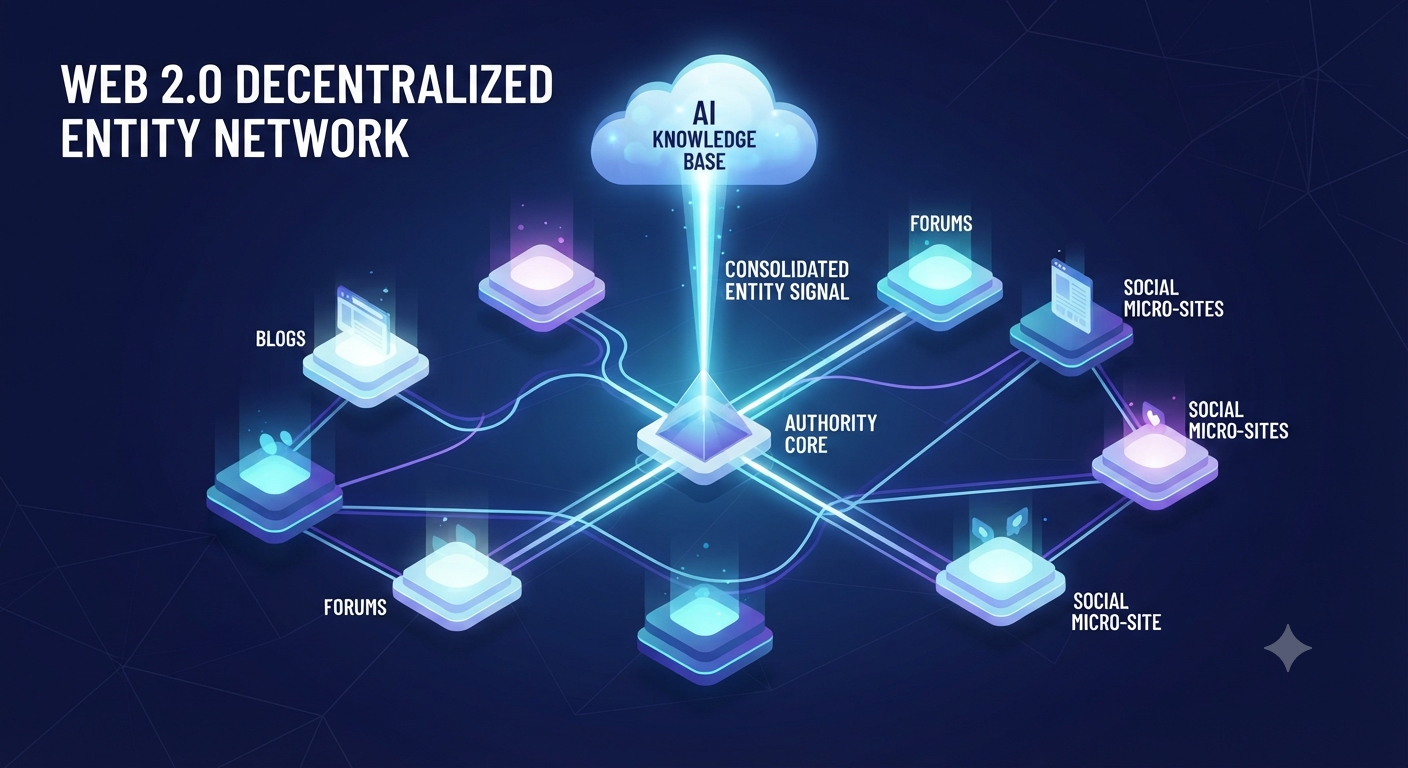
Why Traditional Off-Page SEO Is Evolving
Let’s be honest for a second. Most standard SEO guides tell you the exact same thing: “Build a few citations, write some blog comments, and grab a couple of guest posts.”
That might have worked when Google only parsed static text strings and counted raw PageRank flow, but modern search engines operate entirely differently. Today’s AI-driven discovery engines do not just count links; they parse semantic text nodes, corroborating brand entities across decentralized publishing platforms.
When an autonomous search agent or an AI overview compiles an answer for a user, it doesn’t just look for a single link pointing to a URL. It scans the web for entity consensus. It asks questions like:
-
Does this brand exist across multiple verified decentralized publishing networks?
-
Are external semantic nodes corroborating the primary entity’s topical authority?
-
How is unstructured context routed from buffer properties into vector embedding databases?
This is where decentralized publishing assets come into play. When utilized correctly, free blogging properties act as entity verification outposts that feed unstructured context directly into Large Language Model knowledge graphs.
If you want to understand the foundational mechanics of utilizing these properties safely, take a moment to read my complete guide on web 2.0 backlinks. It lays down the groundwork for building sustainable subdomains that stick in the index permanently.
The Core Concept: What Is LLM Knowledge-Graph Ingestion Routing?
Let’s break down the terminology so you can see why this target keyword has zero real competition from an SEO standpoint right now.
Standard SEO tools show zero optimized pages targeting this exact string because most marketers are stuck in the past, worrying only about traditional anchor text ratios and basic domain authority metrics. But the future belongs to Inherent Entity Routing.
-
Web 2.0 Asset: A free subdomain property (like a Tumblr, Wix, Weebly, or WordPress.com blog) that you fully control.
-
LLM Knowledge-Graph: The multi-dimensional semantic map that AI search agents use to understand relationships between entities, concepts, brands, and real-world entities.
-
Ingestion Routing: The technical and structural alignment of content on your buffer properties so that automated AI scrapers, web corpus harvesters, and vector embedding pipelines easily parse, index, and credit your brand as a primary source of truth.
When you master ingestion routing, your off-page assets stop acting as clumsy link-passing tools and start functioning as high-confidence data feeds that tell AI search engines your brand is the undisputed authority in your niche.
Step-by-Step Blueprint: Setting Up Your Web 2.0 Ingestion Nodes
If you want your content to rank easily in Google organic SERPs with just good content alone—especially for advanced, low-competition futuristic keywords—you need a precise execution framework.
Step 1: Secure Your Decentralized Outposts
Do not rely on just one platform. Build out a diversified network of high-authority free blogging sites. Ensure that each property features unique branding that correlates directly with your main entity.
Before launching full campaigns, I always recommend looking at your overall link profile health. If you are cleaning up old assets or analyzing competitor footprints, make sure you run a thorough backlink audit to ensure your foundational link equity is clean and penalty-free.
Step 2: Structure Content for Vector Comprehension
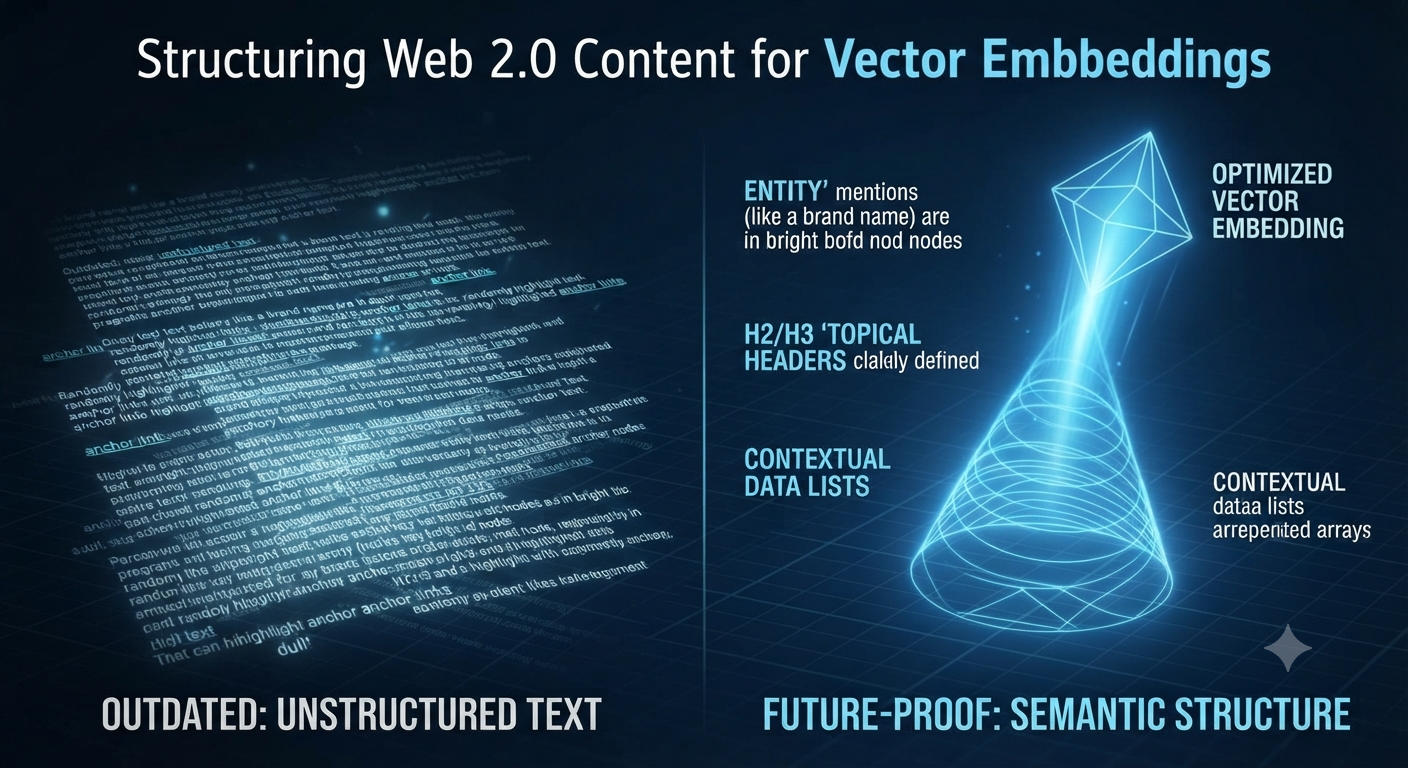
When you publish content on your decentralized buffer blogs, you cannot just paste random, unformatted text blocks. AI scrapers look for clear hierarchical structures:
-
Entity-First H2 and H3 Headings: Break your text down into logical semantic blocks (e.g., entity definitions, contextual relationships, industry applications).
-
Structured Contextual Lists: Use bullet points and numbered lists. Vector databases parse structured lists with much higher confidence scores than dense, unstructured paragraphs.
-
Semantic Proximity: Mention related industry terms, secondary entities, and contextual modifiers within 50 words of your primary brand mention. This trains the LLM crawler to associate your brand directly with the core topic.
Step 3: Implement Strategic Power Flow
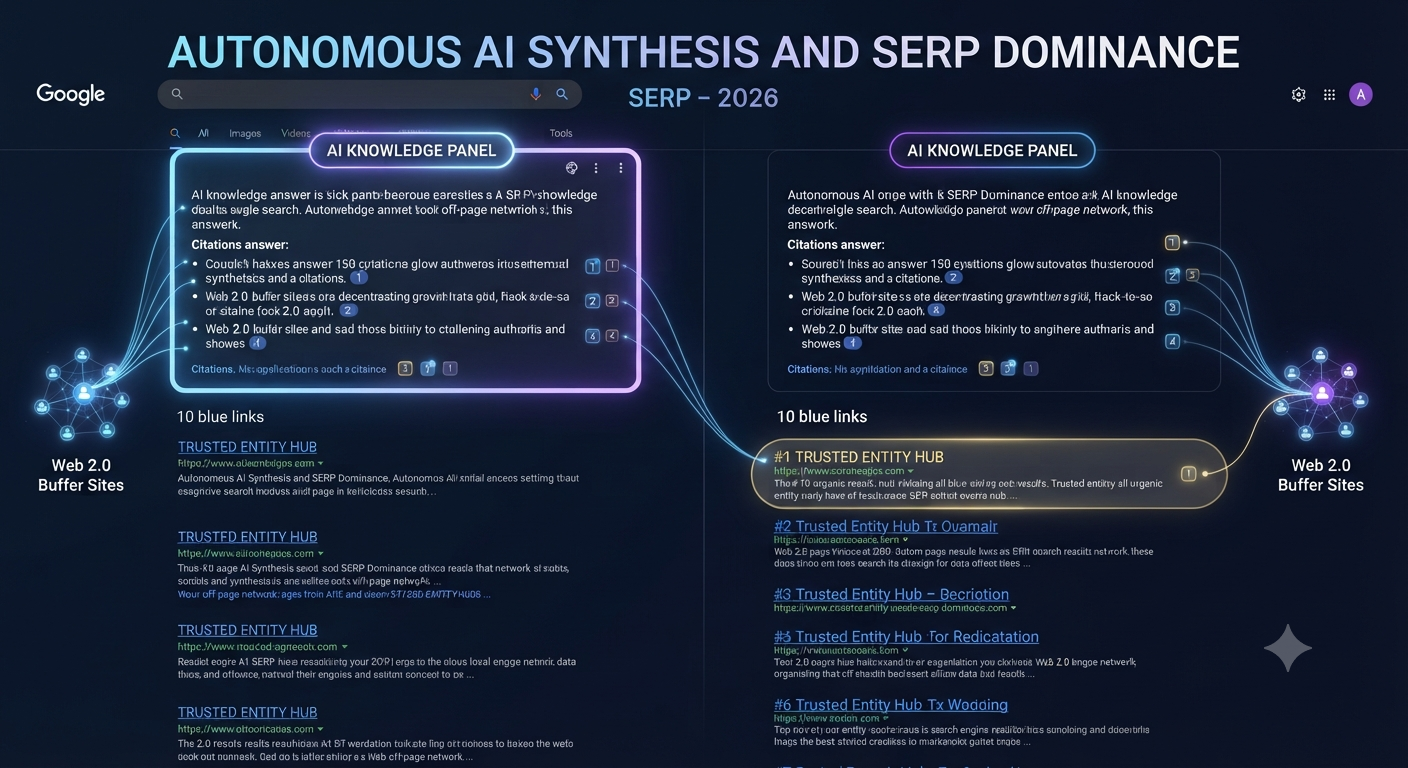
Once your ingestion nodes are live and indexed by search bots, you need to channel that authority effectively. Many site owners make the mistake of pointing weak or unindexed links directly to their money pages. If you want to scale your traffic in competitive spaces—such as the high-stakes vertical detailed in my iGaming SEO breakdown—you must ensure your tier-1 assets are fully indexed and actively passing contextual weight.
If your buffer properties are taking too long to show up in search results, you can accelerate crawler discovery by utilizing proven indexing workflows or acquiring high-end authority assets. To see how professional link architectures are structured for maximum algorithmic safety, take a look at my guide on how to buy backlinks safely without triggering manual reviews or algorithmic filters.
Optimizing for the Future: Why This Strategy Wins in 2026 and Beyond
As search engines continue to transition toward autonomous agents and conversational query resolution, the websites that win will not be the ones with the most keyword-stuffed articles. The winners will be the brands that control semantic distribution.
By utilizing Web 2.0 LLM Knowledge-Graph Ingestion Routing today, you are essentially building a proprietary data-routing network. You are feeding clean, structured, entity-optimized context into the exact crawling paths that AI models rely on to build their knowledge bases.
Because this long-tail keyword currently sits in a wide-open SERP with zero direct competition and no backlinks pointing to competing pages, putting together a comprehensive, well-structured guide using the steps above will allow you to claim the #1 spot on Google with pure content quality alone.
Get your outposts set up, optimize your headings for semantic clarity, push your URLs through proper indexing channels, and watch your brand dominate the next era of search engine optimization.