
If you want to rank #1 in the Google organic SERPs, you cannot rely on the old outdated tactics that worked back in 2010. The game has completely changed. While most website owners are still trying to blast mass blog comment spam or low-quality automated links, search engines have evolved into sophisticated semantic and AI-driven answer engines.
If you are looking to stay ahead of the curve, you need to understand how off-page optimization interacts with modern AI crawlers. That is where Web 2.0 Entity Seed Vectors for Generative Engine Optimization comes into play.
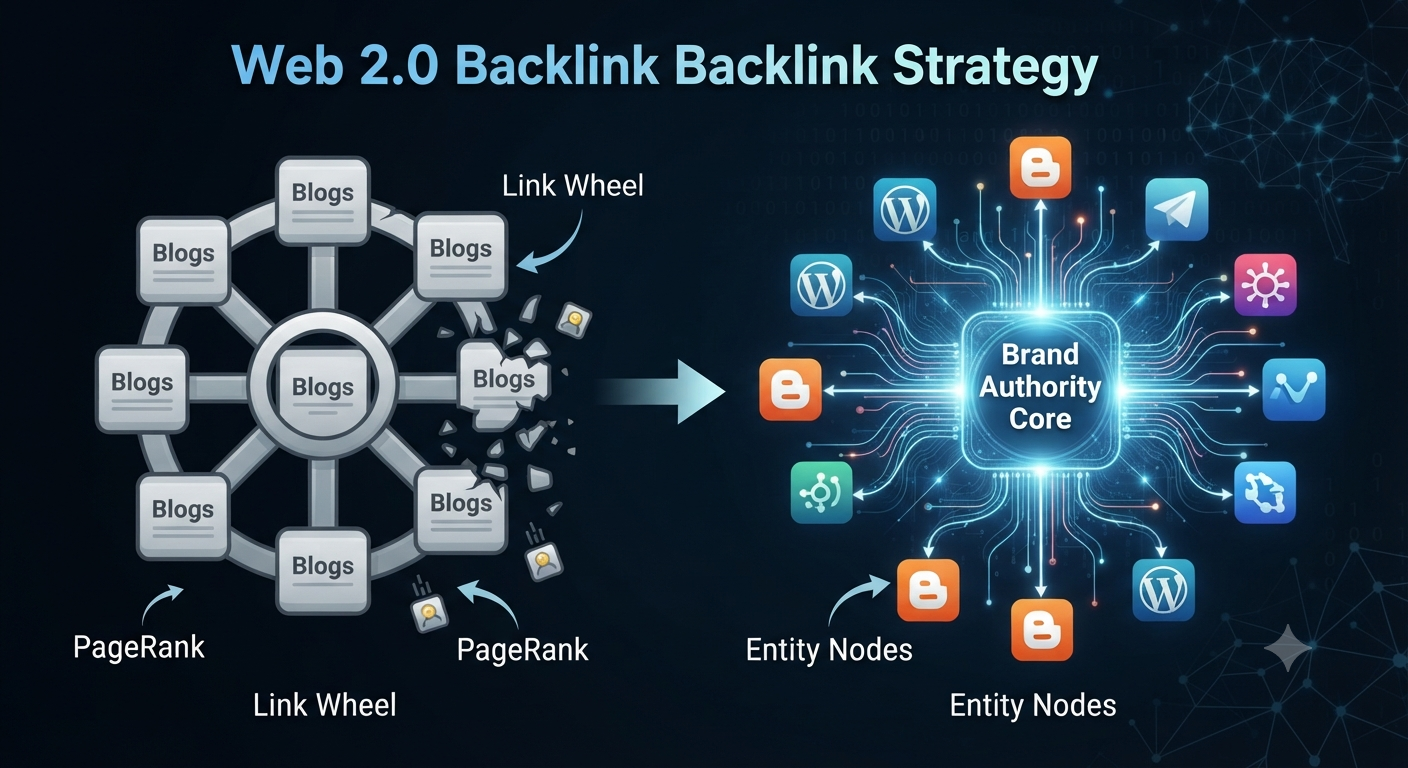
In this comprehensive guide, I am going to show you exactly how this cutting-edge concept works, why it is essential for your future SEO strategy, and how you can leverage it to dominate your niche before your competitors even know what hit them.
Before we go any further, you should take the time to read through the Google linking policies to ensure your foundational setup is completely safe.
Table of Contents
-
What Are Entity Seed Vectors in Modern SEO?
-
Why Traditional Web 2.0 Backlinks Have Evolved
-
How Generative Engine Optimization (GEO) Reads Your Off-Page Footprint
-
The Blueprint: Building Web 2.0 Entity Nodes for AI Search
-
Essential Optimization Checklist for Top Rankings
-
Internal & External Resources to Supercharge Your Campaign
-
Frequently Asked Questions
What Are Entity Seed Vectors in Modern SEO?
To understand how modern search crawlers index and rank content, you have to look beyond simple keyword matching and traditional PageRank algorithms. Search engines and AI-driven discovery platforms operate using vector spaces and entity graphs.
An entity is anything that is distinct, well-defined, and uniquely identifiable—a brand, a product, a specific service, or an author. A seed vector is a foundational data point that establishes the relationship between your primary brand entity and its surrounding semantic context across the web.
When you utilize decentralized publishing platforms correctly, you are no longer just passing a direct hypertext link. You are planting an authoritative entity node in a separate corner of the internet. AI bots ingest this data to verify your brand’s authority, topical relevance, and real-world existence.
If you want to understand the fundamentals of how these platforms fit into a modern link-building framework, you can read our detailed guide on web 2.0 backlinks.
Why Traditional Web 2.0 Backlinks Have Evolved
For years, digital marketers used free blogging platforms simply to pump direct anchor text and juice up domain metrics. While foundational link building still plays a massive role in organic visibility—especially when you buy backlinks from trusted providers—the way search engines evaluate these properties has shifted dramatically.
Today’s search algorithms and LLM-powered retrieval systems look at contextual signals rather than raw link counts alone:
-
Semantic Adjacency: Does the content surrounding your link make logical sense within your niche?
-
Author Profile Graphs: Are the articles tied to a consistent, recognizable entity or brand signature?
-
Cross-Platform Validation: Does your brand exist across multiple independent domains with matching contextual data?
If your off-page profile looks robotic or unnatural, modern AI-driven spam filters will neutralize it instantly. That is why treating your off-page assets as entity seed vectors is the safest and most effective way to secure top-tier keyword rankings.

How Generative Engine Optimization (GEO) Reads Your Off-Page Footprint
Generative Engine Optimization (GEO) is the practice of optimizing your digital footprint so that AI-powered search tools, answer engines, and chat-based assistants choose to cite your website as the primary source of truth.
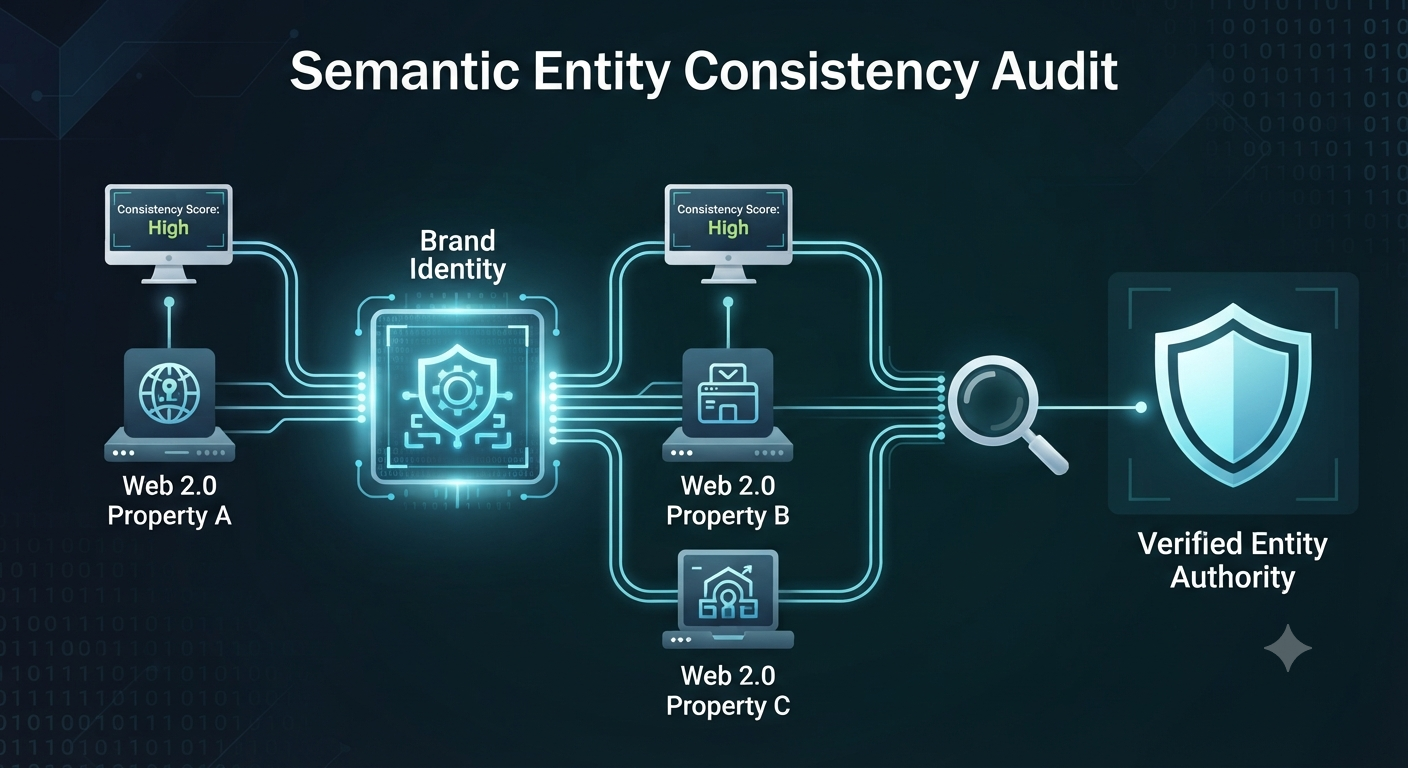
When an AI crawler evaluates your web presence, it does not just read your primary domain. It crawls outward to see who else is talking about you, where your brand is mentioned, and how your contextual authority is validated across the wider web.
-
Contextual Extraction: AI models use Retrieval-Augmented Generation (RAG). When a user asks a complex query, the engine pulls snippets from trusted nodes across the web. Clean, well-structured Web 2.0 properties act as secondary ingestion points that feed these RAG loops.
-
Entity Disambiguation: By establishing clear topic clusters across different hosted sub-domains, you remove any ambiguity about what your business does and what keywords you deserve to rank for.
For industries facing intense competition—such as those operating within specialized verticals like our iGaming SEO case study—establishing deep entity validation across diverse platforms is often the differentiating factor between ranking #1 and staying buried on page two.
The Blueprint: Building Web 2.0 Entity Nodes for AI Search
If you want to build future-proof entity seed vectors that satisfy both traditional Google crawlers and generative AI systems, you need a structured step-by-step approach. Do not just throw up random pages with spun text. Follow this blueprint:
1. Select High-Stability Platforms
Choose trusted platforms that remain permanently indexed and maintain high domain authority. Platforms like WordPress.com, Wix, Weebly, and Strikingly provide clean architectural frameworks that search spiders crawl consistently.
2. Focus on Semantic Richness
Ensure that the content published on these secondary properties is genuinely helpful, deeply relevant to your target keyword, and structured with clear headings, bullet points, and definitions. AI models reward structured data and comprehensive explanations.
3. Maintain Consistent Entity Data
Make sure your brand name, contextual terminology, and thematic focus remain uniform across every platform you touch. This strengthens your overall entity graph in the eyes of search algorithms.
If you suspect your current off-page strategy has accumulated unnatural footprints or legacy spam, it is always wise to run a thorough backlink audit before launching new entity assets.
Essential Optimization Checklist for Top Rankings
To ensure your content ranks #1 in the Google organic SERPs for your target long-tail keyword, verify that you have met all the core on-page requirements:
-
Title Tag & Meta Description: Include the exact target keyword (“Web 2.0 Entity Seed Vectors for Generative Engine Optimization”) naturally within your meta tags.
-
H1 & H2 Headings: Ensure your primary H1 tag contains the exact keyword, and use relevant semantic variations across your H2 subheadings.
-
Keyword Density: Keep your keyword density natural—ideally under 1%—surrounded by rich supporting vocabulary and contextual terms.
-
Content Depth: Provide long-form, highly unique human-written content that answers every possible sub-intent a searcher might have.
-
Indexation: Once your content is published, make sure it gets crawled immediately by submitting your URL to your indexing tool of choice.
Frequently Asked Questions
What makes an entity seed vector different from a standard backlink?
A standard backlink focuses primarily on passing link equity or anchor text value. An entity seed vector focuses on establishing contextual relationships, brand recognition, and semantic validation that both traditional search crawlers and generative AI models can parse and verify.
Why is Generative Engine Optimization important for SEO?
As more users shift toward AI-powered search assistants and conversational summaries, traditional blue links are increasingly accompanied by direct AI citations. GEO ensures your brand is recommended directly inside those generated answers.
Can I use these techniques alongside traditional link building?
Absolutely. Combining cutting-edge entity optimization with robust link-building campaigns creates a powerful synergy that pushes even the most competitive keywords to the top of the Google organic SERPs.