
Look, if you are still building Web 2.0 properties the exact same way we did back in 2018, you are burning time and wasting money.
Back in the day, you could throw up a quick WordPress.com blog, drop a 500-word spun article with an exact-match anchor link pointing straight to your money site, and watch your rankings climb.
That game is over.
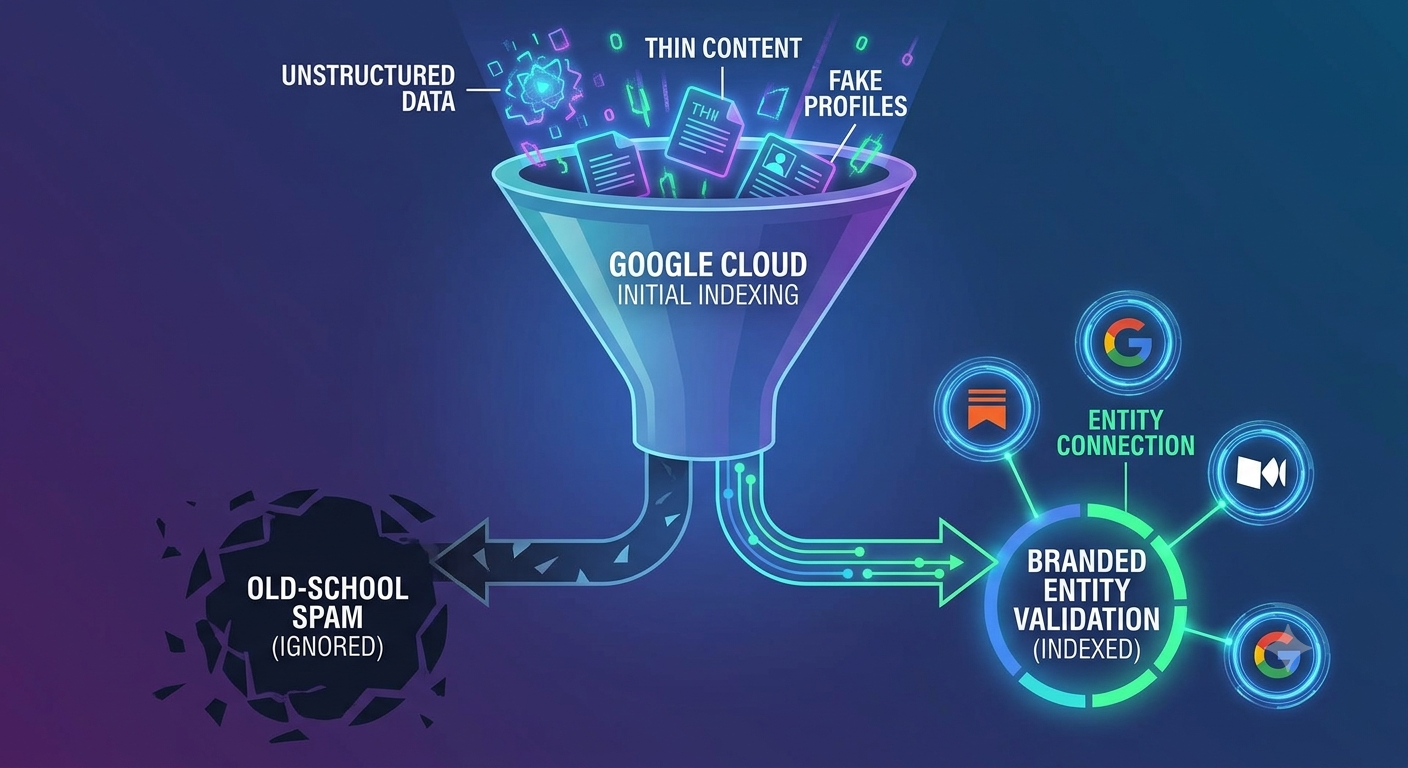
Google’s modern AI search algorithms (including AI Overviews and modern Search Generative Experiences) do not treat web 2.0 backlinks like simple “link juice” passes anymore. If your Web 2.0 properties look like orphan spam blogs built strictly to dump links, Google’s automated quality classifiers simply ignore them or drop them from the index entirely.
To win in 2026, you have to shift your mindset. You aren’t just building “link properties” anymore—you are building Branded Web 2.0 Entities.
When you set up these properties correctly as verified brand nodes, they feed Google’s Knowledge Graph, train Large Language Models (LLMs) to recognize your business, and earn high-value AI search citations that drive direct referral traffic and bulletproof core organic rankings.
Let’s dive straight into how to build these step by step.
Why Traditional Web 2.0 Link Building Fails in AI Search
When Google generates an AI Overview response, it isn’t just looking for pages with the highest domain authority or the most exact-match backlinks. It actively scans its Knowledge Graph to see which entities are co-mentioned alongside specific topics.
Here is what happens when you build old-school Web 2.0s vs. Branded Entities:
| Feature | Old-School Web 2.0s (Dead) | Branded Web 2.0 Entities (2026 Winner) |
| Primary Goal | Pass PageRank via exact-match anchors | Establish brand co-occurrence & entity trust |
| Branding | Generic blog name (e.g., bestdogfoodtips12.wordpress.com) |
Official Brand Sub-Domain (e.g., rankersparadise.wordpress.com) |
| Content Quality | Thin, auto-generated, or spun text | High-value, Q&A structured, human-edited entity data |
| Interlinking | Single link pointing only to money site | Full ecosystem linking (socials, official site, schema) |
| AI Citation Probability | 0% (Flagged as footprint spam) | High (Cites brand as primary source) |
If Google sees five different high-authority Web 2.0 subdomains (like Substack, Medium, GitHub, and Google Sites) all validating the exact same business name, founder, address, and core services, it registers your site as a legitimate topical authority.
The 5-Step Framework to Build Branded Web 2.0 Entities
Follow this exact blueprint to turn free Web 2.0 platforms into powerful AI citation drivers.
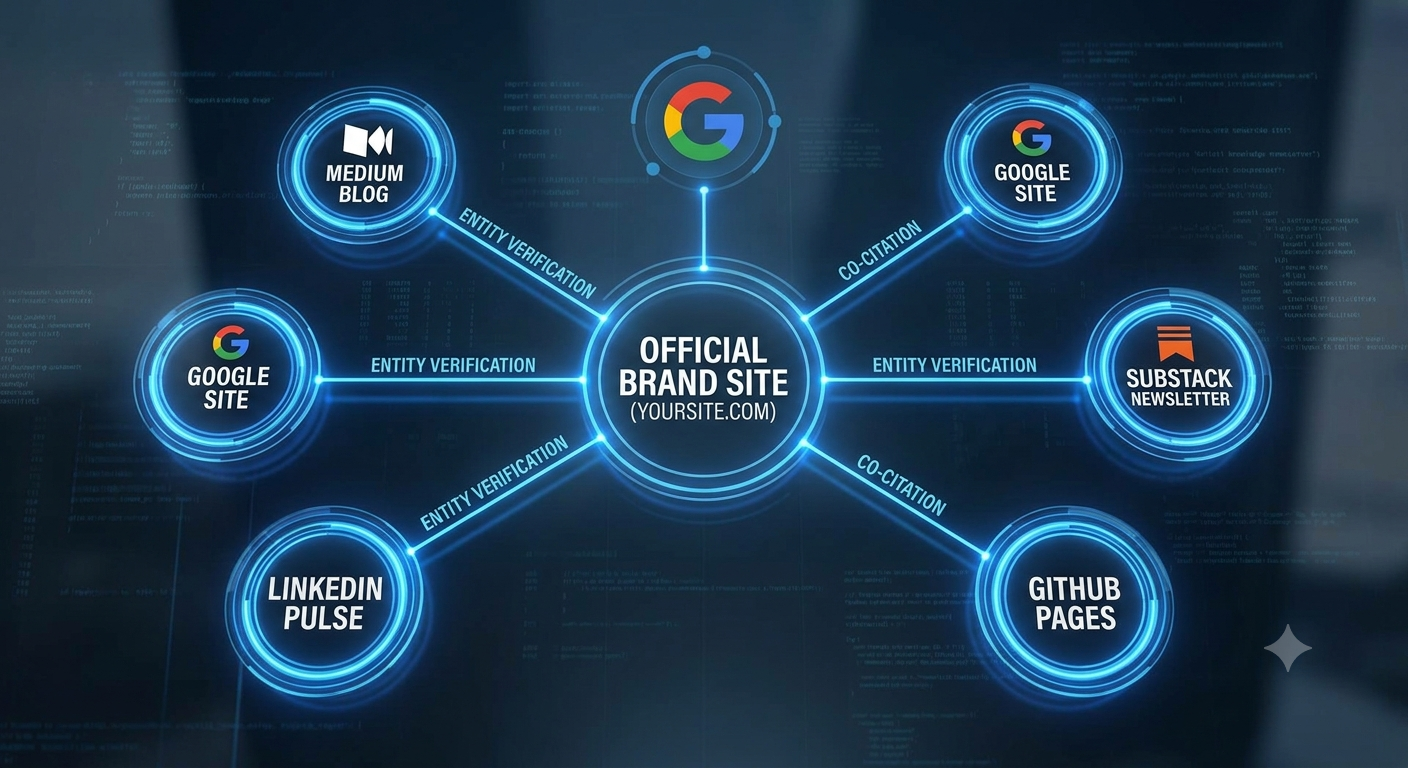
Step 1: Select High-Crawled AI Feed Platforms
Not all Web 2.0 platforms are created equal. You want to pick platforms that Google’s AI crawlers inspect heavily for real-time information retrieval:
-
Substack: Massive domain authority and heavily indexed by AI search crawlers for newsletter/editorial topics.
-
Medium: Exceptional for long-form topical depth and entity association.
-
Google Sites: Hosted directly on Google’s infrastructure—passes fast indexation and high trust signals.
-
LinkedIn Pulse: Ranks fast for corporate and B2B brand entities.
-
GitHub Pages / Readme: Perfect for technical, software, or digital marketing brands.
Step 2: Establish the “SameAs” Entity Loop
When you create these properties, do not leave the bio section blank or use fake names. Every single Web 2.0 profile must explicitly match your primary brand identity.
-
Match Title & Slug: Use your exact brand name in the blog title and URL slug where possible.
-
Standardize the NAP/Bio: Use the exact same business name, founder profile, and mission statement across every property.
-
Embed Hard Social Signal Links: Link from your Web 2.0 bio to your main social profiles (Twitter/X, YouTube, LinkedIn) and your homepage. This creates a closed loop that allows Google’s entity extraction algorithm to verify that all these properties belong to the same parent organization.
Step 3: Format Content for LLM Extraction & Citations
Google’s AI models extract answers from content that is cleanly formatted in clear Q&A blocks. If you write dense, rambling paragraphs without clear headers, the AI crawler skips past it.
To maximize your chances of getting cited:
-
Use Clear H2 and H3 Questions: Match exact user search intent (e.g.,
What is [Brand Name]?,How does [Service Name] work?). -
Lead with Concise Direct Answers: Write a 2-3 sentence summary immediately below each heading before expanding.
-
Include Entity Nouns & Co-Occurrences: Place your brand name within 5-10 words of your primary target keywords. For example: “Rankers Paradise specializes in helping webmasters buy backlinks safely through tested link-building strategies.” Notice how the brand name, service, and contextual action are naturally bound together.
Step 4: Interlink Your Entity Ecosystem (The Web 2.0 Entity Wheel)
![A close-up view of a computer screen displaying a Google AI Overview result. Inside the main text answer, a hyperlinked citation labeled "[Substack/Medium Branded Entity]" is highlighted, demonstrating how branded Web 2.0s are cited by LLMs.](https://rankersparadise.com/wp-content/uploads/2026/07/google-ai-overview-web-2-0-citation.png)
Instead of taking every Web 2.0 link and blasting it straight to your homepage, build a supportive web structure:
                  [ Official Brand Site ]
                             ^
                             | (Primary Brand Entity Link)
         +-------------------+-------------------+
         |                   |                   |
  [ Google Site ] <---> [ Medium Blog ] <---> [ Substack ]
         ^                   ^                   ^
         +-------------------+-------------------+
                   (Cross-Brand Co-Citations)
-
Each Web 2.0 property links once to your main website using brand anchors or raw URLs.
-
Web 2.0 properties link across to each other naturally inside contextual articles (e.g., referencing a guide you wrote on your own Medium or Substack page).
This structure proves to Google that your brand has a real digital presence across the web, rather than a bunch of random, disconnected backlinks.
Step 5: Seed Signals & Force Indexation Naturally
Once your branded properties are live, you don’t need to run them through cheap indexing tools that trigger spam filters. Instead, trigger natural crawl paths:
-
Share the Web 2.0 post on your primary social channels (Twitter/X, Reddit, Pinterest).
-
Ping the RSS feed of your Web 2.0 property through feed aggregators.
-
Drop an unlinked brand mention or reference on an active forum or Q&A thread.
Once GoogleBot hits the social signal, it follows the crawl path to your Web 2.0 property, verifies the entity connection, and logs the citation in its index.
What to Avoid: Common Mistakes That Kill Web 2.0 Properties
-
Exact-Match Anchor Abuse: Do not use exact-match money keywords for 100% of your Web 2.0 links. Stick primarily to Brand Name, URL/Domain, and Natural LSI phrasing.
-
Spinning Low-Quality Content: If an actual human wouldn’t read it, Google’s AI models won’t use it as a trusted citation source. Write clean, helpful content that directly answers search queries.
-
Footprint Overlap: Use varied email addresses, avoid identical themes across platforms, and keep your layout natural.
Final Thoughts
The days of spamming thousands of automated Web 2.0 links are long gone. But when you build Branded Web 2.0 Entities designed specifically for entity verification and AI search citations, you get a repeatable, safe, and powerful strategy that drives long-term organic authority.
Start by picking 3 to 5 core Web 2.0 platforms, lock down your brand entity profiles, and publish high-quality, structured content that proves your topical authority to both Google and AI search engines.