
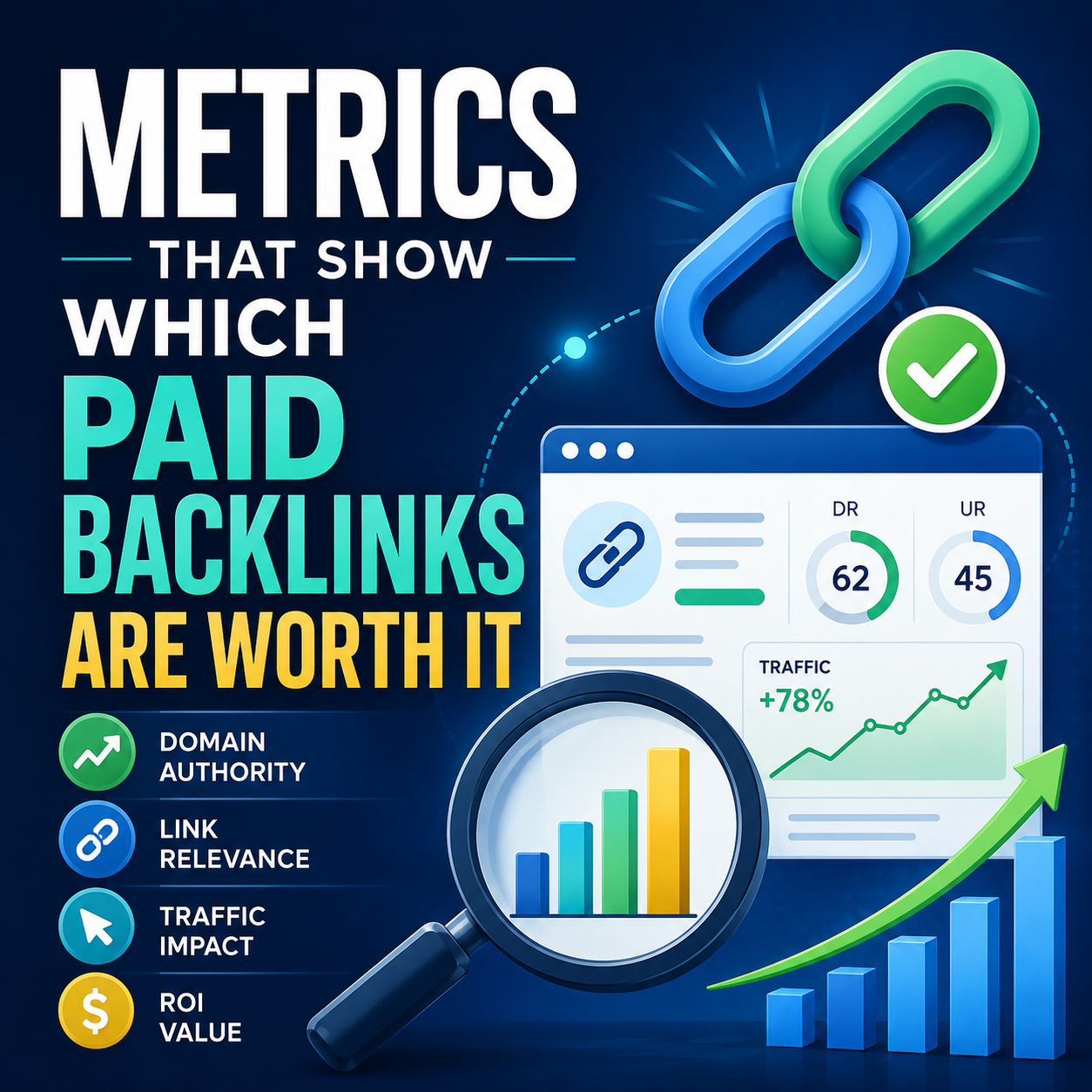
Paid backlinks can be powerful when they are chosen carefully, but not every link is worth the money. Some placements can help a website gain authority, rankings, and referral traffic, while others may offer little value or even create risk. The key is knowing which metrics matter before buying a backlink and which signs show whether the investment is likely to pay off.
A good backlink is not just a link on a website with a high score. It should come from a relevant, trustworthy, indexed page that has real traffic, strong topical alignment, and a natural placement within useful content. When these factors work together, a paid backlink becomes more than a simple SEO shortcut. It becomes part of a long-term growth strategy.
Why Backlink Metrics Matter
Buying backlinks without checking the right metrics is like paying for advertising without knowing who will see it. A backlink may look impressive on the surface, but if the website has no real audience, poor content, spammy outbound links, or weak topical relevance, it may not help your rankings.
Metrics help you separate quality opportunities from risky ones. They give you a clearer picture of whether a link is likely to support your SEO goals. While no single metric can guarantee results, a combination of signals can help you make smarter choices.
For a deeper buying framework, review these investment-based backlink strategies before choosing where to place your next paid link.
1. Organic Traffic
Organic traffic is one of the most important backlink quality indicators. If a website receives consistent search traffic, it usually means Google trusts at least some of its pages. A link from a site with real organic visibility is generally more valuable than a link from a site that only has inflated authority scores.
When checking organic traffic, look for stability. A website with steady or growing traffic is usually safer than one that has suffered a sharp drop. A sudden decline may suggest a penalty, poor content quality, algorithmic issues, or an outdated SEO strategy.
A backlink from a page or domain with real traffic also gives you a better chance of referral visitors. Even if the main goal is SEO, direct clicks from relevant readers can add extra value.
2. Topical Relevance
Relevance is one of the strongest signs that a backlink is worth paying for. A link from a website in your niche, or a closely related industry, is usually more natural and useful than a link from a random high-authority domain.
For example, if your website is about SEO services, a backlink from a marketing blog, business publication, SaaS website, or digital strategy resource is more relevant than a link from an unrelated lifestyle or gaming site.
Topical relevance helps search engines understand the connection between the linking page and your website. It also improves user experience because readers are more likely to click links that match the topic they are already reading about.
3. Domain Authority and Domain Rating
Domain Authority, Domain Rating, Authority Score, and similar third-party metrics can be helpful, but they should not be used alone. These scores estimate the strength of a domain’s backlink profile, but they do not always reflect real SEO value.
A high score may look attractive, but it can sometimes be manipulated through poor-quality link building. On the other hand, a lower-authority niche website with real traffic and strong relevance may be more valuable than a high-score site with weak content.
Use authority metrics as a starting point, not a final decision. The best paid backlinks usually combine authority with relevance, traffic, editorial quality, and clean link practices.
4. Page-Level Strength
Many buyers focus only on the domain, but the actual page where your link appears matters just as much. A backlink placed on a strong, indexed page with useful content is more valuable than a link buried on a thin, forgotten page.
Check whether the page is indexed in Google, whether it targets a real topic, and whether it has any ranking potential. A link from a page that attracts impressions, traffic, or backlinks of its own can pass more value than a page created only for selling links.
The surrounding content also matters. Your backlink should appear naturally inside a relevant paragraph, not randomly inserted into unrelated text.
5. Spam Score and Link Quality
Spam signals can quickly turn a paid backlink into a bad investment. Before buying a link, review the website’s outbound link profile. If it links to casinos, adult sites, suspicious finance offers, fake products, or unrelated niches in nearly every article, it may be part of a link farm.
Also look for excessive sponsored posts, duplicate content, spun articles, and pages written only to host links. These are warning signs that the website may not provide lasting SEO value.
A good backlink source should have editorial standards. It should publish useful content, link naturally to relevant sources, and avoid obvious link-selling footprints.
6. Indexing Status
A backlink has limited value if the page is not indexed. Before paying for a placement, check whether similar pages on the website are indexed by Google. After the link goes live, confirm that your specific page is indexed too.
If a website publishes hundreds of posts but many of them do not appear in search results, that may suggest low trust, poor crawlability, or thin content. Indexed pages are not automatically valuable, but non-indexed pages are usually a poor investment.
7. Anchor Text Quality
Anchor text helps search engines understand the topic of the linked page. However, over-optimized anchor text can look unnatural if used too often. A strong paid backlink strategy should include a mix of branded anchors, partial-match anchors, natural phrases, and occasional exact-match terms.
The best anchor text fits naturally into the sentence. It should make sense to the reader and not feel forced. If every paid backlink uses the same keyword-heavy anchor, it can create an obvious pattern.
Anchor text should support relevance without making the link look manipulative.
8. Editorial Placement
Where the link appears on the page matters. A contextual link inside the main body content is generally more valuable than a link in the footer, sidebar, author bio, or random list of resources.
Editorial placement means the link is part of the article’s natural flow. It should support the topic being discussed and add value for the reader. A well-placed link looks like a recommendation, not an advertisement.
The more natural the placement, the more likely it is to be useful for both SEO and user engagement.
9. Outbound Link Ratio
A page with too many outbound links may pass less value to each linked website. If an article contains dozens of external links to unrelated sites, your backlink may be diluted.
Check how many external links appear on the page and whether they are relevant. A reasonable number of helpful links is normal. A page overloaded with commercial links is a red flag.
The same applies at the domain level. If nearly every post on a website contains paid links to unrelated businesses, the site may have reduced trust.
10. Content Quality
Content quality is one of the easiest ways to judge whether a backlink is worth buying. A strong placement should appear in an article that is original, readable, useful, and relevant to the website’s audience.
Avoid backlinks from pages with thin content, poor grammar, generic AI-style filler, duplicate paragraphs, or no clear search intent. Low-quality content can reduce the value of the link and make the placement look unnatural.
A backlink surrounded by helpful, well-written content is more likely to be indexed, trusted, and useful over time.
11. Traffic Location
If your business targets a specific country, check where the linking website’s traffic comes from. A site with traffic from your target market is usually more valuable than a site with unrelated global traffic.
For example, a UK business may benefit more from links on websites with strong UK visibility. A US-focused service may prefer websites with US search traffic. Location relevance can improve both referral quality and search engine context.
This does not mean every backlink must come from the same country, but traffic geography should match your goals where possible.
12. Link Permanence
Some paid backlinks disappear after a few months. Others are removed when a website changes ownership, updates old content, or deletes paid posts. Before buying a link, understand whether the placement is permanent, rented, or time-limited.
Permanent does not always mean forever, but a quality provider should be clear about expected link duration. If the link is likely to be removed quickly, the price should reflect that risk.
Longer-lasting backlinks usually offer better value because SEO results often take time to build.
13. DoFollow vs NoFollow
A dofollow backlink can pass ranking signals, while a nofollow, sponsored, or UGC link may not pass the same level of SEO value. That does not mean nofollow links are useless. They can still bring referral traffic, brand exposure, and a natural-looking backlink profile.
However, if your main goal is ranking improvement, you should know what type of link you are buying. A paid placement should be transparent about whether the link is dofollow or tagged.
The best backlink profiles usually contain a natural mix, but paid SEO campaigns often focus on high-quality dofollow placements.
14. Referral Traffic Potential
SEO value is important, but referral traffic is another sign of a worthwhile backlink. A link placed on a relevant, well-read article can bring visitors who are already interested in your topic.
Referral traffic may not always be huge, but even a small number of qualified visitors can be valuable. If the linking site has a real audience, strong content, and relevant readers, the backlink has more than one benefit.
A paid backlink that supports rankings and sends potential customers is much more valuable than one that exists only for link metrics.
15. Cost vs Expected Value
The final metric is return on investment. A backlink should be judged by what it can realistically contribute to your SEO campaign. A cheap link is not always a bargain, and an expensive link is not always high quality.
Compare the price against relevance, authority, traffic, content quality, and placement strength. If a backlink checks most of the quality boxes, it may be worth paying more. If it only has a high authority score but weak traffic and poor relevance, it may not be worth the cost.
The goal is not to buy the most backlinks. The goal is to buy the right backlinks.
Red Flags That a Paid Backlink Is Not Worth It
Some backlink opportunities should be avoided, even if they look affordable. Be cautious if the website has no organic traffic, publishes unrelated sponsored posts, uses duplicate content, has a high spam score, or links to low-quality industries across every article.
Other warning signs include private blog network footprints, fake traffic, poor indexing, hidden links, irrelevant anchor text, and sellers who cannot explain where the link will be placed.
A bad backlink may not only waste money. It may also weaken your backlink profile and create cleanup work later.
Final Thoughts
The best paid backlinks are not chosen by one metric alone. They are selected by looking at the full picture: traffic, relevance, authority, content quality, indexing, anchor text, placement, and long-term value.
A backlink is worth paying for when it appears on a trusted website, fits naturally into useful content, reaches the right audience, and supports your broader SEO strategy. When you focus on quality instead of volume, paid backlinks can become a smart investment rather than a risky shortcut.
Keep reading…
How to buy backlinks for startup SEO campaigns