
If you’ve spent any time in Google Search Console, you know the sinking feeling. You pull your link report and see it—a flood of random sites from overseas, massive link farms, or shady directories pointing directly to your money pages. It’s frustrating, and for a lot of site owners, it’s enough to trigger a full-blown panic.
The industry “gurus” will almost always tell you to grab the Google Disavow Tool and start hacking away at your link profile. But here is the reality of SEO in 2026: The Disavow Tool is a nuclear option.
If you use it incorrectly, you’re just as likely to tank your own rankings by disavowing perfectly healthy links that Google actually likes. If you’re worried about your site’s health but you’re tired of the “disavow everything” mentality, keep reading. We’re going to look at the manual, sane way to handle link health without touching the red button.
Why The Disavow Tool Is Often A Trap
Google has become incredibly smart over the last few years. Their algorithms—specifically the ones handling spam—are designed to ignore garbage links. When you proactively upload a massive disavow file, you’re essentially telling Google, “I’ve built a bunch of spam and I’m scared.”
Unless you have received a manual action notification inside Google Search Console, you usually don’t need to do anything. Google’s spam policies are clear: if they detect manipulative links, they devalue them. They don’t necessarily punish you; they just make those links “invisible” to their ranking systems.
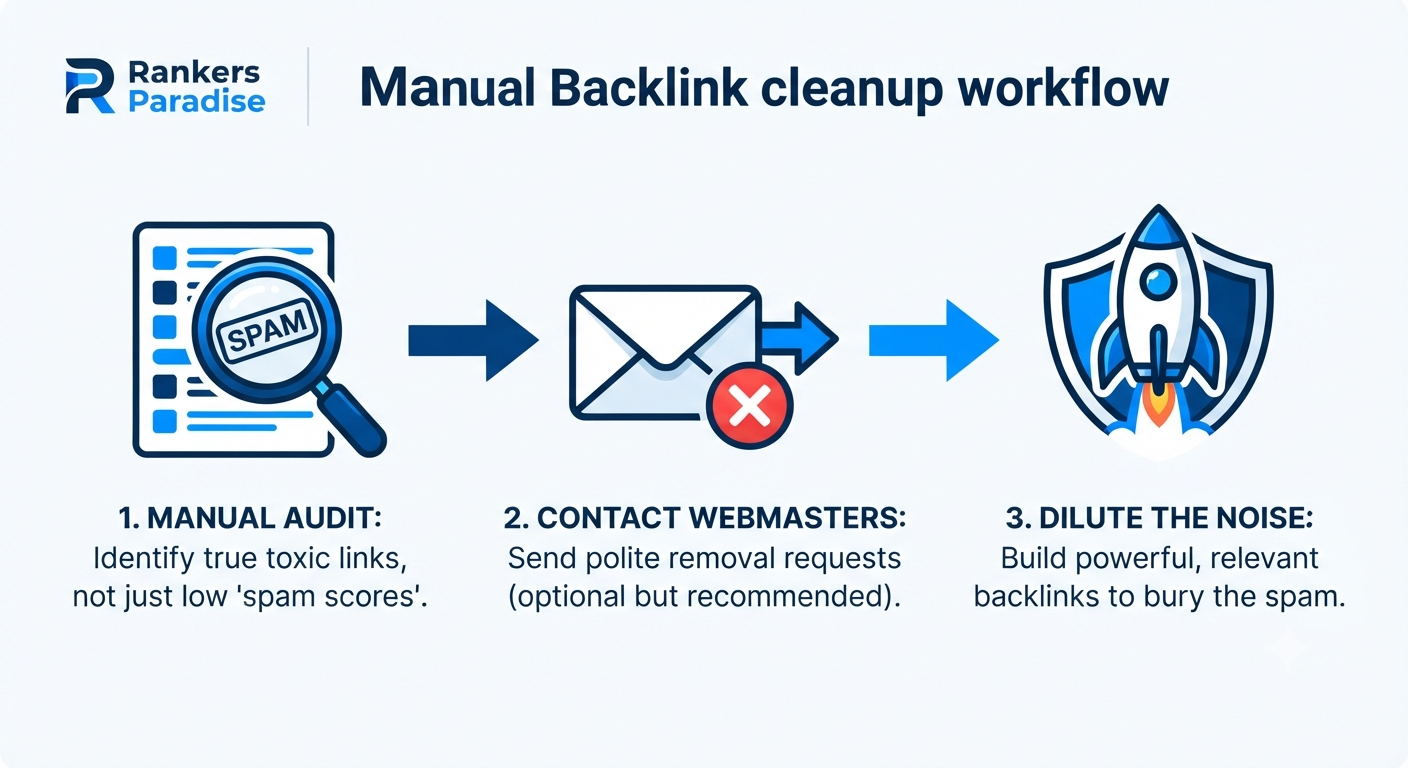
Step 1: The Manual Audit (Stop Relying on “Spam Scores”)
If you’re still checking your link profile through a tool and filtering by “Spam Score,” you’re looking at the wrong metrics. Most of those scores are arbitrary.
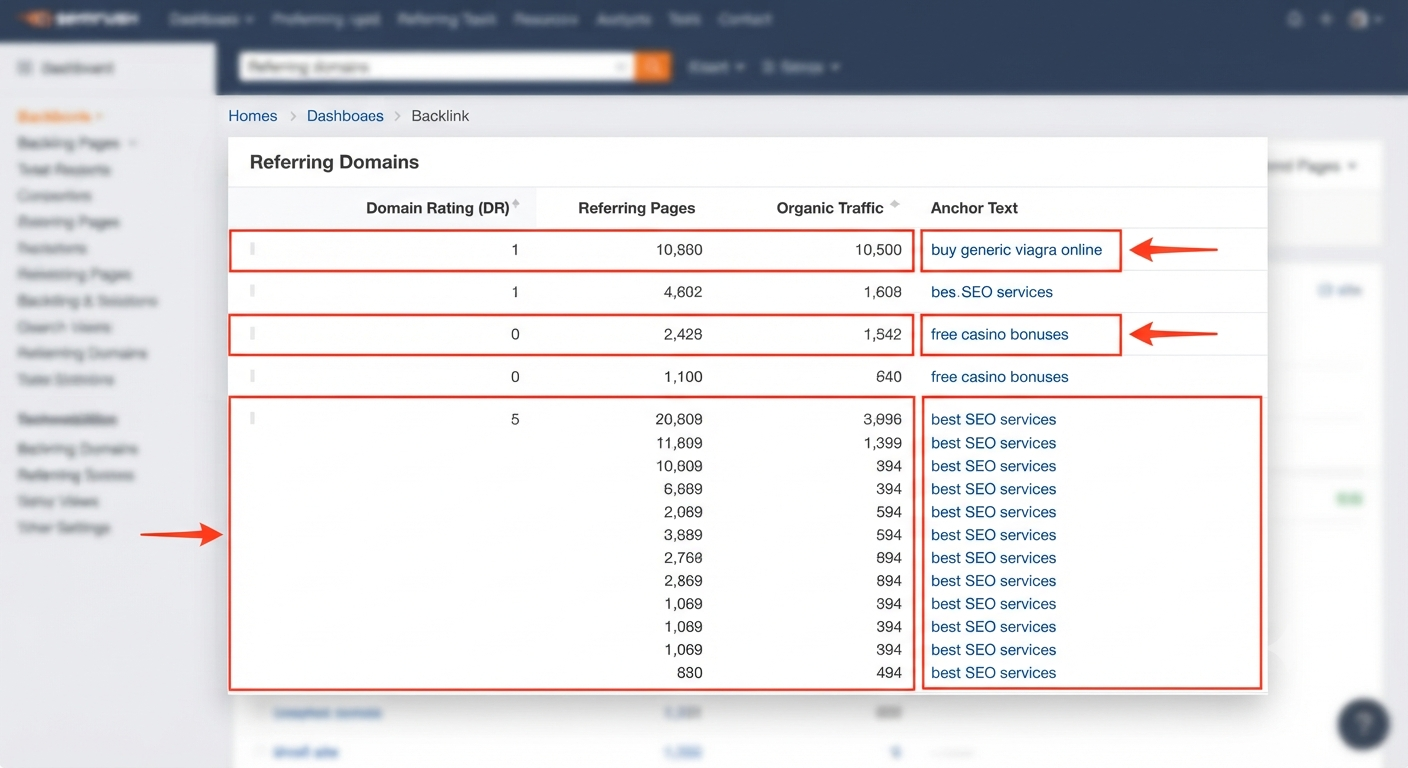
Instead, perform a “gut-check” audit:
-
The Content Context: Is the link sitting on a page that actually makes sense? If you run a digital marketing blog and you’re getting a link from a “car repair” site in a language you don’t speak, it’s irrelevant—but that doesn’t mean it’s “toxic.” It’s just noise.
-
The Link Farm Pattern: Are you seeing hundreds of links from the same IP range or with identical anchor text? That’s the classic sign of a backlink farm. These are the only ones you should legitimately worry about, and even then, only if they are massive in volume.
-
The “Zombie” Sites: Look for sites that haven’t been updated since 2018, have zero organic traffic, and look like they were built purely to house outbound links.
Step 2: The Contact and Request Protocol
If you’ve identified a specific site that is blatantly spamming your domain, your first step should be outreach. Yes, it’s manual. Yes, it takes time. But it’s the most “white-hat” way to show Google you’re a proactive site owner.
Send a short, professional email to the site owner:
“Hi, I noticed a link to [YourWebsite.com] on your page about [Topic]. It doesn’t seem to fit the context of your site. Would you mind removing it? Thanks.”
Keep it short. If they ignore you, don’t stress. The fact that you tried to get it removed is all the documentation you need for your own records.
Step 3: Dilute the “Noise” with Authority
This is the part most SEOs miss. You don’t need to remove bad links if you simply drown them out with high-quality signals.
Think of it like a reputation score. If your profile is 50% junk and 50% nothing, you’re in trouble. But if you have that same 50% junk and you build 500% more high-authority, relevant links, that “noise” becomes statistically irrelevant to Google.
Rather than wasting time in the Disavow Tool, shift your budget toward proactive, high-authority link acquisition. When you buy backlinks that are contextually relevant and come from sites with real, organic traffic, you build a “moat” of authority around your domain. This makes your rankings stable regardless of what spam hits your profile.
Step 4: The Internal Moat
If you’re worried about bad links hitting your home page or a specific money page, start strengthening your internal linking.
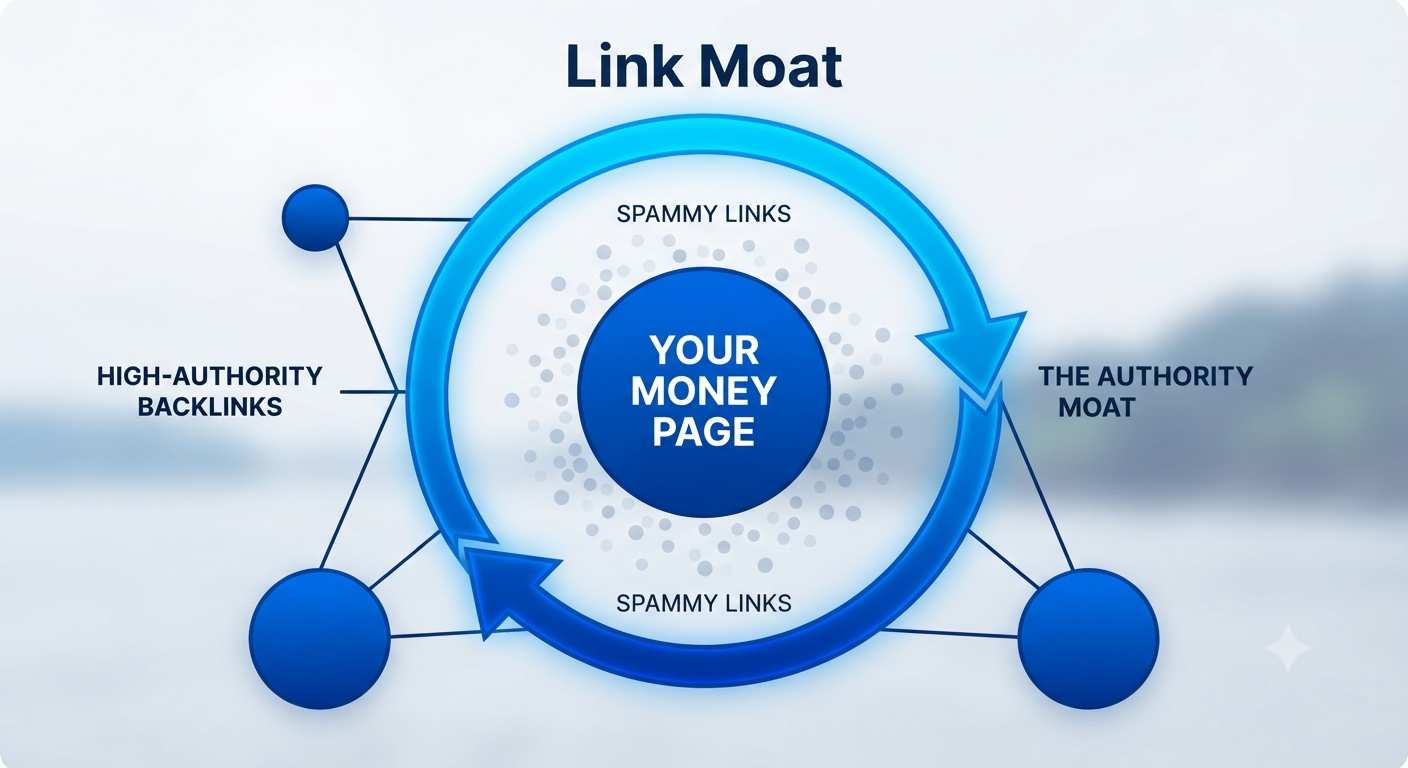
Use your best content to point links to your money pages. This passes internal equity and shows Google that your own site considers those pages to be the authority. This is a standard do-it-yourself SEO guide principle: internal links are your most underutilized asset for fighting off the influence of spammy external sites.
The Bottom Line
Don’t let the fear of “toxic” backlinks stop you from growing. In 2026, Google’s systems are more than capable of filtering out the trash.
Stop obsessing over the links you can’t control and start doubling down on the links that actually move the needle. If you need a hand building a profile that’s strong enough to ignore the noise, check out our SEO service options—we focus on building authority that lasts, not just clearing out the junk.