
I am going to show you exactly how to power up web 2.0 backlinks so that your free blogs pass massive ranking juice directly to your money site.
If you are using free web 2.0 properties, you probably already know how powerful they are. Platforms like Tumblr, Blogger, and Wix have massive domain authority. But here is the problem most people face:
When you register a brand new subdomain (like yourniche.tumblr.com), that specific page starts with a Page Authority (PA) of exactly 1.
Even though the root domain has high authority, your new page has zero link juice to pass. If you just leave it there, your backlink is not going to do much to push your search rankings.
Today, I am going to show you the step-by-step strategy we use at Rankers Paradise to turn these free, low-power subdomains into ranking monsters. You can follow this guide for free, and you do not need a big budget to do it.
Why You Must Power Up Web 2.0 Backlinks
Before we look at the steps, you need to understand the basic math behind link equity (or what we call link juice).
When you get a backlink from a highly trusted, high-ranking domain, it passes authority. However, a link from an inner page with no links pointing to it passes almost nothing.
To make your web 2.0 backlinks work like high-cost, premium guest posts, you have to build authority on the web 2.0 pages themselves.
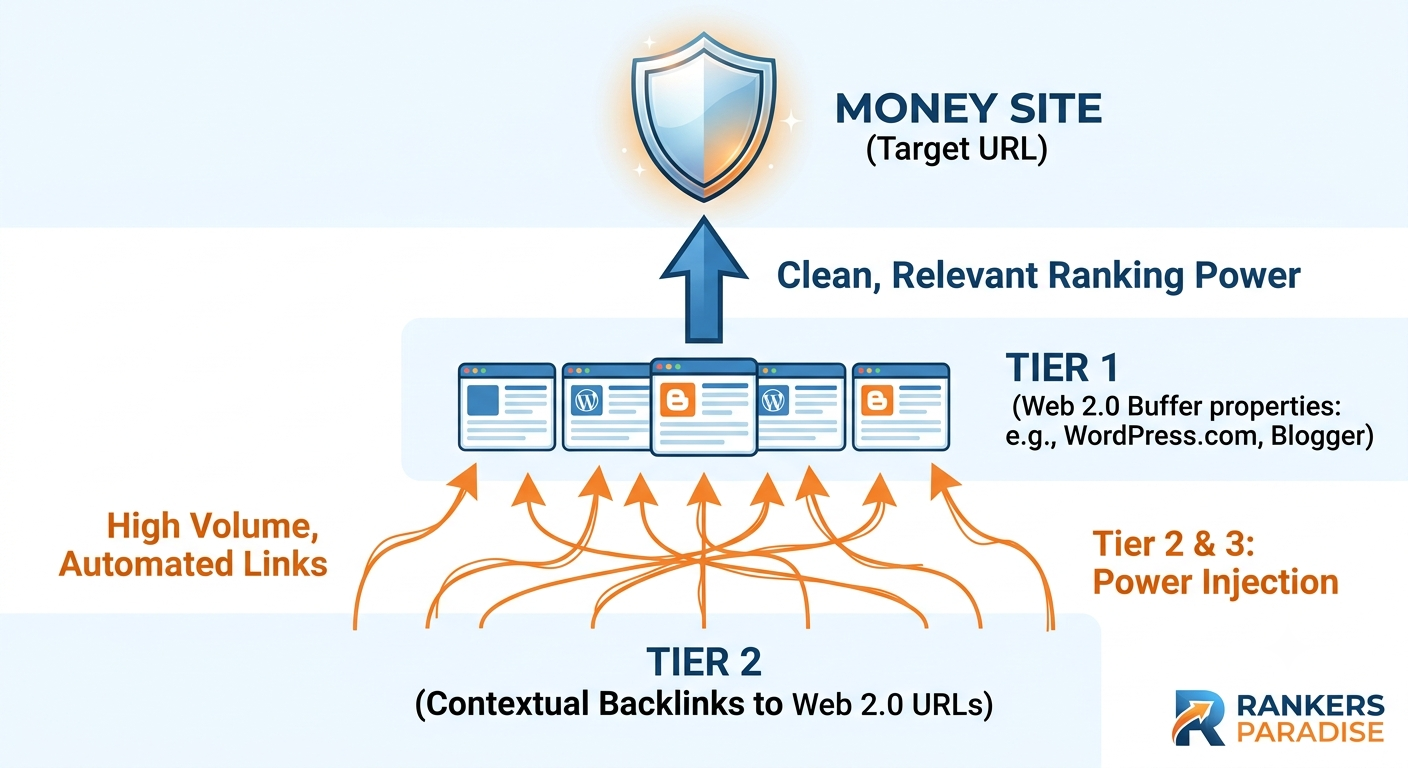
By building links to your web 2.0 pages (creating a Tier 2 and Tier 3 structure), you:
-
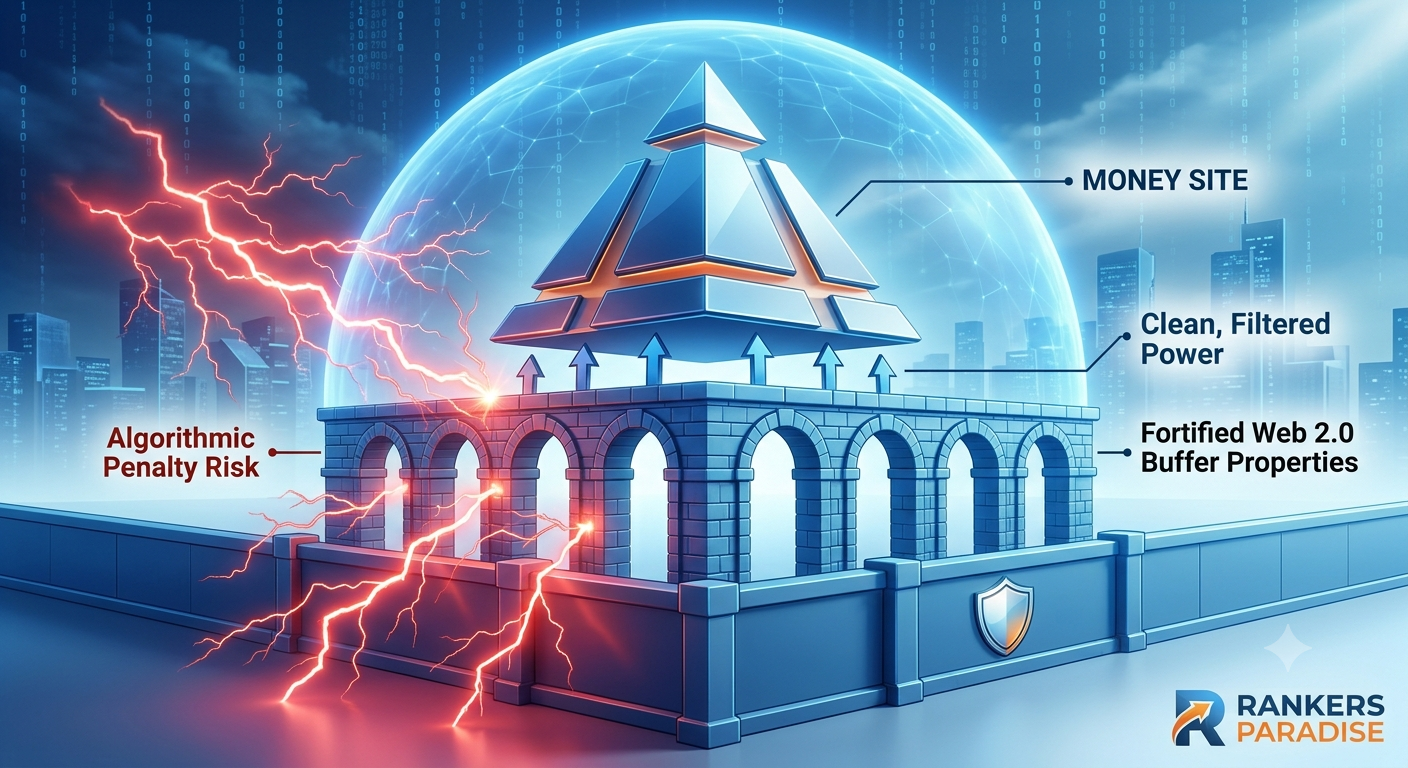
Keep your money site 100% safe: The web 2.0 acts as a buffer. Any aggressive link building you do only touches the free blog, filtering out the risk before the clean ranking juice passes to your main website.
-
Force Google bot to crawl your links: If Google does not crawl your web 2.0s, your backlinks do not exist in the eyes of the search engine. Powering them up forces rapid crawling and indexation.
-
Save thousands of dollars: Instead of trying to buy backlinks for every single high-competition keyword, you can build a few high-quality web 2.0 backlinks and power them up yourself for a fraction of the cost.
Step-by-Step: How to Power Up Web 2.0 Backlinks
Here is the exact process we use to inject massive authority into our web 2.0 networks. Follow these steps in order to get the best ranking results.
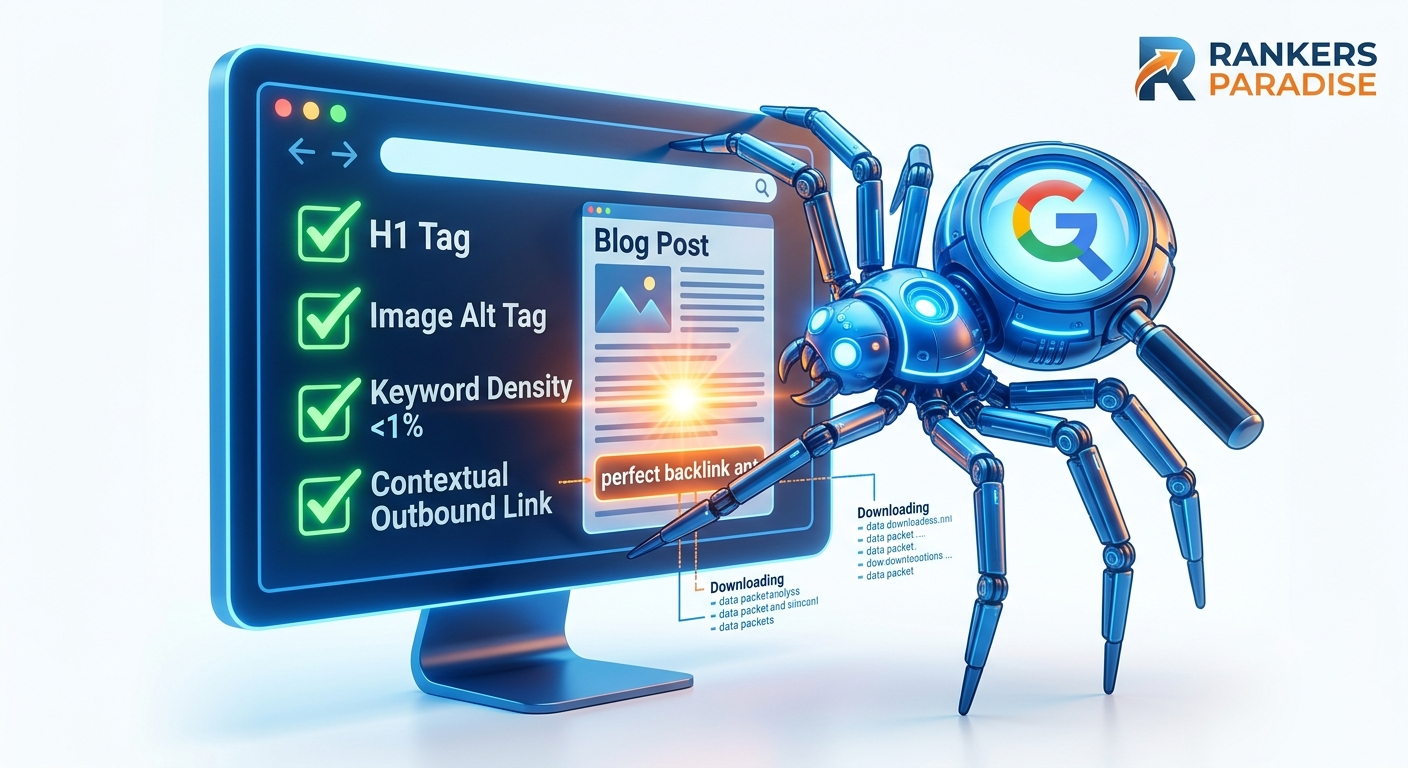
Do not just register a blog and drop a link on day one. Sign up to top platforms like Wix, Weebly, and WordPress. Fill out the profile completely, add an about page, and publish 2 to 3 high-quality informational posts that do not have any outbound links. This builds trust with the platform’s spam filters so your site does not get deleted.
Write a highly relevant, optimized article for your Tier 1 web 2.0. Ensure your target keyword is in the title, heading, and body of the post. Insert your backlink using a natural anchor text mix (use a mix of your brand name, open URL, and generic anchors like “click here”).
Once your web 2.0 is live, copy its exact URL. Now, build 10 to 20 medium-authority links directly to this web 2.0 URL. You can use social bookmarks, web 2.0 profiles, or niche-relevant directory links. Because this is Tier 2, you can use exact-match anchor texts to feed highly relevant contextual signals into your web 2.0 page.
Share your web 2.0 post on platforms like Twitter (X), Pinterest, and Reddit. This sends natural user-activity signals to Google. Use free pinging services like Ping-O-Matic to let search spiders know that your new Tier 2 links and web 2.0 content have been updated.
How to Index Your Powered-Up Web 2.0 Links Fast
You can build the most powerful backlinks in the world, but if Google does not crawl and index them, your rankings will not change. High-quality indexing is the final step in the process.
To get your powered-up web 2.0 properties indexed fast:
-
Submit to Indexing Services: Use premium indexers or cloud-based indexing tools to submit your Tier 2 links. This helps search spiders discover the links pointing to your web 2.0.
-
Use Google Search Console (GSC): If you are using Google Sites or a platform where you can verify ownership, add the web 2.0 property to a throwaway GSC account and request manual indexation. This is the fastest way to get crawled.
-
Embed Youtube Videos: Google loves its own properties. Embedding a relevant YouTube video inside your web 2.0 post makes Google bot crawl the page much faster.
Best Anchor Text Strategy for Tiered Links
When you are powering up your web 2.0s, you must use a smart anchor text strategy.
-
For Tier 1 (Web 2.0 linking to your Money Site): Keep it incredibly safe. Use brand anchors, naked URLs, or generic anchors for 80% of your links. Only use your exact match target keyword 20% of the time.
-
For Tier 2 (Links pointing to your Web 2.0): You can be much more aggressive. You can use 50% to 60% exact match or partial match keywords as your anchor text here, because any over-optimization risk stops at the web 2.0 and does not touch your main website.
If you follow this simple blueprint, your web 2.0 blogs will quickly build page authority, and you will see your main website rise up the Google organic search engine results pages (SERPs).