
Let’s skip the generic agency fluff and get straight to the point. You have a local business—or you’re running SEO for a local client—and you want to know one thing: Can you just buy your way to the top of the Google local map pack and organic SERPs, or will it blow up your site?
Go search this question anywhere else. You know what you’ll find? A bunch of high-and-mighty agency blogs crying, “Oh no, never buy links! It violates Google’s guidelines! Just write great content and wait for local bloggers to magically find you!”
Yeah, right. Tell that to the plumber down the road who is absolutely crushing it in the maps while your pristine, “100% white-hat” site is stuck on page 3.
The short answer is yes, buying backlinks absolutely works for local SEO. But here is the massive catch: Local SEO does not play by the same rules as global affiliate or e-commerce SEO. If you go out and buy a blast of generic guest posts with exact-match commercial anchors, you are going to tank your local rankings faster than a leaky pipe.
Let’s break down exactly how to buy links for local rankings without triggering an algorithmic penalty, what actually moves the needle, and how to execute this safely.
Why Local SEO Link Building is Different
When you want to buy backlinks for a national or global site, the algorithm heavily favors raw power—high Domain Authority (DA), massive traffic, and niche relevance.
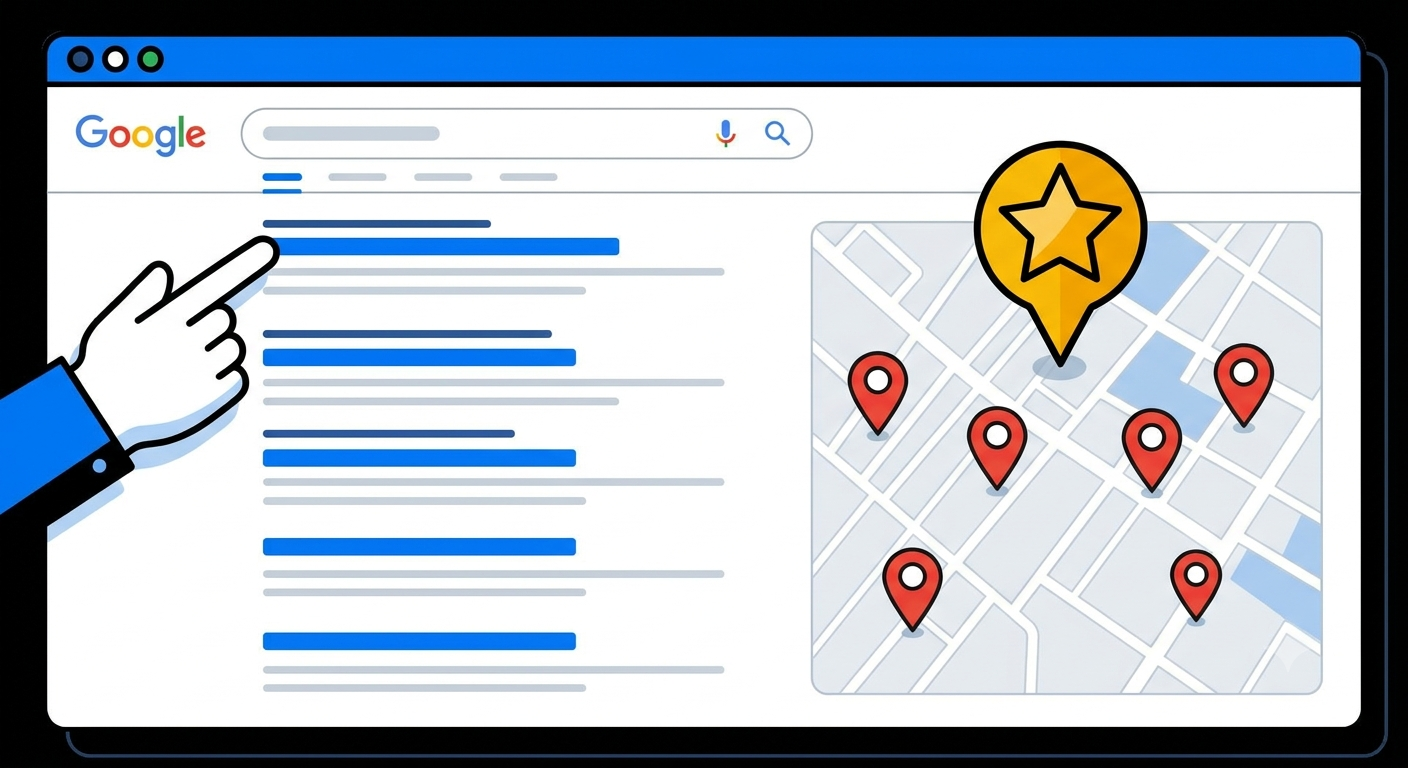
With local SEO, Google is looking at a completely different set of data points. The search engine spider is trying to answer two primary questions:
-
Is this business actually relevant to the searcher’s query?
-
Is this business genuinely located in or serving this specific geographic area?
Because of this, a link from a DA 20 local community blog or a regional news site in your exact town will carry ten times more ranking weight than a generic DA 60 tech blog that has nothing to do with your location. Geotargeting and localized relevance trump raw authority every single day of the week.
How to Structure Your Local Backlink Profile
If you are going to invest your budget into purchasing links, you need a highly strategic mix. You cannot rely on a single link type. A natural, bulletproof local link profile requires a multi-layered approach.
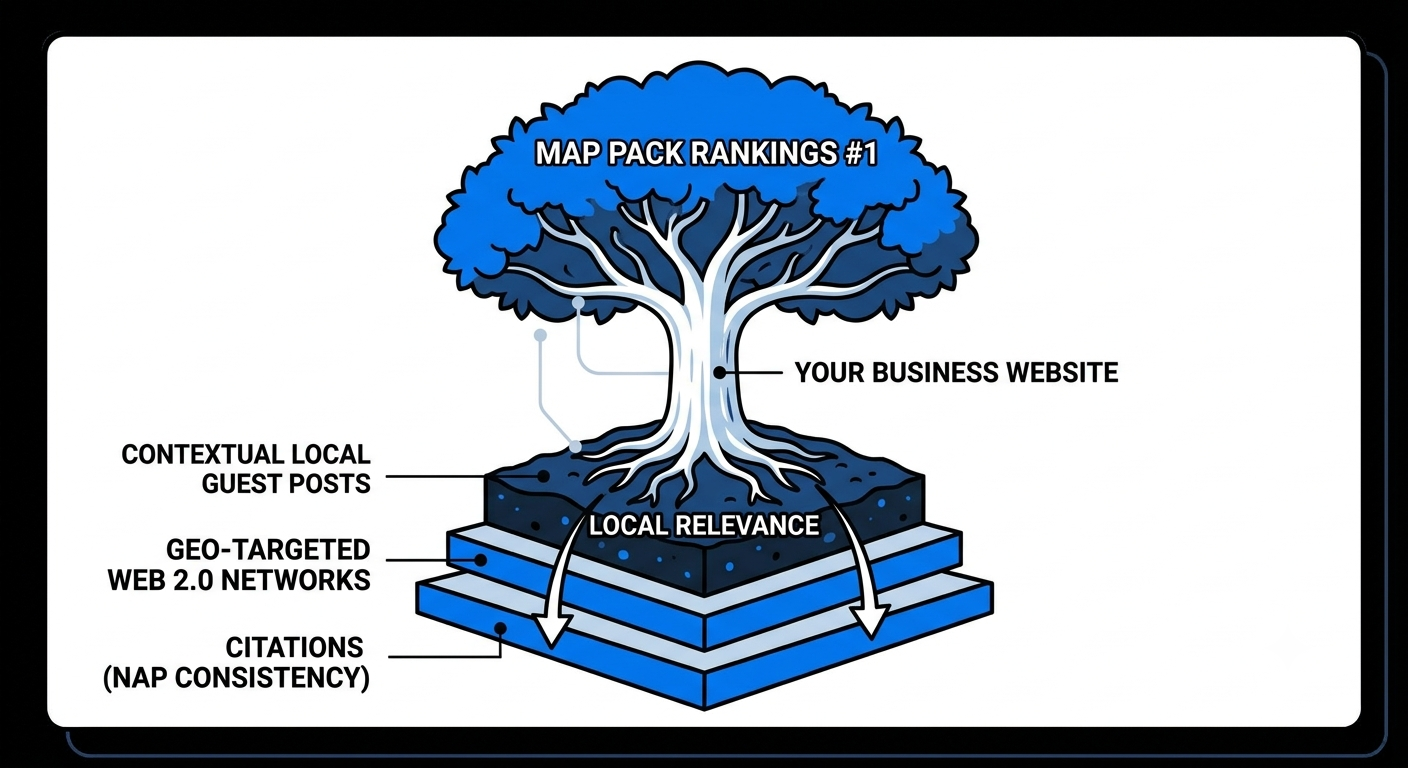
1. Geo-Targeted Web 2.0 Networks
One of the most effective, highly controlled ways to build local relevance is by setting up a dedicated network of blogs. When you build and optimize web 2.0 backlinks, you have complete control over the anchor text, the content, and—most importantly—the geographic signals.
To make these work for local SEO, you don’t just write generic articles. You need to embed your business’s NAP (Name, Address, Phone Number) directly into the content of the Web 2.0 properties. Map embeds and localized keyword mentions (e.g., “best roofing contractors in Austin TX”) pass massive local trust down the line to your main site.
2. Niche Edits and Local Guest Posts
When reaching out to vendors or marketplaces to buy contextual links, look for sites that already have organic traffic from your target country or region. If you can secure a guest post on a regional lifestyle blog, a local directory, or a niche-relevant site within your state, the algorithmic connection becomes incredibly tight.
3. High-Quality Local Citations
While standard business directory citations (Yelp, YellowPages, Foursquare) are technically “nofollow” or unlinked mentions, they form the absolute baseline of your local authority. Google cross-references your NAP data across these platforms to verify your business existence. If your citation baseline is weak, buying powerful contextual links will look highly unnatural to the Google bot.
The Golden Rules of Local Anchor Text Distribution
This is where almost everyone messes up. They buy a package of links and point them all at their homepage using the anchor text: Plumber Atlanta.
Do that, and you’ll get hit with an over-optimization filter. Humans do not naturally link to websites that way. If a real local customer or blogger links to you, they use your brand name or simple directional text.
To keep your link building completely under the radar and highly effective, keep your anchor text ratios closely tied to this framework:
-
Brand / Naked URL Anchors (70%):
Your Business Name,yourwebsite.com,[https://yourwebsite.com](https://yourwebsite.com). This builds the authority foundation safely. -
LSI / Topic Anchors (15%):
click here,visit website,local plumbing services,find out more. -
Partial Match / Localized Anchors (10%):
affordable plumbing in Atlanta,Atlanta plumbing experts,call this team for roof repair. -
Exact Match Anchors (5% or Less):
Plumber Atlanta. Use these sparingly, only when your brand authority is already well established.
Step-by-Step: How to Safely Buy Links for Local Rank Tracking
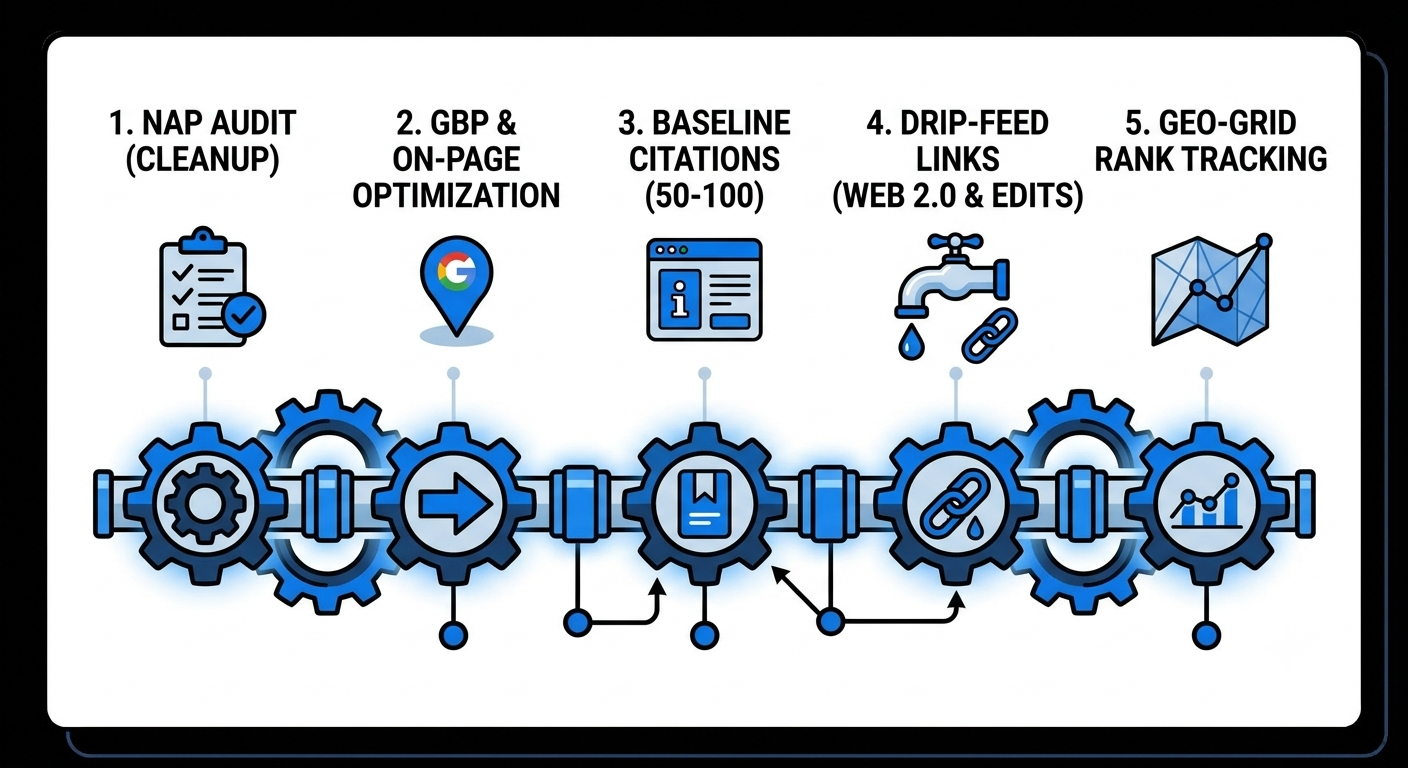
If you want to move your site from page 2 into the top spot of the organic maps with pure content and smart link placement, follow this exact workflow:
Step 1: Audit and clean up your NAP consistency across the web.
Step 2: Optimize your Google Business Profile (GBP) and on-page geo-landing pages.
Step 3: Secure a baseline of 50-100 high-tier local business citations.
Step 4: Drip-feed powerful, contextual Web 2.0 links and niche edits over 30-60 days.
Step 5: Monitor your local map pack movement using a geo-grid rank tracker.
The Verdict
Does buying backlinks work for local SEO? Absolutely. In competitive niches like towing, plumbing, legal, or real estate, it is often the only way to break past established competitors who have been sitting in the map pack for a decade.
But don’t just spray and pray. Focus heavily on geographic relevance, keep your anchor text safe, and make sure your on-page SEO matches your off-page signals.
If you keep your head down, build clean tiered networks, and focus on local footprints, Google will have no choice but to reward you with the traffic and leads your business deserves.