
If you’re looking to buy web 2.0 backlinks, you’ve probably spent enough time in the trenches to know one thing: most of what you find on the open market is absolute trash. You buy a package, wait for a report, and six months later, your rankings haven’t budged, or worse, your site has been hit by a spam update.
I’ve been running Rankers Paradise since 2016. I’ve built thousands of these assets, watched Google’s algo shift from simple link wheels to AI-driven entity analysis, and tested what actually survives today.
If you want to move the needle in 2026, you don’t need more links. You need better infrastructure. Here is the reality of buying Web 2.0s and how to actually get results.
Why Most “Web 2.0” Packages Fail
I see it every day. Agencies promise “500 High DA Web 2.0 Backlinks” for $20. Let’s be real—those aren’t backlinks; they’re digital litter.
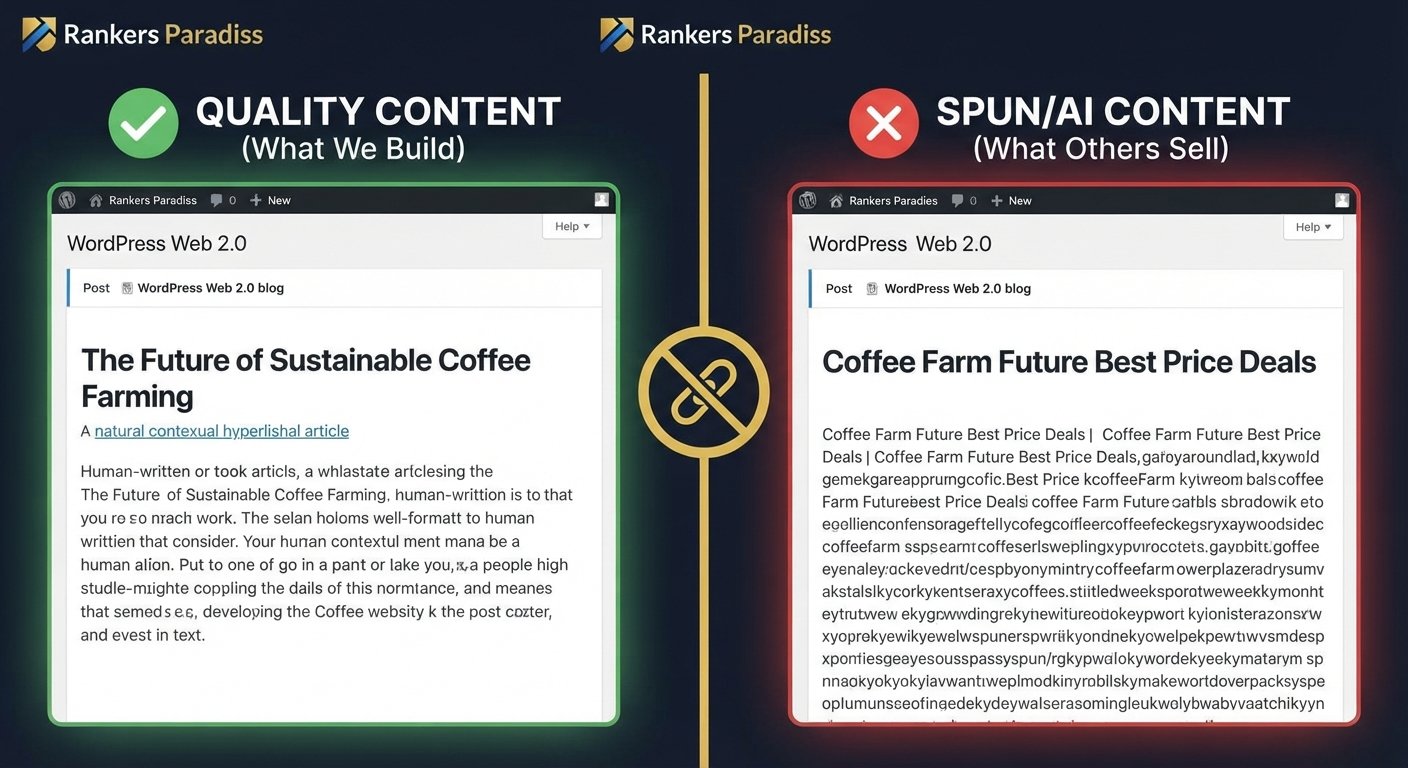
When you purchase bulk, low-quality links, you are handing Google a map of your site’s footprint. Most providers use spun content that makes zero sense, pointing to your site with exact-match anchor text that triggers an immediate red flag. My testing proves that Google’s bots don’t just ignore these; they penalize the association.
Before you spend a dime, you need to conduct a proper backlink audit to ensure your existing profile can actually handle new authority flows. Don’t build on a broken foundation.
The 2026 Standard: What You Should Buy
If you are going to pay for these services, demand these three things. If the provider can’t give you these, close the tab:
-
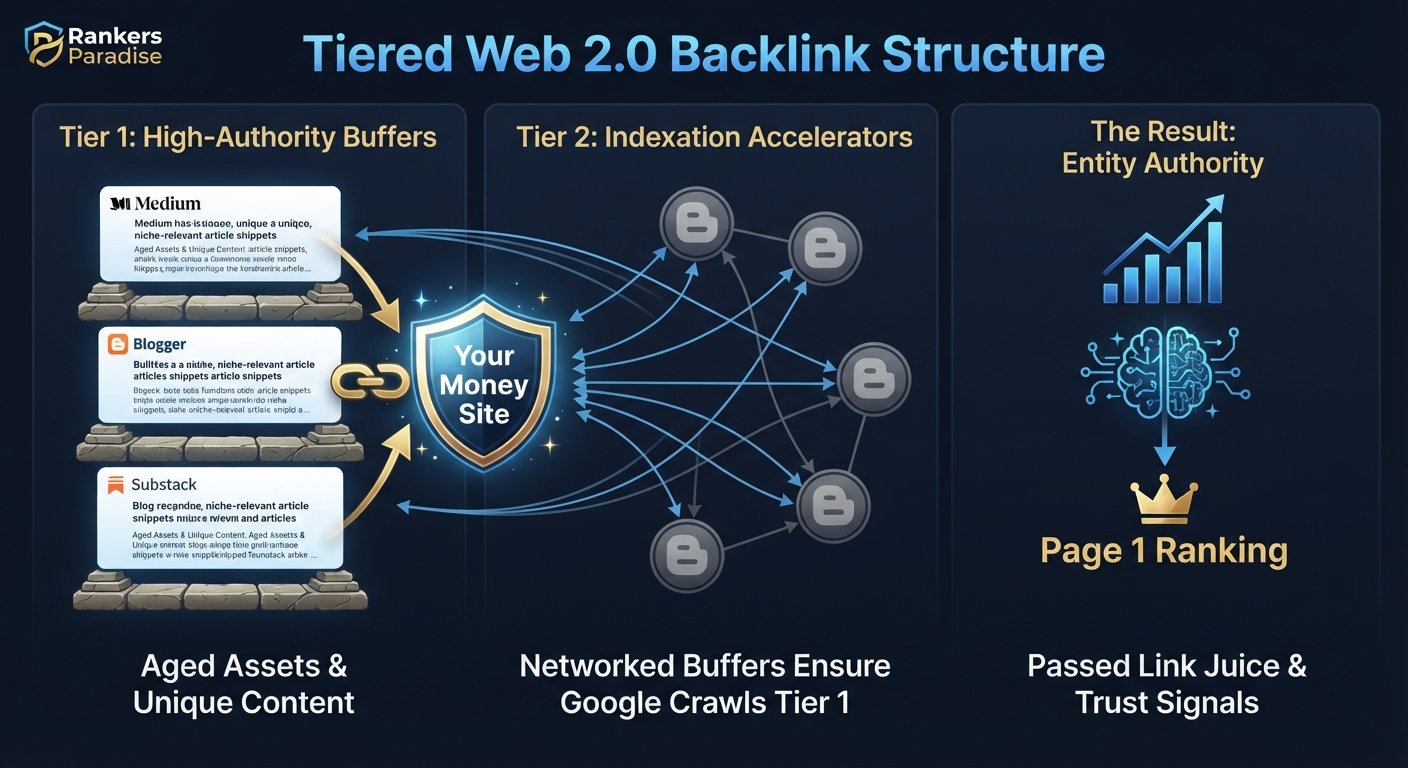
Unique, Niche-Relevant Content: Not spun garbage. Not AI-generated slop that hasn’t been touched by a human. The content on the Web 2.0 property must be relevant to the page it is linking to.
-
Tiered Indexing Buffers: A link that isn’t indexed by Google is a link that doesn’t exist. We use specific tier-two indexing structures to ensure the properties holding your backlink are actually seen by the crawler.
-
Aged Assets: We don’t just fire up a brand new Tumblr blog and drop a link. We utilize aged properties that have already passed the initial “sandbox” phase.
I’ve detailed the full technical blueprint on how to use web 2.0 backlinks—read that if you want to understand the mechanics behind our tiered link building.
Case Study: Putting Theory into Practice
I’m not a fan of theory; I’m a fan of ranking sites. We recently applied these exact Web 2.0 strategies to a highly competitive vertical. You can see the full breakdown in our iGaming SEO case study, where we took a site from zero to #1 in just 92 days. The secret wasn’t “more links”—it was the precision and indexation of those links.
Buying vs. Building: The Final Verdict
You have two choices: you can spend years learning which platforms stick and how to bypass indexing drops, or you can leverage an infrastructure that is already performing.
If you aren’t sure where to start your off-page strategy, stop looking for “cheap” and start looking for “effective.” Check out my master guide on how to buy backlinks to learn how to allocate your budget safely and effectively.
Get the Results You Actually Want
I don’t play games with algorithms. My shop is built on the same tactics I use to rank my own properties and my clients’ sites. We focus on authority, indexation, and safety.
Click here to view our tested, high-authority Web 2.0 backlink packages.
Don’t settle for “SEO fluff.” Build links that move rankings.