
If you have been doing search engine optimization for more than five minutes, you already know the hard truth: most of what is sold on the open market as a “guest post service” is absolute garbage.
You pay a few hundred bucks, wait for a report, and three months later, your rankings haven’t budged. Or worse—Google rolls out a core update, your traffic craters, and you find out your shiny new guest post is sitting on a private blog network (PBN) disguised as a real magazine, or worse, a hacked site stuffed with 50 outbound casino links.
I’ve been building links, testing strategies, and running Rankers Paradise for a decade. I’ve watched countless agencies pop up, sell automated spam, and vanish when the algorithm catches up. I don’t care about theory or what the gurus are tweeting about. I care about what moves the needle in the SERPs today, what keeps client sites safe, and what generates actual revenue.
If you are looking to buy guest posts that actually push your keywords to position #1, you need a strategy rooted in real-world testing. Here is how we do it in the trenches.
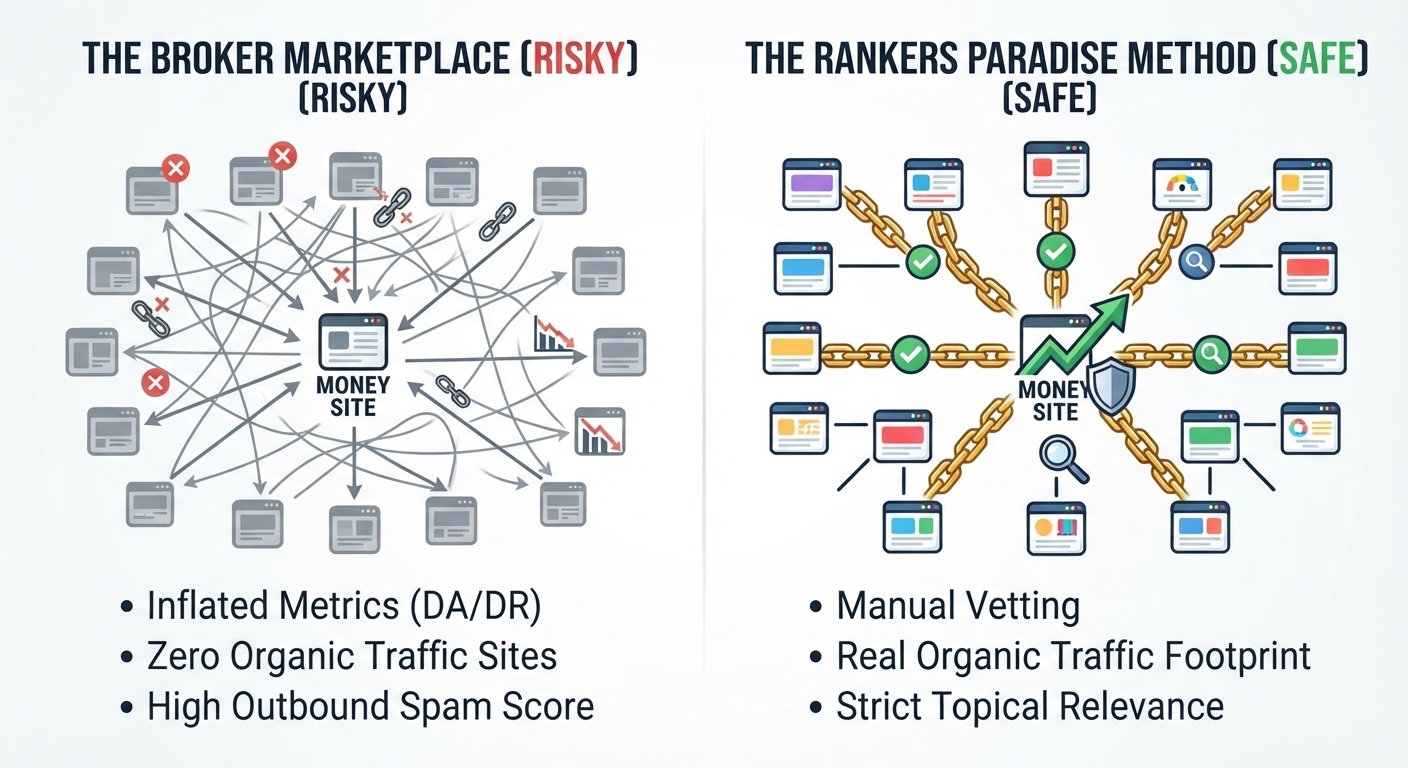
The Broken State of the Guest Post Marketplace
Let’s be honest about how most third-party link marketplaces operate.
A broker builds a massive database of websites, slaps an inflated Domain Authority (DA) or Domain Rating (DR) metric on them, and marks up the price. They pitch you on “high-authority editorial links.” But if you pull back the hood and run a proper backlink audit on those target domains, you’ll spot the red flags immediately:
-
Zero Organic Traffic: The site has a high DA because of manipulated metrics, but Ahrefs or Semrush shows it gets less than 50 visits a month from Google.
-
Outbound Link Farming: The blog publishes articles on everything from crypto trading to local plumbing services and cheap shoes on the exact same page. There is no topical relevance.
-
Footprint Tracking: The hosting, registration details, and anchor text distribution scream “PBN network,” making it easy for automated filters to devalue the link or penalize your money site.
If you buy links from brokers who don’t vet their inventory manually, you are essentially paying for a digital paperweight.
What a Real Guest Post Strategy Looks Like
When you buy backlinks for a competitive commercial campaign, every single placement has to pass strict operational criteria. Over years of testing, I’ve locked down a strict checklist for every guest post deployed through our store packages:
-
Real Organic Traffic Footprint: The host domain must rank for hundreds or thousands of real keywords in Google. It needs to be an active, breathing site that generates its own organic search traffic.
-
Contextual Relevance: The article surrounding your link must make sense. If you run an eCommerce store or an iGaming SEO case study operation, the host site needs a clean topical history in that vertical—or at least a broad niche category that justifies the contextual bridge.
-
Natural Anchor Text Diversity: Stop over-optimizing your exact match anchors. We mix branded, naked URLs, and partial match keywords to keep your backlink profile looking entirely natural to search engine crawlers.
-
Controlled Link Velocity: Pouring 500 guest posts onto a brand-new domain in 48 hours is a fast track to a manual action. Growth needs to mimic organic momentum.

Combining Guest Posts with Tiered Infrastructure
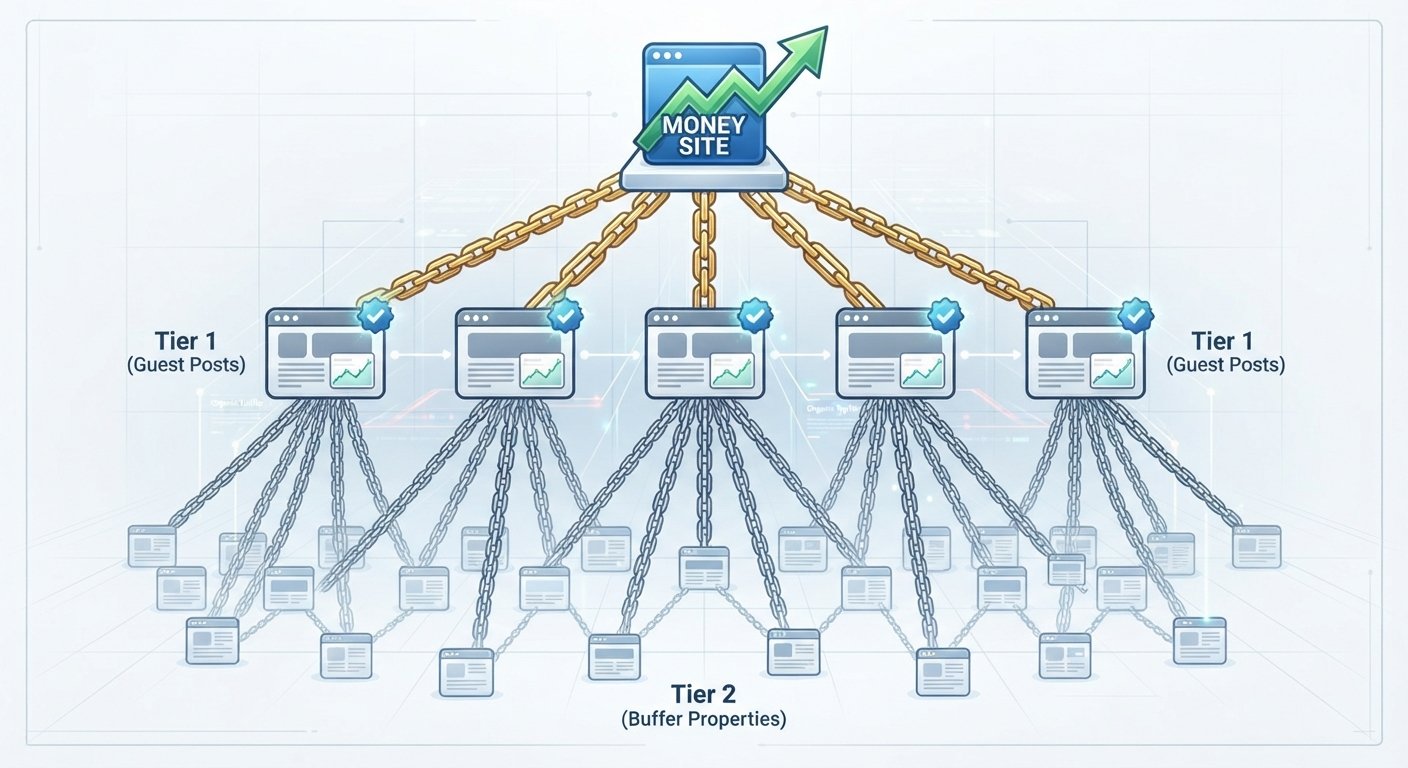
Guest posts shouldn’t stand alone in a vacuum. To maximize the juice passed to your primary money pages—whether you’re pushing a competitive product category or ranking a local service site—you need to support your tier-one placements.
This is where multi-tiered link building comes into play. Just like I break down in my guide on web 2.0 backlinks, building contextual buffer properties underneath your main asset helps indexation speed and forces search crawlers to crawl and pass authority more efficiently through your entire architecture.
When you combine high-authority editorial guest posts with properly structured secondary assets, you create a fortress of link equity that algorithmic updates simply cannot shake.
Ready to Rank? Stop Gambling with Cheap SEO
You have two choices when it comes to off-page optimization. You can keep rolling the dice on cheap, automated broker platforms that burn your budget and risk your domain, or you can invest in battle-tested, manual link placements that deliver sustainable, long-term rankings.
If you are ready to scale your traffic and dominate your niche, skip the trial and error.