
Most eCommerce store owners treat link building like a blindfolded guessing game. They wake up, realize their main category pages are stuck on page two, and panic-buy a random batch of low-quality links. Then, they wonder why Google hits them with a penalty or why their rankings don’t budge.
I’ve spent years running tests on Rankers Paradise, and I can tell you this: eCommerce link building is different. You aren’t just trying to move a blog post; you are trying to move a money-making machine. If you want to buy backlinks for eCommerce stores without blowing up your rankings, you need a blueprint, not a hope-and-pray strategy.
The eCommerce Trap: Why Standard Link Building Fails
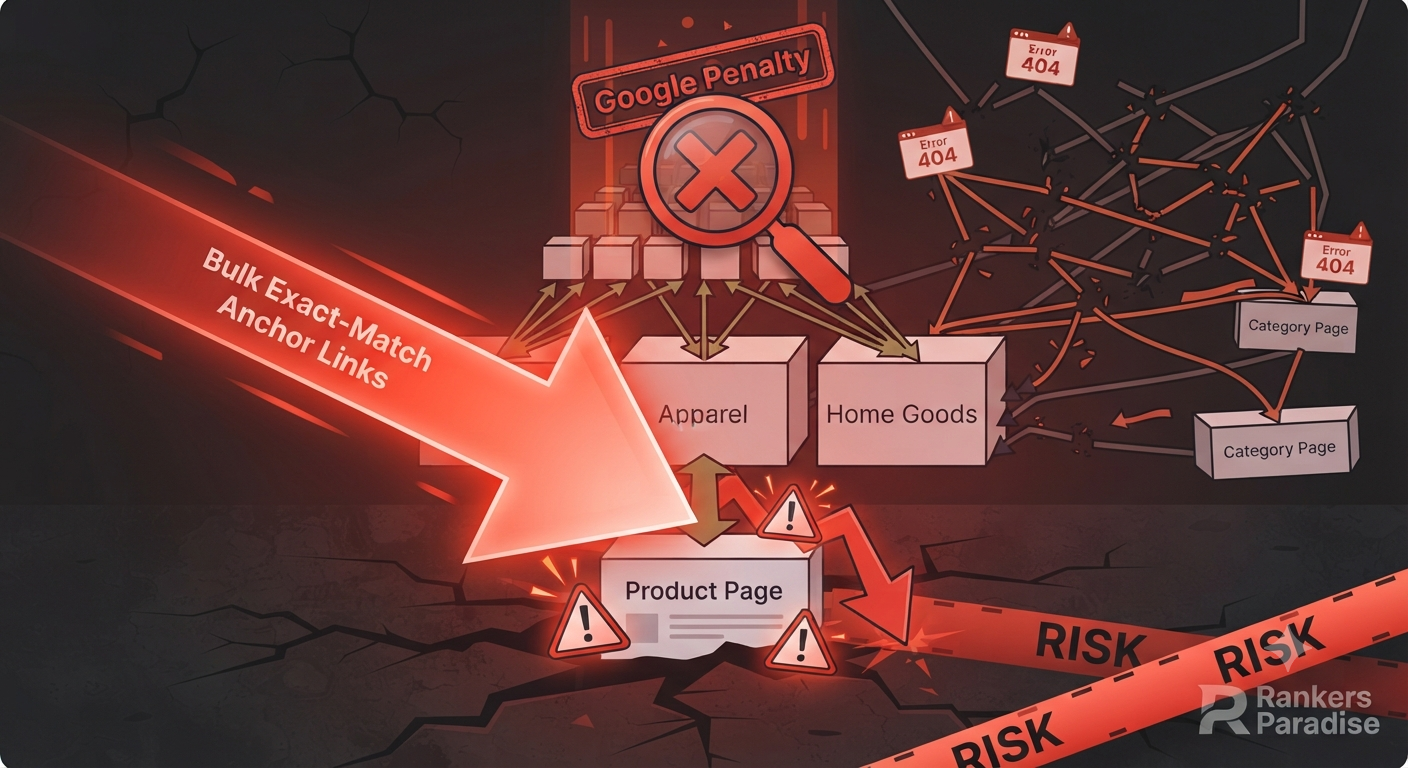
In my experience, the biggest mistake store owners make is pointing bulk, exact-match anchor text straight at product pages.
E-commerce sites are unique because of their architecture. You have a homepage, category pages, and then thousands of product pages. Google looks at your site authority differently here. If you blast a product page with 500 links, the algorithm knows it’s unnatural.
If you are just starting out, you need to understand the fundamentals of safe link acquisition. Before you drop a cent, I highly recommend you read my guide on how to buy backlinks to ensure you understand the risk-to-reward ratio.
The Hierarchy of Authority: Where to Build Links
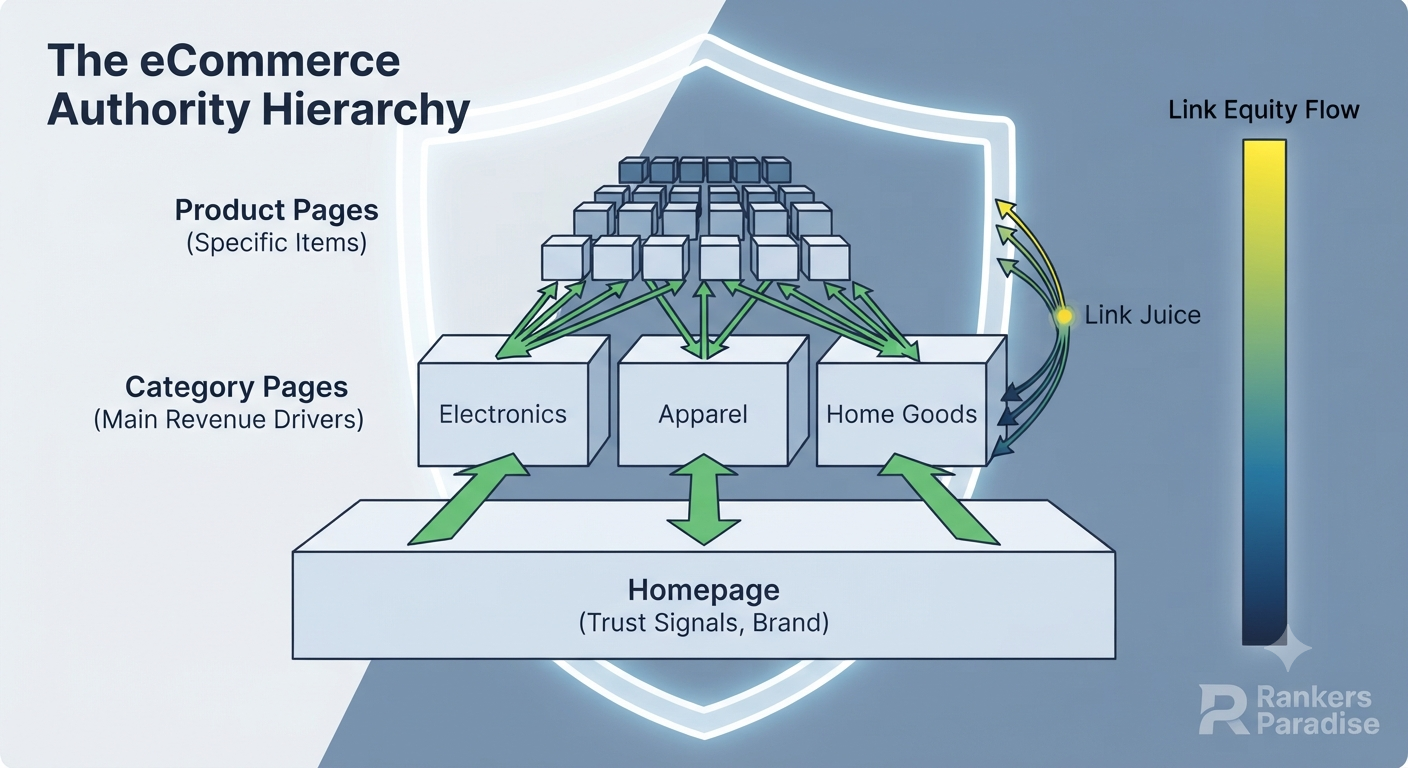
When you buy backlinks for an eCommerce store, don’t spread your budget thin across every single product. That’s a waste of money. Instead, follow this hierarchy:
-
Homepage: Your trust bucket. This is where your branded links and foundation links live.
-
Category Pages: These are your “money” pages. These should receive the bulk of your high-authority contextual links.
-
Product Pages: These should only receive links once the category pages above them have established authority.
I’ve seen massive success by layering web 2.0 backlinks as a buffer. By building out these tiered structures, you insulate your money site from the direct impact of lower-quality links while still passing that essential “link juice” up the chain.
The Secret Sauce: Mixing Your Link Profile
If you look at the top-ranking sites in iGaming SEO, you’ll notice something: they never rely on one type of link.
For an eCommerce store, you need a blend of:
-
High-DA Contextual Links: These provide the raw power.
-
Branded Web 2.0s: These provide the diversification that tells Google you are a legitimate business, not a churn-and-burn site.
-
Niche-Relevant Citations: Crucial if you have a local or regional presence.
Before you buy anything, always perform a backlink audit on your current profile. If you have “toxic” links pointing to your site, buying more links is like pouring gasoline on a fire—you’ll just accelerate your penalty.
2026 Strategy: How to Execute
Stop looking for “cheap” services that promise 10,000 links for $5. That will kill your store faster than you can blink.
The goal in 2026 is relevancy and entity association. When you buy backlinks, make sure the content surrounding the link is actually relevant to your niche. If you are selling high-end headphones, the content on the site you are buying from should be talking about audio equipment, tech trends, or consumer electronics.
If the site looks like it was made in a basement in 2012, don’t touch it.
The Bottom Line
Ranking an eCommerce store requires a steady hand. Don’t chase the algorithm updates; build a site structure that respects them. Use your budget to build a tiered, high-authority backlink foundation that mimics natural growth.
If you want to see how we handle these strategies, check out my shop packages. I use the exact same methods I test on my own assets to move my clients’ rankings from zero to page one. Stop guessing, start building.