
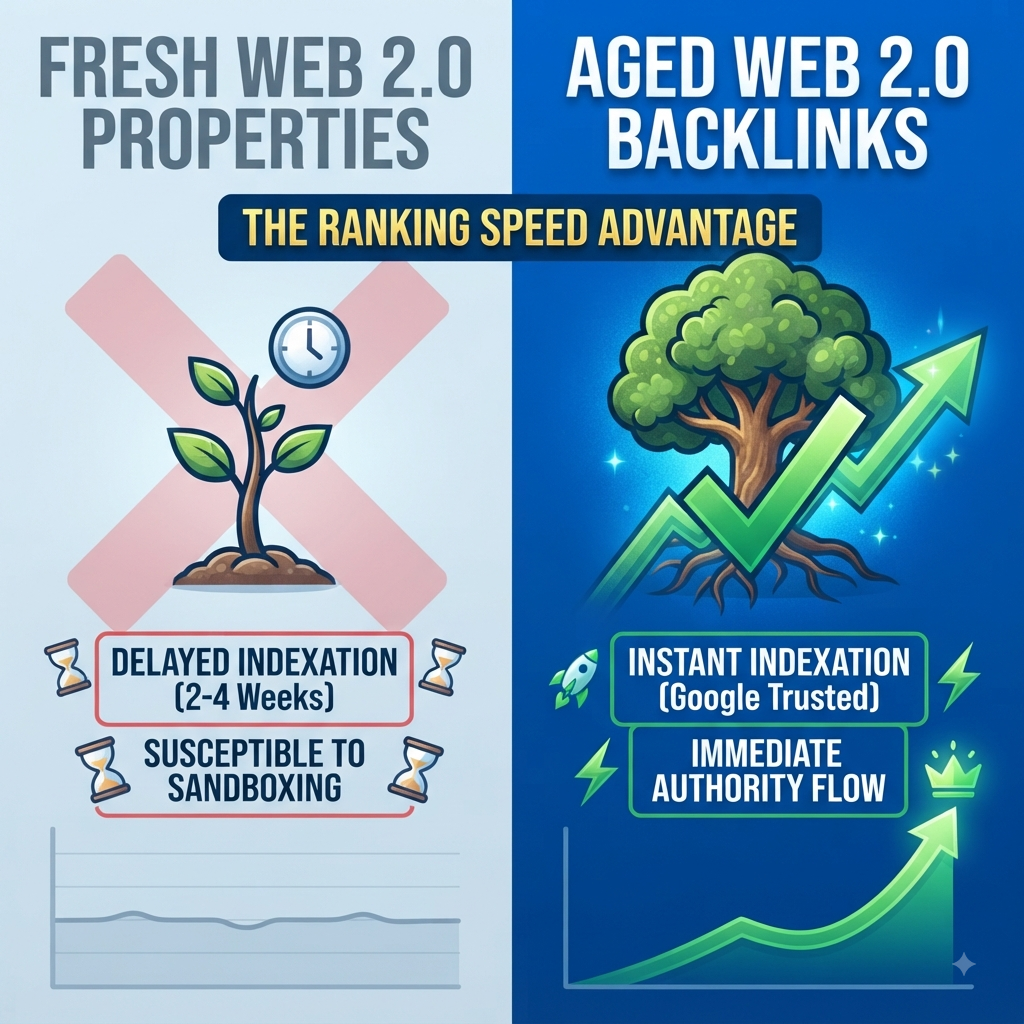
I’ve been doing this long enough to see the SEO landscape shift under our feet a dozen times. If you’ve followed my work here, you know I don’t waste time on theory. I test. I track. And I move on when a strategy stops delivering. Right now, there is a massive amount of “fluff” advice telling you to build fresh Web 2.0 sites. Let me be blunt: if you are still building fresh Web 2.0 properties and hoping for a ranking boost in 2026, you are burning time and money.
The game has changed. Google’s algorithms are more sophisticated than ever. A brand-new sub-domain with zero history is easily ignored or sandboxed. That is exactly why I’ve shifted my entire focus to one specific asset: aged Web 2.0 backlinks.
Why Aged Web 2.0s Move the Needle Faster
When you buy aged web 2.0 backlinks, you aren’t just buying a link. You are buying a shortcut. These properties have already cleared the initial “trust” hurdles. They have a footprint, they have indexation history, and in many cases, they have residual domain authority that fresh sites simply cannot replicate.
My testing has shown that aged properties bypass the initial “indexing silence” that plagues new link-building campaigns. When you point these at your money site, Google doesn’t have to “verify” the site’s existence for weeks. The authority is already there. It’s ready to flow.
The 2026 Ranking Blueprint
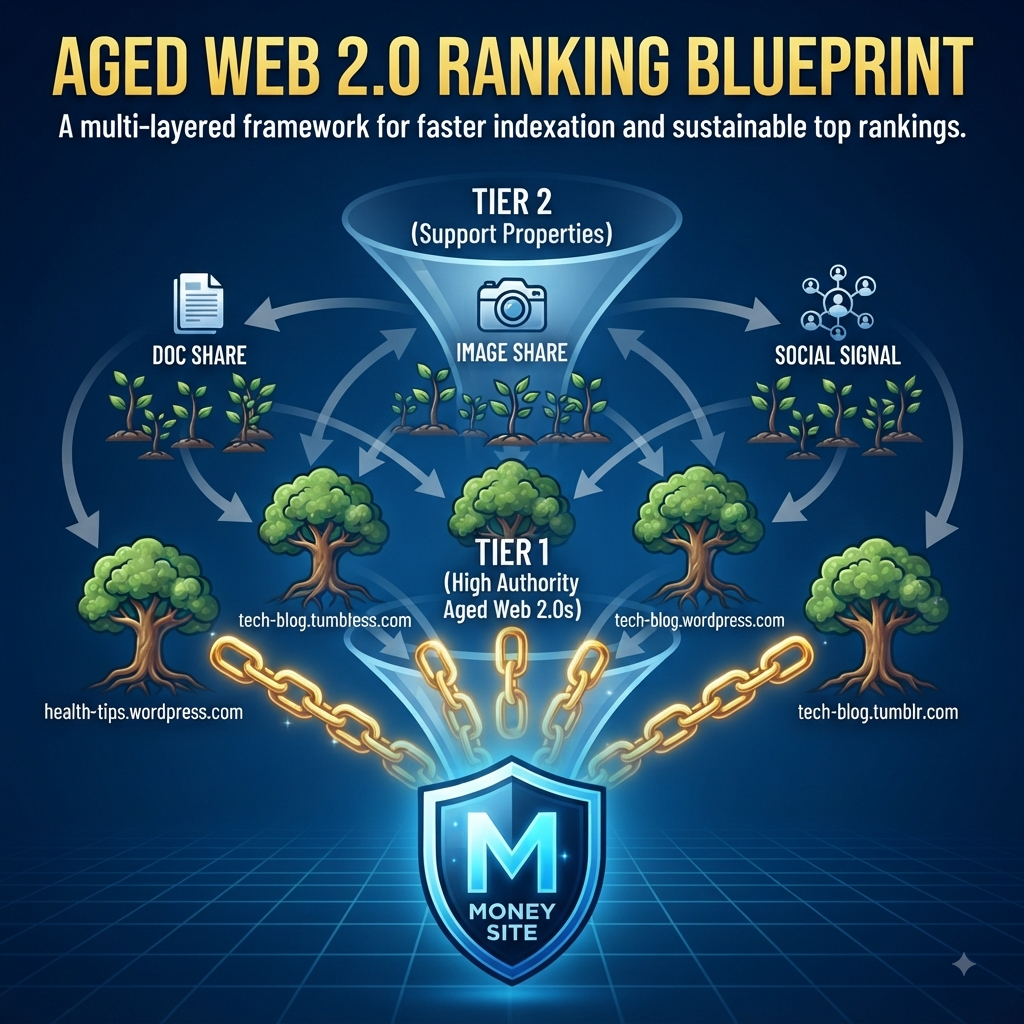
If you’re ready to see real movement, stop looking for “easy” free tricks and start investing in infrastructure that sticks. Most people fail because they don’t have a plan. You need a multi-layered approach.
-
First, ensure you understand how to buy backlinks the right way—quality always trumps quantity.
-
Second, use my proven framework for web 2.0 backlinks to structure your Tier 1 and Tier 2 assets correctly.
-
Third, if your rankings aren’t moving, perform a backlink audit to see what’s holding your site back.
Real-World Results
I recently applied this to an iGaming SEO project. The competition in that space is ruthless—you don’t rank for those keywords with fluff or “AI-generated” generic posts. By utilizing aged Web 2.0s as the backbone of our link-building strategy, we moved a brand-new site to page one in under three months. The data doesn’t lie.
The Bottom Line
You can spend hours trying to index fresh sub-domains, or you can use the assets that already have the trust. If you are serious about ranking your site, you need the right tools. I’ve already done the hard work of sourcing and maintaining these aged properties. You can skip the months of trial and error and use the exact framework that is ranking my own sites today.
Don’t just take my word for it. Look at the rankings, look at the results, and make a decision based on data, not guesses.