
If you have been building links for more than five minutes, you already know how much garbage is floating around the SEO industry.
Type into Google or any major marketplace, and you will find thousands of vendors promising “500 High DA Web 2.0 Backlinks for $10.” You buy the package, wait a couple of weeks, check your Ahrefs or Semrush dashboard, and what do you find? Absolutely nothing. Your rankings haven’t moved an inch, or worse—Google has de-indexed half the properties because they were built on spammy, automated subdomains that left a massive digital footprint.
I’ve been testing off-page SEO strategies right here at Rankers Paradise for a decade. I don’t care about what theory-crafting gurus are chattering about on social media. I care about what moves the needle, what keeps my clients at the top of the SERPs, and what survives algorithmic updates.
If you are hunting for the best web 2.0 backlink service, you need to know how to separate the professionals from the script-kiddies. In this guide, I am going to break down exactly what makes a top-tier Web 2.0 service, how we build them to rank safely, and how you can leverage these properties to dominate competitive search terms.
Why 90% of Web 2.0 Backlink Services Fail
Let’s address the elephant in the room. People have been screaming that Web 2.0s are dead since 2015.
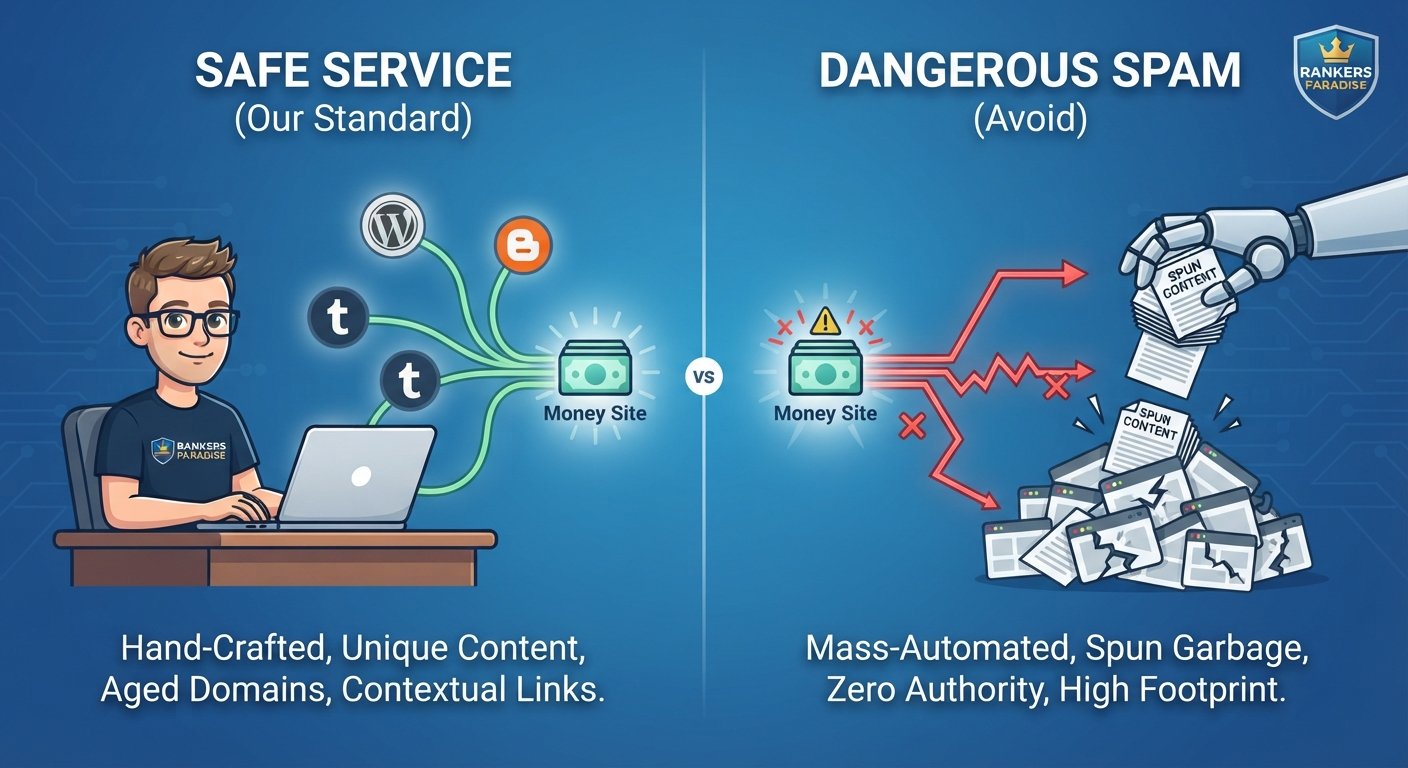
They claim that free blogging platforms like WordPress.com, Tumblr, and Blogger are easily spotted by search engine crawlers and ignored. And you know what? They are right—if you buy cheap, automated junk.
When cheap services fail, it usually boils down to three fatal flaws:
-
Zero Content Quality: They drop spun, unreadable text loaded with exact-match anchor text into a freshly minted subdomain. Google’s natural language processors chew that up and spit it out instantly.
-
Terrible Footprints: Automated bots create hundreds of accounts from a single IP address using identical account details and cookie structures. Google’s spam detection catches this footprint in its sleep.
-
No Indexing Strategy: They build the links and walk away. If Google’s bot never crawls the Web 2.0 post, the link equity never passes to your money site. It’s like shouting into an empty cave.
If you want to buy backlinks that actually drive commercial movement, you cannot cut corners on creation, hosting variation, or indexing velocity.

What Defines the Best Web 2.0 Backlink Service?
When evaluating or building a professional-grade Web 2.0 campaign, several non-negotiable standards must be met. This is the exact blueprint we use for our own managed campaigns and client sites.
1. Aged, High-Authority Domains
Brand-new subdomains carry zero trust. The best services leverage aged platforms or build properties that have already established a baseline of authority in Google’s index. When you secure a contextual backlink from a property with real historical trust, that authority flows smoothly down to your target page.
2. Contextual Relevance and Human-Readable Content
You cannot trick modern search engines with garbage text. Every single Web 2.0 property needs unique, readable content that relates directly to your niche. If you are ranking an e-commerce category page or a competitive service site, the surrounding text on the Web 2.0 must build semantic topical relevance.
If you want to understand the foundational setup of these assets, check out my guide on web 2.0 backlinks. It covers the exact structure I used to land top rankings back in the day and how those principles have evolved for modern search engines.
3. Natural Anchor Text Distribution
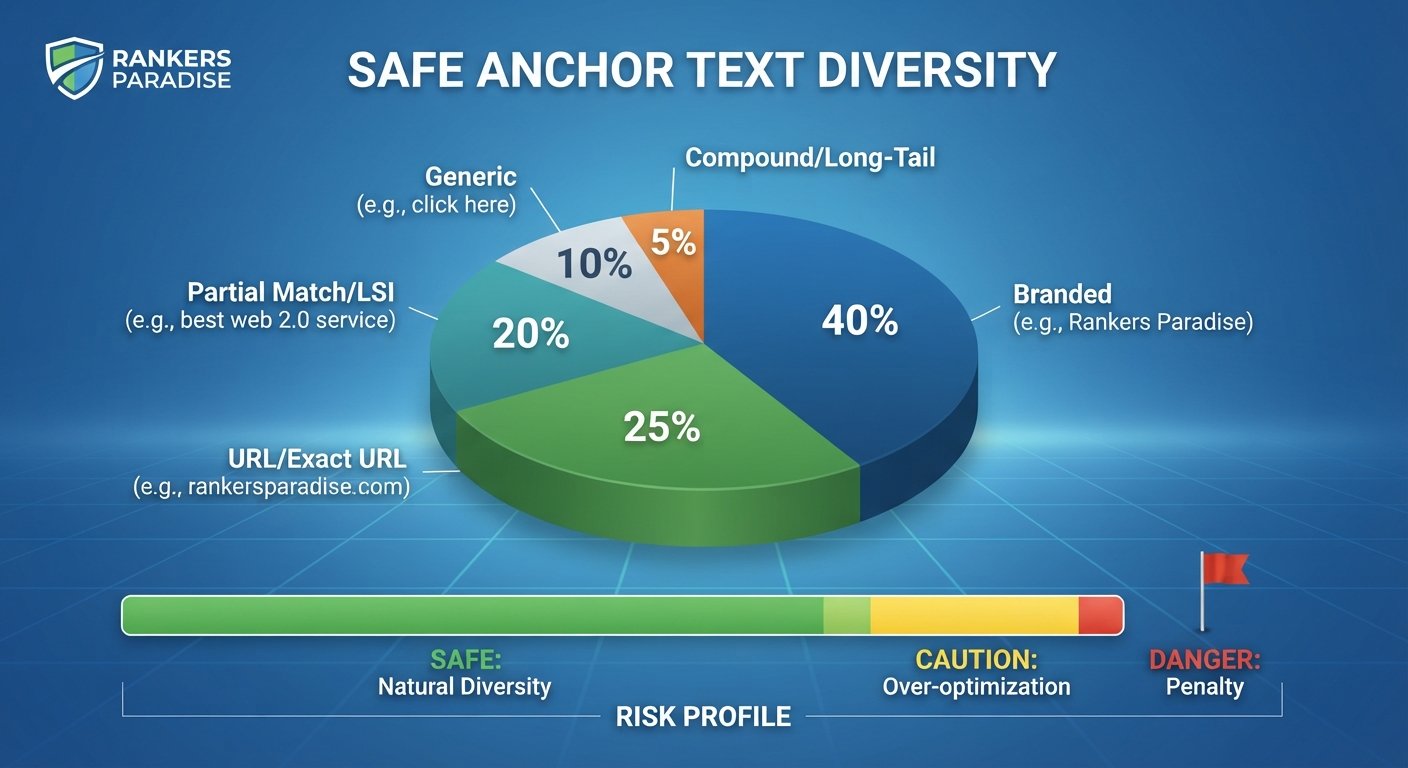
Over-optimization is the fastest way to trigger a algorithmic penalty. If all 50 of your Web 2.0 links use the exact anchor text “buy red widgets,” Google’s spam filters will flag it immediately. A top-tier service uses a healthy mix of branded anchors, URL anchors, partial matches, and latent semantic indexing (LSI) terms.
4. Safe Drip-Feed Velocity
Real websites don’t get 500 backlinks on a Tuesday and zero for the next six months. Link velocity must look natural. Drip-feeding your Web 2.0 creation over 14 to 30 days ensures that the acquisition rate matches organic growth patterns.
How Web 2.0s Fit Into a Modern Multi-Tier Strategy
Web 2.0 backlinks shouldn’t always be pointed directly at your main money site—especially if you are working in ultra-competitive niches like finance, lead gen, or iGaming SEO, where algorithmic scrutiny is severe.
Instead, think of Web 2.0 properties as powerful buffer sites or mid-tier assets.
-
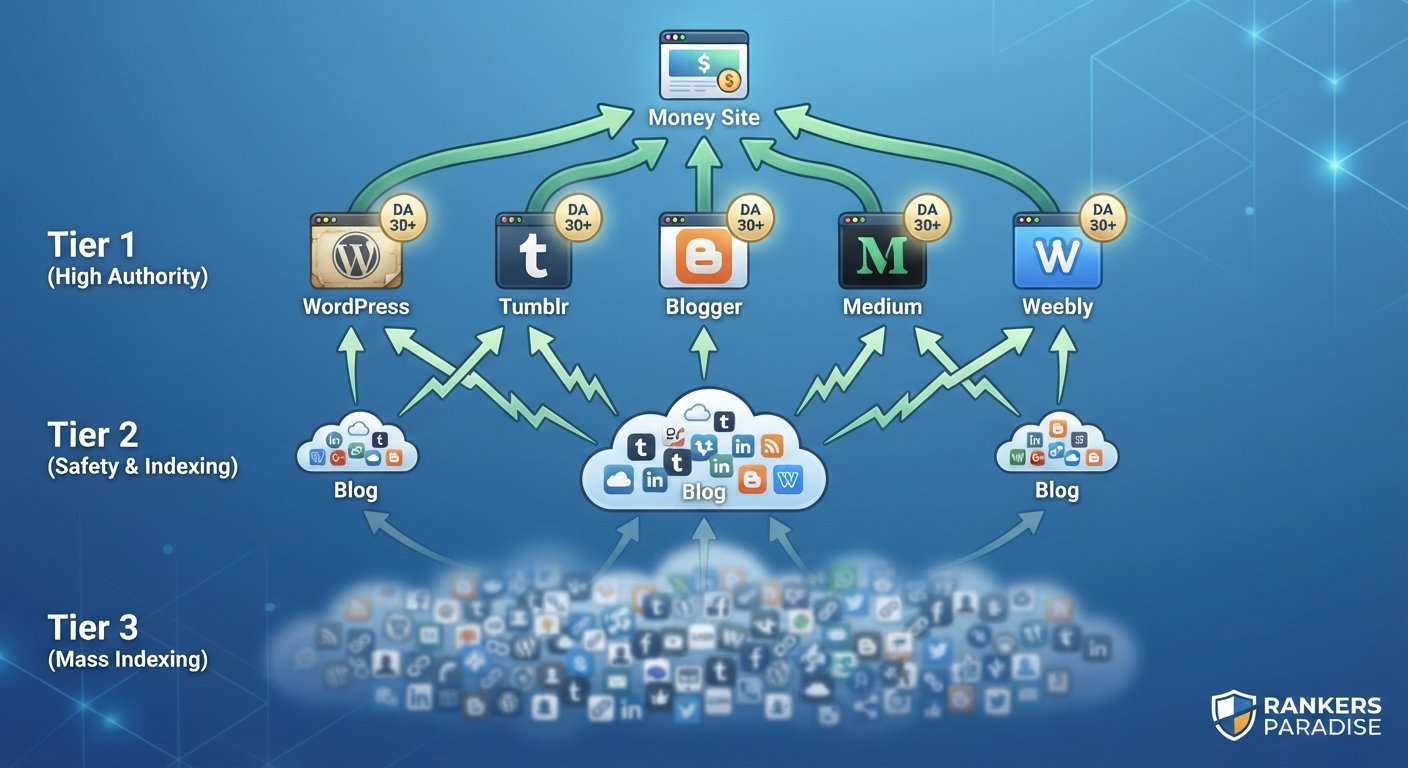
Direct Tier 1: High-authority, aged Web 2.0s with clean metrics pointing safely to inner pages or tier-two properties.
-
Tiered Link Architecture: To supercharge your Tier 1 Web 2.0s, you can back them up with tier-two contextual links, profile links, or social shares. This forces search engine spiders to crawl and index your Web 2.0 properties rapidly, passing maximum juice to your primary domain.
Before launching any aggressive off-page campaign, I always recommend running a thorough backlink audit on your target property. You need to know your current anchor ratios, toxic link profiles, and indexing baseline so you don’t stack new power on top of a broken foundation.
How to Choose the Right Package for Your Site
When you are ready to invest in your off-page SEO, look for a service provider that offers complete transparency. Avoid anyone who hides behind vague descriptions or refuses to show samples of their work.
A professional service should provide:
-
Detailed reports upon completion.
-
Contextual placement within relevant articles.
-
High indexation rates through verified drip-feeding.
-
Real customer support from people who actually do SEO in the trenches every day.
Stop wasting your marketing budget on disposable, automated spam that disappears into the ether within weeks. Build a resilient off-page profile with authority assets that stand the test of time.
Head over to our Shop Services to check out our tested, hands-on Web 2.0 backlink packages designed to move your rankings safely and effectively.