
If you are looking for a backlink company, I am guessing you have already decided you need links.
The harder part is deciding who you trust to build them.
I have been doing SEO and testing backlinks for years. I have bought good links, bad links, ridiculously expensive links and links that looked terrible on paper but moved rankings anyway.
I have also paid for links that did absolutely nothing.
That is SEO.
You test things. You watch what happens. You stop spending money on what doesn’t work and put more money into what does.
The problem when choosing someone to build backlinks is that almost every provider tells you the same thing.
High authority.
Quality websites.
Manual outreach.
Real traffic.
White hat.
Powerful links.
Great.
But what are you actually getting?
That is the bit I care about.
I am going to show you what I look at before I use a company for backlinks, what I would avoid, what I think is worth paying for and how I judge a link after it goes live.
I will also explain something that gets overlooked far too often:
The most expensive backlink is not automatically the best backlink.
I have seen cheaper links outperform placements costing several times more.
Let’s get into it.
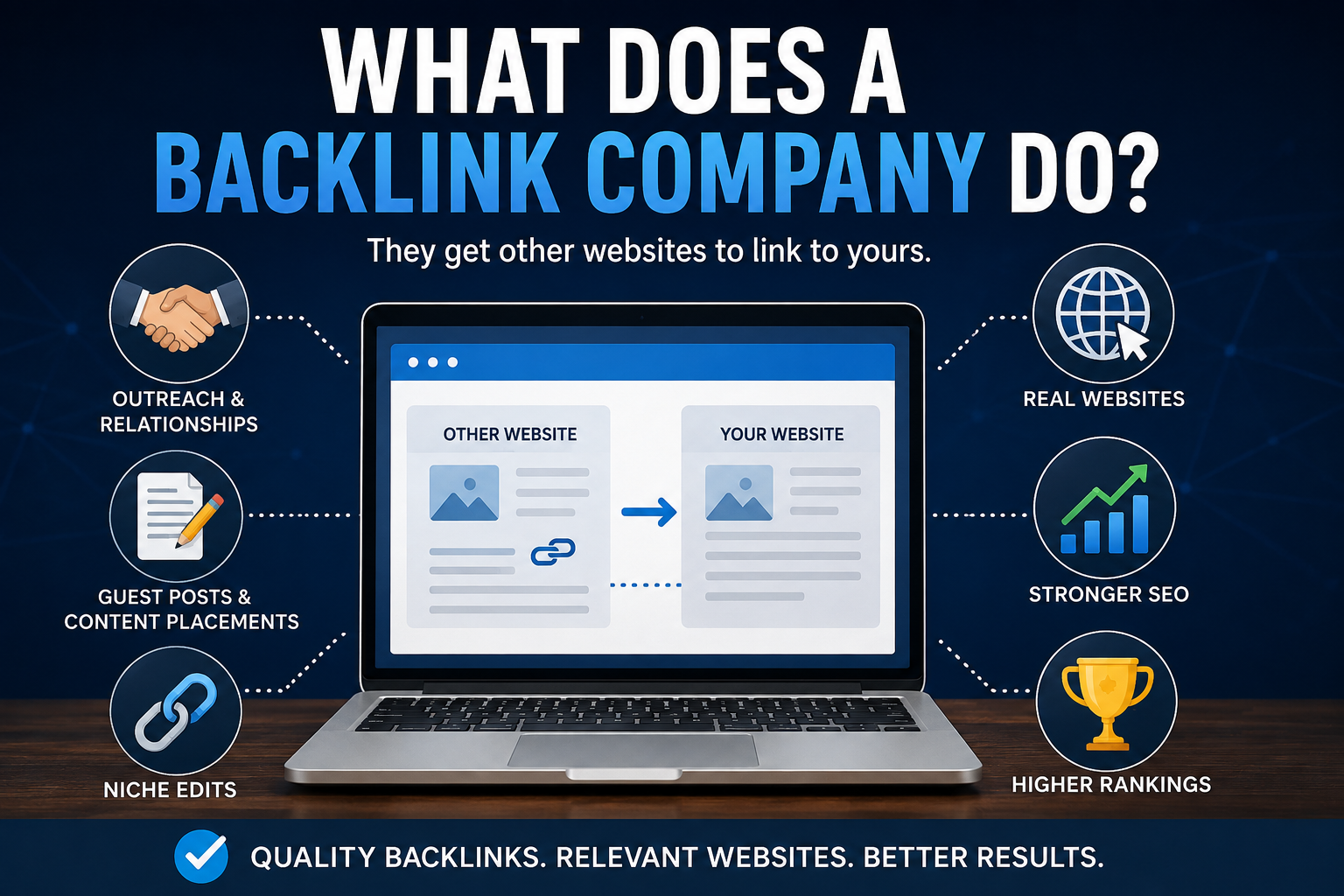
What Does a Backlink Company Actually Do?
The simple answer is that they get other websites to link to yours.
How they achieve that is where things become interesting.
One provider might contact genuine website owners and negotiate placements.
Another owns its own network.
Some use existing relationships with publishers.
Others sell guest posts.
Some concentrate on niche edits.
A few simply resell links purchased somewhere else and put a markup on top.
There are also companies selling huge packages containing hundreds or thousands of links.
These are not the same service.
That is the first thing you need to understand.
Do not compare two companies purely by the number of links they give you.
I would rather have a handful of links that actually help a website than 5,000 URLs dumped into a spreadsheet that Google barely notices.
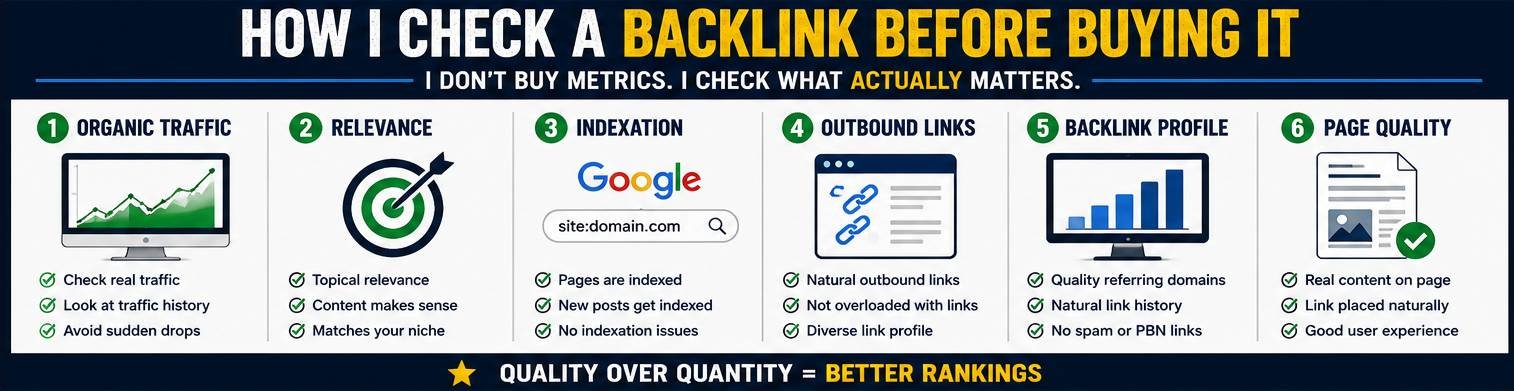
What I Look for Before I Buy Any Link
I don’t start with DA.
I don’t start with DR either.
Those metrics can be useful, but they are not Google.
They are third-party measurements.
I have seen websites with impressive-looking authority scores that I wouldn’t pay $10 for a link from.
Open the website.
That sounds obvious, doesn’t it?
You would be surprised how many people don’t do it.
Look at the actual pages.
Does the site appear to have a purpose?
Does somebody seem to be maintaining it?
Are new articles being published?
Do pages appear in Google?
Does the content make sense?
Is every second article about casinos, CBD, loans, crypto and essay writing?
If something smells wrong, I normally leave it alone.
There are too many websites available to waste time forcing a link onto a bad one.
I Want to See Organic Traffic
Traffic is one of the first metrics I check.
I don’t require every website to have enormous traffic.
That would be silly.
A small specialist website can be extremely relevant and useful without attracting 100,000 visitors per month.
What concerns me is the pattern.
Suppose a website had steady Google traffic for three years and suddenly fell off a cliff.
Why?
That is something I want to know before paying.
Maybe the site was hit by an update.
Perhaps most of its rankings disappeared.
Maybe the owner changed the domain.
There could be an innocent explanation.
But I want to check.
A graph often tells me more than a big DR number sitting at the top of an SEO tool.
Relevance Matters More Than People Think
If I am ranking a website about fishing equipment, I would love a link from a fishing website.
Easy.
But relevance doesn’t always need to be that exact.
An outdoors website could work.
A sports or hobby publication may have a suitable section.
A regional newspaper might publish something genuinely relevant.
What I don’t want is a completely random article shoved onto a domain purely because the website has a high authority metric.
Think about the link from Google’s point of view.
Why does this page link to that page?
There should be an answer.
If the only answer is “because somebody paid for it,” it probably isn’t the best link you could have bought.
The Page Is Important Too
People spend a lot of time analysing domains and forget about the page containing the backlink.
I want a proper page.
I want useful content around the link.
I want the link positioned where somebody could reasonably click it.
A contextual backlink buried naturally inside a relevant article is very different from a link sitting among 200 unrelated URLs on a page nobody visits.
This is one reason I still like contextual links.
They make sense.
The article talks about a subject, your website provides additional information about that subject, and the link connects the two.
Simple.
Check Whether Google Actually Indexes the Website
Here is another basic check.
Can Google find the pages?
A backlink sitting on a page that never enters Google’s index isn’t much use to me.
I monitor new placements after they go live.
Some get picked up quickly.
Others take longer.
Occasionally you will find a website where new pages repeatedly fail to index.
That gets my attention.
Before buying several links from the same source or network, look at recently published pages and see what is happening.
Don’t just check the homepage.
Don’t Buy a Metric
This is probably one of the biggest mistakes I see.
DA 50 backlink.
DR 60 backlink.
DA 70+ guest post.
It sounds great in a product title.
But I am not buying a number.
I am buying a link.
Authority metrics are useful filters. I use SEO tools myself.
But I never assume that a DR 70 site is automatically better than a DR 30 site.
I want to know where the website gets its authority from.
I want to see its traffic.
I want to inspect its outbound links.
I want to know whether its pages rank.
I want relevance.
I want to see whether the site has become a dumping ground for paid posts.
Use metrics.
Just don’t let the metric make the decision for you.

Watch the Outbound Links
This check can expose a bad site very quickly.
Look through recent articles.
What is the website linking to?
If you see normal citations, useful resources, brands and relevant businesses, that looks natural.
If every new article contains an exact-match commercial anchor pointing at a different buyer, you know what is going on.
That doesn’t automatically mean the link cannot work.
I have tested plenty of links from websites selling placements.
Some work very well.
The question is how far the site has gone.
There is a big difference between a publisher monetising some content and a website that exists for no reason other than selling links.
I prefer the first one.
I Always Check the Backlink Profile
Before putting a link on a website, take a quick look at the links pointing to that website.
Where did its authority come from?
You occasionally find domains with strong metrics built almost entirely from strange redirects, spam links or one unusual source.
That doesn’t necessarily make the domain worthless, but it changes how I value the placement.
I want authority that looks difficult to fake.
Real editorial mentions.
Old links.
Relevant links.
Links from established sites.
A varied profile.
The more natural the history looks, the happier I am.
Cheap Backlinks Are Not Automatically Bad
I know this goes against a lot of SEO content.
People love saying:
Never buy cheap backlinks.
I don’t agree with blanket statements like that.
I have used inexpensive links that worked.
I have used expensive links that didn’t.
Price alone doesn’t tell you enough.
The real question is:
What am I getting for the money?
A $30 link that indexes, remains live and helps push a keyword upwards is better value than a $500 placement that achieves nothing.
That doesn’t mean you should go to the cheapest seller you can find and order 10,000 links.
There is a difference between finding value and buying rubbish.
If you are considering purchasing links, I have put together a separate guide on how I buy backlinks and the checks I make before spending money.
Expensive Backlinks Can Be Bad Too
This is the other side of it.
A high price creates confidence.
It shouldn’t.
If somebody asks $800 for a backlink, I still check it.
If they want $1,500, I check it even more carefully.
Why wouldn’t I?
Sometimes you are paying for genuine scarcity.
A major publication might be difficult to get onto.
A specialist website may reject most commercial submissions.
Proper outreach takes time.
Good content costs money.
Those things have value.
Other times you are paying because three resellers have each added their margin before the link reaches you.
Find out what you are buying.
Ask to See Examples
Before placing a large order, ask for examples.
Not a spreadsheet containing 10,000 mystery domains.
I want to see examples of the type of link I am likely to receive.
Then I inspect them.
I normally look at:
- Relevance
- Organic traffic
- Traffic history
- Page indexation
- Referring domains
- Outbound links
- Recent content
- Anchor use
- Link placement
- General site quality
You can learn a lot in five minutes.
If a provider refuses to show anything and expects you to order blind, I would be cautious.
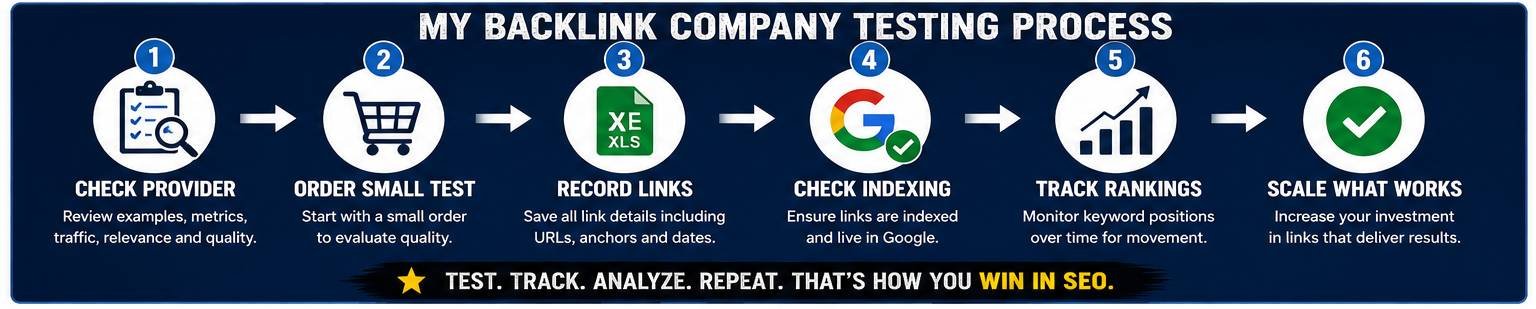
Test Small Before Going Big
This is something I do with almost everything in SEO.
Test it.
If I find a new link source, I don’t need to throw my entire monthly budget at it on day one.
Get a few links.
Record the date.
Watch the target pages.
Track the keywords.
See whether the links index.
Give Google time to crawl things.
Then look at what happened.
If I like the results, I can do more.
If nothing happens, I haven’t blown the whole budget.
SEO becomes much easier when you stop treating opinions as facts and start collecting your own results.
A Good Company Should Understand Anchor Text
This matters.
If you order 20 links and every backlink uses exactly the same commercial keyword, I would be concerned.
A natural backlink profile contains variation.
Brand names.
URLs.
Generic wording.
Partial matches.
Topical phrases.
Exact-match anchors can be powerful. I use them.
I just don’t want every backlink screaming the same keyword.
Look at what your website already has before adding more.
This is where doing a proper backlink audit before a large campaign becomes useful.
You need to know what is already there before deciding what should come next.
Google Search Console can also show the sites linking to your property, your most-linked pages and commonly detected linking text.
Your Website Matters More Than the Seller Tells You
A link isn’t magic.
This needs saying because backlink sellers obviously want to sell backlinks.
You can point good links at a terrible page and still struggle.
Before I spend heavily on off-page SEO, I want the target page sorted.
Does it match search intent?
Is the keyword achievable?
Is the content genuinely useful?
Is the page internally linked?
Can Google crawl it?
Is it indexed?
Does it deserve to outrank what is already there?
Backlinks can give a good page the push it needs.
They cannot permanently fix everything else that is wrong with a website.
Internal Links Come First
I have done this for years.
Before building external links to a new article, I go through my own website and find places where I can link to it.
Why wouldn’t you?
You control those links.
They cost nothing.
They help users move around the website.
They also help search engines discover pages and understand relationships between your content.
Do the easy work first.
Then start spending money.
I Still Use Web 2.0 Links
Not every backlink has to come from an expensive publisher.
I still test free and lower-cost link types as part of a mixed profile.
One strategy I have used repeatedly is web 2.0 backlinks.
The important part is how you build them.
I don’t see much point in creating hundreds of empty profiles and calling that a backlink campaign.
Build the property properly.
Add useful content.
Make it relevant.
Link pages together where it makes sense.
Get the pages crawled.
I have tested these links on my own sites and tracked the ranking movement.
That is why I still use them.
Not because somebody on an SEO forum said they work.
Can Backlinks Still Move Difficult Keywords?
Yes.
I have seen it myself.
But difficult niches expose bad SEO very quickly.
You might get away with average content and weak links when there are five websites competing for a keyword.
Try that in gambling, finance or another aggressive SERP and you will probably disappear underneath competitors with much stronger campaigns.
We documented one of our campaigns in our iGaming SEO case study.
That type of project is useful because you get to see what happens when a new website starts with virtually nothing and has to build its way into a competitive SERP.
I prefer looking at results like that rather than discussing SEO entirely in theory.
How Many Backlinks Should You Buy?
There isn’t a universal number.
Anyone who gives you one without seeing your website is guessing.
The answer depends on:
Your keyword.
Your current authority.
Your competitors.
Your existing links.
The quality of the links.
Your content.
Your niche.
The age and history of the site.
A local plumber targeting a small town does not require the same campaign as a casino affiliate trying to compete internationally.
Look at the SERP.
Look at the websites beating you.
Then work backwards.
Don’t Copy a Competitor’s Backlinks Blindly
Competitor analysis is useful.
Blind copying isn’t.
Suppose the number-one result has 400 referring domains.
You don’t know which of those links are helping.
Some could be worthless.
Some might have been built ten years ago.
Some may be ignored.
Others could be incredibly powerful.
Instead of saying, “They have 400, so I need 401,” inspect the quality.
Find the links you would actually want.
Look for patterns across several successful competitors.
That gives you much better information.
What About PBN Backlinks?
Private blog networks are another subject where people tend to take extreme positions.
Some SEOs say they never work.
Others build almost everything with them.
I have tested PBN links.
The quality varies enormously.
A well-maintained site with history, relevant content and sensible outbound linking is not the same thing as a network made from expired domains stuffed with spun articles.
If you are buying network links, footprints are what concern me.
The same theme.
The same hosting.
Identical page layouts.
Repeated anchors.
The same writing pattern.
The same outbound-link structure.
Everything published on the same day.
That makes me nervous.
If you use these links, know what you are buying.
Look at Link Longevity
A backlink that disappears after two months isn’t much of an investment.
Ask what happens if the placement is removed.
Is there a replacement policy?
How long is the link expected to remain live?
Who controls the website?
This becomes particularly important when you are buying in volume.
Ten disappearing links are annoying.
Two hundred disappearing links can completely change your backlink profile.
I prefer links that stick.
Check the Actual Target URL
This sounds almost too basic to include.
Check it anyway.
I have seen campaigns where links pointed to:
HTTP instead of HTTPS.
Redirected URLs.
Old product pages.
URLs with unnecessary parameters.
Pages that had subsequently been deleted.
You are paying for the link.
Make sure it points exactly where you want it to go.
What Should a Backlink Report Include?
I don’t need a beautiful 40-page PDF.
Give me the information.
At minimum I want:
- Linking URL
- Target URL
- Anchor text
- Domain
- Date placed
- Link status
Useful additional information can include authority metrics, traffic estimates and indexation status.
But the live URL is the important bit.
I want to click it and inspect the placement myself.
Red Flags I Would Avoid
There are certain things that make me cautious very quickly.
Guaranteed number-one rankings.
Nobody controls Google.
Thousands of “high authority” links for next to nothing.
Check what those links actually are.
No examples.
Why can’t I see what I am buying?
Every site has suspiciously identical metrics.
Look deeper.
No discussion about your target page.
Links are only part of the job.
Exact-match anchors everywhere.
I prefer variation.
Sites with no real content or audience.
A metric does not make a website good.
No replacement policy.
Ask what happens when links vanish.
You don’t need to make backlink buying complicated.
Just don’t buy with your eyes closed.
What I Think Makes a Good Backlink
For me, the ideal link has several things going for it.
The website is real.
The page is indexed.
The subject is relevant.
The article makes sense.
The backlink sits naturally inside the content.
The site has some history.
It isn’t overloaded with paid outbound links.
The link stays live.
And, most importantly, it contributes to ranking movement.
Not every link will tick every box.
SEO rarely works like that.
I am looking at the complete picture.
How I Judge Whether a Backlink Worked
This is where testing matters.
I track keyword positions before building links.
Then I record what was built and when.
I don’t expect every link to cause an obvious jump the next morning.
Google has to discover pages, crawl them and process signals.
There are also other things happening at the same time.
Competitors change.
Content gets updated.
SERPs move.
Google updates its systems.
That is why I look at trends rather than getting excited about one day’s ranking movement.
If I repeatedly use a type of link and repeatedly see positive movement, I keep testing it.
If I spend money month after month and nothing improves, something needs to change.
Simple.
Should You Build Backlinks Yourself or Hire Someone?
You can absolutely build backlinks yourself.
I do plenty of my own link work.
The advantage is control.
You know exactly what you are building and why.
The disadvantage is time.
Finding sites, checking metrics, creating content, contacting owners, negotiating placements, building properties and monitoring everything can eat hours.
Hiring someone makes sense when the time saved is worth more than the cost.
But outsourcing does not mean switching your brain off.
Check the work.
Track the results.
Know what you are paying for.
Don’t Forget Google’s Rules
You should also understand Google’s position before paying for links.
Google’s Search Essentials and spam documentation explain the practices it considers link spam, and Google recommends qualifying paid or sponsored outbound links appropriately.
Read the rules yourself.
Don’t rely entirely on what an SEO seller tells you Google says.
Then decide how you want to run your campaign.
Should You Use a Backlink Company?
If you don’t have the time, contacts or experience to build links yourself, using one can make sense.
The good ones save an enormous amount of work.
The bad ones simply sell you impressive-looking numbers.
That is the difference I would concentrate on.
Don’t ask:
How many backlinks do I get?
Start asking:
Where are the links?
Why were these sites selected?
Are the pages indexed?
Does the placement make sense?
What anchors will be used?
Will the links stay live?
What happens if one disappears?
Those questions tell you much more than DA 50+ ever will.
My Backlink Company Checklist
If I were testing a new provider today, this is the quick checklist I would use:
- Look at example websites.
- Check organic traffic.
- Look at traffic history.
- Inspect recent posts.
- Check Google indexation.
- Review outbound links.
- Check the site’s own backlinks.
- Look at topical relevance.
- Ask how anchors are selected.
- Confirm the exact target URL.
- Ask about replacement guarantees.
- Start with a small order.
- Record the live links.
- Track keyword positions.
- Increase spending only when I am happy with what I see.
Nothing fancy.
It is mostly common sense.
The difficult part is resisting the urge to buy because a metric looks impressive.
Frequently Asked Questions
What is the best backlink company?
I wouldn’t choose one purely from a list of company names. The best provider for you is the one that can supply suitable links for your niche, budget and target keywords while giving you enough information to inspect what you are buying. Ask for examples and test with a smaller campaign first.
How much should a backlink cost?
There is no fixed price. I’ve seen useful links at relatively low prices and poor links sold for hundreds of dollars. Website quality, relevance, traffic, editorial standards, placement difficulty and demand can all affect the price.
Judge the link before judging the price.
Are backlink companies safe?
That depends entirely on what they build. Outsourcing does not remove risk. Check the websites, anchors, target pages and methods being used. Google’s published spam policies specifically address manipulative link practices, so understand those policies before running a paid campaign.
Can a company guarantee first place on Google?
No company controls Google’s organic results.
A provider can improve your SEO, build links and show previous results, but a genuine number-one guarantee is not something I would base a buying decision on.
How long do backlinks take to work?
There isn’t a fixed period. Google first needs to discover and process the linking page, and ranking movement depends on far more than one link. I monitor indexation and keyword movement over time rather than expecting an instant jump.
Are high-DA backlinks the best?
Not automatically.
DA is a third-party metric. I also check relevance, traffic, site history, page quality, indexation, outbound links and the site’s own backlink profile.
Should I buy backlinks or build them myself?
Both can work.
Building them yourself gives you more control but takes time. Paying a provider can speed up the process, but you still need to inspect the work.
I use whichever approach makes sense for the project.
Final Thoughts
I have been building and testing backlinks long enough to know that there isn’t one magic link type.
Things change.
Google changes.
Competitors change.
Websites that were good link sources five years ago can become terrible.
New opportunities appear.
That is why I keep testing.
If you take one thing away from this guide, make it this:
Buy the backlink, not the sales pitch.
Look at the website.
Look at the page.
Check the traffic.
Check relevance.
Inspect the link.
Track what happens afterwards.
Then make your next decision using the results.
That is how I approach backlink building at Rankers Paradise.
Test.
Track.
Keep what works.
Drop what doesn’t.