
When you are trying to rank a website in Google organic search, you quickly realize one hard truth: content alone rarely gets you to the number one spot. You can have the best-optimized on-page setup, perfect Yoast or Rank Math green lights, and flawless metadata, but without a solid off-page strategy, you will stall out on page two.
Over the years running Rankers Paradise since 2016, I have tested countless link-building strategies. I have built thousands of links across every platform imaginable—from automated spam blasts that tank sites overnight to manual, high-authority contextual campaigns that stick permanently and drive massive organic traffic.
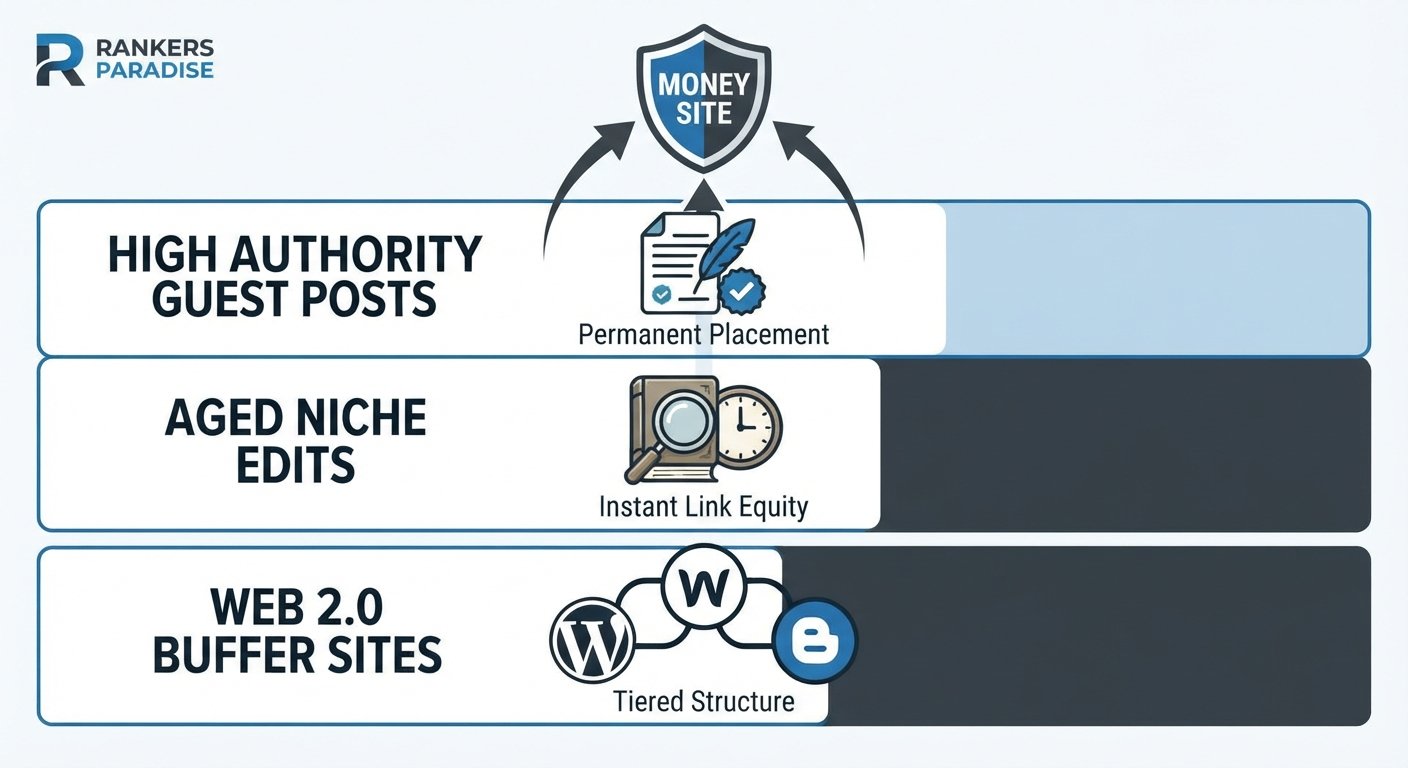
If you are looking for the best services to buy backlinks, web 2.0, niche edits, and guest posts, you need to know what actually works in the current SEO landscape. In this guide, I am going to break down each of these core link types based on real-world testing, explain how to deploy them safely, and show you how to combine them into a bulletproof ranking system.
Executive Summary: Off-Page SEO Link Types at a Glance
| Link Type | Primary SEO Benefit | Best Used For | Risk Level |
| Guest Posts | High contextual authority & permanent editorial placement | Direct power to money sites & competitive commercial keywords | Low (if manually vetted) |
| Niche Edits | Instant authority from aged URLs with historical indexing | Fast ranking momentum & passing aged link equity | Low-Medium (depends on site history) |
| Web 2.0 Backlinks | Buffer protection, tier-1 authority building & anchor diversity | Safely passing link juice and cushioning anchor profiles | Low (if manually built and indexed) |
Why You Need a Multi-Layered Backlink Approach
If you just blast hundreds of cheap links directly at your money site without a buffer or structural plan, Google’s algorithm will spot the unnatural footprint immediately. Successful off-page SEO requires a balanced approach. You need high-authority contextual links passing direct juice to your primary pages, supported by structured tier systems that keep your anchor text profile clean and natural.
Before you invest time or capital into any campaign, make sure your on-page foundations are locked down. For a complete breakdown of how to acquire safe, tested links, check out my comprehensive guide on how to buy backlinks.
1. Guest Posts: The Gold Standard of Contextual Link Building
Guest posting remains one of the most reliable ways to secure top-tier placements in Google organic SERPs. A guest post involves writing an original, relevant article and publishing it on an established website within your niche, with a contextual link pointing back to your site.
Why Guest Posts Work
When you buy guest posts, you aren’t just getting a random link dropped in a footer or a sidebar. You get a contextual link embedded naturally inside fresh, relevant body content surrounded by topical text. This provides massive semantic relevance signals to Google bot.
What to Look For When Buying Guest Posts
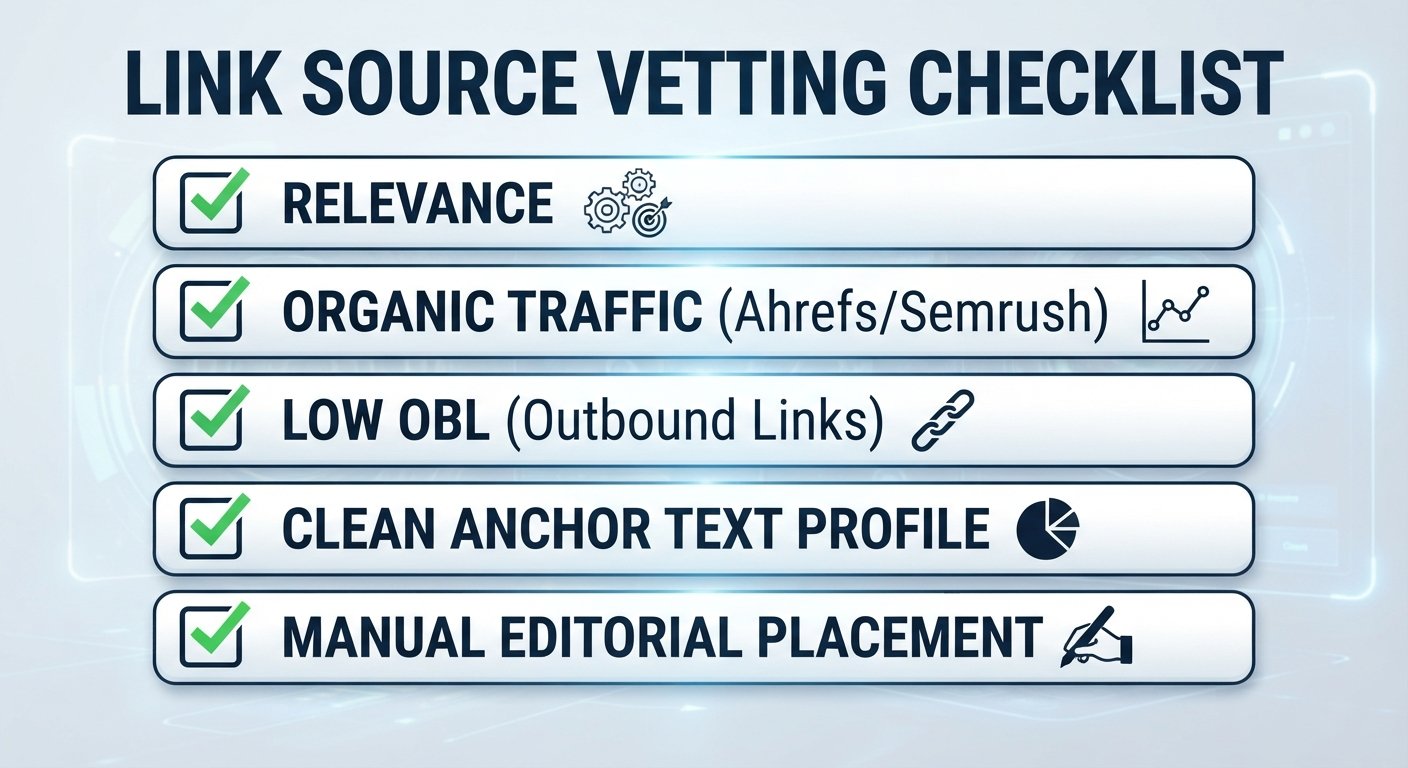
Not all guest posting services are created equal. When evaluating providers or placing links yourself, make sure you vet the target sites using real metrics:
-
Real Organic Traffic: Check the site in Ahrefs or Semrush. Never buy links from a site with zero organic traffic, no matter what its Domain Rating (DR) or Domain Authority (DA) says.
-
Clean Outbound Link Profile: Ensure the site isn’t a private blog network (PBN) disguised as a real blog selling cheap links to anyone.
-
Relevance: The host site must be topically relevant to your industry. A link from a tech blog pointing to a pet supply site looks unnatural and loses impact.
If you want to secure powerful, manually vetted editorial placements without spending weeks doing manual outreach, take a look at our professional options when you buy guest posts.
2. Niche Edits (Contextual Link Insertion): Instant Authority from Aged Content
Niche edits—also known as contextual link insertions—involve placing your backlink inside an existing, already-indexed article on an aged website.
Why Niche Edits Outperform Fresh Pages
When you publish a brand-new guest post, Google has to crawl the page, discover it, and gradually build trust over time. With niche edits, you are placing your link onto a page that:
-
Already has historical age and trust in Google’s index.
-
Already ranks for its own set of keywords and attracts organic traffic.
-
Already possesses established internal and external link equity (PageRank).
By getting your link inserted into an existing paragraph of a relevant, aged article, Google bot crawls it and passes that accumulated link juice immediately to your target URL.
Avoiding Pitfalls with Niche Edits
The main risk with niche edits is buying from services that hack into compromised websites or use automated scripts to spam links into unrelated content. Always ensure your niche edits are placed manually on legitimate, clean websites where the surrounding text naturally matches your anchor text and target URL.
To see how we secure high-impact contextual placements on aged articles, check out our service to buy niche edits.
3. Web 2.0 Backlinks: Building Safe Buffer Networks and Tiered Power
Web 2.0 platforms are high-authority, free blogging networks (such as WordPress.com, Wix, Weebly, and Strikingly) where you can set up subdomains and publish unique content.
How to Use Web 2.0 Platforms for SEO
Instead of pointing every single backlink directly to your money site—which can trigger over-optimization filters—you can use Web 2.0 properties as buffer sites and tier-1 assets.
When you build Web 2.0 properties correctly, you maintain 100% control over the platform. You can add images, embed videos, and update your content whenever you want. More importantly, they allow you to safely diversify your anchor text distribution.
To master the step-by-step creation of these platforms, read my detailed tutorial on web 2.0 backlinks.
The Power of Web 2.0 Link Wheels
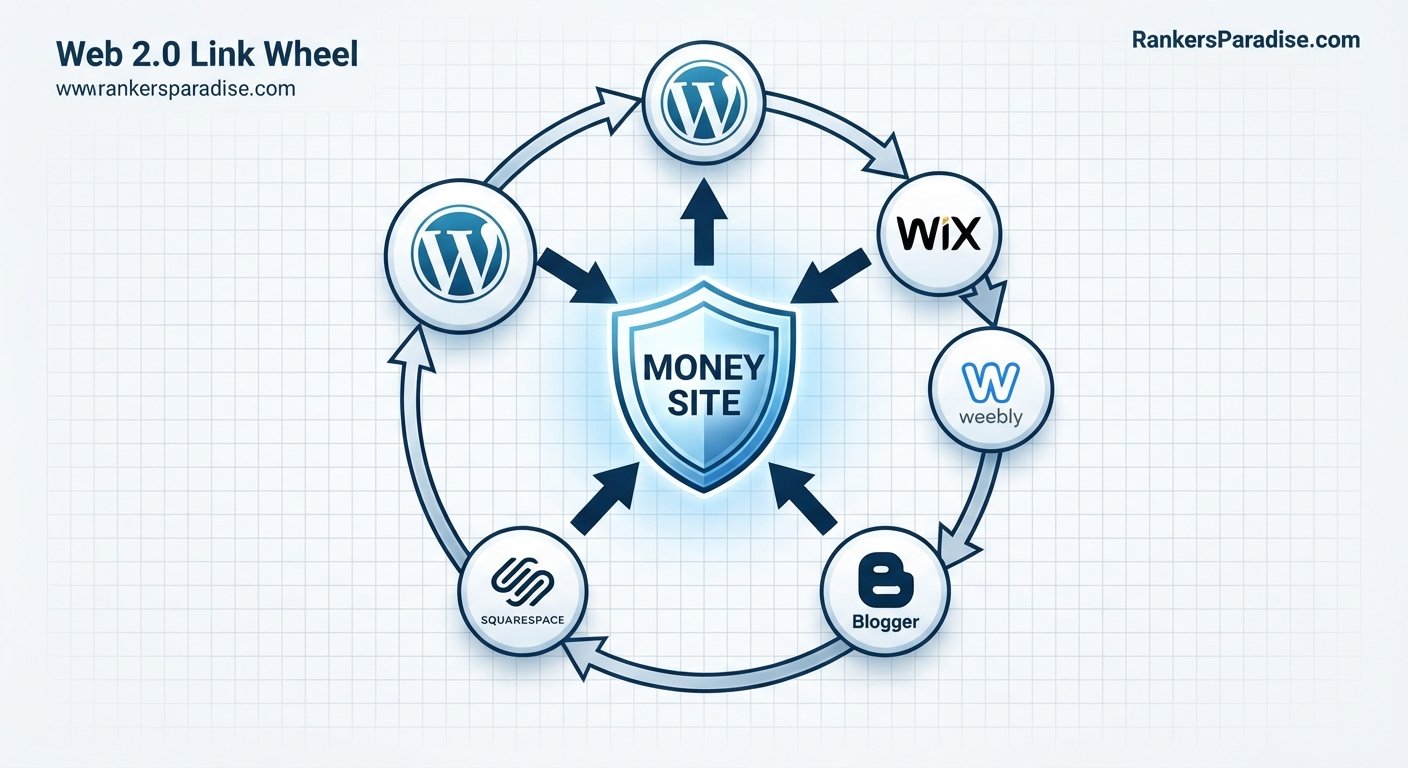
If you build a Web 2.0 site and point it directly to your money site without supporting links, it becomes an orphaned page with limited ranking impact. To maximize their effectiveness, I use a structured Web 2.0 link wheel strategy:
-
Tier 1 Web 2.0s: Unique, well-optimized articles posted on high-authority platforms pointing directly to your money site.
-
Tier 2 Supporting Links: Spun or secondary content pointing to your Tier 1 Web 2.0 properties to ensure Google bot crawls them frequently and passes full link equity downstream.
When Google bot crawls these Web 2.0 properties and registers that your links exist, your keyword rankings in the SERPs begin to climb.
Link-Building Risk Assessment Matrix
Before launching any off-page campaign, use this risk assessment checklist to evaluate your strategy and protect your rankings from algorithmic penalties:
| Strategy Element | Safe Practice | High-Risk Practice (Avoid) |
| Anchor Text Ratios | Natural mix of Brand, URL, Generic, and occasional Exact Match keywords | 100% exact-match anchor text across every single backlink |
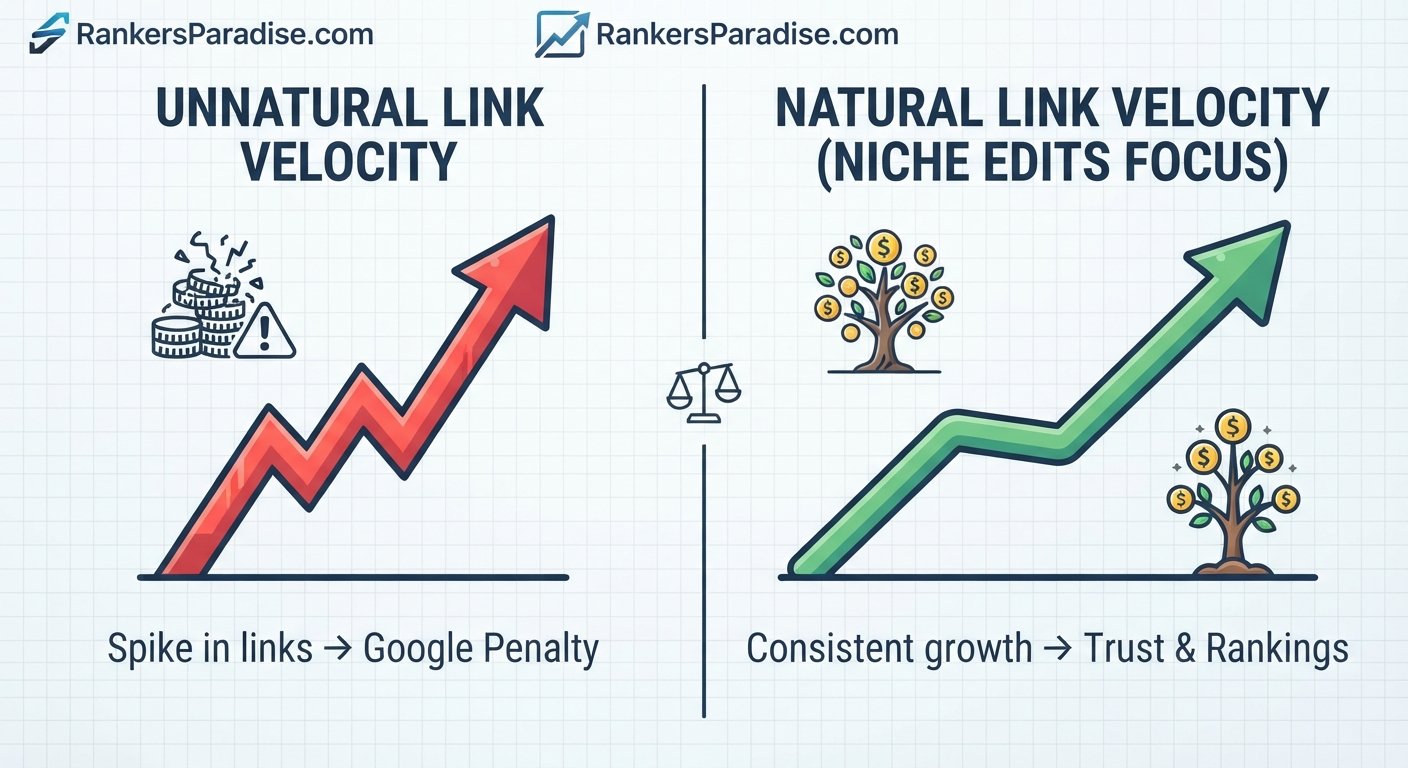
| Link Velocity | Steady, natural acquisition matching content growth | Gaining 500 spam links overnight on a brand-new domain |
| Platform Selection | Clean, indexed sites with organic traffic and relevant niches | PBN networks with footprints, link farms, and hidden casino links |
| Content Quality | Unique, human-edited articles with relevant images and videos | Low-quality spun text with broken grammar and zero formatting |
How to Combine Guest Posts, Niche Edits, and Web 2.0s for #1 Rankings
To rank #1 in Google organic search for competitive commercial terms, you should never rely on just one type of backlink. A winning campaign combines all three pillars into a cohesive workflow:
-
Setup Your Foundation: Ensure your on-page SEO is optimized with clean H1/H2 headings, proper Yoast or Rank Math metadata, and target keywords under a 1% density.
-
Deploy Web 2.0 Buffers: Build out a small network of high-authority Web 2.0 properties pointing to your money site to establish thematic relevance and anchor text diversity.
-
Acquire Niche Edits for Fast Momentum: Secure contextual link insertions on aged, indexed pages to give your rankings an immediate push in the SERPs.
-
Reinforce with Guest Posts: Add authoritative guest post backlinks from real, traffic-driving niche blogs to solidify your position at the top of Google.
By structuring your off-page SEO this way, you create a natural, powerful backlink profile that Google trusts and rewards with top rankings.
Frequently Asked Questions
Are Web 2.0 backlinks still effective in 2026?
Yes. While some marketers claim free platforms are outdated, real-world testing proves that Web 2.0 properties still rank and pass powerful link equity when indexed properly and supported by tier-2 links.
Should I point guest posts directly to my homepage?
It depends on your site architecture. It is usually best to distribute guest posts across your homepage, core category pages, and high-value product or service pages to keep your link profile looking natural.
How many exact-match anchor texts should I use?
A safe rule of thumb is to keep exact-match commercial keywords to around 1 in every 5 links (20%), while filling the rest of your profile with brand names, raw URLs, and generic phrases like “click here” or “read this guide.”