
Best Off Page SEO Link Building Packages for Web 2.0 Niche Edits Guest Posts
If you’ve been doing SEO for more than five minutes, you already know how this game goes. You type “best off page seo link building packages for web 2.0 niche edits guest posts” into Google, and what do you get? A massive wall of recycled listicles written by freelancers who have never built a live backlink in their lives.
They push automated software spam, recommend random platforms on dead subdomains, and tell you that buying 5,000 links on Fiverr for $10 is a solid ranking strategy.
I’m Nick from Rankers Paradise. I’ve been in the trenches running real-world link tests, building multi-tiered link structures, and pushing sites to the top of Google SERPs since 2016.
The plain truth is that off-page SEO isn’t about throwing thousands of random links at your money site and hoping something sticks. If you want real organic search visibility that survives core updates, you need a balanced, contextually relevant link portfolio.
That means combining three heavy-hitting off-page assets:
-
Web 2.0 properties for anchor text control and multi-tiered buffer zones.
-
Niche edits (curated links) for immediate aged authority and indexing power.
-
Guest posts for high-DR relevance and contextual trust.
Below, I’ll break down how to evaluate these packages, how each link type works in the real world, and how to combine them into an unstoppable ranking engine.
Why Combining Web 2.0, Niche Edits, and Guest Posts Works
When Google’s spider crawls your site’s link profile, it looks for natural, diverse patterns. If 100% of your backlinks come from fresh guest posts with exact-match anchors, it triggers a manual review or an algorithmic filter. If 100% of your links come from Web 2.0 blogs, you miss out on real domain authority.
By layering Web 2.0s, niche edits, and guest posts together, you mimic the natural link velocity of a market leader:
                          [ Money Site ]
                                ^
                                |
    +---------------------------+---------------------------+
    |                           |                           |
[ Guest Posts ]         [ Niche Edits ]             [ Web 2.0 Tier 1 ]
(High DR, Context)    (Aged Posts, Traffic)        (Complete Control)
                                                            ^
                                                            |
                                                   [ Tier 2 Backlinks ]
                                                 (Indexing & Power Boost)
Each link asset plays a distinct operational role:
-
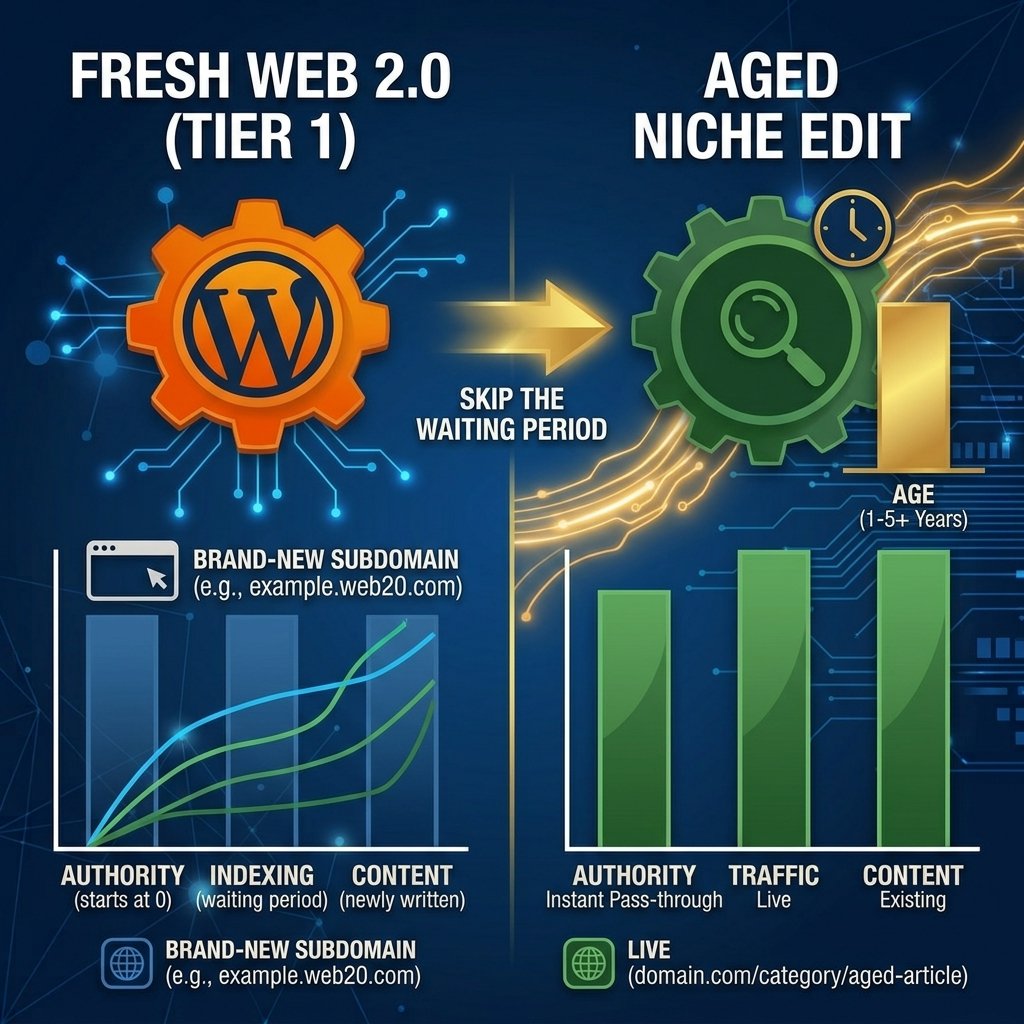
Web 2.0 Backlinks: Give you 100% control over anchor text distribution, brand buffers, and structural setup. You can learn the complete setup mechanics in my detailed guide on web 2.0 backlinks.
-
Niche Edits: Insert your link directly into existing, aged content that Google has already indexed and ranked. When you buy niche edits, you skip the indexation waiting period and tap into existing page authority immediately.
-
Guest Posts: Establish top-level topical relevance on niche-specific blogs. When you buy guest posts, you get clean, editorial links surrounded by fresh, hand-written content.
The Breakdown: What Makes a Link Package “Best-in-Class”?
Most off-page packages fail because service providers cut corners on content, account setup, or indexing. To separate high-performing packages from dangerous link spam, verify these core standards before spending a dollar:
| Link Asset Type | What Low-Quality Providers Deliver | What Rankers Paradise Hand-Crafted Packages Deliver |
| Web 2.0 Sites | Auto-generated subdomains, auto-spun AI text, zero images, abandoned accounts. | Real hand-crafted accounts, custom profiles, hand-written niche content, structured Tier-2 indexing. |
| Niche Edits | Injected links on hacked PBNs, orphaned pages with zero traffic, spun text overlays. | Contextual links inserted into relevant, aged articles with active organic traffic and clean history. |
| Guest Posts | Low-tier link farms (PBNs disguised as real blogs), site-wide footers, zero topical relevance. | Hand-written, niche-specific articles published on real blogs with verifiable traffic metrics. |
How to Deploy Web 2.0s, Niche Edits, and Guest Posts for #1 Rankings
1. Web 2.0 Properties: Your Anchor Text Control Hub
Web 2.0 subdomains (like Blogger, Medium, Tumblr, Strikingly, and Substack) allow you to build dedicated mini-sites. Because you own the property, you control the surrounding text, alt tags, outgoing links, and anchor text.
-
Primary Function: Building safety buffers, testing target anchors, and absorbing Tier-2 link building power.
-
Nick’s Testing Rule: Never use auto-spun content on Web 2.0s if you want them to index. Google’s spam algorithms drop unindexed Web 2.0 subdomains into the dark. Use hand-written content, embed real images/videos, and send a light Tier-2 link cushion (like social signals or web 2.0 wheels) to push crawler activity.
2. Niche Edits (Curated Contextual Links): Instant Authority
Niche edits involve placing your link inside a blog post or page that is already live on an established website.
-
Primary Function: Capturing immediate equity without waiting for Google to discover and index a brand-new page.
-
Nick’s Testing Rule: Verify that the target page has clean historical metric trends. A single link on a page that has been indexed for three years carry significantly more weight than a freshly published draft sitting on an un-indexed subdomain.
3. Guest Posts: High-Relevance Editorial Signals
Guest posting remains the standard for safe, white-hat authority building. You write (or order) a unique piece of niche-relevant content, insert your contextual link naturally, and publish it on an active niche blog.
-
Primary Function: Passing raw Domain Authority (DA/DR), driving referral traffic, and signaling topical depth to Google.
-
Nick’s Testing Rule: Match the host site’s topical category to your money site. A link from a DR 40 blog in your exact niche beats a link from a generic DR 80 “news site” every single time.
Strategic Blueprint: The Ultimate Multi-Tier Link Building Campaign
If you want to rank for competitive keywords, running these link types in isolation isn’t enough. You need a structured, tiered approach:
Safety Guidelines: How to Buy Backlinks Without Penalties
Before you place an order for any off-page package, follow these golden rules to protect your domain:
-
Vary Your Anchor Text Distribution: Never over-optimize. Keep exact-match target anchors around 10–15% of your total profile. Use branded terms (e.g., Rankers Paradise), bare URLs, and generic phrases (click here, read this guide) for the remaining 85%.
-
Prioritize Hand-Crafted Content: If a vendor uses spun text or low-grade AI garbage, the links will lose indexation within weeks. Insist on hand-written, human-reviewed content.
-
Understand the Mechanics: Before spending your marketing budget, review my master guide on how to buy backlinks safely to avoid common vendor traps.
-
Follow Search Standards: Keep up with official developer documentation like Google Search Essentials and industry updates on search engine architecture like Search Engine Land to ensure your link building aligns with modern quality standards.
Skip the Guesswork: Let Rankers Paradise Build It For You
Finding off-page packages that deliver real results shouldn’t feel like a roll of the dice. If you’re tired of wasting money on cheap software packages that drop out of Google’s index, let my team handle the heavy lifting.
Every link package we execute at Rankers Paradise is built by hand, contextually aligned, properly indexed, and engineered to deliver real, long-term SERP performance.
Head over to our store to explore our hand-crafted link packages, or get in touch directly—let’s get your site ranked where it belongs.