
Most link building guides make the process sound simple: find websites, pitch your content, get backlinks, and watch your rankings improve. On the surface, that advice is not wrong. Backlinks remain one of the strongest signals search engines use to understand authority, trust, and relevance. But there is one step that many guides either skip completely or only mention in passing.
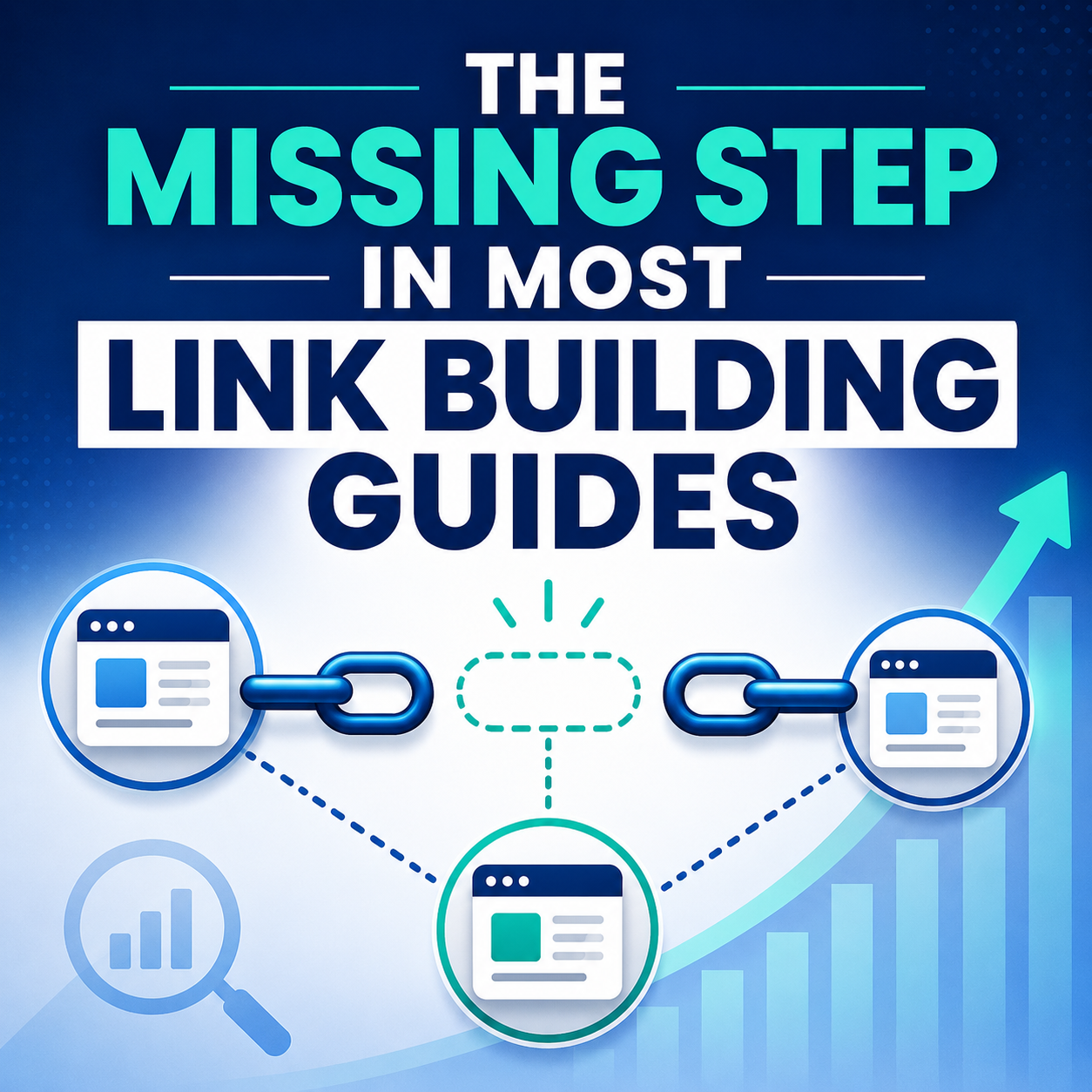
That missing step is link intent planning.
Before you build, buy, earn, or request a single backlink, you need to know exactly why that link should exist, what page it should support, what topical signal it should send, and how it fits into the wider SEO structure of your website.
Without this step, link building becomes random. You might gain backlinks, but they may not strengthen the pages that matter most. You might improve your domain metrics, but your money pages remain stuck. You might publish guest posts, niche edits, or digital PR placements, but they fail to move rankings because they were never connected to a clear ranking goal.
Why Most Link Building Advice Feels Incomplete
A lot of link building content focuses on tactics. You will see advice about guest posting, broken link building, resource page outreach, HARO-style pitching, skyscraper content, competitor backlink analysis, and paid placements. These methods can work, but they are only tools.
A tool is only useful when it is used with the right strategy.
For example, getting a backlink from a decent website may look good in a report. But if the linking page is topically unrelated, the anchor text is vague, and the destination page is not part of your main SEO funnel, the result may be weak. The link exists, but it does not have a strong purpose.
This is why many businesses feel disappointed after “doing link building.” They may have built links, but they did not build a link system.
What Is Link Intent Planning?
Link intent planning means deciding the purpose of every backlink before you pursue it. Instead of asking, “Can I get a link from this site?” you ask better questions:
- What page am I trying to rank?
- What keyword or topic cluster does this page belong to?
- Does the referring site make sense within that niche?
- What anchor text would look natural and useful?
- Should this link point directly to a money page, a supporting article, or a pillar guide?
- How will this backlink strengthen my internal linking structure?
- Does this link help search engines understand my topical authority?
This extra planning step turns link building from a volume game into a relevance game.
The Problem With Building Links Without a Map
Imagine you run a website with service pages, blog posts, category pages, and pillar guides. If you build links randomly to whichever page feels convenient, your authority becomes scattered. Some pages may receive more links than they need, while important pages receive none.
This creates an uneven SEO structure.
A blog post may attract links but fail to pass enough authority to your commercial pages. A homepage may receive too many broad anchors without supporting topical depth. A money page may have strong conversion potential but lack the authority required to rank.
Link intent planning prevents this by mapping each backlink to a specific purpose.
For example, a backlink to a pillar guide can strengthen the entire topic cluster. From there, internal links can pass relevance and authority to supporting pages. This is often safer and more natural than forcing every backlink directly to a sales page.
The Role of Pillar Content in Link Building
Pillar content is one of the best assets for strategic link building because it gives other websites a useful reason to link to you. A strong pillar page usually covers a topic in depth, answers common questions, and connects to related pages across your site.
This makes it easier to earn or place links naturally.
Instead of sending every backlink directly to a product, service, or sales page, you can use pillar content as a central authority hub. Once the pillar page gains authority, it can distribute that value through internal links to other important pages.
For example, if you are learning how to evaluate paid backlink opportunities, this guide to purchasing quality links explains what to look for before investing in links.
That is the kind of internal linking relationship that makes sense: the article introduces a concept, the anchor text is relevant, and the linked page expands on the subject in more detail.
Relevance Beats Raw Metrics
Many link building beginners focus too heavily on metrics such as Domain Authority, Domain Rating, traffic estimates, or spam scores. These numbers can be useful, but they do not tell the full story.
A high-metric backlink from an unrelated website may do less for your rankings than a moderate-metric backlink from a highly relevant page. Search engines are not just looking at whether a website has authority. They are also looking at context.
The best backlinks usually have three types of relevance:
First, the referring website should be relevant to your niche or audience. Second, the linking page should discuss a related topic. Third, the anchor text and surrounding content should make the link feel natural.
When all three are aligned, the backlink sends a clearer signal.
The Anchor Text Mistake Many Sites Make
Anchor text is another area where link intent planning matters. Some websites use exact-match anchors too aggressively. Others use generic anchors like “click here” or “read more” too often. Both approaches can limit results.
Good anchor text should be descriptive, natural, and varied.
It should help users understand what they will find after clicking. It should also help search engines understand the relationship between the linking page and the destination page. However, it should not look forced or over-optimized.
A natural anchor profile usually includes a mix of branded anchors, partial-match anchors, topical anchors, URL anchors, and occasional exact-match anchors when appropriate.
The goal is not to manipulate search engines. The goal is to create a link profile that looks like real editorial referencing.
Link Placement Matters More Than People Think
Not all backlinks on a page carry the same value. A link placed naturally within the main body content is usually more meaningful than a link hidden in a footer, sidebar, author bio, or random resource list.
Context matters.
If a paragraph is discussing a topic and your link supports that discussion, the placement feels useful. If the link appears without explanation, it may look like an afterthought.
This is why link intent planning should include placement expectations. You are not just looking for a domain that will link to you. You are looking for a relevant page, a sensible paragraph, and a reason for the link to exist.
Internal Links Complete the Backlink Strategy
One of the biggest missed opportunities in link building is failing to connect external backlinks with internal links.
When a page receives backlinks, it gains authority. But if that page sits isolated on your website, the benefit may stop there. Internal links help distribute that authority to related pages.
This is why pillar content, supporting articles, and money pages should work together. A backlink to a helpful guide can strengthen that guide, and the guide can then link to related service or product pages where appropriate.
The external backlink brings authority in. The internal link structure guides that authority where it needs to go.
Quality Control Should Come Before Outreach
Another missing step in many link building campaigns is quality control. Before you contact a website, pay for a placement, or submit content, you should inspect the site carefully.
Look at whether the website has real traffic, consistent publishing, relevant categories, indexed pages, and a natural backlink profile. Check whether the content appears written for humans or only for search engines. Review outbound links to see if the site links to every niche imaginable.
A website that accepts any topic, links to questionable industries, or has thin AI-style content may not be worth your time.
The wrong backlink can be neutral at best and harmful at worst.
Link Building Should Support a Bigger SEO Goal
Backlinks are not magic buttons. They work best when your website already has strong technical SEO, useful content, clear keyword targeting, and a logical internal structure.
If your page does not satisfy search intent, backlinks may not save it. If your content is thin, users may bounce. If your site is slow or hard to navigate, ranking improvements may be limited.
Link building should amplify good SEO, not replace it.
Before starting a campaign, make sure the target page deserves to rank. Improve the content. Add missing sections. Strengthen internal links. Match the search intent. Make the page genuinely useful.
Then backlinks can help push it further.
The Missing Step: Build Links With a Reason
The missing step in most link building guides is not a secret tactic. It is the discipline of planning each link before building it.
A good backlink should have a reason to exist. It should support a specific page, topic, keyword cluster, or authority goal. It should make sense to readers. It should fit naturally into the content around it. It should strengthen your website’s wider SEO structure.
When you approach link building this way, you stop chasing random placements and start building authority with purpose.
That is the difference between having backlinks and having a real link building strategy.
Keep reading…
Case Study: How High-Authority Links Revived a Stagnant Website
Footprints to Avoid: What Rookie Link Buyers Always Get Wrong