
If you’ve been in the SEO trenches for more than five minutes, you already know the dirty little secret of this industry: most people who talk about link building have never actually ranked a competitive commercial term in their lives. They repeat the same tired Google documentation verbatim, preach about “earning links naturally” through pure patience, and wonder why their client’s e-commerce store is stuck on page four of the SERPs.
I don’t care about theory. I care about what moves the needle, what survives algorithmic updates, and what actually keeps cash flowing into a business.
I’ve been testing off-page SEO strategies right here at Rankers Paradise since 2016. I’ve seen link wheels evolve, watched PBN networks rise and fall, and navigated every core update Google has rolled out over the last decade. If you want to buy seo backlinks and actually see your rankings climb instead of getting filtered into oblivion, you need a blueprint built on real-world testing—not textbook guesses.
Why Most People Fail When They Buy SEO Backlinks
Let’s be honest about why people look to buy backlinks in the first place. You’ve built a solid site. Your on-page SEO is tight, your content answers the search intent, and your technical setup is clean. But you’ve hit a ceiling. Your competitors have massive authority profiles, and no matter how good your content is, Google isn’t passing you the crown without external votes of confidence.
So, what do most site owners do? They panic-buy. They head over to cheap marketplaces, drop $20 on a package promising “1,000 High-DA Backlinks,” and wait for the magic to happen.
Three weeks later, one of two things happens:
-
Absolutely nothing changes because the links are built on dead, indexed-blocked subdomains with zero organic traffic.
-
Google’s spam detection flags the unnatural footprint, and the site drops off the map entirely.
If you want to win, you have to treat off-page optimization like an engineering project, not a lottery ticket.
The Core Pillars of a Safe Backlink Acquisition Strategy
When you purchase off-page assets, every single link must pass a rigorous set of real-world filters. This is the exact framework I use for my own properties and client campaigns.
1. The Organic Traffic Floor
Never acquire a link from a page or domain that has zero organic visibility in search engine results. If a site doesn’t rank for a single keyword on its own, it has no juice to pass to you. Period. Google ignores zero-traffic ghost towns, and so should you.
2. Contextual Relevance and Editorial Integrity
A link tucked into a spammy comment section or a random blog footer carries zero weight. You need contextual placements embedded within real, human-readable content that matches the topic of your site. That’s why foundational assets like web 2.0 backlinks and curated editorial placements work so well when executed with actual care.
3. Link Velocity and Natural Growth
If a brand-new site with three pages suddenly acquires 500 links overnight, alarms go off. Link velocity has to match your site’s age, content output, and current authority footprint. Scale your acquisition safely over time.
The Exact Anchor Text Distribution Strategy
One of the fastest ways to torch a domain is getting lazy with your anchor text. In the old days, you could slam hundreds of exact-match keywords into a profile and watch your site rocket to the top. Today, Google’s spam classifiers spot that manipulation instantly.
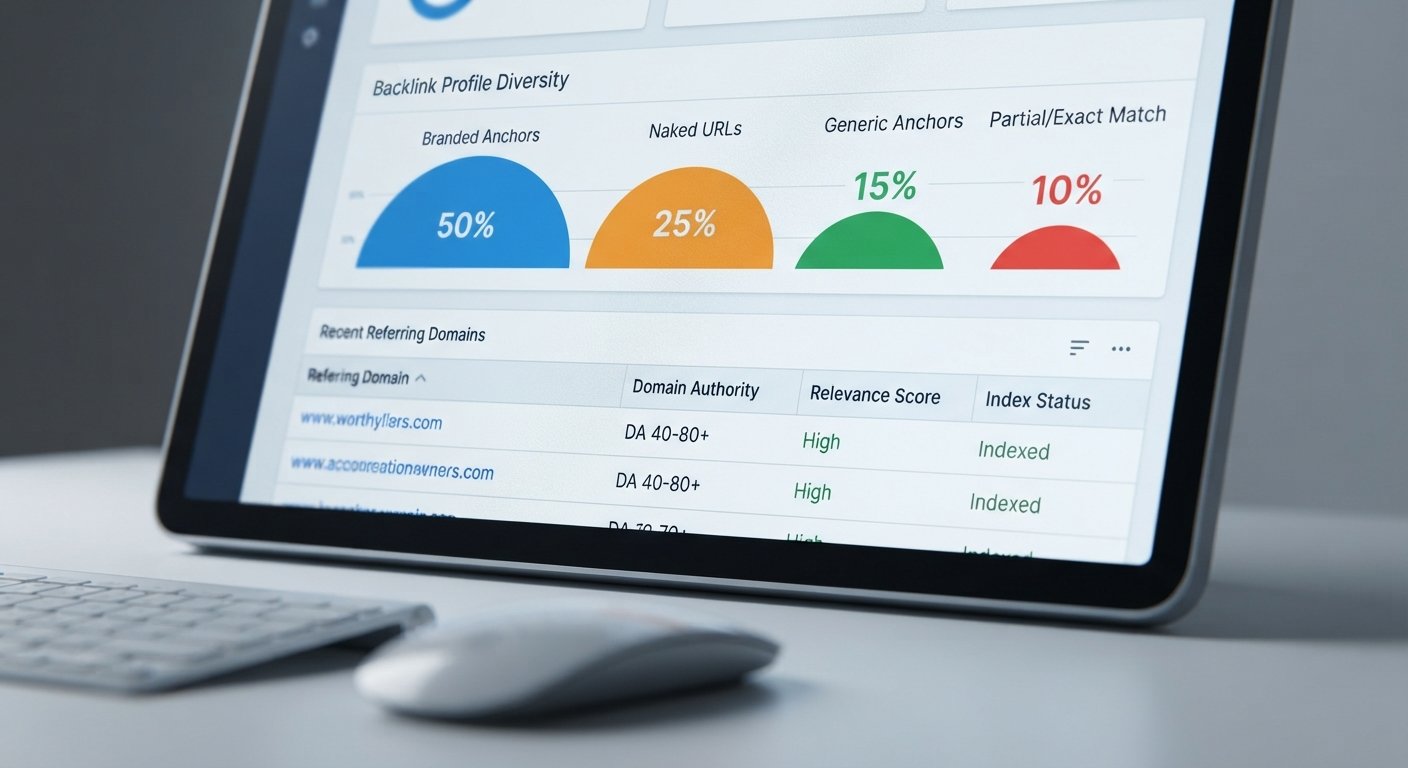
When you build or buy links, your anchor text ratio needs to look entirely organic. Here is the exact breakdown I use across my campaigns:
-
Branded Anchors (40% to 50%): Use your brand name or variations of your domain (e.g., Rankers Paradise, rankersparadise.com). This establishes primary entity recognition.
-
Naked URLs (20% to 25%): Drop the raw URL into the content (e.g., https://rankersparadise.com). It looks natural and acts as a safe vote.
-
Generic Anchors (15% to 20%): Natural phrases like “click here,” “source,” “read this guide,” or “visit website.”
-
Partial Match & LSI Anchors (10% to 15%): Synonyms and related phrases that describe your niche without repeating the exact target keyword verbatim.
-
Exact Match (Under 5%): Use your precise target phrase sparingly, and only on high-authority, trusted foundational links.
The Step-by-Step Indexing Workflow
Getting a link built is only half the battle. If Googlebot never crawls the page where your link lives, that authority is essentially sitting in a dark room where no one can see it.
When you invest in off-page assets, follow this workflow to ensure maximum indexation and value pass-through:
-
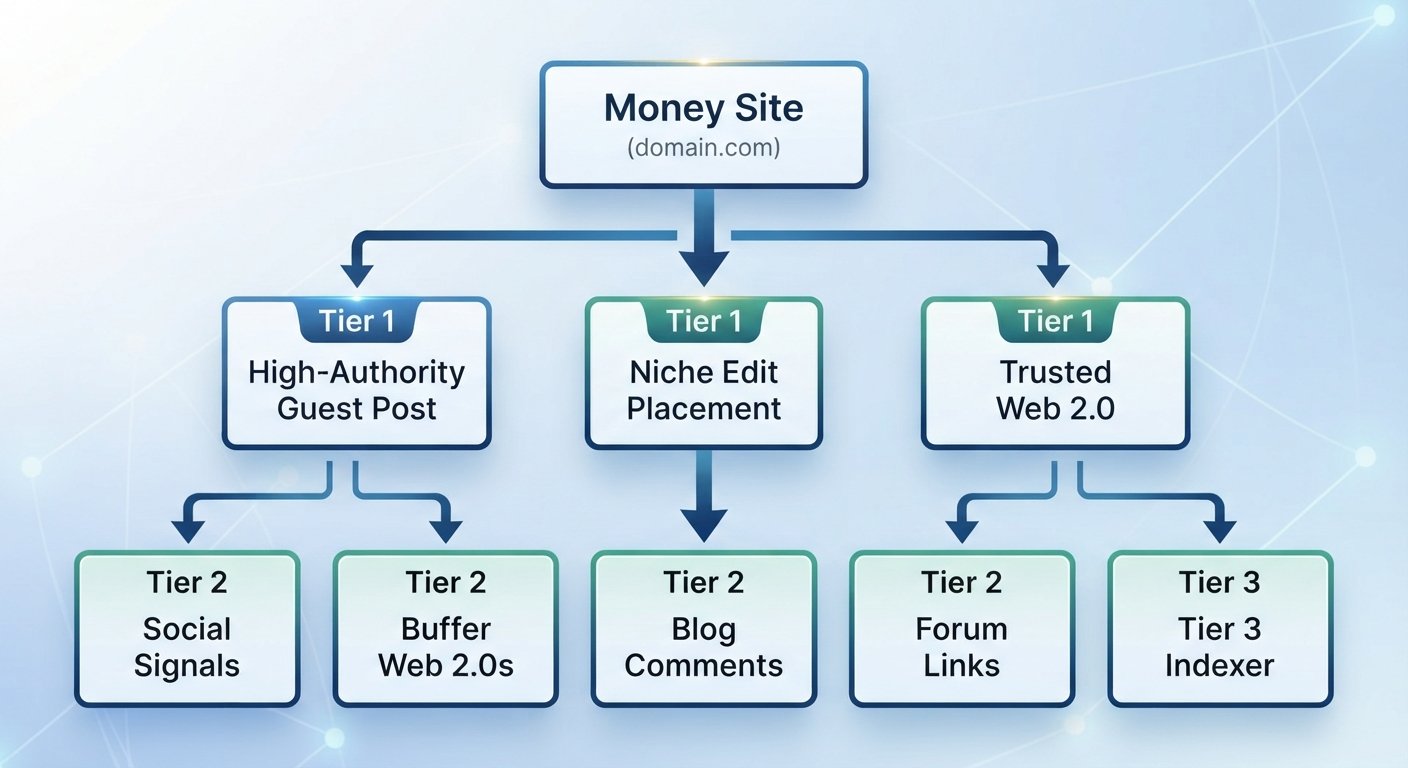
Tiered Buffer Support: Point lower-tier contextual properties or social signals directly at the new placement to stimulate crawler activity.
-
Internal Contextual Integration: Ensure the hosting page has internal links pointing to it from other active, indexed pages within that same site architecture.
-
Natural Verification Checks: Periodically audit your link profiles using Semrush or Ahrefs to confirm that crawled pages stay indexed and don’t slip into index-dropped status. If a link drops out of the index, deploy secondary tier links to revive crawler interest.
Anatomy of a High-Converting Link Profile: What Works Right Now
To dominate competitive organic SERPs, you cannot rely on a single type of link. You need a multi-layered ecosystem that satisfies Google’s entity recognition and trust signals.
Tiered Link Architectures
One of the most reliable methods for driving safe power to commercial pages is building out proper buffer layers. For a deep dive into how to structure these properties without triggering footprint flags, check out my breakdown on how to use web 2.0 sites for backlinks. By funneling authority through contextual buffer nodes, you insulate your money site while passing clean, filtered equity directly to your inner pages.
Rigorous Profiling and Auditing
Before you point a single new link at your domain, you need to know what your current profile looks like. If you have toxic anchor text ratios or spam left over from old campaigns, new links won’t save you—they’ll just compound the penalty. Always run a thorough backlink audit to clean house before launching any aggressive scaling phase.
Surviving High-Competition Verticals
If you want to see how these exact strategies hold up under extreme pressure, look at hyper-competitive sectors where margins are thin and algorithmic scrutiny is brutal. Take a look at this real-world iGaming SEO case study to see how proper off-page architecture and disciplined link deployment can outrank entrenched enterprise competitors in the hardest niches online.

How to Choose the Right Backlink Service Provider
If you decide to outsource your link building—which makes total sense if you’d rather spend your time growing your business than writing guest posts and hunting down email addresses—you need to vet your provider ruthlessly.
Ask them these three questions before handing over a dollar:
-
Do you use PBNs with public footprints, or are these real editorial placements?
-
Can you show me live examples of client sites currently ranking in the top three for commercial terms?
-
Do your links pass contextual relevance, or are they dropped on random multi-niche blog networks?
If they hesitate or try to hide behind vague industry jargon, walk away. You need transparent processes, clear delivery reports, and a track record of real results.
Final Verdict: Stop Guessing and Start Ranking
Ranking #1 for high-intent commercial keywords isn’t about luck. It’s about combining clean on-page foundations with battle-tested off-page authority. If you’re tired of spinning your wheels with strategies that don’t deliver, stop experimenting on your own dime and let experience do the heavy lifting.
Build your authority safely, structure your link profile correctly, and watch your rankings climb to the top of the SERPs where they belong.