
For more than two decades, search engine optimization has revolved around one simple goal:
Get your website ranking higher than your competitors.
Businesses invested in keyword research, content creation, technical SEO, and backlink campaigns because higher rankings meant more visibility, more clicks, and more customers.
But search is entering a new era.
The biggest change is not just that artificial intelligence can answer questions faster. The biggest change is that users are increasingly receiving recommendations, summaries, and solutions directly from AI-powered search experiences without needing to browse through traditional search results.
Instead of clicking through ten blue links, users are asking:
- “What is the best SEO agency?”
- “Which backlink service should I use?”
- “What tools can improve my website rankings?”
- “Who are the experts in this industry?”
AI systems are now deciding which websites, brands, and sources deserve to be included in those answers.
This creates a completely new challenge for website owners.
Ranking on Google is no longer the only battle.
The next battle is becoming a trusted source that artificial intelligence chooses to reference.
This is where AI Citation Optimization becomes important.
The Evolution From Search Rankings To AI Recommendations
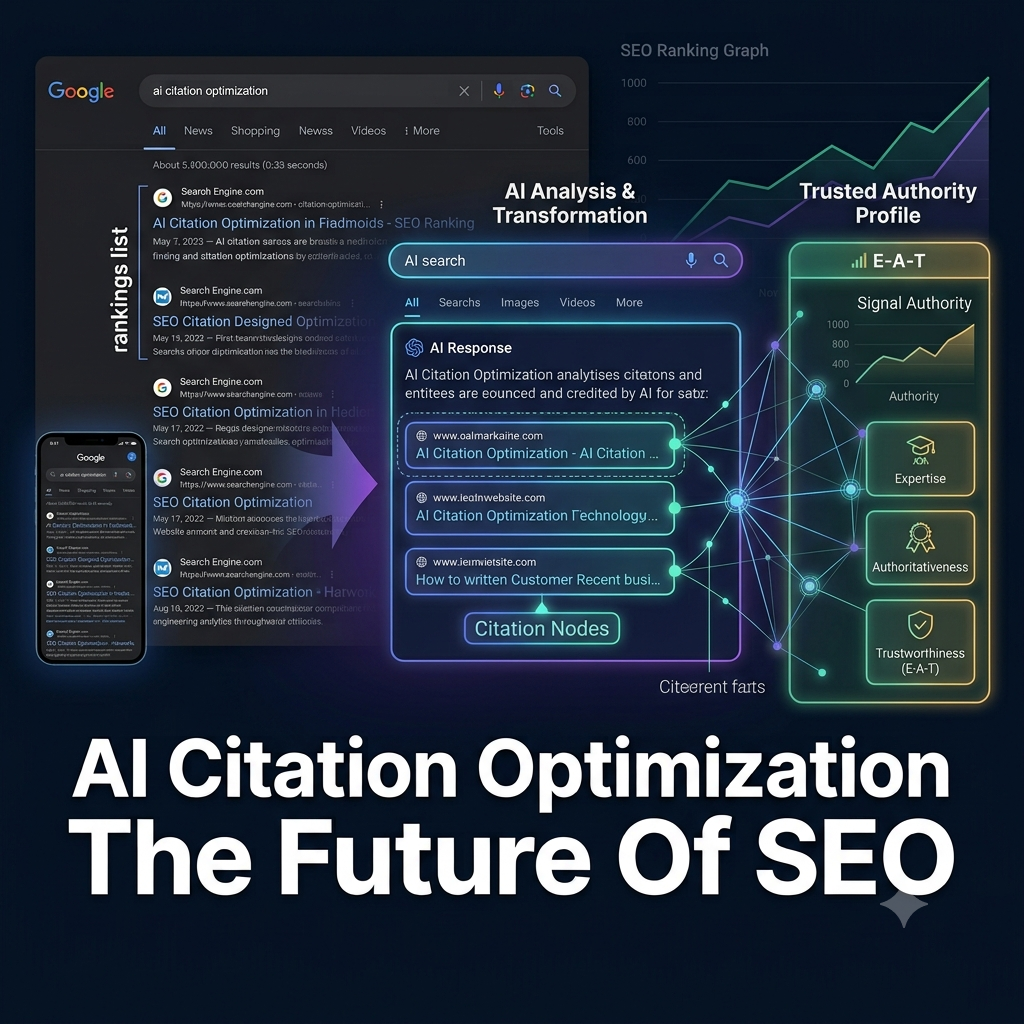
Traditional SEO has always been based around visibility.
A simplified version of the process looked like this:
Search query → Search engine results → Website click → User action
The goal was straightforward:
Get the highest position possible.
However, AI search introduces another layer:
Search query → AI understanding → Source selection → AI-generated answer → User decision
The website that wins is not necessarily always the one ranking first.
The website that wins may be the one AI systems consider:
- trustworthy
- relevant
- authoritative
- well-established
- supported by external information
This is a major shift.
A website can have excellent rankings but still miss out on AI visibility if artificial intelligence does not recognise it as a reliable source.
At the same time, another website may receive fewer traditional rankings but appear frequently in AI-generated answers because it has stronger authority signals.
The future of online visibility will likely require businesses to think beyond rankings.
They will need to ask:
“Does AI understand my brand well enough to recommend it?”
Why AI Search Is Creating A New SEO Competition
For years, websites competed for positions.
Position 1.
Position 2.
Position 3.
The competition was measurable.
SEO professionals could track:
- keyword rankings
- organic traffic
- impressions
- clicks
- conversions
AI search introduces a different type of competition.
Instead of fighting for a position, brands will increasingly compete for inclusion.
Imagine asking an AI assistant:
“What are the best companies that provide SEO services?”
The answer may include several companies.
Those companies have effectively won visibility without necessarily achieving the traditional number one ranking for that search term.
This creates a new question:
How do you become one of the sources AI trusts enough to mention?
The answer is not a single tactic.
It requires a combination of:
- strong content
- proven expertise
- brand recognition
- digital authority
- consistent information across the web
- real-world experience signals
The Difference Between Ranking And Being Cited
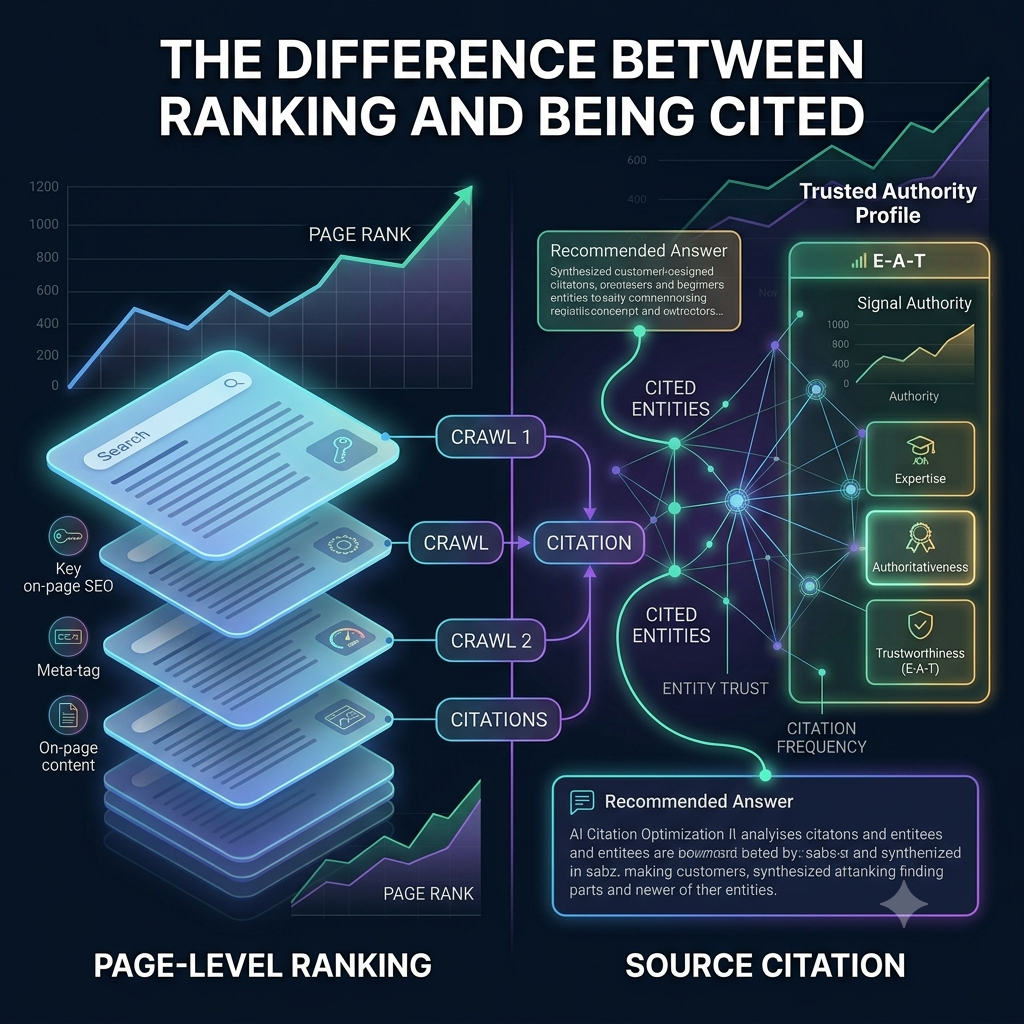
A traditional search result rewards pages.
AI search often rewards sources.
This difference is extremely important.
A search engine may decide:
“This page is relevant for this keyword.”
An AI system may ask:
“Would this source improve my answer?”
Those are two different evaluation processes.
A page ranking highly because it contains the correct keywords does not automatically mean an AI system will select it as a trusted reference.
AI systems need confidence.
They need to understand:
- Who created this content?
- Does this website have expertise?
- Is this information supported elsewhere?
- Does this brand have recognition?
- Does this content provide unique value?
This is why the future of SEO is moving towards a combination of optimisation, authority building, and reputation management.
What Is AI Citation Optimization And Why It Will Become A Major SEO Strategy
The way people discover information online is changing faster than at any point in the history of search.
For years, SEO professionals focused on helping search engines understand website content. The objective was to make pages easier to crawl, index, and rank.
The next stage is different.
Businesses now need to consider whether artificial intelligence systems can understand their brand, trust their information, and confidently include them as a source when generating answers.
This is the foundation behind AI Citation Optimization.
AI Citation Optimization is the process of improving the signals, content, authority, and online presence that influence whether AI-powered search platforms recognise a website as a trusted source worth mentioning.
Instead of only asking:
“How do I rank higher?”
Businesses will increasingly need to ask:
“How do I become one of the sources AI chooses when answering questions?”
Why AI Citations Could Become The New SEO Currency
Search visibility has always been valuable because attention leads to opportunity.
A top Google ranking can generate:
- visitors
- leads
- sales
- brand awareness
However, AI search changes how that visibility is delivered.
A user may never visit a search results page.
They may simply ask:
“Who provides the best backlink services?“
An AI assistant could respond with a summary that includes several recommended companies.
The businesses mentioned inside that answer receive exposure without relying on a traditional click from a search result.
This creates a new type of online visibility:
Being selected as a trusted recommendation.
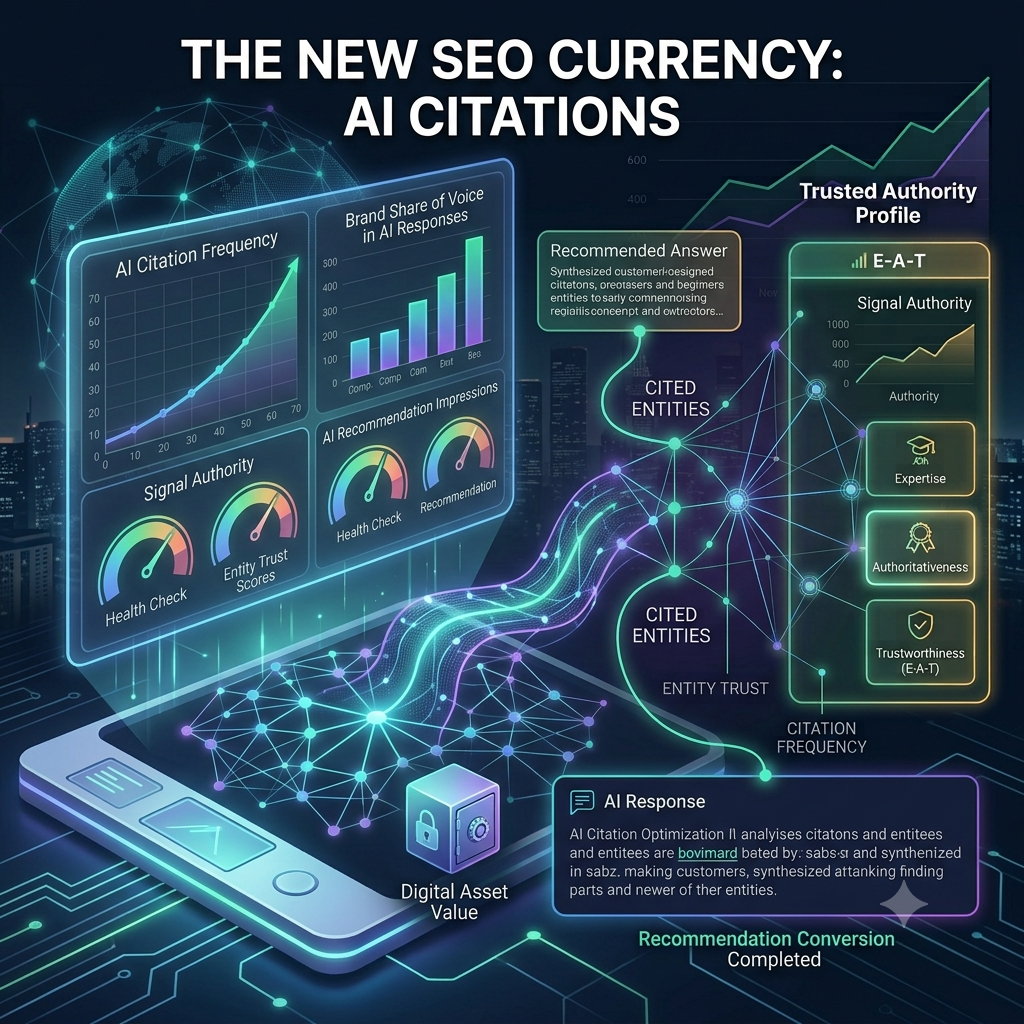
In the future, companies may measure success through metrics such as:
- how often their brand appears in AI responses
- how frequently their website is referenced
- how many relevant questions trigger a mention
- how their visibility compares against competitors
Similar to traditional SEO visibility tracking, AI citation tracking could become an important part of digital marketing strategies.
AI Citations Are Not The Same As Backlinks
One of the biggest misconceptions is assuming AI citations will simply replace backlinks.
That is unlikely.
Backlinks have played a major role in SEO because they act as signals of trust and authority.
A link from another website can indicate:
“This website is valuable enough to reference.”
AI citations are different.
A citation may happen when an AI system identifies a source as useful, trustworthy, or relevant enough to support an answer.
A citation may be influenced by:
- the quality of information provided
- brand recognition
- topical authority
- online mentions
- expert content
- consistency of information
- reputation signals
The future may not be about replacing backlinks.
It may be about understanding that backlinks are becoming part of a much larger authority ecosystem.
A strong digital presence could include:
- quality backlinks
- brand mentions
- expert articles
- industry references
- original research
- case studies
- reviews
- community discussions
Together, these signals help create a stronger online identity.
The Rise Of Entity-Based SEO
One of the biggest changes caused by AI search is the increased importance of entities.
An entity is essentially a recognised person, company, product, organisation, or concept that search engines and AI systems can understand.
For example:
A website is not just a collection of pages.
An AI system wants to understand:
- Who owns this website?
- What industry is this company in?
- What topics does it specialise in?
- Is it mentioned by trusted sources?
- Does it have genuine expertise?
This means businesses need to build more than rankings.
They need to build recognition.
A company with hundreds of pages but weak identity signals may struggle.
A company with:
- consistent branding
- expert content
- real examples
- recognised authors
- industry mentions
may have stronger opportunities to appear in AI-generated answers.
This is why entity optimisation is likely to become one of the most important areas of future SEO.
Why Generic AI Content May Struggle In The Future
The internet is already experiencing an explosion of AI-generated content.
Thousands of websites can now produce:
- articles
- product descriptions
- guides
- reviews
- summaries
The result?
More content does not automatically mean more authority.
AI systems have no shortage of information.
The challenge is identifying which information deserves trust.
This creates an advantage for websites that publish:
Original Experiences
Examples:
- real case studies
- campaign results
- screenshots
- experiments
- unique data
Expert Opinions
Content created from genuine industry knowledge rather than rewritten summaries.
Specific Insights
Information that cannot easily be copied by thousands of competitors.
For example, an article explaining:
“How we achieved a specific SEO result after testing different backlink strategies”
contains a level of experience that a generic AI-generated article cannot replicate.
The Future Of SEO Will Be About Becoming The Source
For many years, SEO was about becoming visible.
The next phase will be about becoming referenced.
The difference is subtle but extremely important.
A visible website appears when someone searches.
A referenced website becomes part of the answer itself.
The businesses that adapt early will focus on building digital authority before AI search becomes fully competitive.
They will create content that does not just target keywords.
They will create content that proves:
- expertise
- experience
- trust
- relevance
The future winners will not simply be websites that rank.
They will be websites that AI systems understand and trust.
The New SEO Metric Nobody Is Tracking Yet: Citation Share And AI Visibility
For years, SEO professionals have relied on familiar metrics to measure success.
The most common ones include:
- keyword rankings
- organic traffic
- impressions
- click-through rates
- backlinks
- domain authority
- conversions
These measurements have helped businesses understand how visible they are in traditional search engines.
However, AI search introduces a new challenge.
A website may receive fewer clicks while still becoming highly visible because artificial intelligence systems are repeatedly mentioning the brand in answers.
This creates the need for a new way of measuring online presence.
One possible future metric is:
Citation Share
Citation Share measures how frequently a brand or website is referenced by AI systems compared with competitors for relevant topics and questions.
Instead of asking:
“Where does my website rank?”
Businesses may start asking:
“How often does AI mention my website when customers ask important questions?”
How Citation Share Could Work
Imagine a company selling SEO services.
A traditional SEO report might show:
Keyword:
“best SEO company”
Position:
#6
Traffic:
500 monthly visitors
However, an AI visibility report could show something different.
Example:
Question tested:
“What are the best SEO agencies for small businesses?”
AI platform results:
Brand A mentioned:
7 out of 10 times
Brand B mentioned:
5 out of 10 times
Brand C mentioned:
2 out of 10 times
Even if Brand A is not ranking number one organically, it has achieved stronger AI visibility.
This is the beginning of a new competitive landscape.
Why AI Visibility May Become More Valuable Than Rankings
Traditional rankings are based on a search result page.
AI visibility happens inside the answer.
This distinction matters because user behaviour is changing.
A person searching today might:
- Open Google
- Compare several websites
- Read multiple pages
- Make a decision
Tomorrow, they may:
- Ask an AI assistant
- Receive a detailed recommendation
- Choose from the suggested options
The brands mentioned inside that answer have a significant advantage.
They have already passed an important trust filter.
The AI system has effectively decided:
“This source helps answer the user’s question.”
The Importance Of Being Mentioned Across Multiple AI Platforms
The future of AI visibility will likely not depend on one platform alone.
Businesses will need to understand how they appear across different AI ecosystems.
These include:
- ChatGPT
- Google AI Overviews
- Gemini
- Perplexity
- Claude
- other emerging AI search platforms
Each system may process information differently.
However, they all share a common challenge:
They need reliable information sources.
A brand that is consistently recognised across multiple platforms may develop stronger digital authority than a competitor that only focuses on traditional rankings.
Why Brand Mentions Could Become More Important
For many years, SEO discussions focused heavily on backlinks.
A backlink was a direct signal:
Another website is recommending you.
AI search introduces a broader concept:
Digital recognition.
This includes:
- being mentioned in industry publications
- appearing in expert discussions
- being referenced in educational content
- having consistent company information
- being associated with specific topics
A brand that is repeatedly connected with a subject becomes easier for AI systems to understand.
For example:
A website about SEO that is consistently associated with:
- search optimisation
- backlinks
- digital marketing
- AI search
- content strategy
creates a stronger topical identity.
Over time, AI systems may have more confidence connecting that brand with SEO-related questions.
The Difference Between Content Visibility And Brand Visibility
Many websites focus entirely on getting individual pages discovered.
However, AI search creates another layer:
Brand-level visibility.
A page might rank well for a keyword.
But does the AI system understand the company behind that page?
This is where many websites may struggle.
A business with thousands of articles but no clear identity can become difficult for AI systems to categorise.
A business with:
- recognised expertise
- consistent messaging
- strong authorship
- supporting content
- external references
creates a clearer digital footprint.
The future of SEO may involve optimising not just pages, but entire digital identities.
How Businesses Can Start Improving AI Visibility Today
Although AI search is still developing, businesses can already prepare.
Some practical steps include:
Create Content That Answers Real Questions
AI systems need useful information.
Content should clearly answer:
- what something is
- why it matters
- how it works
- who it benefits
- what results can be expected
Publish Original Research And Experiences
AI systems have access to millions of similar articles.
Original information creates differentiation.
Examples:
- case studies
- campaign results
- experiments
- industry surveys
- unique analysis
Strengthen Brand Signals
Make sure your business information is consistent:
- company descriptions
- author information
- social profiles
- industry profiles
- website pages
Build Real Authority
Authority is created through repeated evidence.
This can include:
- expert contributions
- relevant mentions
- quality references
- partnerships
- valuable resources
The Future SEO Report May Look Very Different
A future SEO dashboard may not only show:
“Your website ranks position 3 for this keyword.”
It may also show:
“Your brand was cited in 42% of relevant AI responses this month.”
“Your competitor received 65% citation visibility.”
“Your brand is gaining authority within the SEO topic category.”
This is the direction search is moving.
The winners will be businesses that understand visibility is no longer just about where a page appears.
It is about whether your brand becomes part of the answer.
How AI Search Engines Decide Which Websites They Trust And Recommend
One of the biggest questions businesses will ask as AI search becomes more popular is:
“Why does AI mention some websites while ignoring others?”
This question is going to become one of the most important topics in digital marketing.
For years, SEO professionals studied Google’s ranking factors.
They analysed:
- backlinks
- content quality
- technical SEO
- user experience
- page speed
- internal linking
- authority signals
AI search introduces a similar challenge.
Businesses now need to understand what influences whether artificial intelligence systems decide a website is a trustworthy source.
Although AI platforms do not publicly reveal every part of their selection process, several important signals are likely to play a major role in determining which websites receive visibility.
1. Topical Authority: Does Your Website Clearly Understand A Subject?
AI systems need to understand what a website represents.
A website covering hundreds of unrelated topics may be difficult for AI systems to categorise.
However, a website with deep expertise around a specific subject creates clearer signals.
For example:
A website publishing consistently about:
- SEO strategies
- backlink building
- search algorithms
- content optimisation
- AI search
creates a strong association with the digital marketing industry.
This helps search engines and AI systems understand:
“This website specialises in this area.”
Topical authority is not created by publishing one article.
It is built through a collection of connected resources that demonstrate knowledge over time.
This includes:
- detailed guides
- supporting articles
- case studies
- expert opinions
- original research
- practical examples
The future of SEO will likely reward websites that become recognised destinations for specific topics.
2. Entity Recognition: Does AI Understand Who You Are?
One of the biggest changes introduced by AI search is the importance of entities.
An entity is a recognised person, company, product, organisation, or concept.
Traditional SEO often focuses on pages.
AI systems need to understand the bigger picture.
For a business, this means AI needs to understand:
- what the company does
- what industry it operates in
- what topics it is associated with
- why it should be considered trustworthy
A strong entity presence may include:
- consistent company information
- detailed about pages
- author profiles
- expert biographies
- industry mentions
- relevant content
Think of it this way:
A page tells AI information.
An established entity gives AI context.
3. First-Hand Experience Signals
One of the biggest advantages businesses have over mass-produced AI content is real experience.
AI systems have access to enormous amounts of information.
The challenge is not finding content.
The challenge is identifying valuable content.
This creates an opportunity for websites that demonstrate genuine experience.
Examples include:
Case Studies
Showing:
- what was tested
- what strategy was used
- what results happened
Original Data
Including:
- research
- statistics
- experiments
- findings
Real Examples
Explaining:
- successes
- failures
- lessons learned
For example, an article explaining:
“How we improved rankings using a specific SEO campaign”
has a stronger experience signal than a generic article saying:
“Here are 10 ways to improve rankings.”
The internet is becoming saturated with information.
Experience is becoming the differentiator.
4. Content Structure And Information Clarity
AI systems need to understand and extract information efficiently.
A well-written article is not only useful for humans.
It is also easier for machines to interpret.
Strong AI-friendly content often includes:
- clear headings
- direct answers
- definitions
- step-by-step explanations
- structured lists
- comparison tables
- FAQs
For example, instead of writing:
“Many businesses are beginning to understand the importance of improving their online presence through new search technologies.”
A clearer answer would be:
“AI Citation Optimization is the process of improving the signals that help AI search platforms recognise and reference your website.”
The second version gives AI a clear definition that can be understood and potentially used when answering questions.
5. External Recognition And Brand Mentions
AI systems do not only look at what a website says about itself.
They also consider how the wider internet talks about that website.
This is similar to traditional SEO authority building.
External signals may include:
- industry publications
- expert discussions
- relevant websites
- trusted directories
- community conversations
- reviews
A company repeatedly associated with a specific topic becomes easier for AI systems to understand.
For example:
If a brand is consistently mentioned alongside:
“SEO services”
“link building”
“search optimisation”
and
“AI search”
then AI systems have stronger evidence connecting that brand with those topics.
6. Content Freshness And Continuous Improvement
The speed of change in AI search means outdated information can become a problem.
A page written several years ago may still rank well traditionally but provide outdated advice.
AI systems need information that helps users today.
This means businesses should regularly:
- update important articles
- add new examples
- improve outdated sections
- include recent insights
- expand useful resources
A strong website should not be viewed as a collection of finished pages.
It should be viewed as a constantly improving knowledge resource.
7. Trust And Reputation Signals
Trust has always been important in SEO.
AI search makes it even more important because AI systems are effectively making recommendations on behalf of users.
When an AI platform mentions a company, it is influencing a decision.
This means trust signals matter.
Examples:
- transparent business information
- clear contact details
- author expertise
- customer reviews
- industry experience
- genuine examples
The more confidence AI systems have in a source, the more likely that source may be included in future answers.
The Future Of AI Visibility Will Be Built On Proof
The websites that succeed in AI search will not simply be the ones producing the most content.
They will be the ones providing the strongest evidence.
Evidence that shows:
- this company understands the topic
- this website has real experience
- this information is reliable
- this brand is recognised externally
The future of search is moving from:
“Who created the most content?”
to:
“Who has earned enough trust to become the source?”
That shift is what makes AI search different from traditional SEO.
Why Backlinks Are Not Dead — They Are Evolving Into AI Authority Signals
Every few years, a new prediction appears:
“Backlinks are dead.”
The same prediction has appeared many times throughout the history of SEO.
However, quality backlinks have remained one of the most important authority signals because they represent something simple:
Another website considers your content valuable enough to reference.
What is changing is not necessarily the importance of backlinks.
What is changing is how search engines and AI systems may interpret them.
The future of link building is likely not just about improving rankings.
It is about building a stronger digital reputation that helps search engines and AI platforms understand:
- who you are
- what you specialise in
- whether your information can be trusted
The Difference Between Traditional Link Building And AI Authority Building
Traditional SEO often viewed backlinks as ranking signals.
The process looked like this:
Quality website → Link → Search engine trust → Higher rankings
AI search introduces additional considerations:
Quality website → Mention/link/reference → Entity understanding → Greater confidence → Increased AI visibility
The purpose of authority building becomes broader.
A link is no longer just a pathway for search engines to discover a page.
It can also become part of a larger collection of evidence about a brand.
For example:
A company specialising in SEO may strengthen its online identity when it is consistently mentioned across relevant websites discussing:
- search optimisation
- digital marketing
- content strategy
- link building
- AI search
These repeated associations help create a clearer digital footprint.
Why Context Matters More Than Ever
The future of authority building will likely focus heavily on context.
Not all mentions provide the same value.
A random mention on an unrelated website does not provide the same level of relevance as a reference from a website that discusses the same industry.
For example:
A backlink from a technology website discussing AI tools may provide useful context for an AI software company.
A backlink from a marketing publication discussing SEO strategies may provide stronger context for an SEO agency.
The surrounding information matters.
AI systems are becoming increasingly capable of understanding relationships between:
- topics
- brands
- authors
- industries
- websites
This means relevance will continue becoming more important.
The Rise Of Brand Mentions
A major development in AI search is the importance of brand recognition.
A business can build authority through more than traditional links.
Examples include:
- being mentioned in industry articles
- appearing in expert roundups
- contributing insights to publications
- being discussed in relevant communities
- having consistent information across trusted platforms
These signals help create what can be described as a digital reputation.
Think of it like real-world credibility.
A company becomes trusted because people repeatedly recognise it as knowledgeable within a particular field.
Online, AI systems are attempting to build a similar understanding.
Why AI Systems Need External Validation
Imagine two websites publishing similar articles.
Website A:
- publishes hundreds of generic posts
- has little external recognition
- provides no evidence of experience
Website B:
- publishes detailed guides
- shares case studies
- receives relevant industry mentions
- demonstrates real expertise
Both websites may contain similar information.
However, Website B provides stronger evidence that it represents a knowledgeable source.
External validation helps answer an important AI question:
“Why should this source be trusted over another?”
The Future Of Link Building Will Become More Strategic
The next generation of link building will likely move further away from simple quantity.
The focus will become:
Relevance
Does the link come from a related topic?
Authority
Is the website trusted within its industry?
Context
Does the surrounding content support the relationship?
Brand Association
Does the mention strengthen what the business is known for?
Consistency
Does the overall online presence support the same message?
This approach aligns naturally with how AI systems need to understand information.
How Existing SEO Strategies Support AI Citation Visibility
Many traditional SEO activities already contribute towards stronger AI visibility.
For example:
Creating High-Quality Content
Helpful content gives AI systems valuable information to reference.
Building Relevant Backlinks
External references provide additional authority signals.
Publishing Case Studies
Real examples demonstrate experience.
Improving Internal Linking
Connected content helps search engines understand topics.
Developing Brand Recognition
Consistent online information strengthens entity understanding.
The future is not about abandoning SEO.
It is about expanding SEO.
Why Businesses Should Not Ignore Traditional SEO
Some businesses may assume AI search means traditional SEO no longer matters.
This is a mistake.
AI systems still need information.
That information often comes from websites that already have:
- strong technical foundations
- quality content
- authority
- relevance
- trust
A website with poor SEO fundamentals will struggle to become a trusted AI source.
The foundation remains the same.
The destination is changing.
The Opportunity For SEO Professionals
The SEO industry has always adapted.
When keyword stuffing stopped working, professionals focused on quality content.
When mobile search grew, websites adapted.
When user experience became more important, optimisation expanded.
AI search is another evolution.
The professionals who succeed will understand that their role is becoming broader.
They are no longer only helping websites rank.
They are helping brands become recognised authorities.
That is the future of search visibility.
Backlinks And AI Search: The New Perspective
The question is no longer:
“Are backlinks still important?”
The better question is:
“How do backlinks contribute to the overall authority signals that help search engines and AI systems understand a brand?”
The answer is becoming clearer.
Quality backlinks, brand mentions, expert content, and digital reputation all work together.
The future belongs to websites that build genuine authority — not just websites that chase rankings.
How To Optimise Your Website For AI Citations: A Step-By-Step Guide
The future of search will not only belong to websites that rank well.
It will belong to websites that are easy for artificial intelligence systems to understand, trust, and reference.
While AI platforms are constantly evolving, businesses can already take practical steps to improve their chances of being recognised as a valuable source.
The goal is not to manipulate AI systems.
The goal is to build a website that genuinely deserves to be mentioned.
Below are the key steps businesses can take to prepare for the next generation of search.
Step 1: Build A Clear Digital Identity
Before AI systems can recommend a business, they need to understand what that business represents.
Many websites make the mistake of creating content without establishing a clear identity.
A website should clearly communicate:
- who the company is
- what services it provides
- what industry it operates in
- what topics it specialises in
- why users should trust it
Important pages include:
About Page
Your About page should explain:
- company background
- experience
- expertise
- unique approach
Avoid generic statements.
Instead of:
“We provide quality SEO services.”
Use:
“We specialise in helping businesses improve organic search visibility through technical SEO, content optimisation, and authority-building strategies.”
Specific information creates stronger understanding.
Author Information
Content becomes more trustworthy when readers and AI systems can identify who created it.
Consider adding:
- author names
- biographies
- industry experience
- relevant credentials
- links to professional profiles
A website is stronger when content has a clear expert behind it.
Consistent Brand Information
Your company details should be consistent across the internet.
Check:
- business descriptions
- social profiles
- directories
- industry profiles
- external mentions
If different websites describe your business in completely different ways, it becomes harder for systems to understand your identity.
Step 2: Create Content That Answers Questions Directly
AI systems are designed to provide answers.
This means content should be structured around solving problems.
Instead of creating content only around keywords, think about the questions your customers ask.
Examples:
Traditional keyword approach:
“Backlink services”
Question-based approach:
“What makes a backlink valuable in modern SEO?”
Traditional keyword approach:
“GEO SEO”
Question-based approach:
“How does AI search decide which websites to recommend?”
The second approach creates content that is naturally aligned with AI search behaviour.
Step 3: Add Clear Definitions And Explanations
AI systems often need to understand concepts quickly.
Providing clear definitions increases the chance that your content can become a useful reference.
For example:
Weak:
“AI search is changing everything.”
Strong:
“AI search refers to search experiences where artificial intelligence systems generate answers by analysing information from multiple sources.”
Clear explanations help both humans and machines.
Useful sections include:
- What is…
- How does…
- Why does…
- What are the benefits…
- What are the differences…
Step 4: Publish Original Research And Real Experiences
This is one of the biggest opportunities for businesses.
The internet is becoming filled with similar AI-generated content.
The websites that stand out will be the ones providing information that cannot simply be copied.
Examples:
Case Studies
Show:
- starting point
- strategy used
- timeline
- results
Experiments
Explain:
- what was tested
- what happened
- what was learned
Industry Data
Publish:
- surveys
- analysis
- research
- findings
Original information gives AI systems something unique to reference.
Step 5: Strengthen Your Topic Clusters
AI systems need context.
A single article rarely proves expertise.
A collection of connected resources creates a stronger knowledge structure.
For example, a website about SEO could create a topic cluster:
Main article:
AI Search Optimization Guide
Supporting articles:
- AI Citation Optimization
- GEO SEO Explained
- Google AI Overviews Guide
- Entity SEO Strategy
- Future Of Search Marketing
- AI Content Optimisation
Each article supports the others.
This helps create a deeper understanding of the website’s expertise.
Step 6: Improve Content Structure
AI systems need to extract information efficiently.
A well-structured article has advantages.
Consider using:
Clear Headings
Use headings that explain exactly what each section covers.
Short Direct Answers
Provide concise explanations before expanding.
Lists And Tables
Organised information is easier to process.
Frequently Asked Questions
FAQs naturally match conversational searches.
Example:
Question:
“How do I get my website mentioned by AI?”
Answer:
“To improve AI visibility, focus on building topical authority, publishing original content, strengthening brand signals, and creating trusted external references.”
Step 7: Build Relevant Authority Signals
AI visibility depends on trust.
Trust is created over time through multiple signals.
Examples:
- industry backlinks
- expert mentions
- guest contributions
- partnerships
- reviews
- discussions
- citations from trusted sources
The key word is relevance.
A website should build authority within the topics it wants to be associated with.
A fitness company does not need hundreds of random mentions.
It needs recognition within fitness-related communities.
The same principle applies to every industry.
Step 8: Monitor AI Search Visibility
Traditional SEO professionals track rankings.
The future will require tracking AI visibility as well.
Businesses should regularly test:
- Does ChatGPT mention my brand?
- Does Google AI Overviews recognise my content?
- Are competitors appearing more often?
- Which questions trigger my visibility?
- Which topics need more authority?
AI visibility monitoring will likely become a normal part of future SEO reporting.
Step 9: Keep Updating Important Content
AI search will increase the importance of freshness.
Important pages should be regularly reviewed.
Update:
- statistics
- examples
- screenshots
- recommendations
- outdated information
A constantly improving resource signals ongoing expertise.
A website should not simply publish and forget.
The strongest websites will continue developing their knowledge base.
The Goal Is Not To Trick AI — It Is To Become The Best Source
The biggest misconception about AI optimisation is that businesses need secret tricks to influence AI systems.
The reality is simpler.
The websites most likely to benefit are those that consistently demonstrate:
- expertise
- experience
- authority
- trust
- usefulness
The same principles that create a successful website today will continue to matter.
The difference is that visibility will increasingly depend on whether AI systems recognise those qualities.
The AI Search Advantage Will Belong To Early Adopters
Many businesses are waiting until AI search becomes mainstream before adapting.
That creates an opportunity.
Companies that begin building authority now have time to establish:
- stronger brand recognition
- deeper content libraries
- more industry references
- clearer expertise signals
By the time AI search becomes highly competitive, early adopters may already have a significant advantage.
The future of search will not only reward websites that are optimised.
It will reward websites that are understood.
AI Citation Optimization vs Traditional SEO: What Is The Difference?
Search engine optimisation has always evolved alongside technology.
The SEO strategies that worked 10 years ago are different from the strategies that work today.
Keyword stuffing disappeared.
Low-quality link networks became less effective.
Search engines became better at understanding meaning, context, and user intent.
Now another major shift is happening.
Traditional SEO focuses on helping websites appear in search results.
AI Citation Optimization focuses on helping websites become trusted sources inside AI-generated answers.
Both strategies are connected, but they have different objectives.
Understanding the difference will become increasingly important for businesses that want to remain visible as search continues to change.
Traditional SEO: Optimising For Search Rankings
Traditional SEO is designed around improving organic visibility.
The main goal:
Appear higher in search engine results pages.
A typical SEO strategy focuses on:
- keyword research
- content optimisation
- technical improvements
- internal linking
- backlinks
- page experience
- website structure
Success is often measured through:
- ranking positions
- organic traffic
- impressions
- clicks
- conversions
Example:
A user searches:
“best backlink services”
A traditional SEO strategy aims to make your website appear as high as possible in the search results.
The higher the ranking, the greater the opportunity for clicks.
AI Citation Optimization: Optimising For AI Recommendations
AI search introduces a different goal.
The objective becomes:
Become one of the trusted sources AI systems choose to reference.
Instead of only competing for positions, businesses compete for inclusion.
A user asks:
“What are the best backlink services?”
An AI assistant generates an answer.
The brands mentioned within that answer receive visibility.
The user may never browse through traditional search results.
This creates a new type of search exposure.
The website is not just ranking.
It is being recommended.
The Key Differences Between SEO And AI Citation Optimization
1. Rankings vs References
Traditional SEO:
“Where does my page appear?”
AI Citation Optimization:
“Does AI consider my website valuable enough to mention?”
A ranking is a position.
A citation is a recommendation.
2. Keywords vs Understanding
Traditional SEO historically focused heavily on keywords.
Modern SEO has already moved beyond simple keyword matching, but keywords still play an important role.
AI systems require a deeper understanding.
They need to recognise:
- topics
- entities
- relationships
- expertise
- context
A website should not only mention a subject.
It should demonstrate knowledge about that subject.
3. Pages vs Entire Brands
Traditional SEO often focuses on individual pages.
AI search places more emphasis on understanding the complete entity.
AI systems may consider:
- website content
- author information
- external mentions
- brand reputation
- industry associations
A strong page helps.
A strong digital identity helps even more.
4. Traffic Metrics vs Visibility Metrics
Traditional SEO reporting focuses on:
- visitors
- clicks
- rankings
AI visibility introduces new possible measurements:
- citation frequency
- AI mentions
- recommendation appearances
- brand visibility inside AI answers
A company could receive valuable exposure even when users do not directly click a website.
Why Businesses Need Both SEO And AI Optimisation
A common mistake is assuming AI search replaces traditional SEO.
It does not.
Strong SEO remains the foundation.
AI systems still need websites that are:
- crawlable
- technically sound
- informative
- trustworthy
- authoritative
A website with poor SEO fundamentals will struggle to gain visibility anywhere.
The future is not:
SEO or AI optimisation.
The future is:
SEO + AI visibility optimisation.
The Relationship Between SEO, GEO And AI Citation Optimization
These terms are often used together, but they represent slightly different concepts.
SEO
Search Engine Optimization.
Focus:
Improving visibility in traditional search engines.
GEO
Generative Engine Optimization.
Focus:
Optimising content for generative AI search experiences.
AI Citation Optimization
Focus:
Improving the likelihood that AI systems recognise and reference your website as a trusted source.
These areas overlap.
A strong SEO foundation supports GEO.
A strong GEO strategy supports AI visibility.
A strong authority strategy supports citations.
The future of digital marketing will likely combine all three.
Why Early Adoption Matters
Most businesses are still focused on traditional rankings.
That means there is currently an opportunity for companies that begin preparing early.
Building AI visibility takes time.
Authority cannot be created overnight.
A website needs:
- valuable content
- recognised expertise
- consistent information
- trusted references
- industry relevance
Companies that start now may establish stronger positions before AI search becomes highly competitive.
The Biggest Mistake Businesses Will Make
The biggest mistake will be waiting until AI search becomes the standard.
Many businesses made the same mistake with:
- mobile optimisation
- local SEO
- voice search
- content marketing
Early adopters gained advantages because they built foundations before competition increased.
AI search will likely follow a similar pattern.
The businesses that prepare today will have more opportunities tomorrow.
The Future SEO Professional Will Think Differently
The SEO professional of the future will not only ask:
“How do we improve rankings?”
They will ask:
- How does AI understand this brand?
- What topics is this company associated with?
- Is this website considered a trusted source?
- Are competitors receiving more AI visibility?
- What information does AI need before recommending us?
The role of SEO is expanding.
It is moving from search optimisation to digital authority optimisation.
The Future Of Search: Why AI Citations Could Become The Biggest SEO Opportunity Of The Next Decade
Every major change in search creates new opportunities.
When Google became dominant, businesses learned how to optimise websites for rankings.
When mobile search grew, businesses adapted their websites for new user behaviour.
When voice assistants appeared, marketers started focusing on conversational searches.
Now artificial intelligence is creating the next major transformation.
The future of search is moving from simply finding websites to receiving direct answers.
This changes the question businesses need to answer.
The old question was:
“How do we rank higher?”
The new question is:
“How do we become one of the sources AI trusts enough to recommend?”
This shift creates a new opportunity for businesses that prepare early.
Search Is Moving From Discovery To Decision Making
Traditional search engines were designed to help users discover information.
A person searched.
Results appeared.
The user made a decision.
AI-powered search experiences are different.
They are becoming decision-support systems.
A user can ask:
“Which SEO tools should I use?”
“Which companies offer reliable digital marketing services?”
“What are the best strategies for improving website visibility?”
Instead of presenting only links, AI systems can provide a complete response.
The sources included in that response receive something extremely valuable:
Trust.
The AI system has already filtered information and selected what it believes is useful.
Being included becomes a competitive advantage.
The New Battle Will Be For AI Visibility
For years, businesses competed for:
- first-page rankings
- featured snippets
- local pack positions
- search traffic
The next competition will involve:
- AI recommendations
- AI references
- brand mentions
- source selection
The businesses that win will not simply create content.
They will build authority.
They will become recognised within their industries.
They will provide information that AI systems can confidently use.
Why Most Websites Will Struggle With AI Search
The internet is already full of content.
The problem is no longer a lack of information.
The problem is information quality.
Millions of websites publish:
- generic articles
- rewritten content
- basic explanations
- similar advice
AI systems do not need more of the same.
They need reliable sources.
Websites that stand out will focus on:
Experience
Showing real knowledge gained from practical work.
Expertise
Demonstrating understanding of a subject.
Originality
Publishing information competitors cannot easily replicate.
Authority
Building recognition across the wider web.
The Advantage Of Publishing Before Everyone Else
New areas of SEO often follow the same pattern.
At first:
Only a small number of marketers pay attention.
Then:
The industry begins discussing it.
Finally:
Everyone tries to compete.
The businesses that benefit most are usually the ones that started building authority early.
AI search is currently at this stage.
Many businesses understand that AI is changing search.
Far fewer understand the importance of becoming a trusted source inside AI answers.
This creates an opportunity.
How Businesses Should Prepare For The AI Search Era
Companies preparing for the future should focus on several key areas.
Continue Building Strong SEO Foundations
Technical SEO, content quality, and authority remain essential.
AI systems still depend on reliable websites.
Create Content Worth Referencing
The goal should not only be producing content.
The goal should be producing resources.
The strongest content includes:
- original research
- practical examples
- expert opinions
- case studies
- useful data
Build A Recognisable Brand
AI systems need to understand entities.
Businesses should create consistent signals across the web.
This includes:
- company information
- expert profiles
- industry mentions
- relevant discussions
- trusted references
Become The Expert, Not Just Another Website
The future belongs to businesses that demonstrate knowledge.
Anyone can publish an article.
Fewer businesses can show:
“We tested this.”
“We achieved this result.”
“We analysed this data.”
“We have real experience in this area.”
That difference will matter.
AI Citation Optimization Is The Next Evolution Of SEO
The future of SEO is not about abandoning everything that worked before.
It is about expanding the definition of visibility.
Search optimisation started with helping websites become discoverable.
It evolved into helping websites become useful.
The next stage is helping websites become trusted.
AI Citation Optimization represents this next step.
It focuses on the signals that help artificial intelligence systems understand which brands, websites, and sources deserve recognition.
Final Thoughts
The search landscape is changing.
Rankings will continue to matter.
Content will continue to matter.
Links will continue to matter.
But another factor is emerging:
Will AI choose your website when someone asks for an answer?
Businesses that start building authority now will have a significant advantage as AI search continues developing.
The future of online visibility will not only belong to websites that appear in search results.
It will belong to websites that become part of the answer.
Frequently Asked Questions About AI Citation Optimization
What is AI Citation Optimization?
AI Citation Optimization is the process of improving a website’s authority, content quality, entity recognition, and online presence to increase the chances of being referenced by AI-powered search platforms.
Is AI Citation Optimization replacing SEO?
No. AI Citation Optimization works alongside traditional SEO. A strong SEO foundation remains important because AI systems still rely on trustworthy, accessible, and authoritative websites.
How can I get my website mentioned by AI?
Businesses can improve AI visibility by creating expert content, publishing original research, strengthening brand signals, building relevant authority, and making website information easier for AI systems to understand.
Will backlinks still matter for AI search?
Backlinks are likely to remain valuable because they provide external validation and authority signals. However, future SEO strategies will focus more on the overall reputation and recognition of a brand.
What is the difference between GEO and AI Citation Optimization?
GEO focuses on optimising content for generative AI search experiences. AI Citation Optimization focuses specifically on improving the signals that influence whether AI systems reference and recommend a website.