
AI Is Changing Search… But Good SEO Still Wins
For the last couple of years there’s been one question I keep hearing from clients.
“How do I get my website into AI search results?”
It’s a fair question.
Whether someone is using Google AI Mode, AI Overviews, ChatGPT, Gemini or Perplexity, the way people search online is changing. Instead of clicking through ten blue links, they’re increasingly getting instant answers generated by AI.
That has led to a flood of videos, blog posts and so-called “experts” claiming they’ve cracked the code.
According to some people you need special AI tags.
Others tell you to create an LLMS.txt file.
Some even claim you should rewrite your whole website specifically for AI.
Personally, I think a lot of that is noise.
I’ve spent years working in SEO, helping websites climb the rankings across some incredibly competitive industries. One thing I’ve learned is that every time Google changes something, people start looking for shortcuts instead of focusing on what actually works.
This time isn’t any different.
The websites that consistently perform well in AI search are usually the same ones that already have solid technical SEO, publish genuinely useful content and continue improving their websites over time.
There isn’t a magic switch you can flick.
There isn’t a hidden setting inside WordPress.
There isn’t an “AI SEO plugin” that suddenly gets your pages quoted.
What there is are a number of best practices that make your content easier for search engines—and AI systems—to understand, trust and reference.
That’s exactly what this checklist covers.
What Is AI Search Visibility?
Put simply, AI search visibility is your website’s ability to appear inside AI-generated answers rather than only appearing as a traditional organic search result.
Instead of simply ranking on page one, your content may be:
- Referenced in an AI Overview.
- Cited as a source.
- Used to answer a user’s question.
- Recommended alongside other trusted websites.
- Mentioned when someone asks an AI assistant for advice.
For website owners, that’s becoming just as valuable as ranking highly in Google Search.
The good news?
Many of the same SEO fundamentals you’ve been using for years still matter today.
If your website already provides helpful information, answers questions clearly and has a strong technical foundation, you’re already heading in the right direction.
The AI Search Visibility Checklist
Rather than chasing every new trend that pops up on social media, work through these practical improvements.
Some take five minutes.
Others take a little longer.
Together they can make a real difference.
✅ 1. Publish Content That Actually Helps People
Let’s start with the obvious one.
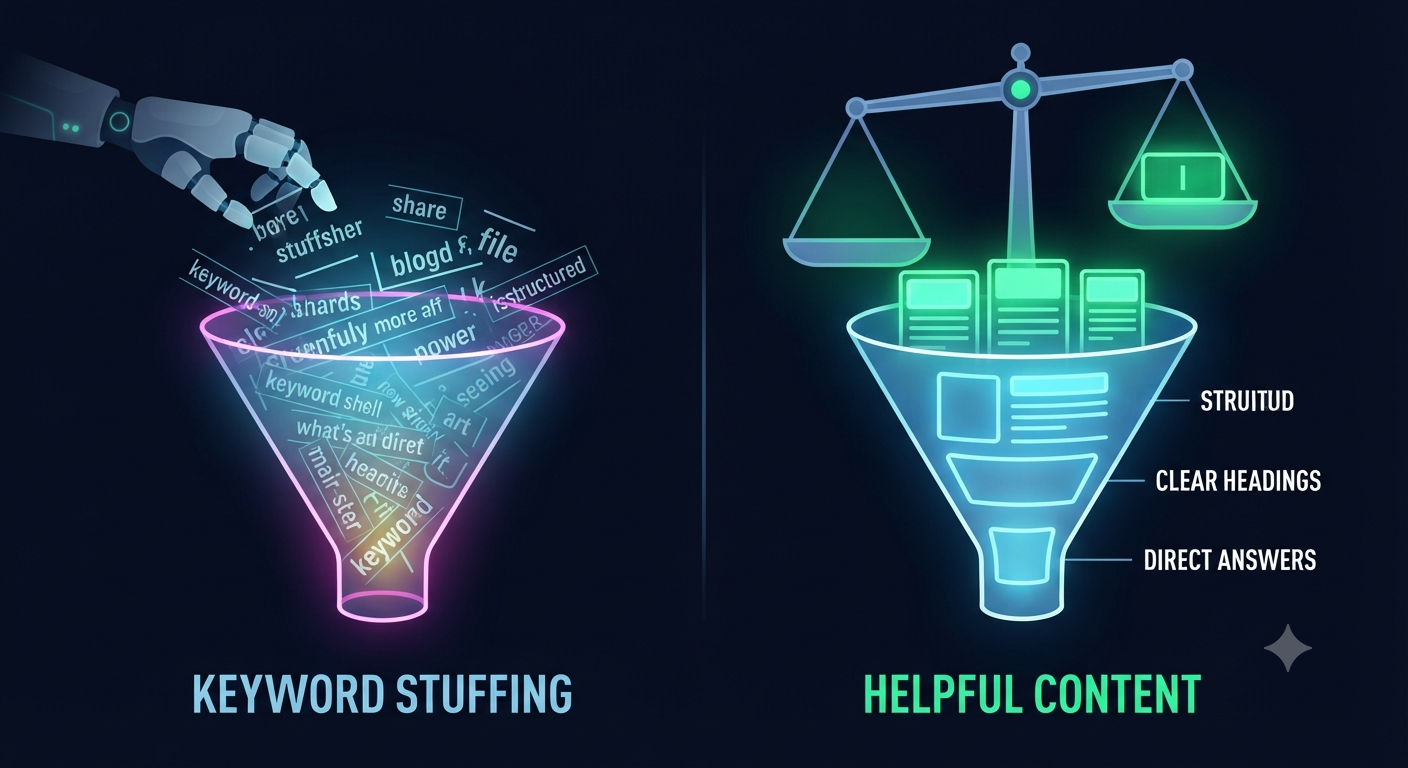
AI systems aren’t looking for pages stuffed with keywords.
They’re looking for useful information.
Before publishing any article, ask yourself one simple question.
Would someone genuinely find this helpful?
If the answer is yes, you’re already ahead of a lot of websites.
If the article only exists to rank for a keyword, it probably needs more work.
✅ 2. Answer Questions Clearly
One thing AI loves is direct answers.
If someone searches:
Don’t spend 500 words dancing around the subject.
Answer the question straight away.
Then explain why.
A simple answer followed by detailed supporting information is much easier for AI systems to understand than pages that ramble.
✅ 3. Build Topical Authority
Publishing one great article isn’t enough anymore.
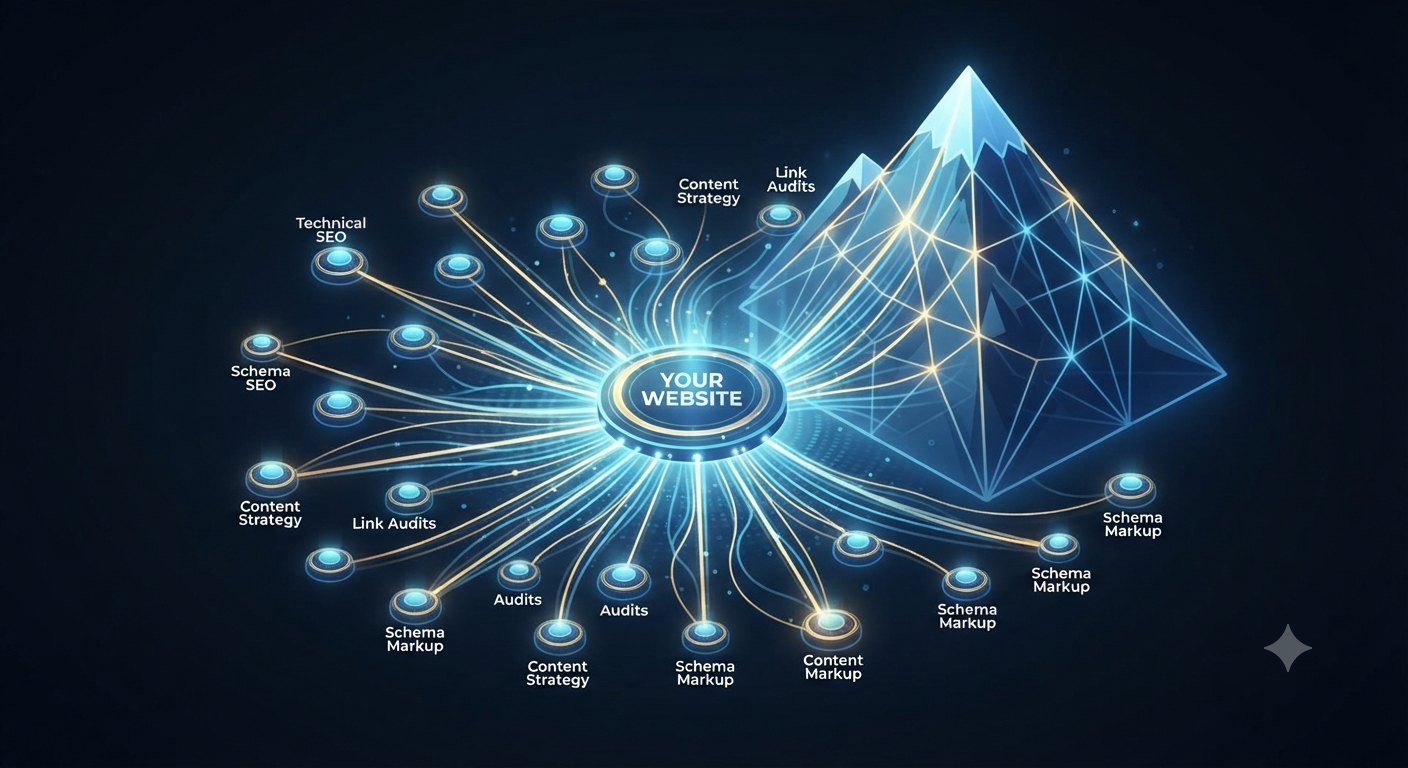
If you want your website to become a trusted source, you need to cover a topic properly.
For example, if your website is about SEO, don’t just write one article about backlinks.
Cover everything.
Write about:
- Technical SEO
- Internal linking
- Guest posting
- Link audits
- Local SEO
- Google Search Console
- Crawling
- Indexing
- Schema markup
- Digital PR
The more complete your content ecosystem becomes, the more trust your website builds over time.
✅ 4. Keep Older Articles Updated
Fresh content doesn’t always mean publishing something new.
Sometimes updating an article from last year is far more valuable.
I regularly revisit older posts and improve them by:
- Adding new examples.
- Updating screenshots.
- Removing outdated advice.
- Expanding sections.
- Improving readability.
Google likes seeing websites that continue maintaining their content instead of abandoning it.
✅ 5. Write Like You’re Talking to a Real Person
One thing I’ve noticed lately is just how many AI-written articles sound exactly the same.
Every paragraph is the same length.
Every sentence follows the same pattern.
Every article repeats itself.
Readers notice.
Search engines probably do too.
Write naturally.
Don’t worry about sounding “perfect.”
If something needs explaining, explain it.
If something doesn’t work anymore, say so.
Your personality is one thing AI can’t copy convincingly.
✅ 6. Use Clear Headings
Think of your headings as signposts.
They tell both readers and search engines exactly what each section is about.
Instead of vague headings like:
“More Information”
Use something useful like:
“How AI Chooses Which Websites to Reference”
It removes guesswork.
It also makes articles much easier to skim.
✅ 7. Improve Your Internal Linking
Internal links are still one of the most overlooked parts of SEO.
Every relevant article should naturally point readers towards related content.
Not because you’re trying to manipulate rankings.
Because it genuinely helps people discover more information.
It also helps search engines understand how your website is organised.
A well-connected website is much easier to crawl than dozens of isolated pages.
✅ 8. Make Your Website Easy to Crawl
It sounds basic, but plenty of websites still make life difficult for search engines.
Check things like:
- Broken links
- Redirect chains
- Slow-loading pages
- Orphan pages
- Blocked resources
- Duplicate URLs
If Google struggles to crawl your website efficiently, AI systems aren’t going to have an easier time understanding it.
Good technical SEO is still the foundation everything else is built on.
✅ 9. Don’t Chase Every AI SEO Hack
Every week there’s a new “secret trick.”
Someone claims they’ve discovered a hidden ranking factor.
Someone else insists a brand-new tool guarantees AI citations.
Then a week later everyone moves on to the next trend.
Most of these shortcuts disappear as quickly as they arrive.
Instead of constantly changing direction, spend that time improving your website.
The boring stuff usually wins.
Better content.
Better navigation.
Better user experience.
Better information.
It’s not exciting.
But it works.
✅ 10. Add Original Insights
One thing AI struggles to replace is genuine experience.
If you’ve tested something…
Share it.
If you’ve made mistakes…
Write about them.
If you’ve ranked a website using a particular strategy…
Explain what happened.
Those kinds of insights are difficult for anyone else to replicate.
They’re also exactly the sort of information readers appreciate because it comes from real experience rather than recycled advice.
✅ 11. Use Structured Data Where It Makes Sense
Schema markup isn’t a magic ranking button.
Adding it won’t suddenly make your website appear in every AI answer overnight.
What it does do is help search engines understand the different parts of your pages.
Think of it as adding labels to your content.
If you have:
- FAQs
- Reviews
- Products
- Articles
- Breadcrumbs
- Organisation details
…then use the appropriate structured data.
Just don’t fall into the trap of adding every schema type you can find because someone on YouTube told you to.
Keep it relevant.
Keep it accurate.
✅ 12. Write Better Introductions
Most visitors decide within a few seconds whether they’re staying on a page.
Your introduction needs to tell them they’re in the right place.
Instead of spending three paragraphs explaining why SEO is important, get straight to the point.
Tell readers what they’ll learn.
Show them why it’s worth reading.
Then get into the detail.
Nobody enjoys scrolling through hundreds of words before finding the answer they came for.
✅ 13. Include Original Images
Stock photos rarely add any value.
If you’re explaining something technical, create your own screenshots, diagrams or examples. Like you see what I have done in this post, it’s why it is ranked #1 on Google for many keywords.
For example:
- Google Search Console screenshots
- Ranking graphs
- Before and after comparisons
- Flowcharts
- Process diagrams
- Real analytics (where appropriate)
Original images help readers understand what you’re talking about.
They’re also far more useful than another generic handshake photo.
✅ 14. Back Up Claims With Evidence
The internet is full of opinions.
What makes an article stand out is showing why something works.
Whenever possible, include:
- Test results
- Industry research
- Official documentation
- Case studies
- Real examples
If you’ve actually tested a strategy yourself, that’s even better.
Readers trust evidence far more than bold claims.
✅ 15. Create Content That Deserves To Be Referenced
Here’s something worth thinking about.
AI doesn’t have to quote your page.
It chooses to.
Ask yourself:
“Would another website naturally reference this article?”
If the answer is no, think about what could make it more valuable.
Maybe that’s:
- A useful checklist.
- A downloadable template.
- Original research.
- A comparison table.
- A simple explanation of a complicated topic.
The more useful your content becomes, the easier it is for other websites—and AI systems—to mention it.
✅ 16. Improve Readability
People don’t read websites the way they read books.
They scan.
Large blocks of text are difficult to follow.
That’s why I always recommend:
- Short paragraphs
- Clear headings
- Bullet points
- Numbered lists
- Plenty of white space
If your content is easier to read, visitors are more likely to stay.
That’s never a bad thing.
✅ 17. Build A Recognisable Brand
Years ago, ranking was mostly about keywords.
Today, brand matters far more than many people realise.
If people recognise your website, remember your name and actively search for your content, you’re moving in the right direction.
Some simple ways to strengthen your brand include:
- Publishing consistently.
- Being active within your industry.
- Sharing useful advice.
- Producing original resources.
- Building a reputation for quality.
People remember websites that genuinely help them.
That’s the kind of reputation worth building.
✅ 18. Don’t Ignore Technical SEO
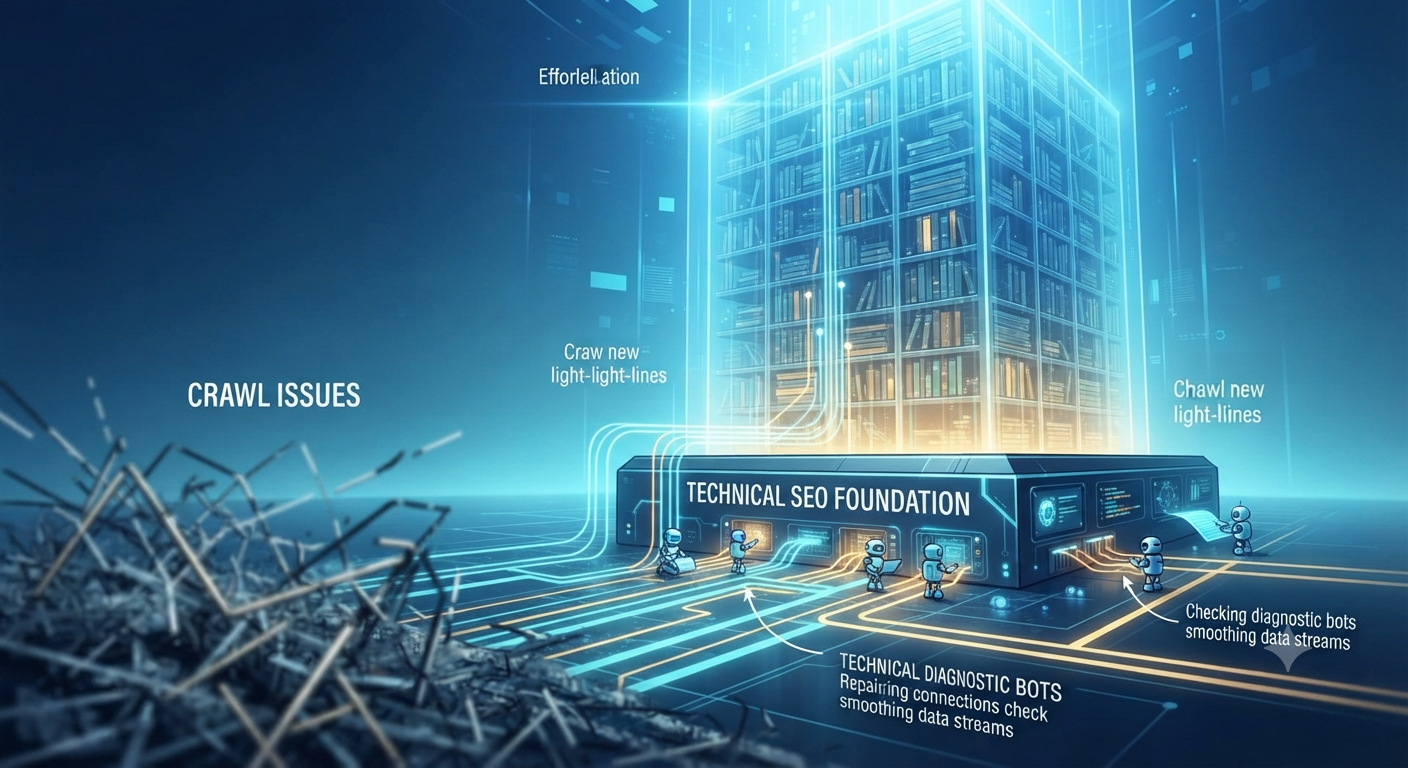
It doesn’t matter how good your content is if search engines struggle to access it.
Regularly check things like:
- Crawl errors
- Indexing issues
- XML sitemaps
- Canonical tags
- Mobile usability
- HTTPS
- Core Web Vitals
Technical SEO isn’t glamorous.
But it’s one of the reasons some websites consistently outperform others.
✅ 19. Add An Author Profile
People like knowing who’s behind the advice they’re reading.
Instead of publishing anonymous content, create an author page.
Tell readers:
- Who you are.
- What experience you have.
- What industries you’ve worked in.
- Why they should trust your advice.
It doesn’t need to be an autobiography.
Just enough information to show there’s a real person behind the content.
✅ 20. Use Real Examples
Theory only gets you so far.
Readers want to know what actually happens in the real world.
If you’ve improved rankings…
Say so.
If a strategy failed…
Talk about it.
If you’ve tested different approaches…
Explain the results.
Real examples make articles far more interesting than repeating advice that’s already been published a thousand times.
🧠 A Quick Reality Check
One thing I’ve noticed recently is that some website owners are spending more time trying to optimise for AI than they are trying to help their visitors.
That feels backwards.
If someone lands on your page and leaves because the content isn’t useful, it doesn’t really matter whether an AI system referenced it once.
Focus on building pages that people genuinely want to read.
AI search is evolving quickly, but one thing hasn’t changed:
Useful websites continue to outperform average ones.
That’s been true for years, and I don’t see that changing anytime soon.

✅ 21. Strengthen Your Website’s Entity Signals
One area that is becoming increasingly important is helping search engines understand who you are, what your website is about and why your content should be trusted.
This is where entities come into play.
An entity is basically a recognised person, brand, company, product or topic that search engines can understand.
For example, a website about SEO should naturally build connections around topics like:
- Search engine optimisation
- Google Search
- Link building
- Content marketing
- Technical SEO
- Digital marketing
- Buying backlinks
The more consistent your website is, the easier it becomes for search engines and AI systems to understand your expertise.
This doesn’t mean forcing keywords everywhere.
It means becoming known for a specific topic.
✅ 22. Earn Mentions Across The Web
Backlinks have always been important for SEO, but online mentions also help build credibility.
When other websites talk about your brand, products or content, it creates additional trust signals.
Examples include:
- Industry articles mentioning your website.
- Podcast appearances.
- Expert interviews.
- Digital PR campaigns.
- Community discussions.
- Guest contributions.
The key is quality.
A few genuine mentions from relevant websites are far more valuable than hundreds of random low-quality links.
✅ 23. Create Content Around Real Search Questions
AI search is heavily focused on answering questions.
This means creating content around the things people actually want to know.
Instead of only targeting short keywords, think about:
- What problems does my audience have?
- What questions do customers ask repeatedly?
- What information would save someone time?
- What would a beginner struggle to understand?
For example:
“Backlinks”
is a broad topic.
But:
“How many backlinks does a new website need to rank?”
is a much clearer question.
The more specific the answer, the more useful your content becomes.
✅ 24. Keep Your Content Updated
A five-year-old article can still rank.
Age isn’t the problem.
Outdated information is.
If your article covers something that changes regularly, make updates part of your SEO routine.
Look for:
- Old statistics.
- Broken links.
- Outdated screenshots.
- Old examples.
- Changes to Google guidelines.
- New tools or strategies.
Refreshing existing content is often one of the quickest ways to improve performance without creating another new article.
✅ 25. Monitor How AI Search Changes Your Traffic
SEO is changing.
The way people discover websites is changing.
This means you need to pay attention to new patterns.
Keep an eye on:
- Google Search Console data.
- Organic traffic changes.
- Search impressions.
- Brand searches.
- Referral traffic and backlinks.
- New keyword opportunities.
Don’t panic every time Google releases an update.
Look for trends.
A single bad day of traffic doesn’t mean your SEO strategy is broken.
✅ 26. Don’t Forget Traditional SEO Fundamentals
This is probably the most important point on the entire checklist.
AI search does not replace SEO.
It builds on top of it.
A website that:
- Cannot be crawled.
- Has poor content.
- Has no authority.
- Provides a bad user experience.
- Doesn’t answer questions clearly.
…is unlikely to suddenly become successful because AI search exists.
The fundamentals still matter.
Keyword research still matters.
Internal links still matter.
Quality backlinks still matter.
Technical SEO still matters.
The best AI search strategy is usually just good SEO done properly.
✅ 27. Focus On Becoming The Best Answer
This is the final point, and probably the one that matters most.
Stop asking:
“How do I trick AI into mentioning my website?”
Start asking:
“How do I create the best possible answer to this topic?”
The websites that win long term are the ones that provide something valuable.
Maybe that’s the most detailed guide.
Maybe it’s the best example.
Maybe it’s original research.
Maybe it’s explaining something in a way nobody else has.
Competition is getting harder.
But there is always room for websites that genuinely help people.
Common AI Search Visibility Myths
Myth 1: You Need Special AI Optimisation Plugins
There are plenty of tools appearing that promise instant AI visibility.
Some may help with analysis.
Some may help with content workflows.
But there is no plugin that guarantees AI citations.
Your website still needs strong foundations.
Myth 2: AI Has Replaced Google Rankings
Not true.
Traditional search rankings still matter.
Many AI-powered search experiences still rely heavily on information discovered through existing search systems.
A website with strong organic visibility is usually in a better position than a website with no search presence.
Myth 3: Publishing More Content Automatically Wins
More content does not always mean better results.
Publishing five average articles every week is not necessarily better than publishing one excellent article.
Quality beats quantity.
A smaller website with genuinely useful content can outperform a much larger website full of generic pages.
Myth 4: You Need To Rewrite Everything For AI
You don’t need to completely change your website.
If your content was already written for humans, that’s a strong starting point.
Improve it.
Expand it.
Make it clearer.
Add more value.
Don’t destroy good content chasing every new trend.
Final Thoughts
AI search is probably one of the biggest changes the SEO industry has seen.
But if you’ve been doing SEO properly for years, the transition is not as scary as some people make it sound.
The websites that succeed will not be the ones searching for shortcuts.
They will be the ones that consistently publish useful information, build trust and become recognised as valuable resources.
The same principles that helped websites rank years ago still apply today.
Create better content.
Build a stronger website.
Help your visitors.
Keep improving.
AI may change how people search, but websites that deserve attention will always have an advantage.
AI Search Visibility Checklist Quick Summary
Before publishing your next article, ask:
✅ Does this genuinely help the reader?
✅ Does it answer the search intent clearly?
✅ Is it better than existing content?
✅ Does it include original insights?
✅ Is the website technically healthy?
✅ Are internal links supporting the topic?
✅ Is the author and brand trustworthy?
✅ Is the information accurate and updated?
✅ Would another website reference this content?
If you can answer yes to most of these, you’re already doing more than many websites competing for visibility.
The future of SEO isn’t about finding tricks.
It’s about becoming the source people—and AI—want to trust.