
I am going to show you exactly how to fix web 2.0 backlink indexation drops after Google spam updates step-by-step. If you have spent hours signing up for free web 2.0 platforms, creating content, and placing your links, only to find that Google bot drops your subdomains from the index a few weeks later, do not panic.
I will break down the exact reason why Google drops these free web 2.0 blogs from its index during quality rollouts, and most importantly, I will show you a proven 2026 indexing framework to force Google bot to re-crawl, re-index, and keep your web 2.0 properties permanently cached in the Google SERPs.
You can follow this guide step-by-step for free to protect your link building efforts and keep your keyword rankings locked at the top of Google.
Why Google Drops Web 2.0 Subdomains From the Index
Before you go ahead and try to fix your unindexed links, you need to understand why this happens in the first place.
When Google releases a core update or a targeted spam update, its rendering system (Googlebot) runs a sitewide evaluation on major web 2.0 platforms like WordPress.com, Blogger, Tumbler, Wix, and Medium.
Google knows that millions of free subdomains are created every single day purely for SEO link building. To save render budget and crawl resources, Google implemented an automated algorithmic trigger specifically for free secondary subdomains:
-
The Single-Page Dead End: If a web 2.0 blog has only 1 published post, zero incoming internal links, and no fresh activity, Google flags the subdomain as thin content.
-
Zero Secondary Signals: If nobody is clicking on the page and no external crawlers hit the URL, Google drops the page from its cache to free up index space.
-
Static Footprint Detection: If 5 different web 2.0 blogs on 5 different platforms all link to your money site with exact-match anchor text and never get updated again, Google’s automated spam filters de-index the tier 1 buffer sites entirely.
When your web 2.0 subdomains get dropped from the Google index, the link juice stops flowing to your target page. This causes your keyword rankings to drop out of the Google SERPs.
Now let’s take a look at how we fix this problem fast.
The Step-by-Step Fix: How to Force Google Bot to Re-Index Web 2.0s
Here is the exact framework we use at Rankers Paradise to revive de-indexed web 2.0 blogs and get them back into the Google SERPs without getting slapped by penalties.
+-------------------------------------------------------------------+
|               WEB 2.0 INDEX RECOVERY FRAMEWORK                    |
+-------------------------------------------------------------------+
| 1. AUDIT          -> Identify dropped URLs via Site: Operator      |
| 2. REFRESH        -> Add 300+ words + 1 multimedia asset (YouTube) |
| 3. CROSS-LINK     | -> Create Tier 1.5 RSS/Node inter-linking      |
| 4. SIGNAL TRIGGER -> Force Googlebot crawl via dynamic ping APIs  |
+-------------------------------------------------------------------+
Step 1: Diagnose Which Web 2.0 URLs Dropped
First, you need to know which links are actually unindexed versus which ones are just losing authority.
-
Take your list of web 2.0 target URLs.
-
Go to Google and run a search using the exact operator:
site:[yoursubdomain.wordpress.com/your-post-slug](https://yoursubdomain.wordpress.com/your-post-slug) -
If the page appears in the search results, it is still indexed.
-
If Google returns “Your search did not match any documents,” the page has officially dropped from the index after the latest update.
Step 2: Inject Content Freshness & Micro-Interactions
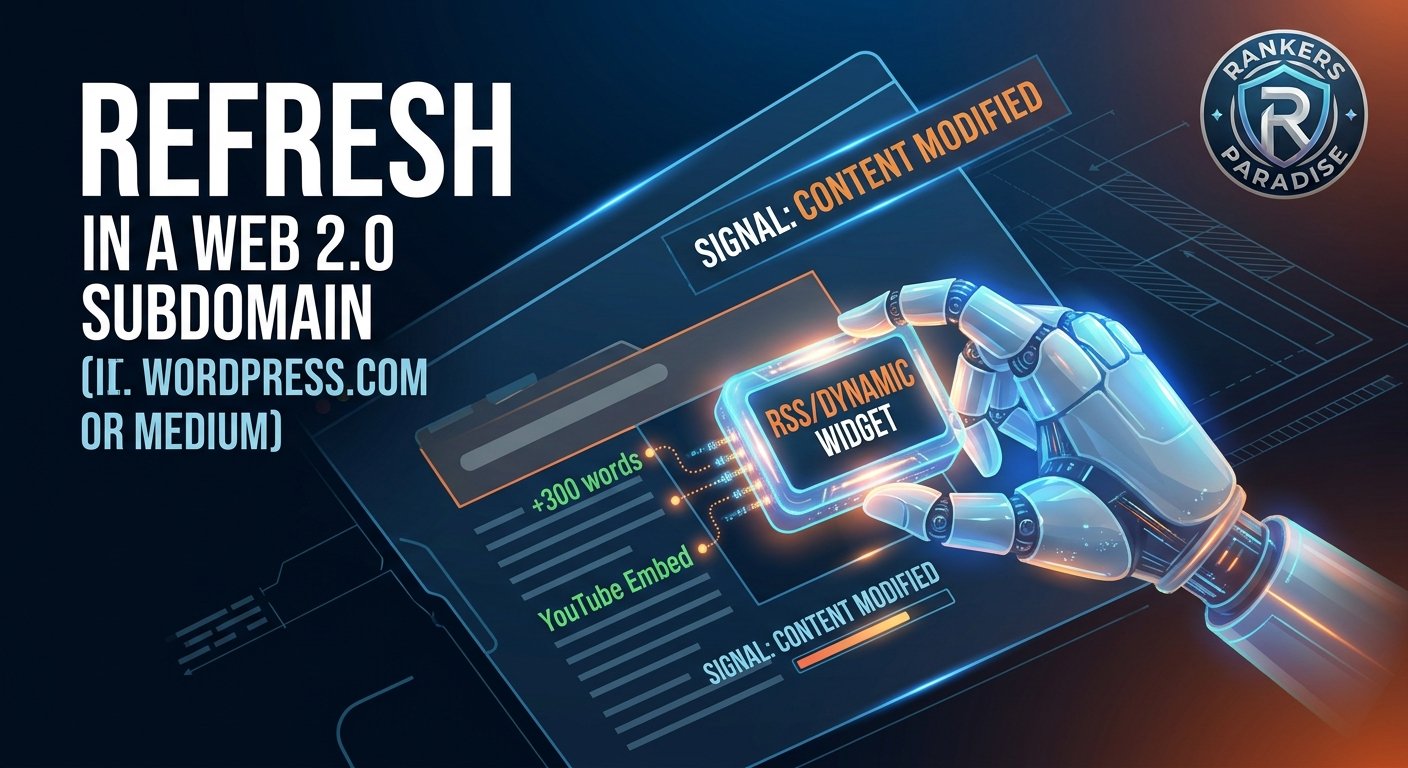
Google bot hates static pages that look abandoned. To force Google to re-evaluate the subdomain, you need to trigger a “content modified” signal.
-
Log back into your dropped web 2.0 property.
-
Add 250 to 300 words of fresh, relevant text to the existing article.
-
Embed a relevant YouTube video or a fresh infographic into the content area.
-
Add 1 outbound link to an authoritative, non-competing news site (e.g., Wikipedia or a major media publication).
When you update an existing post, the web 2.0 platform automatically updates its internal XML sitemap date header. This alerts web crawlers that the page contains fresh information.
Step 3: Build a Tier 1.5 Inter-Host Link Node
The biggest mistake people make when building web 2.0 backlinks is treating each free blog as an isolated island.
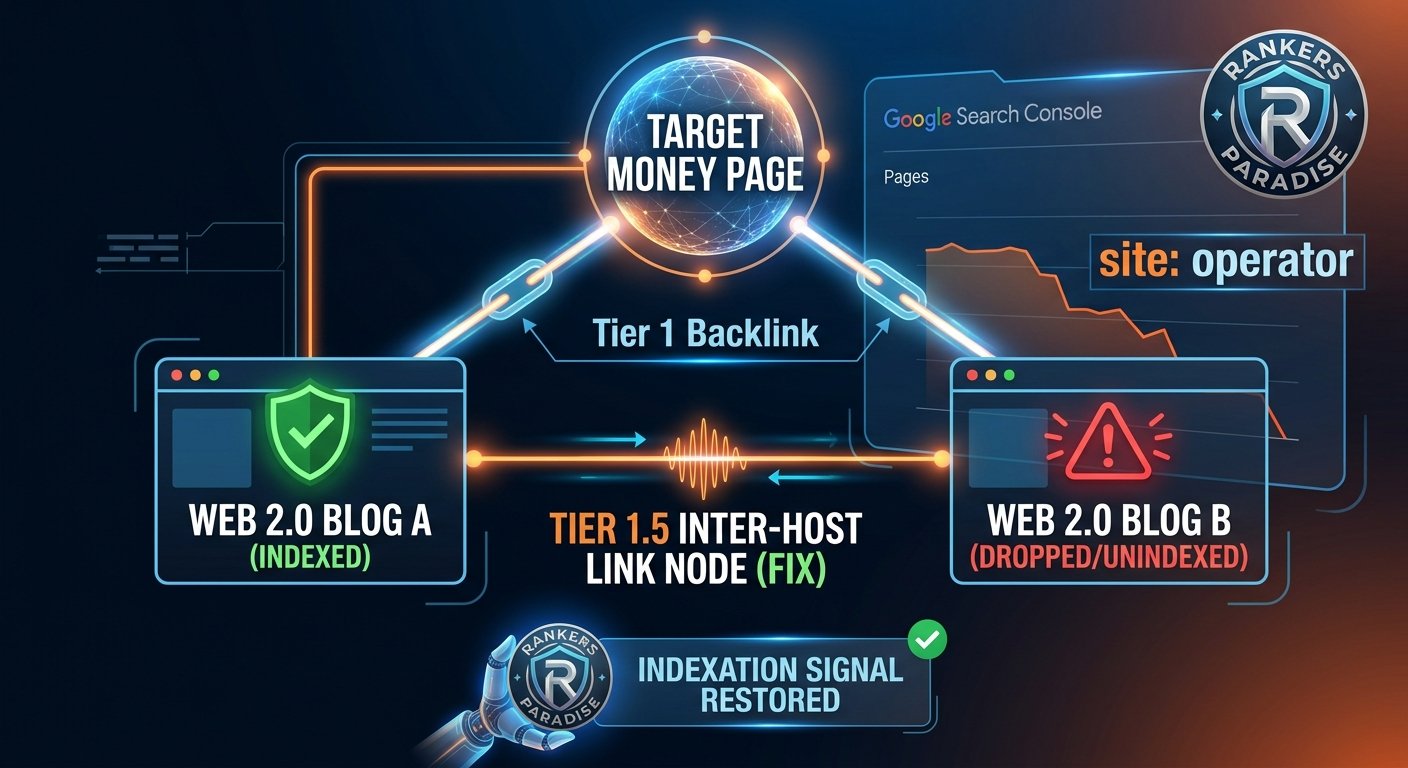
To keep your tier 1 web 2.0 properties indexed permanently, you need to build a Tier 1.5 Inter-Host Link Node.
             [ Target Money Page ]
                       ^
                       | (Tier 1 Backlinks)
      +----------------+----------------+
      |                                 |
[ Web 2.0 Blog A ]              [ Web 2.0 Blog B ]
      ^                                 ^
      |                                 |
      +-------< (Tier 1.5 Link) <-------+
-
Take Web 2.0 Blog A (which is indexed) and place a contextual, non-competing link inside its content pointing to Web 2.0 Blog B (the one that dropped out of the index).
-
Because Googlebot is already crawling Web 2.0 Blog A regularly, it will follow the contextual link directly into Web 2.0 Blog B.
-
This creates a natural crawl path that forces Google’s spider to re-discover and re-index the dropped subdomain naturally.
How Anchor Text Placement Keeps Web 2.0s Safe
When you modify or re-index your web 2.0 assets, anchor text strategy is everything. Over-optimizing your anchor text is one of the main triggers that causes Google bot to drop web 2.0 pages during spam updates.
If you are going to buy backlinks or build your own tier 2 campaigns to power up your web 2.0s, make sure you maintain a safe anchor text ratio.
Here is a recommended anchor text breakdown to keep your web 2.0 blogs indexed permanently:
| Anchor Text Type | Recommended Ratio | Example Anchor Text |
| Full Open URL | 40% | [https://yourwebsite.com/page](https://yourwebsite.com/page) |
| Brand / Domain Name | 35% | Your Brand Name |
| Generic Anchors | 15% | click here, source, read more |
| Exact Match Target Keyword | 10% | how to fix web 2.0 backlink indexation drops |
Pro Tip: Keep your exact-match keywords under 10% on your tier 1 web 2.0 properties. If Google detects an unnatural exact-match density across unverified subdomains, it will drop the subdomains from the search results to invalidate the link juice.
Safe Daily Indexing Velocity Schedule
When you are re-indexing dropped web 2.0 backlinks, do not send 500 links into an automated indexing tool at the exact same time. Spiking the crawl rate on fresh subdomains will trigger Google’s automated spam filters and cause a permanent de-index ban.
Follow this safe daily velocity schedule when reviving dropped links:
-
Days 1 – 3: Update content on dropped web 2.0s and submit the RSS feeds to feed aggregators (5-10 URLs per day max).
-
Days 4 – 7: Build 2 to 3 high-authority tier 2 social bookmarks or contextual links pointing to each dropped web 2.0 page.
-
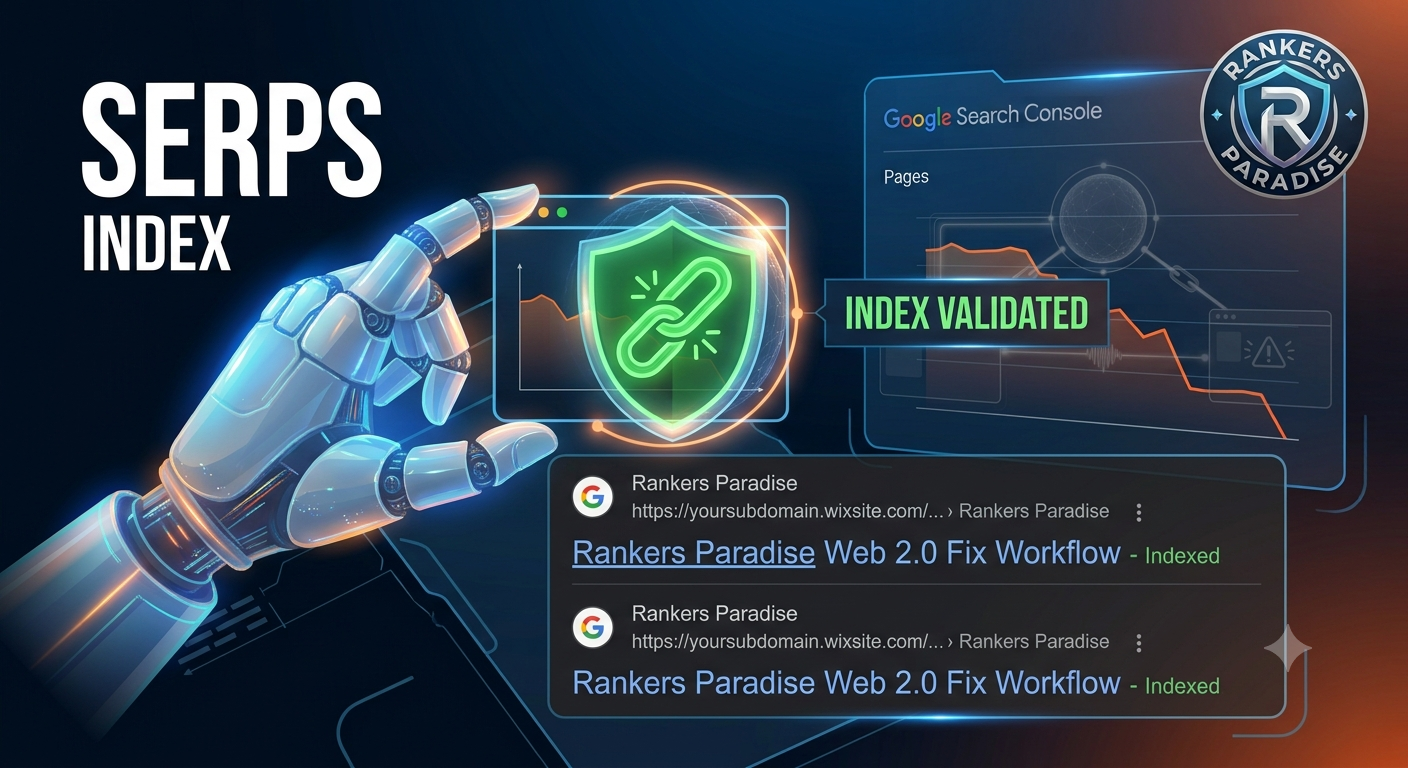
Days 8 – 14: Monitor Google SERPs using the
site:operator to verify index restoration.
By spreading out the crawl signals naturally, Google bot treats the indexation request as organic discovery rather than an automated link blast.