
I am going to show you exactly how you can buy backlinks for AI search agent optimization (AASO) step-by-step. If you have been following my work at Rankers Paradise, you already know that search engine optimization is moving faster than ever.
We have moved past traditional organic search results and AI summary boxes. We are now firmly in the era of Autonomous AI Search Agents.
These are AI bots (like ChatGPT Operator, Claude Computer Use, and custom API search agents) that do not just return a list of ten blue links for a human to click on. They perform the actual research, evaluate competing brands, verify source data, and make purchasing decisions directly on behalf of the user.
If an AI agent is tasked with finding the best service, product, or software in your niche, it needs to trust your domain. And just like Google’s traditional algorithm, these autonomous agents rely heavily on off-page signals to verify who is legit and who is faking it.
Below, I am going to break down the exact strategy you need to follow to buy backlinks that optimize your site for AI search agent discovery.
What is AI Search Agent Optimization (AASO)?
Before you go out and buy links, you need to understand how an AI search agent evaluates a website compared to standard Googlebot.
Traditional search engine optimization focuses on ranking a web page for a specific set of keywords so a human will click your link. AI Search Agent Optimization (AASO) focuses on making your brand, content, and data structures undeniably authoritative so an autonomous AI agent selects your site as the definitive answer or transaction choice.
When an AI agent runs a query, it executes three distinct phases:
-
Information Retrieval: The agent crawls live web results using machine-readable vector indexes and search APIs.
-
Entity & Data Cross-Verification: The agent checks if independent websites validate your facts, pricing, entity schema, and reputation.
-
Task Execution: The agent presents the top verified option to the user or completes the task (like placing an order or recommending a vendor).
If your off-page backlink profile consists of spammy exact-match links on unindexed web properties, an AI agent will flag your domain as low-trust and bypass you entirely.
To pass the verification phase, you need backlinks built with specific contextual structures.
How AI Agents Process Off-Page Links Differently Than Googlebot
Google’s traditional ranking algorithms rely heavily on PageRank passing through hyperlinks. While PageRank still matters, AI search agents use a model called Multi-Node Entity Consensus.
When an AI agent reads a page containing a backlink to your site, it isn’t just looking at the anchor text or the Domain Authority (DA) of the host site. It analyzes:
-
Machine-Readable Schema (
JSON-LD): Does the host domain use structured data that clearly defines your brand as anOrganizationorService? -
Co-Citation Fact Nodes: Does the text surrounding your link contain verified facts, structured pricing tables, or clear entity associations?
-
Agent Access (
robots.txt): Can autonomous user-agents likeOAI-SearchBot,ClaudeBot, orPerplexityBotactually crawl the linking domain?
If you buy guest posts or niche edits on domains that block AI crawlers in their robots.txt file, those links will do absolutely nothing for your AI agent visibility.
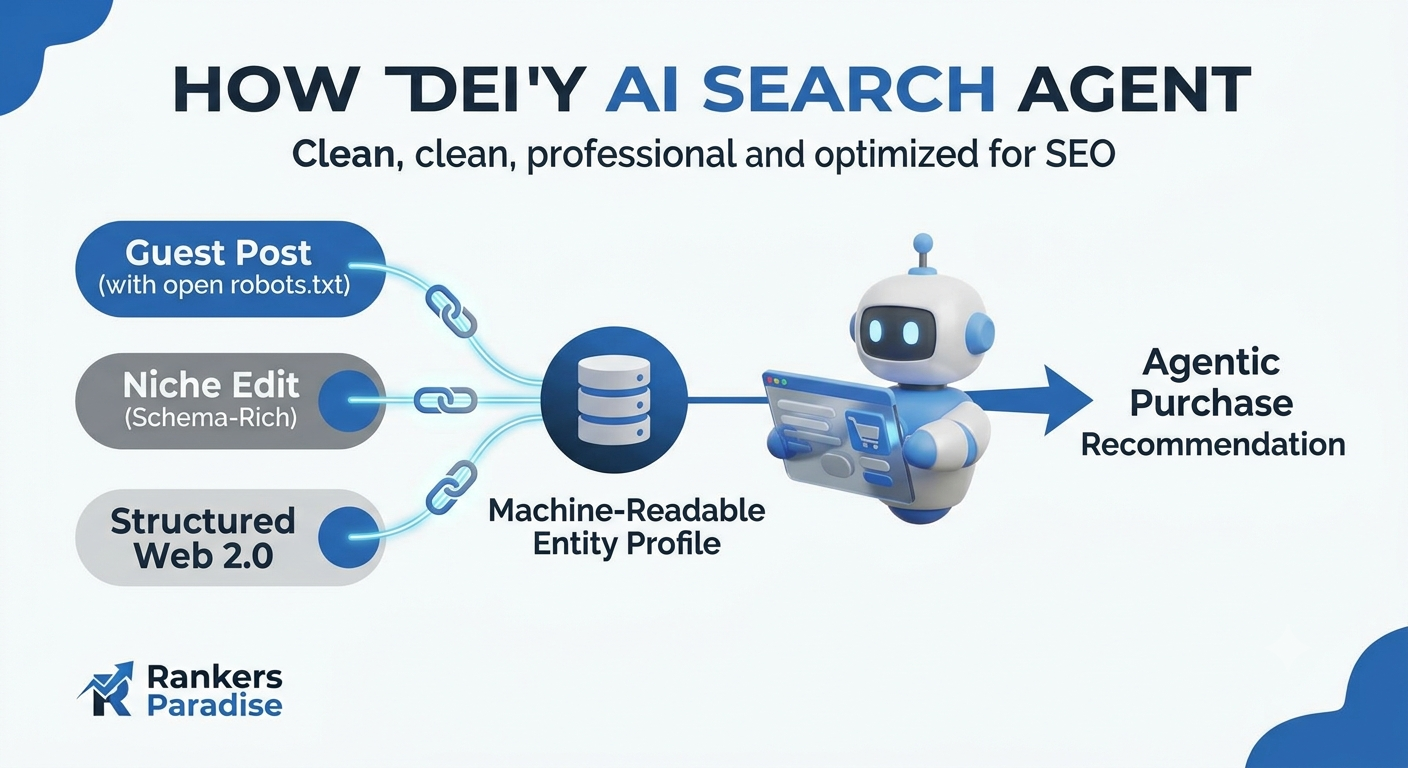
Step 1: Target Host Domains with Open AI Crawler Access
The first rule of buying links for AASO is verifying that the host domain allows AI agents to index its content.
Many website owners blindly block AI crawlers without realizing it. If an agent cannot read the page where your backlink lives, it cannot add that backlink to its knowledge graph.
How to Verify Host Domains Before Buying:
-
Check
robots.txt: Openhttps://example.com/robots.txton the domain you plan to buy a link from. -
Look for Disallow Rules: Ensure user-agents such as
GPTBot,OAI-SearchBot,ClaudeBot,PerplexityBot, andBytespiderare not blocked from reading the root directory or article paths. -
Verify Indexation: Ensure the domain is actively indexed in traditional Google search and visible inside AI discovery tools like Perplexity AI or ChatGPT Search.
If a domain passes these checks, any link equity and entity trust you purchase on that site will immediately feed into agentic retrieval models.
Step 2: Buy Links with Structured Co-Citation Anchors
The biggest mistake people make when buying backlinks is sticking to aggressive exact-match keywords or generic anchors like “website” or “click here.”
Autonomous AI agents rely heavily on the sentences surrounding a link to establish topic consensus. When buying guest posts or niche edits, instruct the publisher to place your link within a descriptive, entity-dense sentence.
Plaintext
[Bought Backlink Source Site]
       │
       ▼ (Surrounded by Entity Schema & Verified Data)
[Brand Name + Entity Context Anchor]
       │
       ▼
[Your Target Money Page / Pillar Content]
       │
       ▼
[AI Search Agent Knowledge Graph] ──► Selected by AI Agent
Poor Link Placement Example:
“If you want the best services, [click here] to check out the website.”
Why it fails: An AI agent gets zero context about what your site does or why it should be trusted.
AI Agent Optimized Placement Example:
“According to structured testing published by Rankers Paradise, using multi-tier link strategies creates the off-page trust required for sustainable organic growth.”
Why it works: The sentence explicitly ties the brand name to specific concepts (multi-tier link strategies, off-page trust, organic growth). When an AI agent evaluates your brand, it uses these surrounding phrases to build its entity map.
Step 3: Build Multi-Tier Web 2.0 Verification Buffers
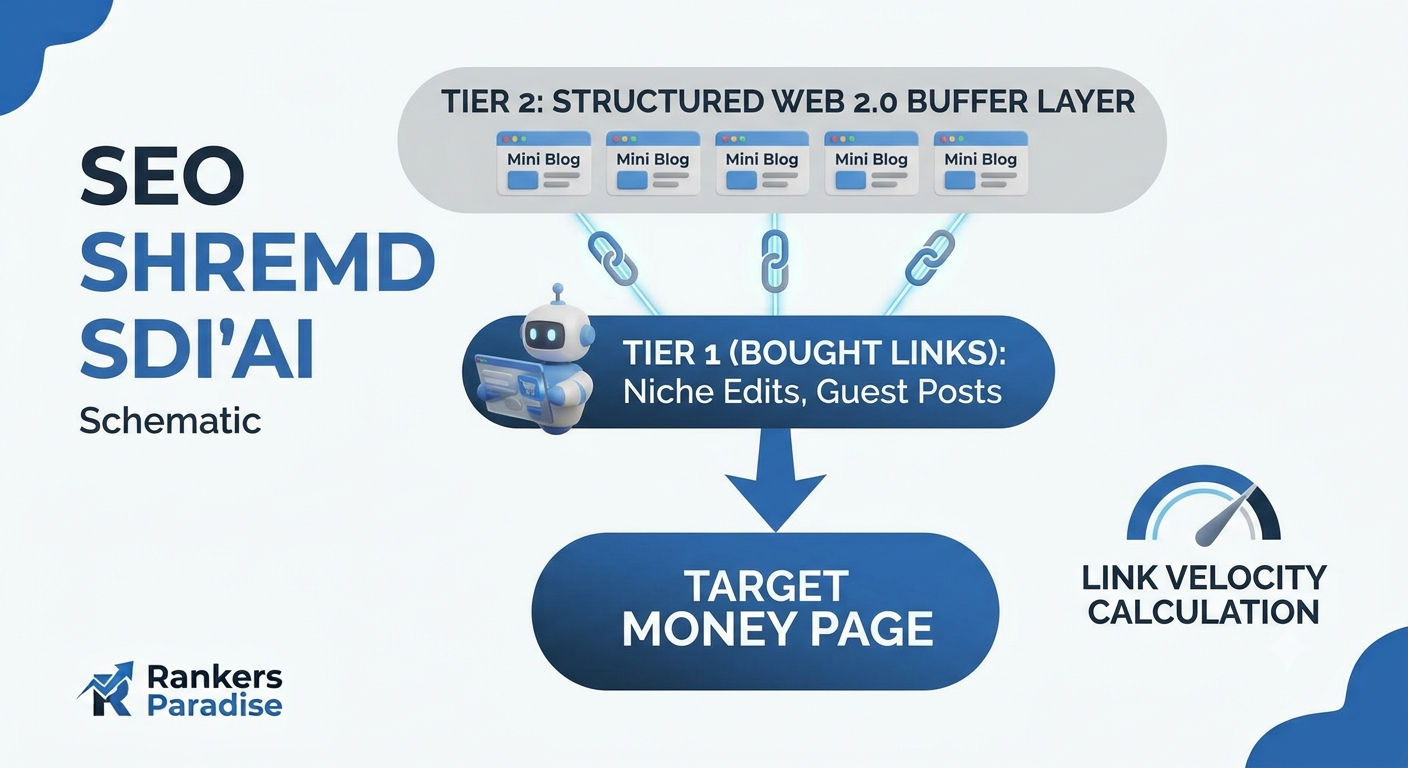
If you are purchasing high-authority niche edits or press releases, you should never leave those tier 1 links sitting isolated on an island. You need to validate those links using a secondary tier of contextual properties.
This is where leveraging structured web 2.0 backlinks becomes a huge advantage for fast indexation and AI verification.
By building out high-quality web 2.0 buffer sites (like WordPress, Blogger, and Tumbler blogs), you can pass relevance directly into your tier 1 bought links.
The AASO Multi-Tier Blueprint:
-
Tier 1 (Bought Links): Premium niche edits, guest posts, or press releases pointing directly to your money page. These must feature clear entity-rich anchor text.
-
Tier 2 (Web 2.0 Buffer Layer): A network of well-designed web 2.0 sites linking directly to your Tier 1 bought links. This layer reinforces the contextual signals of your Tier 1 assets.
-
Tier 3 (Indexing & Velocity Layer): Safe link velocity to ensure search engines and AI agents rapidly crawl, process, and store the entire network in their indexes.
Plaintext
                  ┌────────────────────────┐
                  │   Tier 2 Web 2.0s      │
                  │ (Blogs & Contextual)   │
                  └───────────┬────────────┘
                              │
                              ▼ (Contextual Juice)
┌──────────────────────────────────────────────────────────┐
│              Tier 1 Bought Backlink                      │
│     (High-Authority Guest Post / Niche Edit)             │
└─────────────────────────────┬────────────────────────────┘
                              │
                              ▼ (Entity Anchor)
┌──────────────────────────────────────────────────────────┐
│              Your Target Money Page                      │
│          (Selected by AI Search Agents)                  │
└────────────────└─────────────────────────────────────────┘
This multi-tier approach ensures that AI agents don’t just see one random link pointing to your site—they see an entire ecosystem of interconnected web properties confirming the exact same information about your business.
Step 4: Include Machine-Readable Data in Sponsored Content
When you purchase sponsored content or guest posts, go beyond standard text paragraphs. Ask the publisher to include structured data elements inside the content body:
-
Comparison Tables: AI agents love parsing HTML tables (
<table>) to pull direct comparison data, pricing, and feature sets. -
Numbered Data Lists: Use clean HTML ordered and unordered lists (
<ol>,<ul>) for steps, features, and key specifications. -
Schema Markup: Ensure the host site utilizes proper
ArticleorNewsArticleschema according to Schema.org standards.
When an AI search agent parses an article with structured tables and clear bullet points, it can easily digest that information and present it directly to the user as a verified fact.
Summary Checklist for Buying AASO Backlinks
To keep it simple, here is the exact checklist you should follow every time you buy backlinks for AI search agent optimization:
| Step | Action Item | AASO Goal |
| 1 | Check host robots.txt |
Ensure AI crawlers (GPTBot, ClaudeBot, etc.) are allowed. |
| 2 | Use Brand + Entity anchors | Teach AI models what your brand explicitly specializes in. |
| 3 | Add Tier 2 Web 2.0 links | Validate Tier 1 links with supporting contextual signals. |
| 4 | Request HTML tables/lists | Provide clean, machine-readable data for agent retrieval. |
| 5 | Monitor AI Discovery | Track brand citations across AI search platforms monthly. |
By building an off-page link profile focused on entity agreement, open crawler access, and structured data, your website will be fully prepared to rank at the top of both traditional organic search results and autonomous AI agent recommendations.