
I am going to show you exactly how you can pass link equity from your bought backlinks directly into Google’s AI Overviews. If you have been following my work at Rankers Paradise, you already know that link building is not dead in 2026—it has just evolved.
If you buy backlinks and point them at your target money pages, you can still push your URL to the top of the traditional organic SERPs. But if Google’s AI Overview drops down at the top of the page and completely ignores your URL as a cited source, you are missing out on thousands of high-converting visitors every single month.
I am going to give you the exact off-page blueprint you can follow step-by-step to force Google’s Gemini-powered retrieval models to recognize your bought links, trust your site’s topical authority, and cite your content right inside the top AI summary box.
How AI Overviews Process Link Equity Differently
Before we go any further, you need to understand how Google’s AI Overview engine evaluates off-page link signals compared to traditional PageRank.
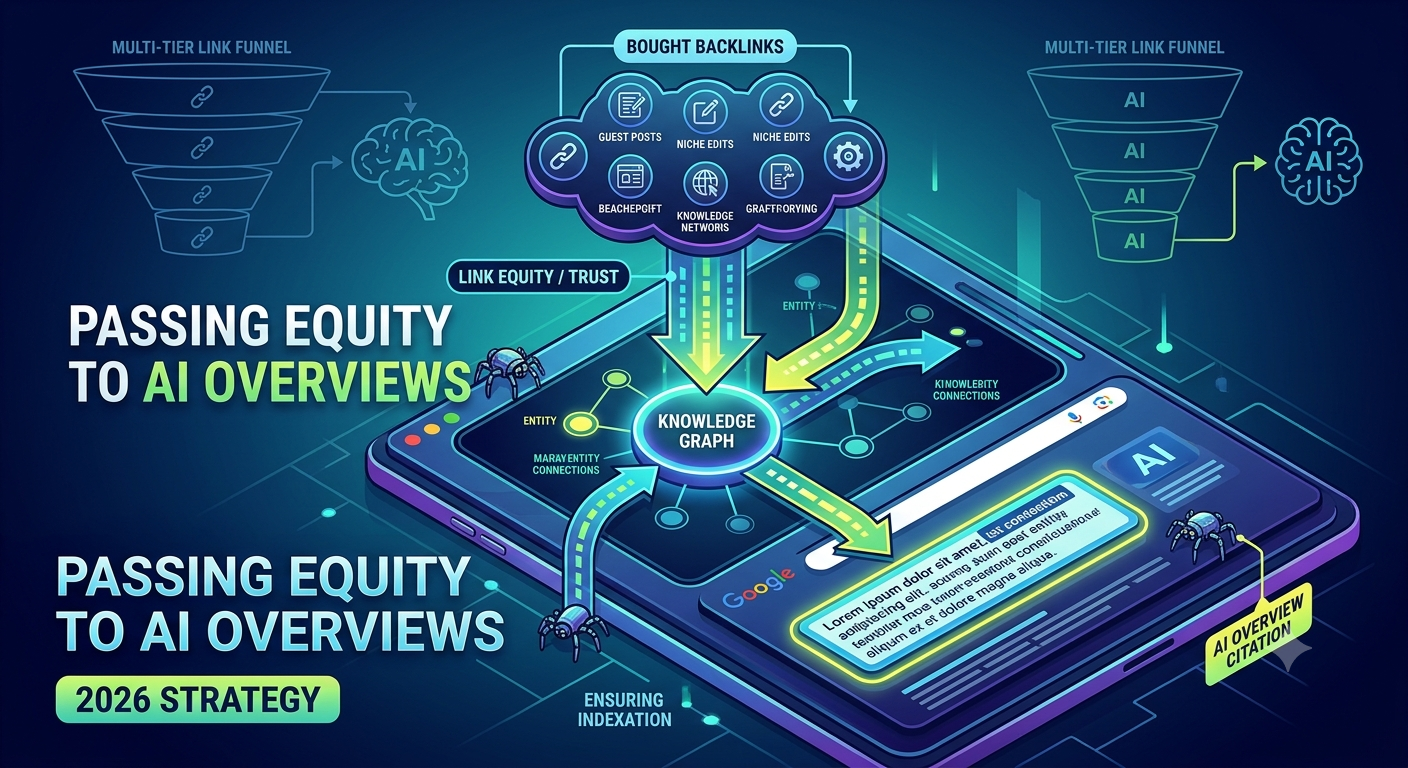
For years, ranking a webpage was mostly about pure raw link juice:
-
Find a high DR/DA website.
-
Pass the juice through an exact match anchor text.
-
Watch the PageRank push your URL up the Google SERPs.
In 2026, the AI Overview retrieval system works on Entity Co-Occurrence and Semantic Vector Agreement.
[Bought Backlink Source]
       │
       ▼ (Entity-Rich Contextual Anchor)
[Tier 1 Money Page / Pillar Content]
       │
       ▼ (Knowledge Graph Alignment)
[Google AI Overview Vector Index] ──► Cited as Top Source in SGE
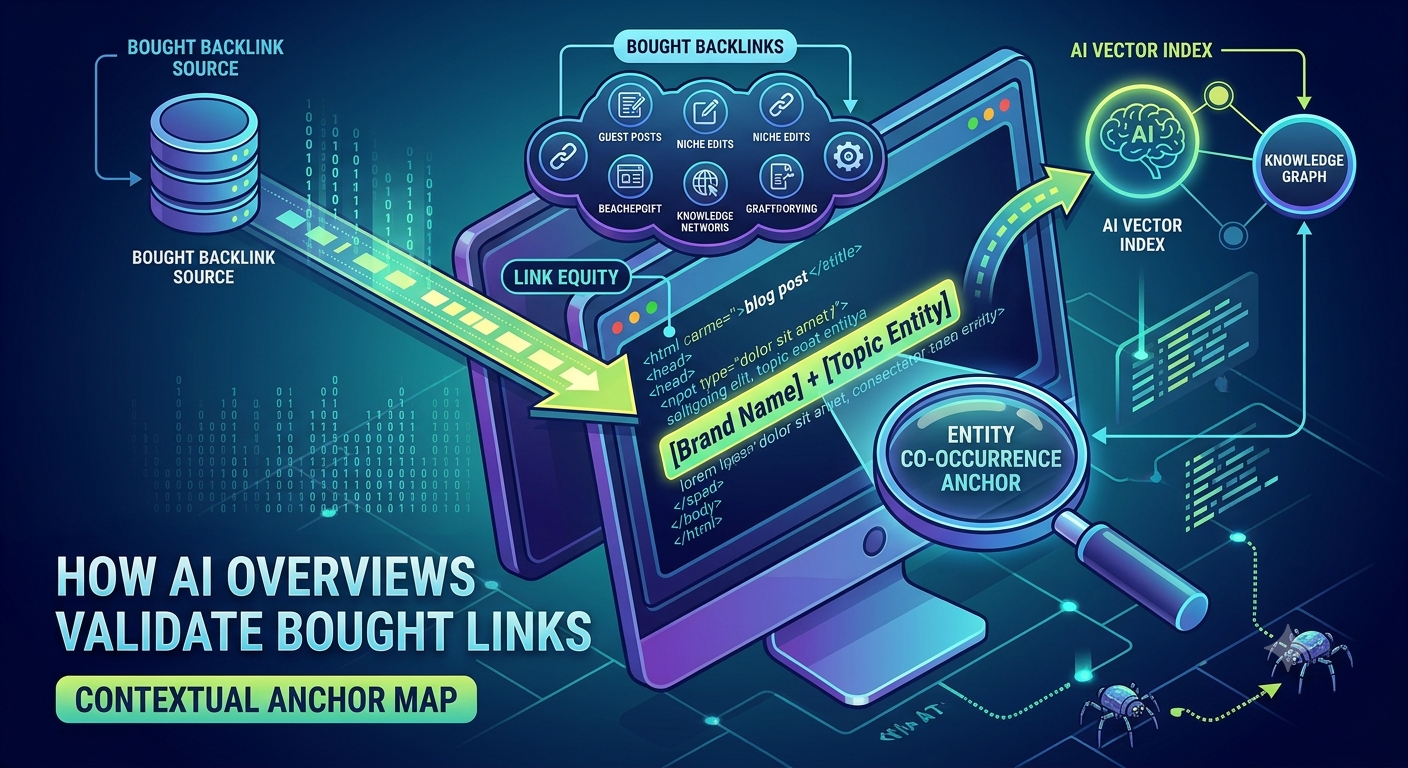
When Google Bot crawls a link on a web page, it doesn’t just pass PageRank down a pipe. The AI system reads the surrounding sentences to verify if the source page, the anchor text, and your target landing page all agree on the same facts.
If you want to buy backlinks that actually influence AI citations, those links must build an undeniable web of “topical consensus” that Google’s Large Language Models (LLMs) can easily verify.
Step 1: Use Entity-Rich Co-Occurrence Anchor Text
The single biggest mistake people make when building links for AI Overviews is relying strictly on aggressive exact match anchor text or generic anchors like “click here.”
If your target keyword is “best SEO strategy for local businesses,” an exact match link anchor on fifty different guest posts looks completely unnatural to Google’s spam filters. Worse, it gives the AI model zero contextual data about why your page should be cited.
Instead, you need to surround your target link with Entity Co-Occurrence.
Bad Anchor Text Setup:
*”If you want to rank, you should buy [best SEO strategy for local businesses].” *
AI-Optimized Entity Setup:
“According to recent industry testing by [Brand Name], implementing a structured [local schema markup along with geo-targeted citations] creates the primary trust signal required for map pack dominance.”
Notice what happened there? The anchor text uses a brand reference mixed with core entity terms (local schema markup, geo-targeted citations, map pack dominance).
When Google Bot parses that backlink, the AI Overview retrieval model connects your brand directly with those entities. When a user asks Google a question about local SEO, the AI pulls your URL because the surrounding link ecosystem consistently ties your brand to those exact concept nodes.
Step 2: Build Multi-Tier Web 2.0 Citation Buffers
If you are buying high-authority press releases, niche edits, or guest posts, you do not want to rely on those single standalone links to do all the heavy lifting for AI Overviews. You need to validate those links using a secondary tier of contextual properties.
This is where building structured web 2.0 backlinks becomes a complete game changer for AI indexation.
                  ┌────────────────────────┐
                  │   Tier 2 Web 2.0s      │
                  │ (Blogs, Web 2.0 Hubs)  │
                  └───────────┬────────────┘
                              │
                              ▼ (Contextual Juice)
┌──────────────────────────────────────────────────────────┐
│              Tier 1 Bought Backlink                      │
│ (Niche Edit / Guest Post with High Topical Relevance)     │
└─────────────────────────────┬────────────────────────────┘
                              │
                              ▼ (Entity-Rich Anchor)
┌──────────────────────────────────────────────────────────┐
│              Your Target Money Page                      │
│             (Cited in AI Overviews)                      │
└──────────────────────────────────────────────────────────┘
Here is the exact step-by-step tiering process to funnel that link equity straight into Google’s AI citations:
-
Secure Your Tier 1 Link: Place a contextual backlink on a topically relevant domain pointing to your target page.
-
Build 5 to 10 Tier 2 Buffer Properties: Set up high-authority Web 2.0 blogs (like WordPress, Tumblr, Wix, or Weebly).
-
Publish Supporting Context: Write articles on your Tier 2 sites that directly quote, reference, and link out to your Tier 1 bought backlink URL.
-
Pass the Information Gain Signal: Ensure the Tier 2 articles answer specific sub-questions related to the main prompt (e.g., “What are the costs?”, “What is the step-by-step timeline?”).
By linking your Tier 2 Web 2.0 properties into your Tier 1 bought backlinks, you create a “topical agreement loop.” Google’s AI model sees multiple independent web properties confirming the exact same facts, which forces the system to pull your primary URL into the AI Overview reference carousel.
Step 3: Align Target Content for Information Gain
You can push all the link equity in the world from your paid backlinks, but if your target landing page is just a rehash of the top 3 Google results, the AI Overview engine will reject it.
Google uses a patent metric called Information Gain. The AI model explicitly looks for unique data, original images, step-by-step workflows, or custom stats that do not exist elsewhere in its training set.
How to Structure Your Money Page for AI Overview Citation:
| Content Element | Traditional Organic SERPs | AI Overview Retrieval System |
| Primary Focus | Keyword density, H2/H3 tags, user intent match. | Direct semantic answers, entity relationships, unique data points. |
| Link Signal | Raw PageRank, domain authority (DR/DA). | Contextual relevance of linking domains + entity co-occurrence. |
| Formatting | Long paragraphs, standard blog layouts. | Bulleted lists, clear summary tables, direct Q&A headers. |
| Indexing Speed | Standard Google Bot crawl queue. | High-velocity API indexation + fresh backlink discovery. |
To make sure your bought backlinks successfully pass equity into the AI box:
-
Place a clear 2-3 sentence Direct Answer directly underneath your H2 headings.
-
Include a custom comparison table or bulleted list summarizing your core process.
-
Add schema markup (specifically
Article,FAQPage, orHowTo) so the AI parser can extract your data instantly.
When your paid backlinks pass authority to a page that features high Information Gain, Google’s LLM treats your page as a primary source rather than a duplicate.
Step 4: Force Google Bot to Crawl and Index Your Link Paths
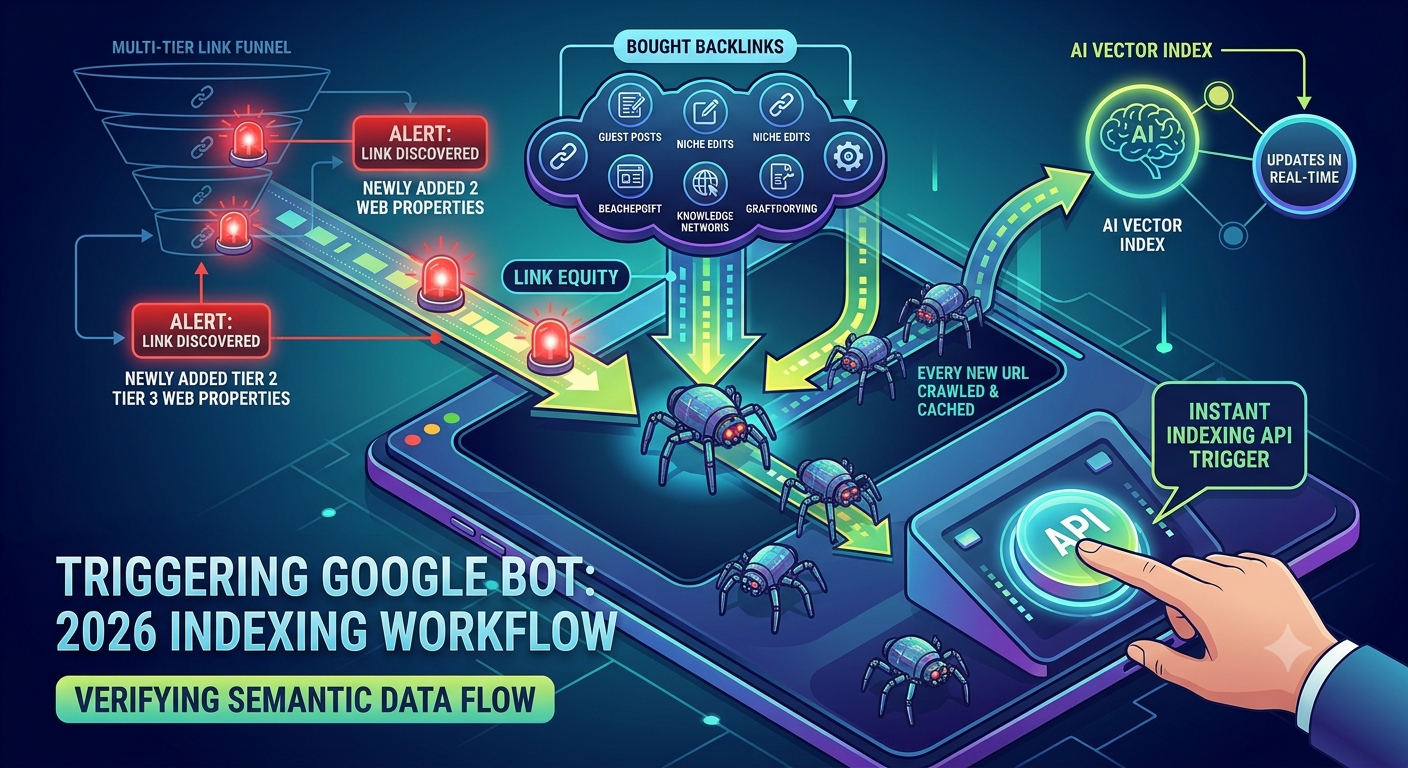
A bought backlink that sits unindexed in the SERPs passes zero link equity to your website, and it will have absolutely zero impact on AI Overviews.
Once your Tier 1 bought links and Tier 2 Web 2.0 properties are live, you need to force Google Bot to crawl the entire link structure immediately.
-
Grab the URLs: Collect every single live URL for your bought guest posts, niche edits, and Web 2.0 buffer blogs.
-
Ping the Indexing APIs: Use Google API indexing scripts or dedicated indexing tools to trigger a fresh crawl request.
-
Check the Index Status: Run a simple
site:yourbacklinkurl.comsearch in Google to confirm the page is fully indexed.
[Tier 2 Web 2.0 Links] ──► [Instant Indexing API] ──► [Google Bot Crawl] ──► [AI Vector Updated]
Once Google Bot crawls the supporting link web, the new entity relationship gets mapped into Google’s vector database, pushing your money page straight into the AI Overview source box.
Frequently Asked Questions
Do bought backlinks still pass PageRank to AI Overviews in 2026?
Yes. PageRank is still the foundational trust layer for Google. However, for AI Overviews, PageRank must be paired with topical relevance and entity co-occurrence in the anchor text so the LLM knows how to classify the incoming trust signals.
What is the safest anchor text ratio for AI Overview link building?
To stay completely safe from algorithmic penalties while maxing out AI citations, keep your anchor profile balanced:
-
Brand / Naked URL: 60%
-
Partial Match / Entity Anchors: 30%
-
Exact Match Keywords: 10%
How long does it take for a backlink to push a page into an AI Overview?
If the backlink source is indexed immediately, you will typically see ranking adjustments in traditional organic SERPs within 14 to 30 days. AI Overview citations often update shortly after during secondary LLM index refreshes as Google re-evaluates top sources for target query clusters.