
I am going to show you exactly whether you can rank a website with only web 2.0 backlinks. I will break down the real keyword ranking results, the algorithmic limits, and the exact step-by-step strategy you need to follow if you want to push your site to position #1 in the Google SERPs without burning a fortune on expensive guest posts.
If you have been in the SEO game for any amount of time, you have heard the self-proclaimed “white-hat” gurus shout from the rooftops:
“Web 2.0 links are dead! Google ignores them! You MUST pay $300 a pop for manual outreach and niche edits or your domain will rot in the sandbox forever!”
I talk to clients every single day who have been scared into paying massive agency retainers because they think free subdomains on Tumblr, Wix, or WordPress.com are completely useless in 2026.
So, let’s cut through the noise and answer the question directly.
Yes, you CAN rank a website with only web 2.0 backlinks—BUT only if you understand the SEO competition, master your on-page optimization, and build your subdomains correctly to avoid automated spam filters.
If you try to blast 5,000 spun web 2.0 links straight to a high-competition commercial page, you will fail. But if you target low-competition long-tail search terms and build clean, multi-tiered web 2.0 properties, you can hit the top spot on Google fast.
What Is a Web 2.0 Backlink?
Before we look at the ranking strategy, let’s quickly cover the basics.
Web 2.0 sites are free platforms where you can register an account, get a free subdomain, and publish your own content.
For example, when you set up a free blog on Weebly, your web address looks like this:
yourbrandname.weebly.com
Because platforms like Weebly, WordPress.com, Wix, and Strikingly have massive underlying domain authority and trust built up over decades, Google bot crawls them constantly.
When you publish a contextual article on these platforms and place a link back to your money site, you transfer a slice of that platform’s trust and equity straight to your domain.
When Does “Only Web 2.0 Backlinks” Actually Work?
To prove that you can rank a page using only these free links, you must first understand SERP analysis. You cannot expect web 2.0 subdomains to outgun a multi-million dollar brand ranking for a high-competition search term like “best credit cards.”
However, a web 2.0 strategy will dominate in the following scenarios:
1. Low SEO Competition Long-Tail Keywords
If you target long-tail search terms where the top 10 organic search results have:
-
No exact-match target keyword in their Page Title Tag or H1.
-
Thin, poorly written content under 800 words.
-
Zero quality backlinks pointing directly to the ranking URLs.
In this situation, your on-page SEO does 80% of the heavy lifting. The web 2.0 links simply act as the final push Google needs to index and rank your page at #1.
2. Local Business Keywords & Micro-Niches
Local service pages (like “carpet cleaning in [small town]”) or micro-niche affiliate sites do not require $500 outreach links. A well-optimized page backed by 5 to 10 high-quality, geographically relevant web 2.0 blogs will easily outrank local competitors who have zero link building strategy in place.
3. New Websites Testing the Waters
If you have a fresh domain, slamming it with aggressive, high-authority press releases or massive link bursts can trigger algorithmic red flags. Using a controlled drip-feed of web 2.0 links allows you to build early trust, index your pages, and establish initial keyword movement safely.
Why Most SEOs Fail With Web 2.0 Links (And Get Slapped)
If web 2.0 platforms are so powerful, why do so many people say they don’t work anymore?
Because 99% of people build them completely wrong.
Here are the three biggest mistakes that kill your web 2.0 ranking power:
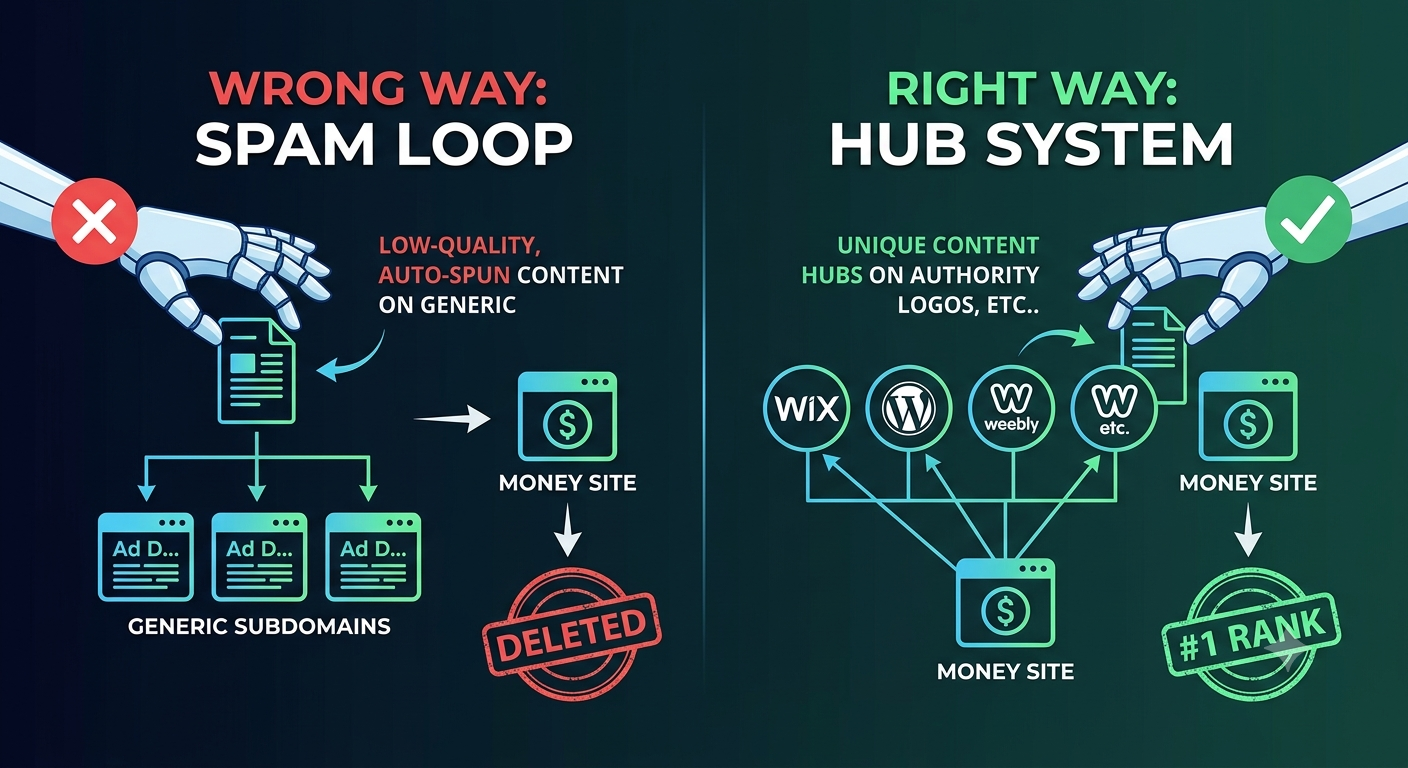
[WRONG WAY]                                  [RANKERS PARADISE WAY]
Auto-Spun Content                            Unique, Helpful Articles
    │                                            │
All Links Point to Money Site               Multi-Tiered Link Structure
    │                                            │
100% Exact Match Anchors                    80/20 Mixed Anchor Profile
    │                                            │
   ▼                                            ▼
Google Deletes Subdomain                    Permanent #1 Rankings
-
Using Low-Quality Spun Content: If you drop 300 words of unreadable, auto-spun garbage onto a free blog, the platform’s automated anti-spam algorithms will flag and delete your account within 48 hours. When the subdomain dies, your backlink dies with it.
-
Leaving Obvious Footprints: If you register 20 web 2.0 blogs using the exact same username, the exact same password, the exact same email address, and post on the exact same day, Google bot will spot the pattern and ignore the link equity.
-
Over-Optimizing Anchor Text: If every single backlink you create uses your exact target keyword as the anchor text, you will trigger an anchor text penalty. You must keep your anchor profile clean and natural.
If you want to know how to set up your platforms properly, check out our complete step-by-step guide on web 2.0 backlinks.
The 5-Step Blueprint to Rank #1 Using Only Web 2.0s
If you want to rank your target page using strictly web 2.0 subdomains, follow this exact step-by-step framework.
Step 1: Find a Low SEO Competition Keyword
Head over to a free keyword research tool or Google Search itself. Look for search terms where the existing top-ranking sites are missing exact-match title tags or have thin content.
Before you write a single word, check the SERPs and ask yourself:
-
Is the exact keyword in the top site’s title?
-
Is the content longer and more detailed than what currently exists?
-
Do the ranking pages have direct backlinks pointing to them?
If the answer to those questions is “no,” you have found a low SEO competition keyword ready to be taken over.
Step 2: Perfect Your On-Page SEO
Your content must be world-class before you build a single link.
Follow this basic on-page checklist:
-
Target keyword in the Title Tag and Meta Description.
-
Target keyword in the H1 Tag.
-
Target keyword in at least one H2 Tag.
-
Target keyword in the first 100 words of your article.
-
Keep your overall keyword density under 1% to prevent over-optimization.
Step 3: Register 5 High-Authority Web 2.0 Platforms
Do not waste your time with obscure, broken platforms. Stick to the absolute best web 2.0 networks that stay indexed on Google forever:
-
Wix.com
-
Weebly.com
-
WordPress.com
-
Strikingly.com
-
Site123.com
Use a fresh, free temporary email address for signups, confirm your accounts, and pick a clean, mobile-friendly blog theme.
Step 4: Publish Unique, Value-Packed Content
Write or generate unique, well-structured articles for each web 2.0 platform. Add relevant images, YouTube video embeds, and outbound authority links to trustworthy sites like Wikipedia or Google Scholar.
This makes your web 2.0 blog look like a real, user-maintained website rather than a temporary link-drop page.
Step 5: Execute the Safe Anchor Text Ratio
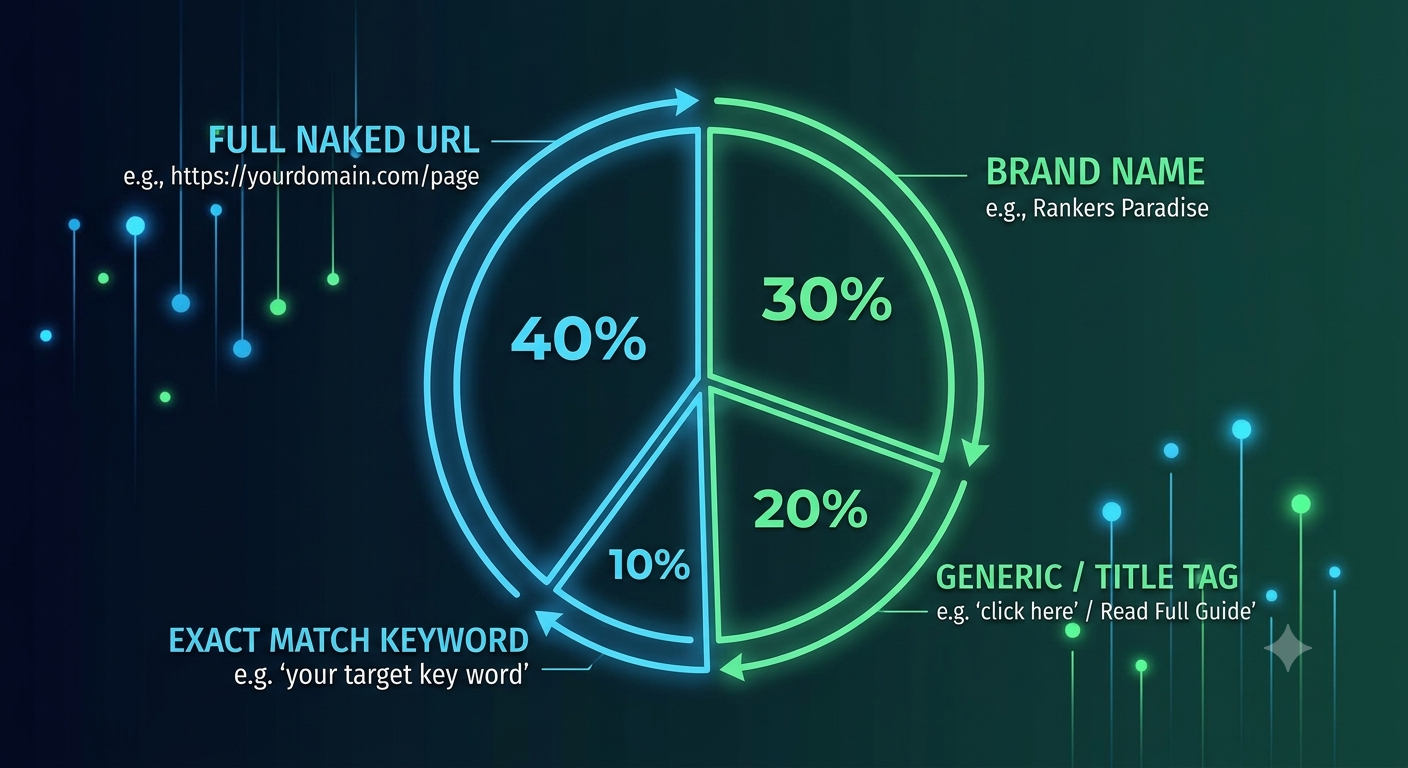
When placing your backlink inside the web 2.0 article, stick to this strict anchor text rule:
| Anchor Type | Example | Percentage |
| Full Naked URL | [https://yourdomain.com/page](https://yourdomain.com/page) |
40% |
| Brand Name | Rankers Paradise |
30% |
| Generic / Title Tag | click here / Read Full Guide |
20% |
| Exact Match Keyword | your target keyword |
10% (1 in 10 links) |
By spreading your anchor text naturally across your web 2.0 web, you pass maximum page rank while keeping your link profile 100% penalty-proof.
The Verdict: Can You Rank With Only Web 2.0s?
To sum it up: Yes, you can.
If you take the time to find low-competition keywords, write superior long-form content, and build clean, footprint-free web 2.0 properties, you will see your pages climb straight to the top of Google.
However, as your business grows and you decide to tackle high-competition keywords, high-volume commercial search terms, or competitive e-commerce product pages, you will eventually need to complement your web 2.0 foundation with higher-tier authority links.
When you hit that ceiling and need heavy-duty ranking power, you can safely buy backlinks to scale your domain authority and dominate the most competitive niches on the web.
Follow this blueprint step-by-step, keep your content quality high, and watch your organic search traffic grow!