
Are you tired of building Web 2.0 properties, checking Google a week later, and seeing absolutely none of your subdomains indexed in the SERPs?
You spend hours setting up Tumblr blogs, WordPress.com subdomains, and Blogger sites. You write solid content, place your backlinks, publish the posts, and then… absolute silence from Google bot.
Most SEOs at this point panic and rush to throw money at paid indexing services, software subscriptions, or shady instant indexers that claim to “force” Google to crawl your links.
Here is the truth: You do NOT need to spend a single dime on paid indexing software to get your Web 2.0 backlinks crawled and indexed.
In this guide, I am going to show you my exact, step-by-step workflow on how to index web 2.0 backlinks without paid indexers. You can follow this guide for free to get your tier-1 and tier-2 subdomains indexed naturally so that authority flows straight to your money site.
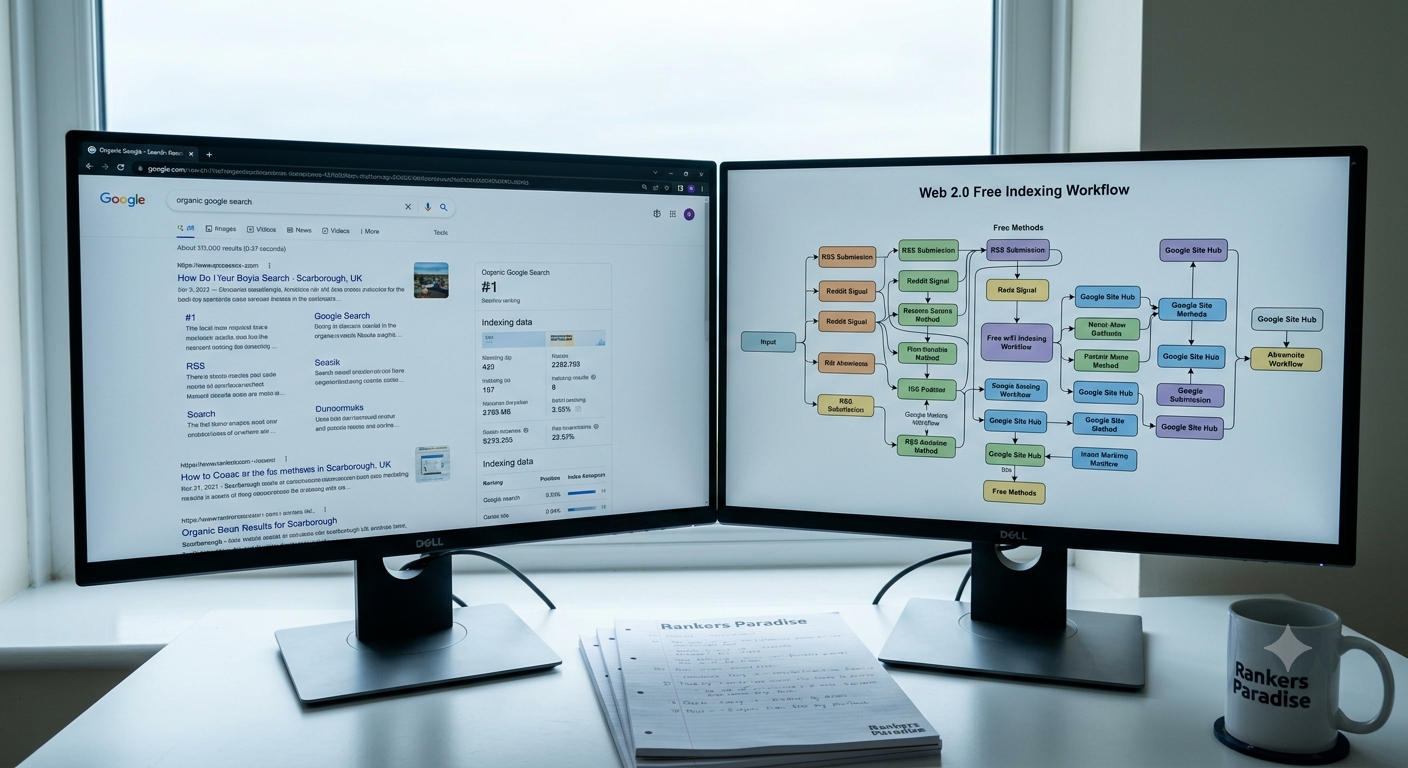
Why Google Bot Ignores Your Web 2.0 Sites
Before we get into the free indexing methods, you need to understand why Google ignores these platforms in the first place.
When you create a brand-new Web 2.0 site (like yourname.wordpress.com or yourname.blogspot.com), Google views it as a brand-new, unverified entity on a massive shared domain.
Google’s crawl budget is limited. Search engines allocate very little crawl priority to new subdomains with zero incoming links, zero internal activity, and zero domain trust.
If your Web 2.0 page has no internal links pointing to it and no external signals pointing at it, Google bot simply won’t discover it—or if it does find it, it won’t bother indexing it.
To fix this for free, we just need to send natural, organic signals that force Google bot to discover and process the content on your Web 2.0 blogs.
Method 1: The Free Web 2.0 Link Wheel Strategy
One of the easiest ways to get multiple Web 2.0 subdomains indexed without paying for indexers is by interlinking them strategically.
Instead of creating isolated Web 2.0 pages that exist alone on an island, you group them into a structured tier.
Web 2.0 A ---> Web 2.0 B ---> Web 2.0 C ---> Your Target Web 2.0 (or Money Site)
When you pass crawl activity through a chain of Web 2.0 platforms, Google bot only needs to crawl one active property in the wheel to follow the trail across all the others.
Step-by-Step Implementation:
-
Create 4 to 5 Web 2.0 sites on trusted platforms (like WordPress.com, Blogger, Wix, or Weebly).
-
Insert your target link inside the primary Web 2.0 post pointing to your main content.
-
On your secondary Web 2.0 sites, link organically to the next Web 2.0 property in the chain using generic or URL anchors.
-
When one property gets crawled, the crawler follows the links through the entire wheel.
If you want a deeper breakdown on setting up these structures correctly, read my guide on web 2.0 backlinks where I cover how to build these step-by-step on each platform.
Method 2: Free RSS Feed Aggregators & RSS Pingers
Every major Web 2.0 platform automatically generates a free RSS feed for your blog subdomains. RSS feeds are essentially direct instructions for web crawlers, letting them know when new content is published.
Instead of paying an indexing service, you can leverage free RSS distribution networks to get Google bot to crawl your RSS feed.
How to Find and Use Your Web 2.0 RSS Feeds:
-
WordPress.com:
[yourblog.wordpress.com/feed/](https://yourblog.wordpress.com/feed/) -
Blogger:
[yourblog.blogspot.com/feeds/posts/default](https://yourblog.blogspot.com/feeds/posts/default) -
Tumblr:
[yourblog.tumblr.com/rss](https://yourblog.tumblr.com/rss)
Step-by-Step RSS Workflow:
-
Copy the exact RSS feed URL for your Web 2.0 site.
-
Head over to free RSS submission directories and aggregators (like RSS Board, Feedburner, or free pinging tools like Pingomatic).
-
Paste your Web 2.0 RSS feed URL and hit submit.
-
The ping triggers an immediate ping request to multiple search engine aggregators, letting Google bot know fresh content is waiting to be indexed.
Method 3: Micro-Social Signals and Forum Crawling
Google search spiders crawl high-activity social platforms continuously every second of the day. Platforms like Reddit, Quora, and Pinterest have a massive crawl frequency.
You can use these high-trust platforms to pull Google bot straight to your Web 2.0 URLs for zero cost.
How to Execute This:
-
Reddit Profile/Comment Post: Head over to Reddit, create a relevant post or add a helpful answer in a subreddit related to your niche, and drop the URL to your Web 2.0 post as a reference source.
-
Quora Answers: Answer a relevant question on Quora and include your Web 2.0 link within the body of your answer.
-
Pinterest Pin: Create a quick image on Canva, create a fresh pin on Pinterest, and set the destination URL to your Web 2.0 blog page.
Because Google crawlers hit Pinterest, Quora, and Reddit constantly, they discover your Web 2.0 link almost instantly via the fresh social footprint.
Method 4: The Google Sites Free Indexing Hub
If you want an ultra-reliable method using Google’s own ecosystem, you can build a free Google Sites hub page.
Since Google Sites (sites.google.com) is hosted directly on Google’s infrastructure, pages created on it are crawled and processed very quickly.
Google Sites Indexing Hub ---> Your Web 2.0 URLs ---> Money Site
How to Set Up Your Free Indexing Hub:
-
Go to
sites.google.comand create a free site. -
Write a short 300-word summary related to your niche.
-
Add a section titled “Recommended Resources” or “Related Reading.”
-
Add live links to all of your unindexed Web 2.0 posts.
-
Publish the Google Site.
-
Submit the Google Site URL directly inside your Google Search Console account (or use free pings).
Google bot will crawl the new Google Site almost immediately, discover your Web 2.0 links inside the resource section, and follow them directly to your Web 2.0 subdomains.
Method 5: Organic Tier-2 Free Links
If a Web 2.0 post refuses to index after trying RSS pings and social signals, it usually means Google deems the page too low-authority to bother adding to its index.
The quickest way to solve an authority issue on a Web 2.0 page is to point a few free tier-2 backlinks directly at it.
You don’t need expensive tools for this. You can grab free tier-2 links from:
-
Free document sharing sites (Scribd, SlideShare, Issuu)
-
High-DA profile links with clickable website fields
-
Free guest blogs or web directories
When you direct authority into your Web 2.0 page from external sources, Google re-evaluates the page’s value and indexes it organically.
If you ever decide to skip the manual work and buy pre-built, high-tier link packages for your campaigns, make sure you know what to look for—check out my full guide on how to buy backlinks safely without getting hit by Google penalties.
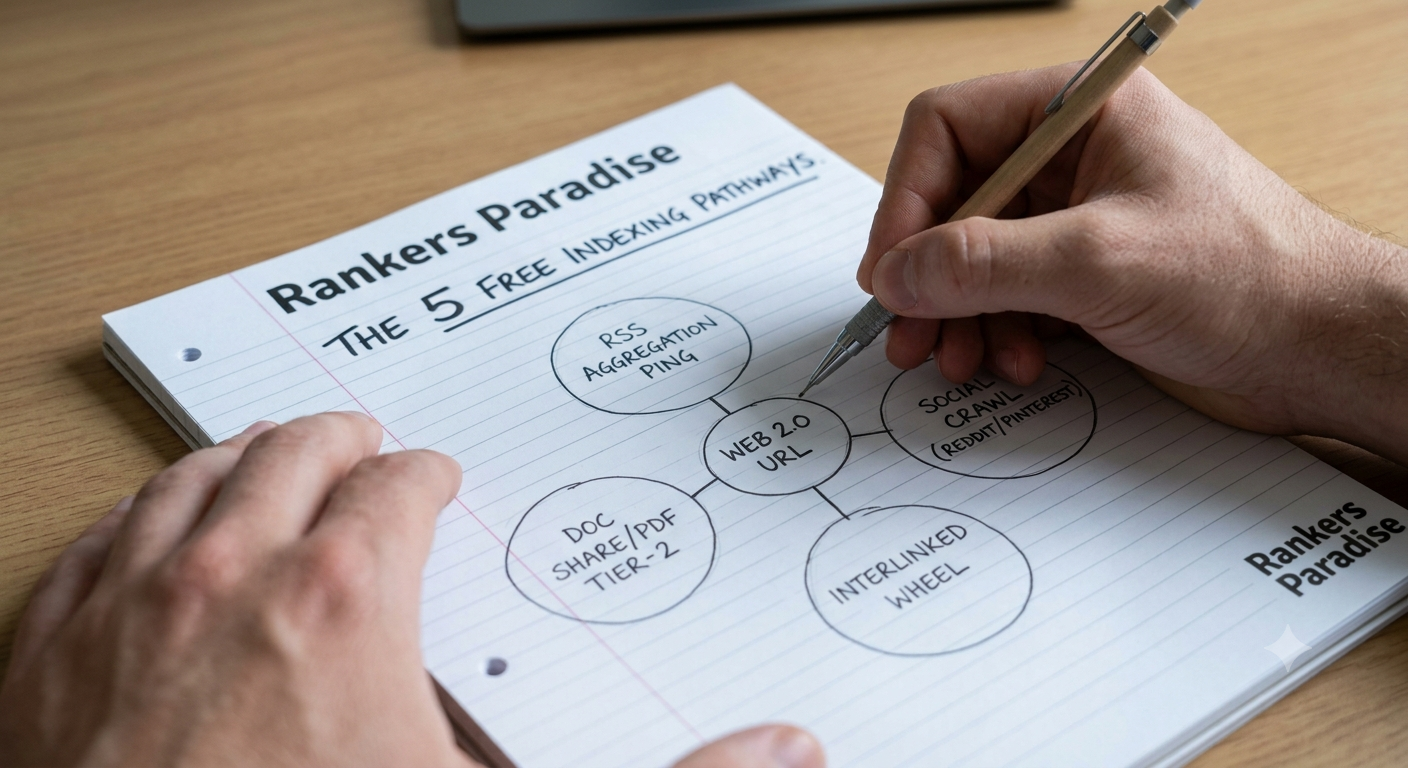
Free Web 2.0 Indexing Checklist
Here is a quick checklist you can keep on hand every time you publish a new batch of Web 2.0 properties:
| Action Step | Tool / Platform Used | Cost |
| Interlink Web 2.0s | Link wheel structure | $0 |
| Submit RSS Feed | Pingomatic / Feedburner | $0 |
| Social Drop | Reddit / Quora / Pinterest | $0 |
| Create Index Hub | Google Sites | $0 |
| Tier-2 Signals | Profile & Doc Sharing Links | $0 |
Frequently Asked Questions
How long does it take for a Web 2.0 backlink to index naturally?
If you rely on Google finding it on its own without any signals, it can take anywhere from 2 to 6 weeks (or it may never index at all). Using the free methods above—like the Google Sites index hub or RSS pings—you can typically get your Web 2.0 pages indexed within 3 to 10 days.
Do Web 2.0 backlinks need to be indexed to pass link equity?
Yes. If a Web 2.0 page is not indexed in Google’s SERPs, Google does not recognize the page as part of its live search index. Unindexed links do not pass rank juice or anchor text signals to your target website.
Should I pay for automated indexing services for Web 2.0s?
No. Automated indexers often rely on spamming thousands of low-quality links or ping networks that can raise red flags or simply fail to work as Google’s algorithms evolve. The manual, zero-cost methods outlined in this guide are far safer and more effective for long-term ranking stability.