
If you’re running a small business, you know the grind. You’ve got a killer website, your services are top-tier, but you’re stuck lingering on page 2 or 3 of the Google SERPs. You’ve been reading the forums and watching the competition climb, and you know the hard truth: you need more authority.
When it comes to building that authority, one of the most effective ways to move the needle is to buy backlinks.
But here’s where most small business owners get stuck: the budget. You look at agency quotes—$2,000, $5,000, or even $10,000 a month—and it feels like a massive gamble. For a small operation, that isn’t just “investing in growth”; it’s a risk that could sink your cash flow.
I get asked this constantly: “Nick, how do I set a monthly budget for buying backlinks without going broke?”
The reality? You don’t need an enterprise-level retainer to see results. You just need a smart, scalable, and surgical plan.
Why Small Businesses Overspend on SEO
Most SEO advice is written for big brands with unlimited budgets. They’ll tell you to drop thousands on guest posts on major publications or expensive PR campaigns.
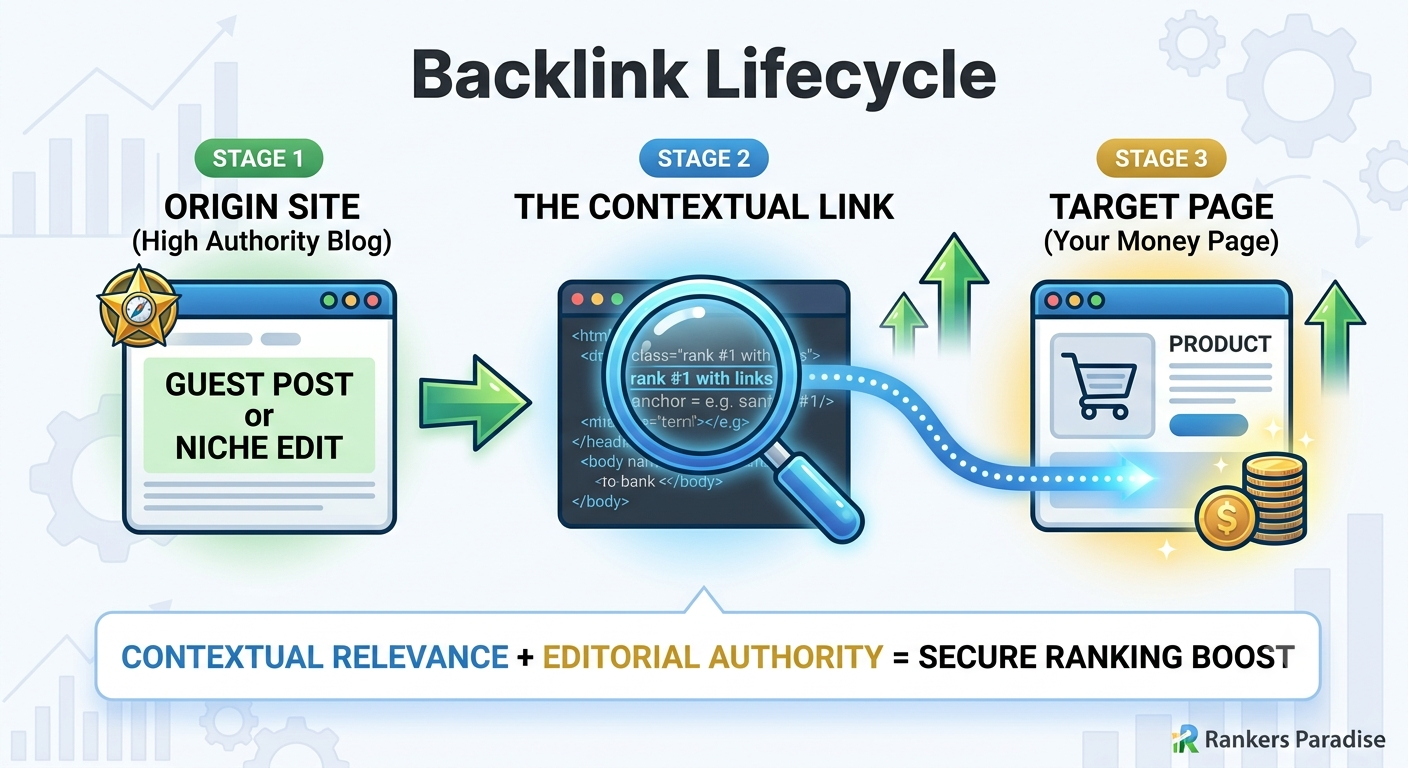
That works if you have deep pockets. But for most of us, we need results now without waiting six months for a PR campaign to kick in. When you’re building your link profile, you don’t need a hundred links from massive news sites. You need high-quality, relevant, and consistent links that tell Google your site is the expert in your niche.
The “Proof of Concept” Budget Strategy
Before you commit to a long-term plan, you need to validate your approach. Don’t guess—use this framework to figure out what you can actually afford to spend on your link-building strategy.
1. Define Your “Survival” Baseline
Start by looking at your monthly marketing budget. What is left over after your fixed costs (hosting, software, content creation)?
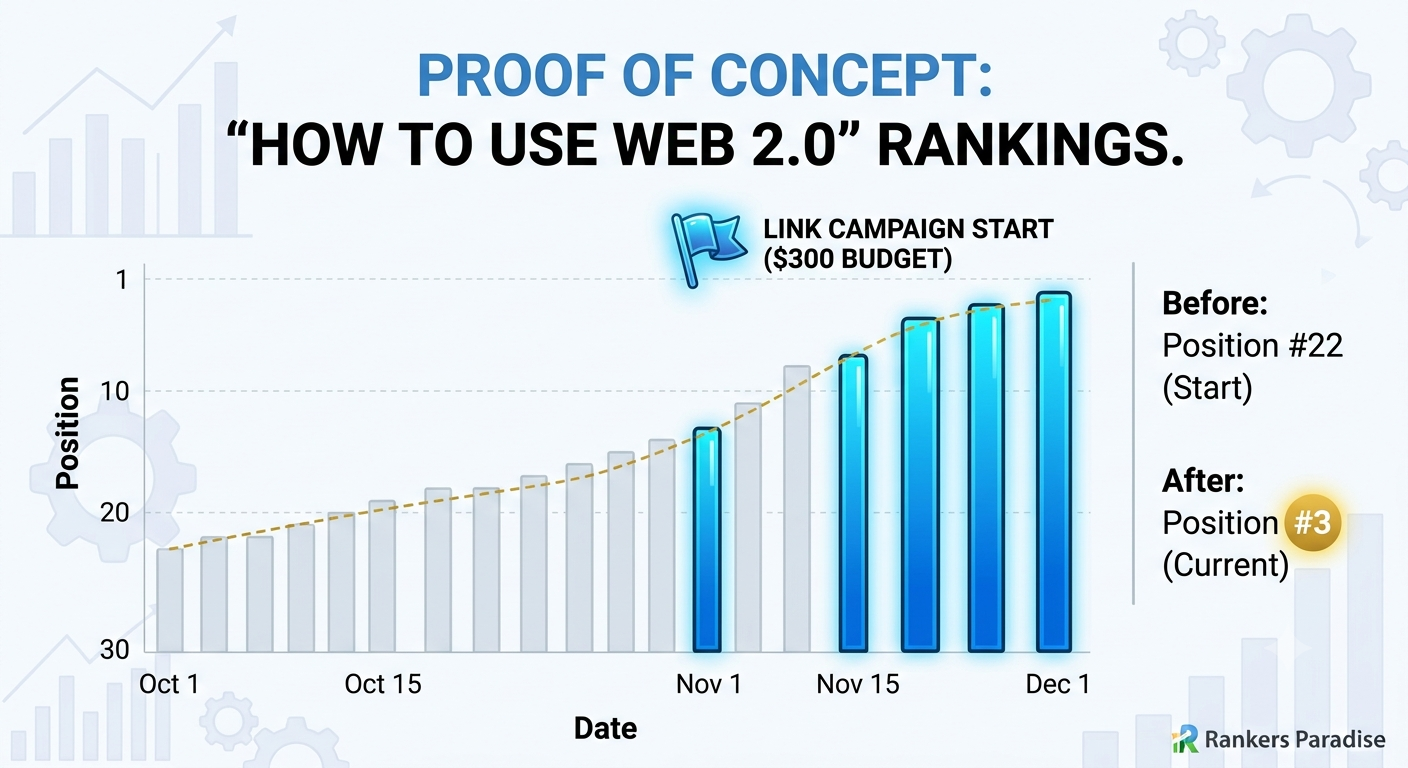
I always recommend starting with a “Proof of Concept” budget. For most small businesses, this sits between $200 and $400 per month. This is enough to acquire a handful of solid, high-quality niche edit backlinks that provide real, contextual authority.
The Goal: See if your target keywords move. If you can push your site from page 3 to page 1 for a specific keyword with a $300 investment, you’ve proven your ROI. Once you have that data, you can confidently scale the budget.
2. Match Strategy to Your Spend
Once you know your monthly number, be tactical about where that money goes:
-
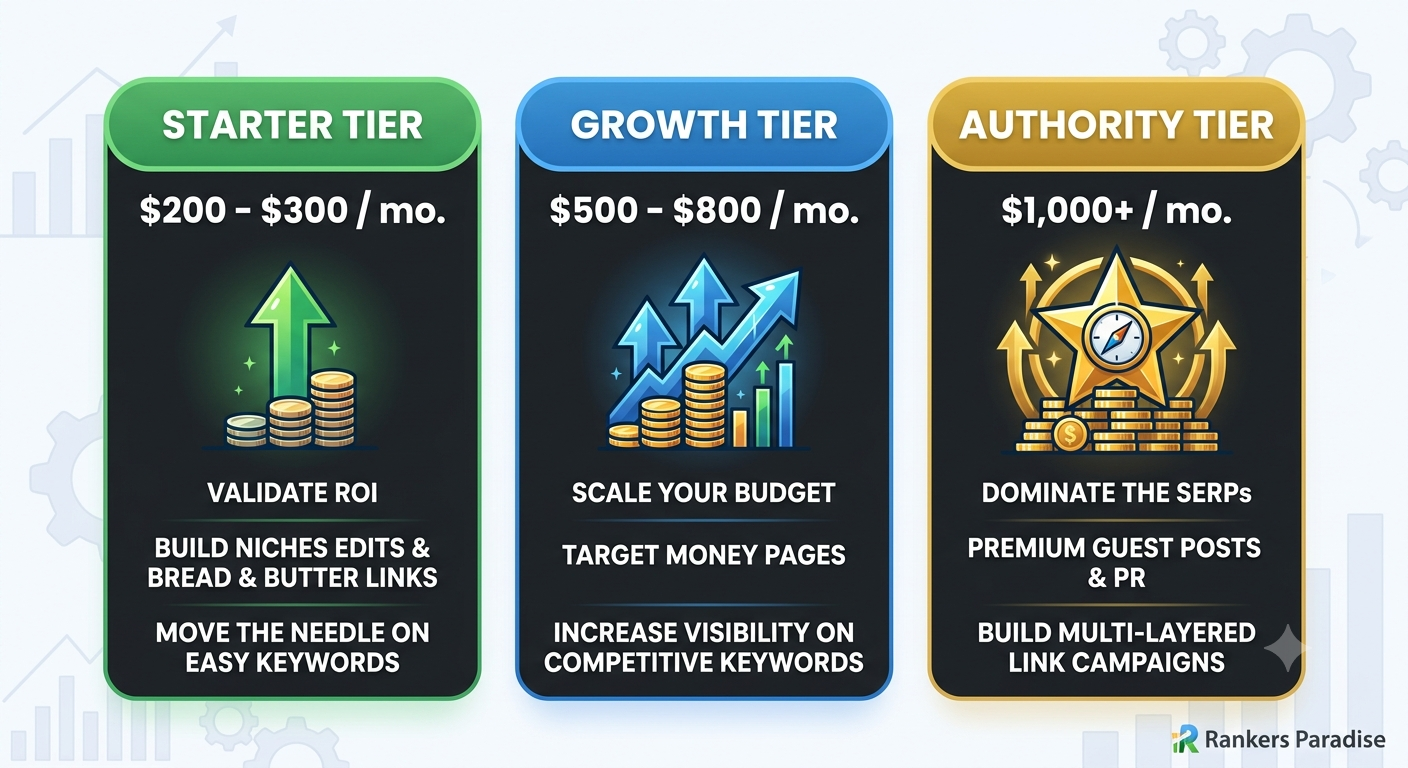
The $200–$300 Starter Tier: Focus on niche-relevant placements. These are your bread and butter. They pass authority and tell Google your site belongs in its specific industry.
-
The $500–$800 Growth Tier: Now you can afford to mix in higher-authority placements. Use this to target your “money pages”—the pages on your site that actually generate sales or leads.
-
The $1,000+ Authority Tier: At this level, you aren’t just ranking; you are dominating. You can mix in premium guest posts, web 2.0 backlinks, and larger campaigns to push for high-volume keywords.
How to Stretch Your SEO Budget Further
You don’t have to spend a fortune if you spend wisely. Here’s how I manage it:
-
Prioritize Your “Money Pages”: Don’t spread your links thin across your entire blog. Spend 80% of your budget on the pages that actually convert. A #1 ranking on a page that sells nothing adds zero to your bottom line.
-
Mix Your Anchor Text: Don’t buy 10 links with the exact same keyword. It looks unnatural to Google. Use a mix of:
-
Branded: Your business name.
-
URL: Your raw website address.
-
Generic: “click here,” “read more,” or “this guide.”
-
Exact Match: Your target keyword (use this sparingly—one every five links is a good rule of thumb).
-
-
Stay Consistent: It is significantly better to spend $300 every month than to spend $1,000 once and then go dark for three months. Google loves steady, consistent growth. It signals that your business is active and growing.
Tracking Results: Is It Working?
You need to be objective about your rankings. I recommend using tools like SerpRobot to track your progress.
-
Before: Record your positions for your target keywords.
-
During: Continue your monthly acquisition.
-
After (60–90 days): Compare your positions.
If the needle isn’t moving, the problem might be on-page SEO. Are your meta tags optimized? Is your content actually answering the user’s question? Sometimes the links are doing their job, but your content isn’t set up to convert that traffic.
Final Thoughts: Keep It Simple
Setting a monthly budget isn’t about being an SEO genius; it’s about discipline. Pick a number you can maintain for at least six months, focus on high-quality links that move the needle on your most important pages, and track your results.
If you need a strategy that fits your specific niche, take a look at our SEO Service Packages. We’ve designed them to be modular and affordable for small businesses, so you can rank #1 without breaking the bank.
What’s your current SEO bottleneck? Let me know in the comments, and I’ll help you map out a strategy that fits your budget.