
Buying backlinks often gets talked about in simple terms. Some people see it as a shortcut. Others treat it like a risky tactic that should be avoided completely. The truth sits somewhere in the middle. When done carelessly, buying backlinks can damage a website. When approached with strategy, relevance, and quality control, it can become part of a wider SEO plan that helps a site earn stronger visibility.
The hidden logic behind buying backlinks is not really about “buying rankings.” It is about understanding how authority, trust, relevance, and competition work together in search engines. Backlinks remain one of the strongest signals that a website is worth paying attention to, but not all links carry the same value. A single relevant link from a trusted website can be more useful than dozens of weak links from random domains.
Why Backlinks Still Matter
Search engines use many signals to decide which pages deserve to rank. Content quality, technical performance, user experience, topical relevance, and site structure all matter. However, backlinks still play a major role because they act like references from one website to another.
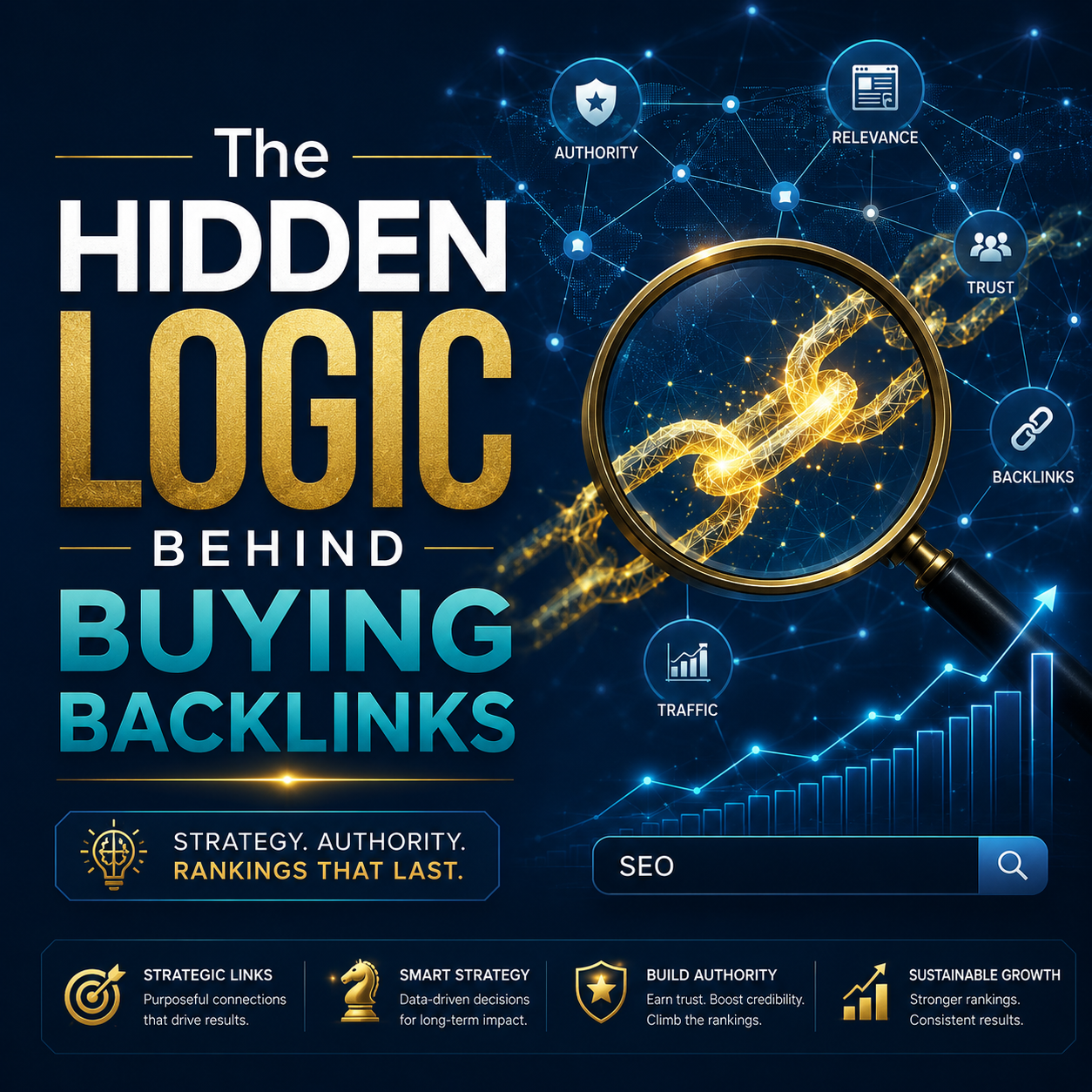
When a website links to your page, it is passing a form of trust. Search engines look at that connection and ask questions such as:
- Is the linking website trustworthy?
- Is the link relevant to the topic?
- Does the link appear naturally within useful content?
- Is the destination page valuable for users?
- Does the link fit the wider context of the website?
This is why backlink building is not just about quantity. A website with thousands of poor-quality backlinks may still struggle to rank, while a smaller site with fewer but stronger links can perform much better.
The Real Reason Businesses Buy Backlinks
Most businesses do not buy backlinks because they want to cheat the system. They do it because earning links naturally can be slow, unpredictable, and difficult. A new website may publish excellent content but still fail to attract attention because nobody knows it exists yet.
In competitive industries, waiting for backlinks to appear naturally can take months or even years. Meanwhile, competitors may already have established authority, stronger domain profiles, and long-standing content assets. Buying backlinks is often used to close that gap faster.
For smaller companies, this can be especially important. A local service provider, niche eCommerce store, or new blog may need external authority before its content has a realistic chance of competing. That is why many site owners research how to buy backlinks for small business websites as part of a broader SEO strategy.
The Difference Between Smart Buying and Reckless Buying
The biggest mistake people make is treating all backlinks as equal. They search for the cheapest packages, buy hundreds of links at once, and expect rankings to improve. This usually leads to poor results because low-quality backlinks are easy to spot.
Reckless backlink buying often includes links from irrelevant websites, automated networks, spammy blogs, copied content, or domains that exist only to sell links. These links may look impressive in a spreadsheet, but they often provide little real authority. In some cases, they can create an unnatural backlink profile that search engines may ignore or distrust.
Smart backlink buying is different. It focuses on relevance, editorial placement, domain quality, traffic signals, anchor text balance, and long-term safety. The goal is not to collect as many links as possible. The goal is to build a backlink profile that looks natural, supports important pages, and helps search engines understand why your website deserves visibility.
Relevance Is the Core Logic
One of the most important factors in backlink quality is relevance. A backlink from a website in the same or a closely related niche usually carries more value than a random link from an unrelated site.
For example, a backlink to a digital marketing agency from a business blog, SEO publication, startup resource, or marketing guide makes sense. A backlink from a random cooking blog or unrelated entertainment website may not carry the same strength.
Search engines are getting better at understanding context. They do not just see that a link exists. They examine the page, the surrounding text, the linking domain, and the relationship between both websites. This means a good backlink should feel like it belongs.
If the link helps the reader discover a genuinely useful resource, it is more likely to appear natural and valuable.
Anchor Text Needs Balance
Anchor text is another important part of backlink logic. The anchor text tells search engines what the linked page is about. However, using the same keyword-rich anchor too often can look unnatural.
A healthy backlink profile usually includes a mix of branded anchors, naked URLs, generic phrases, partial-match keywords, and occasional exact-match anchors. Overusing exact-match commercial phrases can raise red flags, especially if the links come from low-quality sites.
The best approach is moderation. Anchor text should support the target page without making the link profile look forced. Natural variation is safer and more believable.
Quality Beats Volume
Many website owners still believe that more backlinks automatically mean better rankings. This is outdated thinking. Search engines are more interested in link quality than raw link count.
A strong backlink often comes from a website that has real content, real visitors, topical authority, and a clean backlink profile of its own. It should not look like a domain built only for selling links. The content around the link should be original, useful, and relevant.
Low-quality backlinks may be cheaper, but they often create more problems than benefits. They can dilute your link profile, waste your budget, and make future SEO work harder. A smaller number of well-placed links is usually a better investment than a large number of weak links.
Backlinks Work Best With Strong Content
Buying backlinks without strong content is like sending traffic to an empty shop. The link may help people and search engines discover the page, but the page still needs to deserve attention.
A good target page should be well-written, useful, and properly optimized. It should answer search intent, include clear headings, load quickly, and provide a better experience than competing pages. Backlinks can support content, but they cannot fully replace quality.
This is why backlink building should never be isolated from content strategy. The best results often happen when links point to valuable pillar pages, service pages, guides, or resources that have already been built to rank.
Risk Comes From Poor Judgment
Buying backlinks is not risk-free. Search engines prefer links that are earned naturally, and paid links can violate guidelines if they are used to manipulate rankings. The risk increases when links are spammy, irrelevant, excessive, or obviously artificial.
However, risk is not the same across every backlink strategy. A careless approach carries high risk. A selective, quality-focused approach is more controlled. Website owners need to understand what they are buying, where the links are placed, and how those links fit into the overall profile.
The safest mindset is to think like an editor, not a link buyer. Would this link make sense to a reader? Is the article useful? Does the linking site have a real audience? Is the placement relevant? If the answer is no, the link probably is not worth having.
The Hidden Logic Is Patience
One overlooked truth is that backlinks do not always produce instant results. Search engines need time to crawl links, evaluate them, and adjust rankings. A strong backlink campaign may take weeks or months to show its full impact.
This is why buying backlinks should not be treated as a one-time trick. It works best as part of a steady, realistic SEO plan. The goal is to build authority gradually, support key pages, and strengthen the website’s overall trust signals over time.
Sudden, unnatural spikes in backlinks can look suspicious. A slower and more consistent approach usually appears more natural and is easier to manage.
Final Thoughts
The hidden logic behind buying backlinks is not about finding the cheapest link or the fastest ranking boost. It is about understanding how authority moves across the web. Good backlinks help search engines discover, trust, and value your content. Poor backlinks do the opposite.
Buying backlinks can be useful when it is done with care, relevance, and strategy. It should support strong content, use natural anchor text, come from quality websites, and fit into a wider SEO plan. The businesses that benefit most are not the ones buying the most links. They are the ones buying the right links for the right pages at the right time.
Keep reading…
Buying Backlinks That Align With Your Content Strategy