
Ranking power is one of the most discussed ideas in SEO, yet it is often misunderstood. Many website owners know that links can help pages perform better in search results, but fewer understand how authority, relevance, trust, and context move from one site to another. When a website links to another website, it can pass signals that help search engines understand the value, credibility, and topical relationship of the linked page.
This movement of ranking strength is not magic. It is based on a combination of link equity, content relevance, site authority, anchor text, user intent, and the overall quality of the linking page. When these factors work together naturally, links can help pages become more visible, more trusted, and more competitive in organic search.
What Ranking Power Really Means
Ranking power refers to the collection of signals that help a webpage rank higher in search engines. These signals may include the strength of the domain, the authority of the specific page, the quality of its content, the number and quality of links pointing to it, and how useful it appears to users.
When one website links to another, it can transfer some of that authority through the link. This is often called link equity or link juice. However, not every link passes the same amount of value. A link from a trusted, relevant, well-maintained website is usually far more valuable than a link from a weak, unrelated, or spammy site.
Search engines look beyond the existence of a link. They evaluate the reason for the link, where it appears, what text is used, and whether it makes sense within the surrounding content.
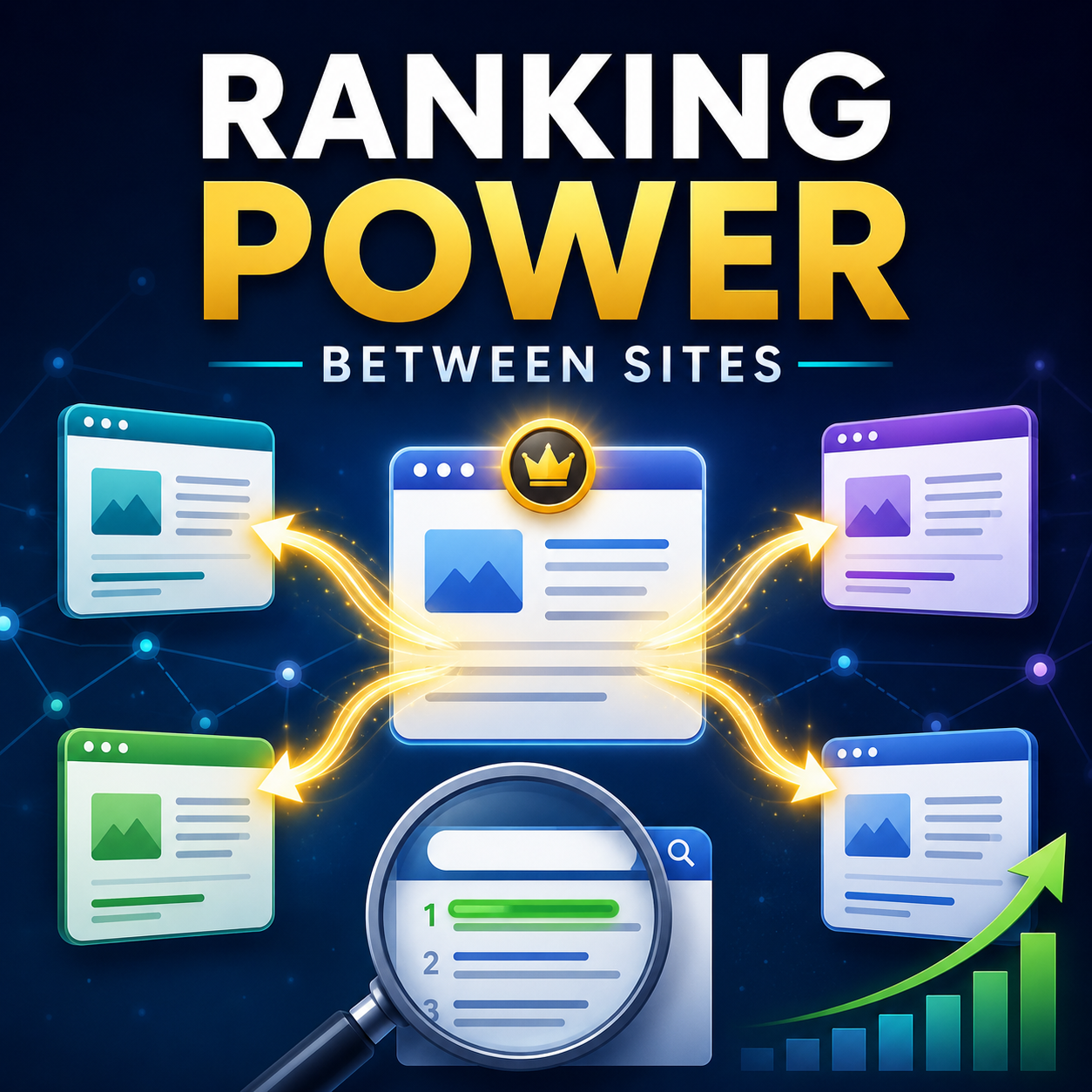
How Links Transfer Authority
A link acts like a pathway between two pages. When a search engine crawls a page and finds a link, it follows that connection to discover or re-evaluate the destination page. If the linking page has authority and the link appears natural, some of that authority can support the linked page.
This transfer is strongest when the link is placed inside relevant content. For example, a link from an article about digital marketing to a guide about backlinks makes sense because the topics are connected. The search engine can understand why the link exists and how it may help the reader.
This is why contextual links are often more powerful than random sidebar, footer, or directory links. A link placed naturally inside a useful paragraph has more meaning because it is surrounded by related information.
Relevance Controls the Strength of the Signal
Relevance is one of the most important parts of ranking power transfer. A link from a website in the same or a closely related niche sends a clearer signal than a link from a completely unrelated site.
For example, if a business website receives links from marketing blogs, SEO websites, business publications, or industry resources, those links reinforce the site’s topical authority. Search engines can see that the website is being referenced by other sources within the same subject area.
On the other hand, if a finance website receives dozens of links from unrelated recipe blogs, gaming pages, or low-quality general directories, those links may look unnatural. Even if the linking sites have some authority, the lack of topical connection can reduce the value of the link.
This is why many SEO strategies focus on niche-relevant backlinks. The goal is not just to get links, but to get links from places that make sense.
Anchor Text Helps Define the Connection
Anchor text is the clickable text used in a link. It gives search engines and readers a clue about what the linked page is about. If the anchor text is descriptive and relevant, it can strengthen the topical signal being passed.
For example, a generic anchor like “click here” gives very little context. A more descriptive anchor helps explain the destination page before the reader even clicks. However, anchor text should still feel natural. Overusing exact-match commercial anchors can look forced and may reduce trust.
A healthy link profile usually includes a mix of branded anchors, natural phrases, partial-match anchors, naked URLs, and occasional exact-match anchors. The key is balance. Anchor text should support the content, not appear manipulated.
For site owners building authority, understanding where to buy niche-relevant backlinks can help them make better decisions about quality, relevance, and link placement.
Page Authority Matters More Than Domain Metrics Alone
Many people focus only on domain-level metrics when judging a backlink. While domain authority-style metrics can be useful, they do not tell the full story. A link from a strong domain is helpful only if the linking page itself has value.
A page with original content, traffic potential, internal links, and search visibility can pass stronger signals than a forgotten page buried deep inside a website. Search engines evaluate individual pages as well as entire domains.
This means a backlink from a relevant, well-written article may be more useful than a link from a high-metric domain where the page has no traffic, no internal support, and no real purpose.
Internal Links Help Ranking Power Move Within a Website
Ranking power does not only move between different websites. It also moves within your own website through internal links. When one page links to another page on the same domain, it helps search engines understand site structure and page importance.
This is especially useful for pillar content. A pillar page is usually a major guide or important landing page that covers a broad topic. Supporting articles can link back to the pillar page to strengthen it. Over time, this creates a topical cluster.
For example, several smaller articles about backlinks, link authority, anchor text, guest posting, and niche relevance can all link to one main backlink guide. This helps search engines see that the pillar page is central to the topic.
Not All Ranking Power Is Passed Equally
Search engines do not treat every link as equal. Some links may pass strong value, some may pass little value, and others may be ignored completely. Several factors influence how much ranking power moves through a link:
The linking site must be trustworthy. If a site exists only to sell links or publish low-quality content, its links may carry less value.
The linking page must be relevant. A strong link should make sense within the topic of the article.
The link placement matters. Links inside the main body content are often more useful than links hidden in footers or sidebars.
The surrounding content matters. A link placed in a useful, well-written article has more context than a link dropped into thin or unrelated content.
The link attributes matter. Links marked as nofollow, sponsored, or UGC may be treated differently from standard followed links.
Trust Is a Major Part of Link Value
Ranking power is not only about authority. Trust also matters. A site that publishes accurate information, earns natural references, maintains quality standards, and avoids spammy practices is more likely to pass useful signals.
Search engines want to reward websites that are genuinely helpful. If a link appears to be part of a real recommendation or useful reference, it is more likely to support the destination page.
This is why quality control is essential in link building. A smaller number of strong, relevant, trustworthy links can outperform a large number of weak or suspicious links.
Content Quality Supports Link Equity
Even if a page receives powerful backlinks, it still needs good content to rank well. Links can help a page gain visibility, but the content must satisfy the search intent.
If users click a page and quickly leave because the content is thin, outdated, or unhelpful, the page may struggle to hold strong rankings. Backlinks work best when they support content that already deserves to rank.
This is why SEO should combine link building with content improvement. A page should be clear, useful, well-structured, and aligned with what searchers want.
Ranking Power Builds Over Time
The effect of links is not always instant. Search engines need time to crawl the linking page, understand the connection, evaluate the quality of the link, and update rankings. Sometimes links begin helping within days. Other times, the impact may take weeks or months.
The strongest SEO results usually come from consistent authority building. One good link can help, but a steady pattern of relevant links, strong content, and smart internal linking creates a much stronger foundation.
Ranking power is cumulative. Each quality signal adds to the overall strength of a website.
Why Link Context Matters
Context helps search engines interpret why a link exists. A backlink surrounded by related text is easier to understand than a link placed randomly with no explanation.
For example, if an article is discussing how backlinks influence rankings and links to a detailed guide about buying backlinks, the relationship is clear. The link supports the reader’s journey. It adds value instead of interrupting the content.
This kind of contextual relevance is important because search engines are becoming better at understanding meaning, not just keywords. A link should fit naturally into the topic and provide a logical next step.
The Difference Between Strong and Weak Ranking Signals
A strong ranking signal usually comes from a relevant, trusted, indexed page with useful content and natural placement. A weak ranking signal often comes from unrelated pages, duplicated content, low-quality blogs, spam networks, or sites with no real audience.
Strong links make a website look more credible. Weak links can make a website look manipulated or careless.
This is why link quality matters more than link quantity. Ten strong niche-relevant backlinks can be more valuable than hundreds of low-quality links from random websites.
How Pillar Content Benefits from Supporting Articles
Pillar content needs authority because it often targets competitive keywords. Supporting articles can help by covering related subtopics and linking back to the main guide. This builds a clear topical structure.
For example, an article about how ranking power moves between sites can support a larger guide about backlinks. The supporting article explains one specific concept, while the pillar page provides the broader strategy.
This approach helps users and search engines. Users can move from a specific topic to a complete guide. Search engines can understand that the pillar page is the main resource.
Final Thoughts
Ranking power moves between sites through links, but the strength of that movement depends on quality, relevance, trust, anchor text, placement, and content value. A backlink is not just a connection between two URLs. It is a signal that helps search engines understand authority and topical relationships.
The best results come from links that make sense. They should appear on relevant websites, within helpful content, using natural anchor text, and pointing to pages that deserve attention.
When combined with strong internal linking and well-built pillar content, backlinks can help a website grow its authority, improve visibility, and compete for more valuable search rankings.
Keep reading…
The Shortcut Some Sites Use to Rank Faster